

Conservation
Conservation Agreement to Benefit Texas Kangaroo Rat
Texas landowners are being offered assurances to take conservation measures to protect the Texas kangaroo rat, a rare species found in only a handful of counties near the Red River and the Panhandle.
The U.S. Fish and Wildlife Service and Texas Parks and Wildlife Department created a Candidate Conservation Agreement with Assurances to help landowners manage, create and restore Texas kangaroo rat habitat and populations throughout the species’ historical range in Texas.
“Texas Parks and Wildlife Department staff look forward to enrolling interested landowners,” says Meredith Longoria, deputy director for the Wildlife Division at TPWD. “This is an opportunity for landowners to take an active role in reducing the likelihood that this species will be added to the endangered species list by agreeing to land management practices that will benefit the species. If the Texas kangaroo rat is added to the list in the future, participating landowners will receive the benefit of being able to continue to manage their land under the terms outlined in the agreement established prior to listing without fear of violating the Endangered Species Act.”
A CCAA is a formal, voluntary agreement between the wildlife agencies and private landowners to conserve habitat that benefits at-risk species. In return, participating property owners receive assurances that no additional conservation measures will be required if the covered species is listed as threatened or endangered under the Endangered Species Act.
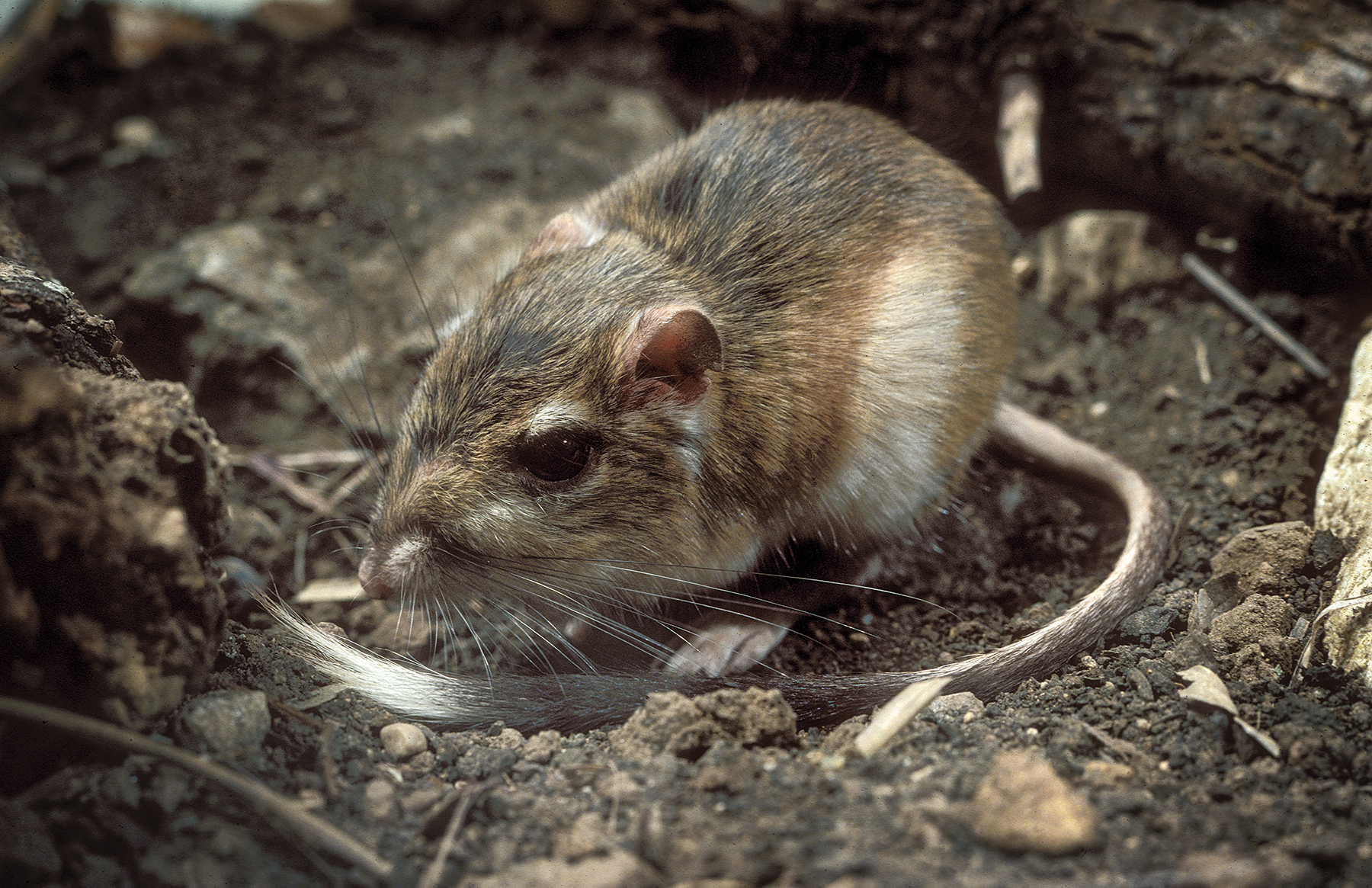
The Texas kangaroo rat is a small brown mammal with a white belly, named for its hopping style of locomotion and elongated rear feet that resemble those of a kangaroo. It has a long tail with a white tuft at the end. Texas kangaroo rats are declining in numbers due to multiple factors, including habitat loss.
Supported conservation measures include prescribed grazing, prescribed fire, range planting and reseeding, and maintaining dirt road edges.
TPWD staff; TPWD
» Like this story? If you enjoy reading articles like this, subscribe to Texas Parks & Wildlife magazine.
