At a place where two rivers meet, we approach the spot where we had hung our bait in the hopes of catching an alligator. Signs of a struggle are everywhere. Our 12-foot gator pole has been snapped into pieces like toothpicks and thrown around the muddy bank. The two 28-pound cinderblocks are toppled over and out of place. The line disappears under the water, still safely secured to a tree.
“The most exciting part was walking down the trail and seeing the gator pole triggered, leading us to believe there was a gator on the line,” says hunter Michael Wagner. “The feeling of anticipation and adrenaline was potent.”
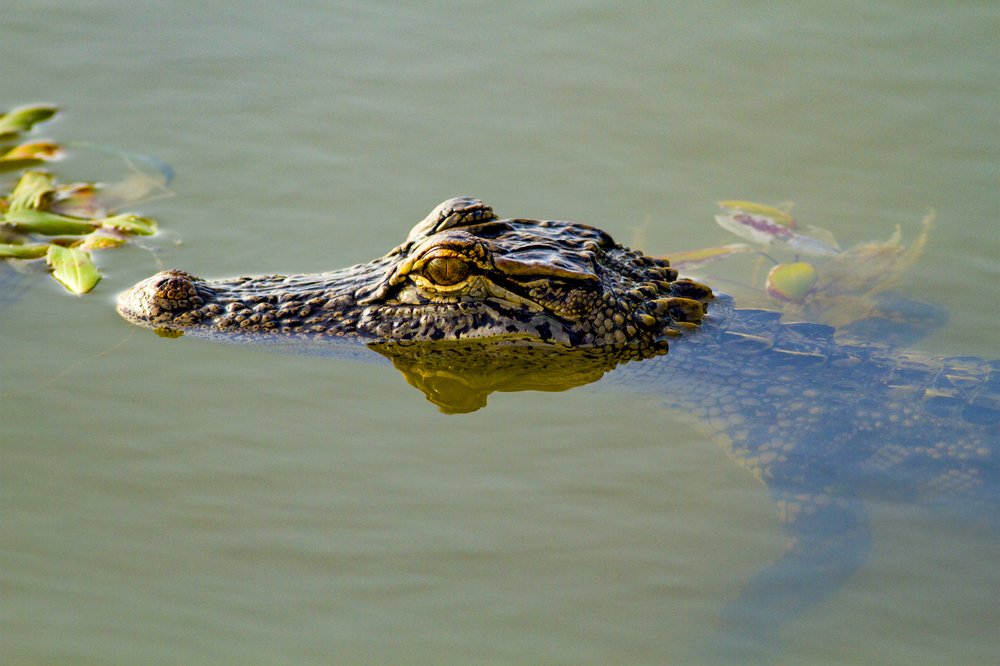
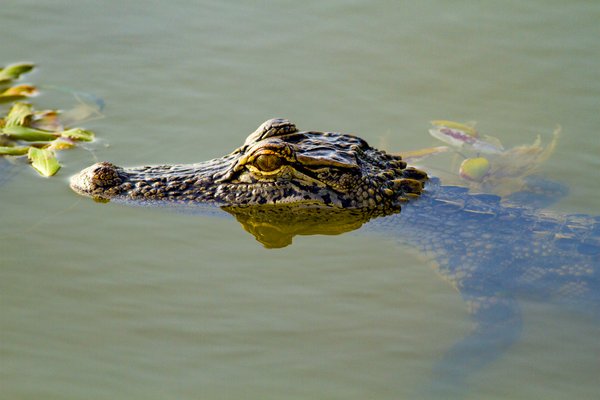
Swamp Puppies. Murder Logs. Long Frogs. Texas Tree Shakers. Whatever nickname you prefer, the American alligator is an apex predator and a living dinosaur that inhabits our Texas waterways. As an alligator hunter and guide for the last 10 years, I start our hunts looking for footprints or “slides” in the mud that can give away a gator’s location and size. Every hunt is a learning experience — just as exciting, exhilarating and unexpected as the last.
The 30-foot line that we connected to a tree stretches into the dark river as we approach the setup. The tree shakes violently as we get closer. The reptile that’s attached to the other end of the line waves its tail to swoosh several gallons of water over the banks, soaking me and the other hunters to the bone. “That ain’t no 9-footer!” exclaims hunter Joey Farah III after the water exploded. This reptile knows he’s hooked, and he’s not happy about it. And now, the banks are covered in mud, putting us at risk of falling in as we wrestle this massive alligator to the surface. The fight is on!
Wrestling alligators is dangerous work. There are lots of variables, and many of them can involve a trip to the emergency room. Remember, you’re picking a fight with a big game animal and hand-lining it to shore with nothing between you and the reptile except the river. “Hand-lining” is the act of retrieving the downed gator line and slowly bringing the gator to the river’s surface so a hunter can harvest it. Be wary of the gator’s “death roll” — it’s part of their defense and can cause severe injury if a hunter gets an arm or leg wrapped in the line.
“There is no better way to be 100 percent present and focused than having a gator on the line,” says hunter Frank Wagner.
Exhausted, dehydrated and full of adrenaline, we finally land the behemoth gator on shore after a 25-minute battle.
“The most unexpected part of my hunt was the size and weight — a small gator is still a large animal,” says hunter and client Josh Mistele.
Alligators inhabit swamps, ponds or river systems. Gators were once an endangered species, but now their range and numbers are expanding, along with the opportunities to hunt them. Hunting gators is often muddy, hot and filled with mosquitoes, and totally worth it.
“The American alligator is one of the great conservation success stories of the 20th century — brought back from the brink of extinction to populations so robust that regulated hunting and commercial alligator farming are now successfully and sustainably managed across the southeastern United States," says Jonathan Warner, Alligator Program leader for the Texas Parks and Wildlife Department.
Our method of catching a gator is with a hook and line. We tie a seven-aught treble hook onto a thousand-pound line and bait the hook with chicken quarters. We secure this line to a tree trunk or strong branch and suspend it over the river with a 12-foot-long piece of wood we call our “gator pole.” The pole holds the bait above the water at the desired height and is weighted with two cinder blocks. The rule of thumb is: the higher the bait hangs above the water, the bigger the gator you hope to catch. In this manner, hunters have the ability to select for older, mature alligators, and prevent younger animals from accessing the bait. A gator will sit directly under a bait and use its tail to rise vertically out of the water to grab it, ingesting the hook in its belly.
Hunting alligators can be a social activity. You’re waiting for baits to fall, and you usually need assistance pulling the gators out of the water. You’re not sitting in a quiet deer blind or hunting doves with a shotgun in open fields. Gator hunting requires a lot of quietly walking the riverbanks, checking lines and rebaiting as necessary. The size of the alligator that ends up on the line adds an element of surprise. “The most exciting part is the complete unknown,” says hunter Marcus Haralson. “You sneak up
to check your baits and then all of a sudden it can go from zero to ‘Go time!’ in an instant.”
After the excitement, adrenaline and fun of the hunt, we examine our captured reptile up close, honoring and admiring these amazing animals that have been here since the time of the dinosaurs. Next, it’s off to the taxidermist to skin it, process the meat and hide. It’s exciting to see these creatures thriving again, and we are thankful for the meals they provide.
What does alligator taste like? The meat is mild in flavor, and will easily take on the flavor or smoke you decide to use. Alligator is a great lean protein and is low in fat. It’s comparable to shrimp or the “bouncy” texture of lobster.
There are many approaches to preparing these reptiles, and much of the influence comes from our Louisiana neighbors. I really enjoy a perfectly hot and spicy blackened alligator or grilled skewer (see recipe on next page). In colder weather, gator piquant (a pleasantly sharp, spicy dish served over rice with green bell peppers, onions and tomato sauce) is belly-warming soul food. Don’t be afraid to step out of your comfort zone and try something new.