By early afternoon on a scorching August day, something quietly strategic is happening at the concrete pavilion at Garner State Park. Colorful folding chairs are appearing around its edges — staked out hours before sunset like prime real estate claims. Nobody’s putting their name on a deed, but everyone understands: this spot is taken.
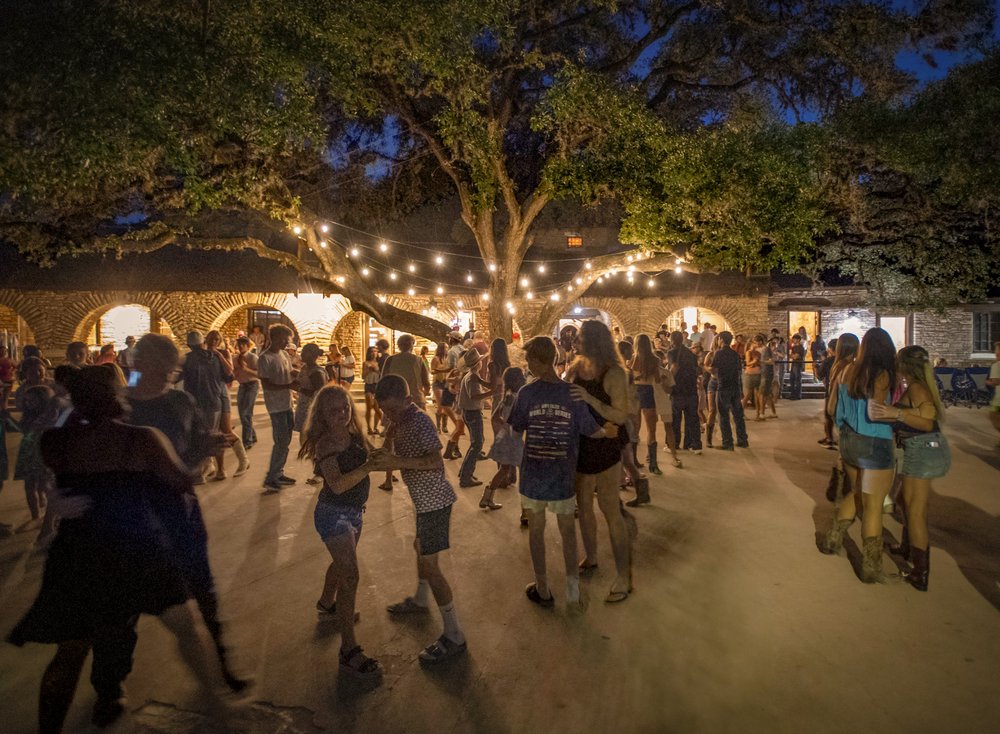
They’re placeholders for park visitors who want a front row seat at the dances that unfold under the stars here nightly, from Memorial Day weekend until mid-August. For more than 80 years, campers and locals have gathered at the shady concrete pavilion overlooking the Frio River to twirl to music after a day spent hiking up Old Baldy and swimming in the Frio River.
Many campers who were looking for love — and some who weren’t — found it here.
As dusk approaches, tiny white lights strung in sprawling oak trees around the pavilion flicker to life. Visitors claim their chairs; others grab a spot on a low limestone wall. Soon, the first song plays on the jukebox.
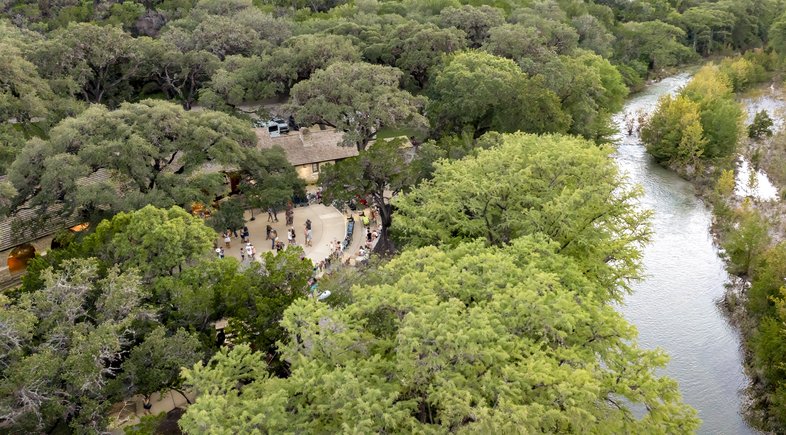
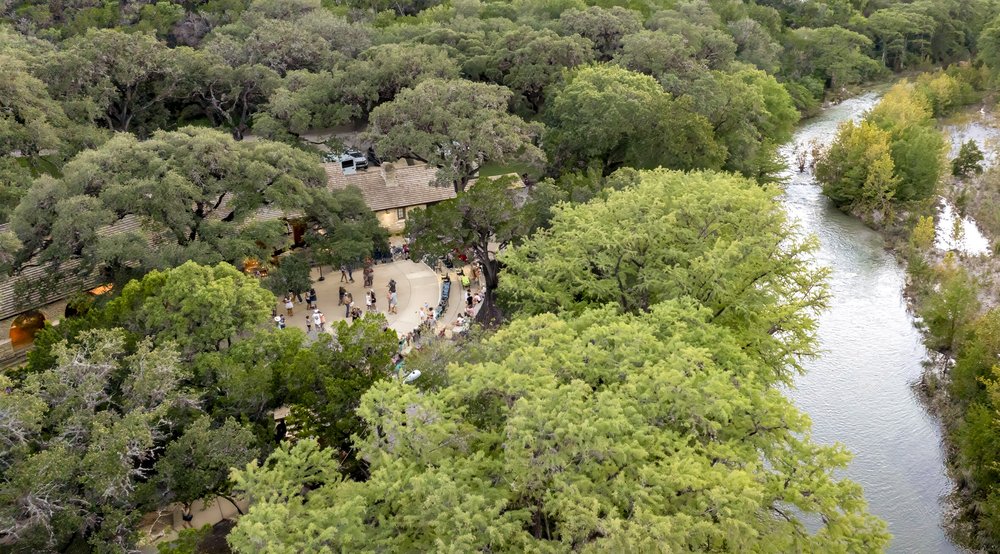
The dance pavilion and Frio River at Garner.
Chase Fountain
The dance pavilion and Frio River at Garner.
Chase Fountain
A Little History
Members of Civilian Conservation Corps Company 879 reportedly started the dance tradition in the late 1930s, when they built the park 90 miles west of San Antonio. They lived in onsite camps, earning a dollar a day through the government program to clear trails and build cabins, roads, culverts and picnic tables. After work some evenings, they invited friends over to play music, dance and relax.
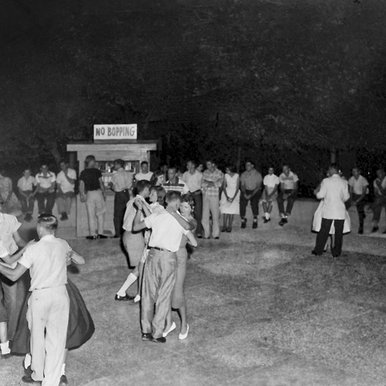
The tradition stuck after the park opened in 1941. Early on, live bands played on Saturday nights, and dancers spun to their own version of the West Coast swing called the Garner Whip. Many wore soft moccasins purchased in the park’s gift shop, sliding across the floor like skaters. (You can still watch old-timers dance the Whip at the “Garner Park ’60s Style” reunion held at the park the weekend before Memorial Day each year.)
Sometime in the 1950s, the first in a series of jukeboxes was installed. The original played 45s; today the neon-lit jukebox is digital.
By the 1960s the dances were a big deal, and they still are today. Generations of Texans have learned how to two-step or honed their waltzing skills on the concrete slab the size of a baseball diamond. Some even experienced a first kiss or fell
in love.
State Park Preservation
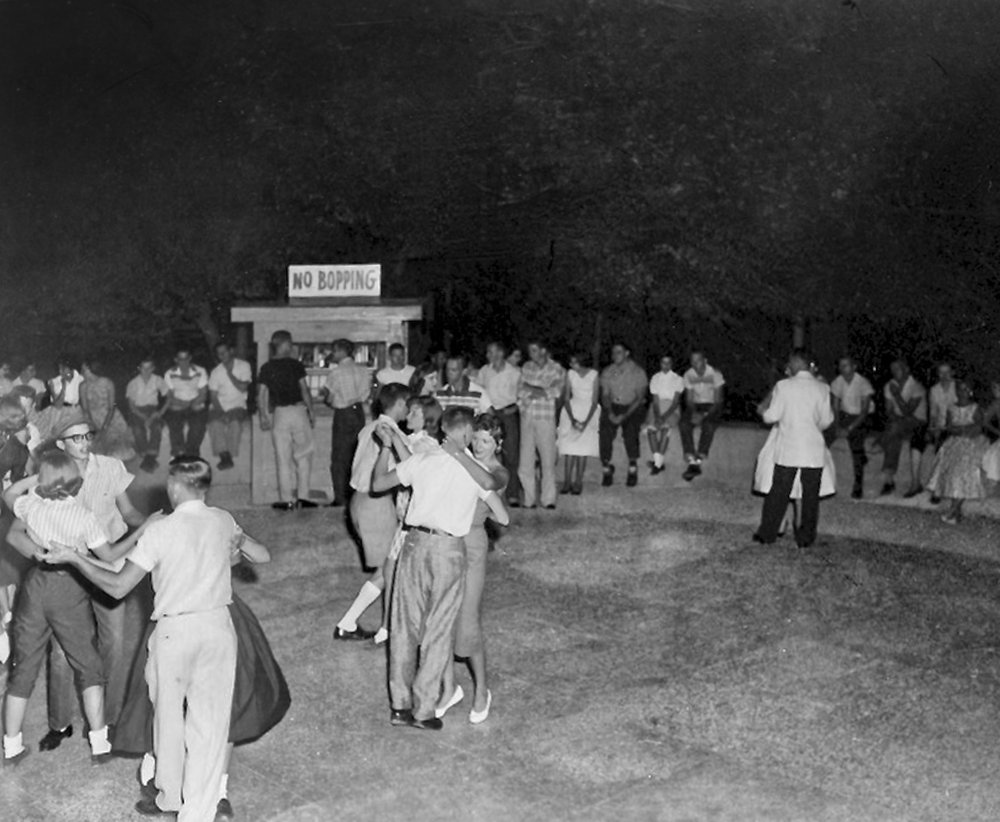
THE GARNER TRADITION: For decades. campers and locals alike have gathered at the CCC-constructed pavilion at Garner State Park to swing, twirl. whip or two-step into the night.
State Park Preservation
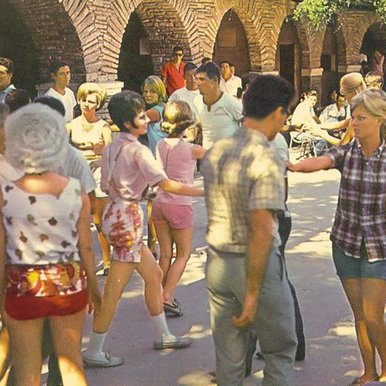
State Park Preservation
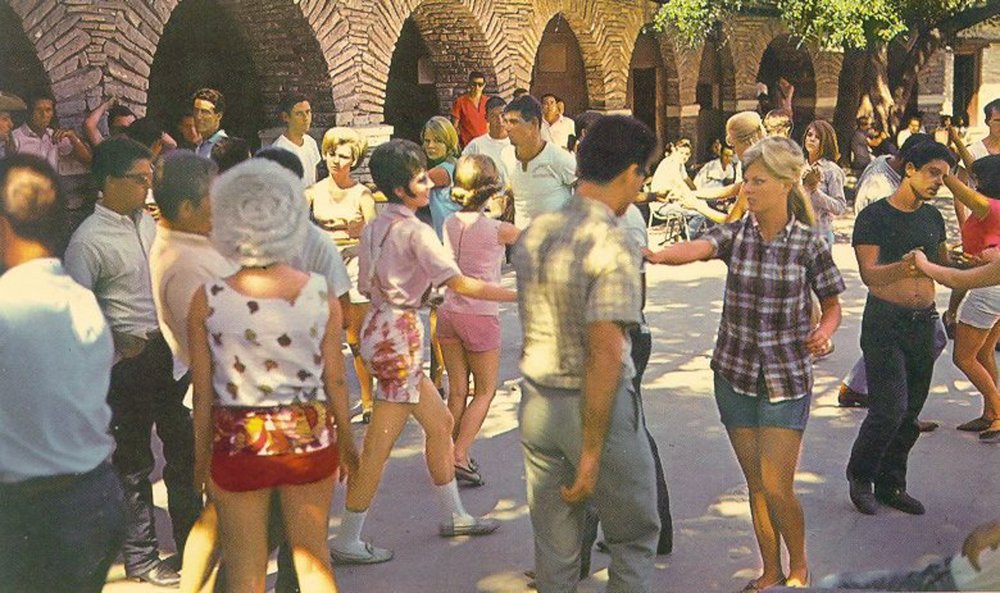
THE GARNER TRADITION: For decades. campers and locals alike have gathered at the CCC-constructed pavilion at Garner State Park to swing, twirl. whip or two-step into the night.
State Park Preservation
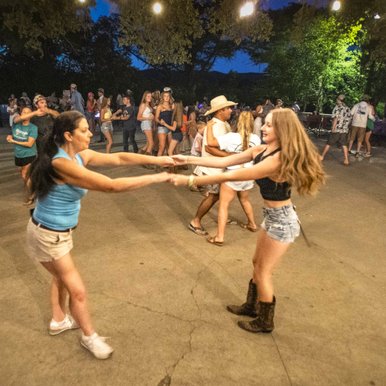
Chase Fountain
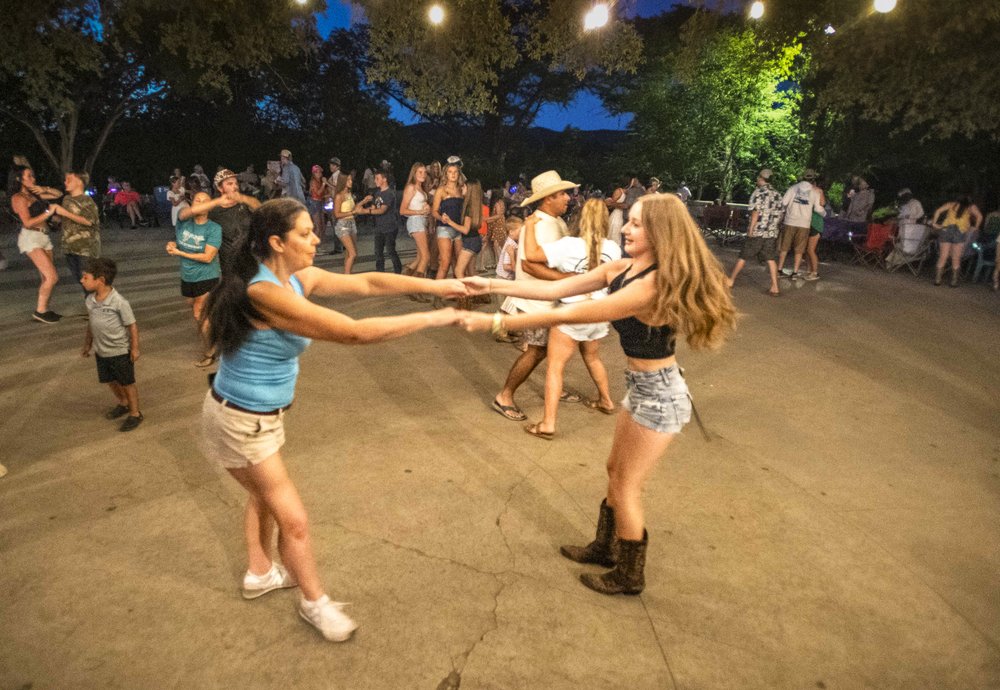
THE GARNER TRADITION: For decades. campers and locals alike have gathered at the CCC-constructed pavilion at Garner State Park to swing, twirl. whip or two-step into the night.
Chase Fountain
THE GARNER TRADITION: For decades. campers and locals alike have gathered at the CCC-constructed pavilion at Garner State Park to swing, twirl. whip or two-step into the night.
Today, whoever drops 50 cents per song — or a dollar for three — into the jukebox beneath the stone archway on the side of the pavilion gets to pick part of the night’s soundtrack. The jukebox choices change only by a song or two each year, and most dancers prefer classic country tracks by George Strait, Hank Williams or Marty Robbins. A few pop favorites — Michael Jackson’s Rockin’ Robin, Devo’s Whip It or Taco’s version of Puttin’ on the Ritz – always make the cut, along with a few line dances.
You can see the latest jukebox lineup on the Friends of Garner website at friendsofgarner.org, where you can also find an explanation of dance etiquette. Women should feel as comfortable as men asking someone to dance, it says, and if your partner steps on your toes, just smile and carry on. The website even includes a (very) short list of approved excuses for turning down someone who asks you to dance. (Hint: If you don’t have a broken leg, you should probably say yes.)
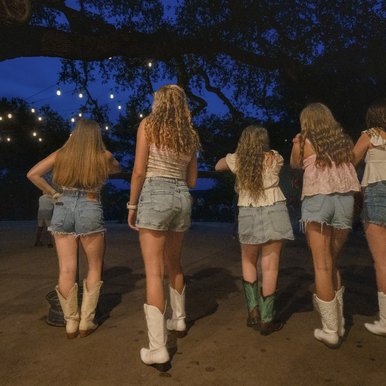
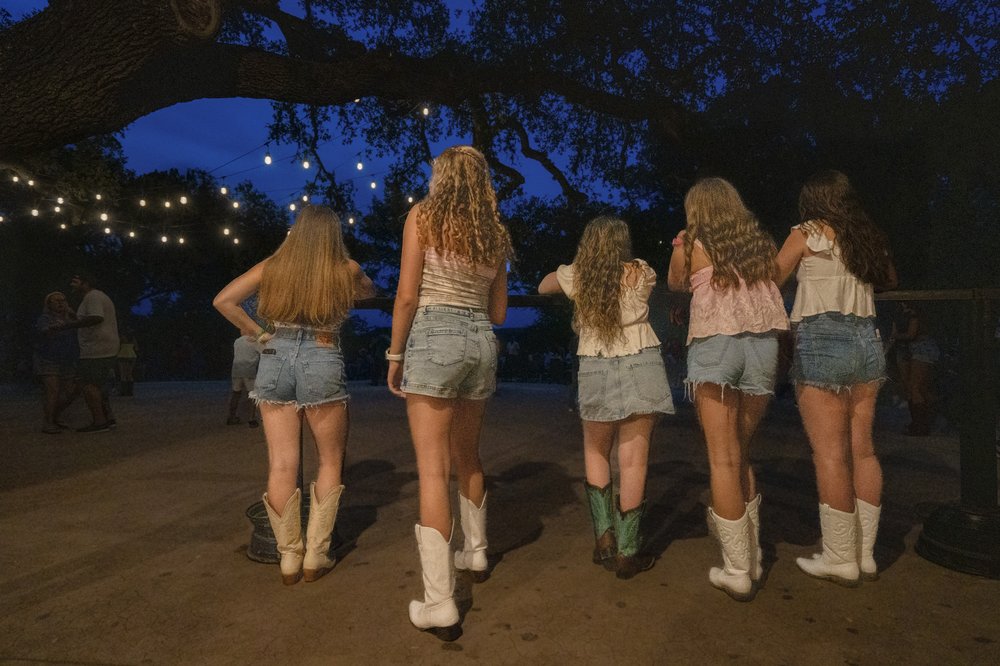
On a typical summer night, the aroma of waffle cones and burgers from a grill hangs heavy in the air (motto: “Where fat free can take a hike.”) Self-conscious teenage girls with their hair and makeup perfect, wearing shorts and cowboy boots, stand along a railing on one side of the long porch. Slicked-up boys in jeans and button-down shirts hover in the background. Kids in flip-flops and grandmas and grandpas prepare to take their first steps of the night, too.
When the music finally starts, the dance floor fills.
“It’s a place where your status doesn’t matter,” says Brett Rimkus, who has headed the concessions at the park and has run the dances since 2001. “It’s the cheerleader or the football player dancing with the bookworm. I’ve seen 10-year-olds ask 19-year-olds to dance.”
Pam LeBlanc
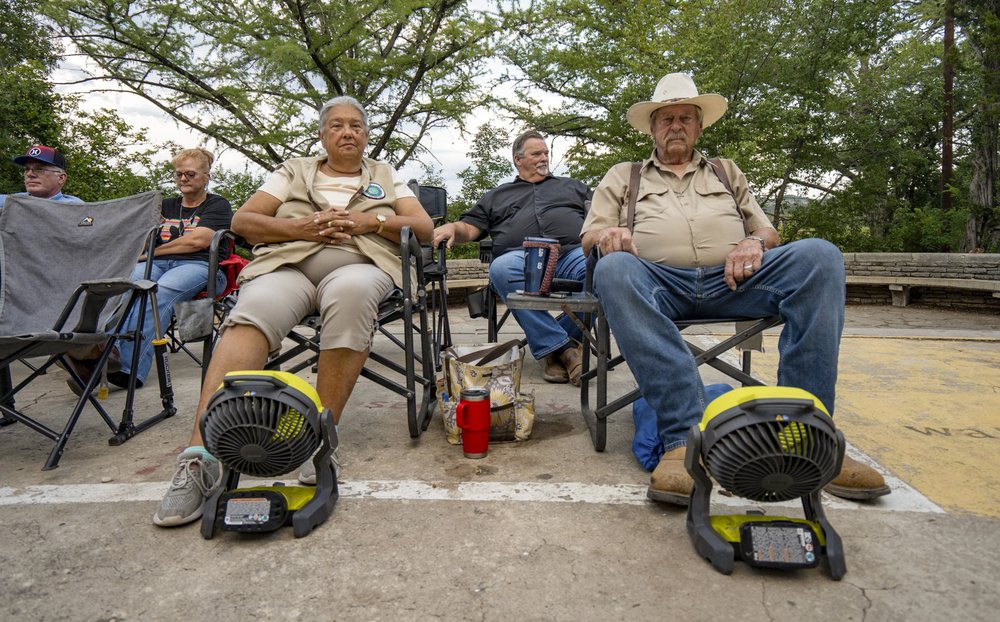
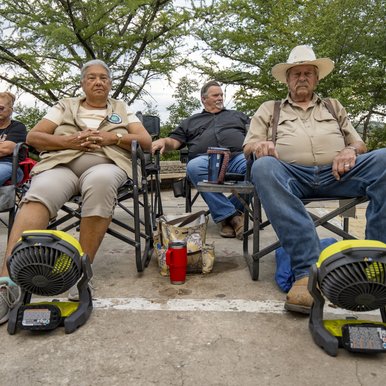
A TIMELESS TRADITION: Park hosts Ken and Arlene McGarrahan preside over the dance floor, with fans for cooling off; little has changed about the dances - other than the outfits.
Pam LeBlanc
Pam LeBlanc
A TIMELESS TRADITION: Park hosts Ken and Arlene McGarrahan preside over the dance floor, with fans for cooling off; little has changed about the dances - other than the outfits.
Pam LeBlanc
A TIMELESS TRADITION: Park hosts Ken and Arlene McGarrahan preside over the dance floor, with fans for cooling off; little has changed about the dances - other than the outfits.
Today, you can usually spot Ken and Arlene McGarrahan, who’ve served as park hosts for 42 summers, presiding at the dances. They arrive early and set up portable electric fans in front of their chairs to help keep themselves cool as they monitor the action. Usually, Ken keeps a pocket full of dog treats that he shares with pet owners.
“You meet good people,” Ken says as a dance got under way one night last August.
The McGarrahans aren’t the only ones making sure everyone behaves.
“Parents line the dance floor, so you’ve got 200 pairs of eyes on you,” Rimkus says. “Every now and then we’ll get two boys fighting over a girl.”
That situation is rare, because most people who attend the dances aren't out to impress. Some come the same week each summer, so they get to know each other over the years. Some who grew up coming to the park marry and bring their own families.
For the most part, little has changed about the dances — other than the clothing people wear and the proliferation of cell phones, which come in handy if you want to get someone’s phone number.
“We used to have kids coming into the gift shop asking for a piece of paper and a pen,” Rimkus said. “There are a lot of love stories out there about people who met at Garner State Park — a lot of love stories that go deep.”
They Met on the River
William and Lindsey Osburn star in one of those stories that Rimkus describes.
“The Garner love connection is a real thing,” says William. Back in 2003, he spent a memorable evening two-stepping with his future wife Lindsey at the park dance after meeting her earlier that day.
Lindsey, her mother and a few friends had been floating the Frio River, towing behind them an inner tube carrying a CD player tucked inside an ice chest. The trailing tube kept snagging on tree branches and rocks along the bank, so William and his friends, ever the gentlemen, kept untangling the line.
At one point, a friend of Lindsey’s mom turned to William and asked if he planned to go to the dance at Garner that night. She knew the perfect girl for him to dance with, she said with a wink.
He ended up taking the hint.
“Seeing who Lindsey was, I was like, ‘Oh my gosh, this girl is beautiful,’” William says. “We danced every dance, and true to the song [Garner State Park by B.J. Thomas] we ended up staying up really late talking on the porch. I went back and told my friend, ‘I’m probably going to marry that girl.’”
He was right.
“A little over a year later, he proposed on the banks of the Frio,” Lindsey says. “A few months after that, we were married at Concan Baptist Church.”
She was 19; he was 23.
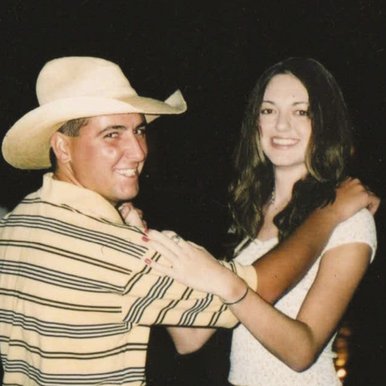
The Osburns met at the dance in 2003.
Courtesy of Osburn Family
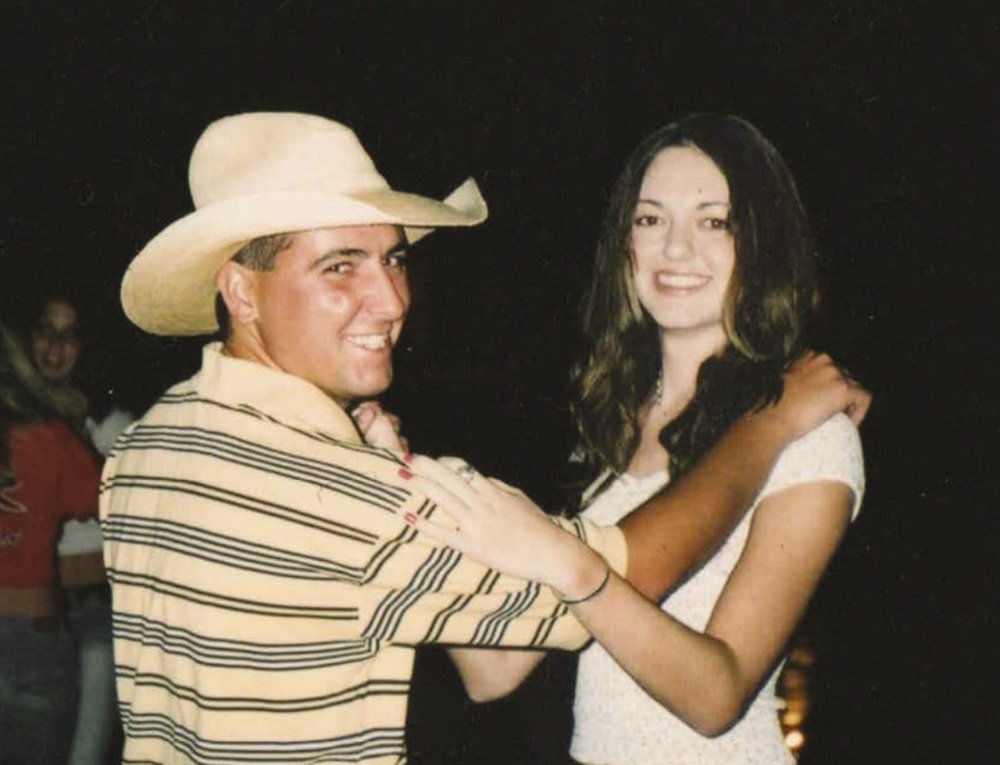
The Osburns met at the dance in 2003.
Courtesy of Osburn Family
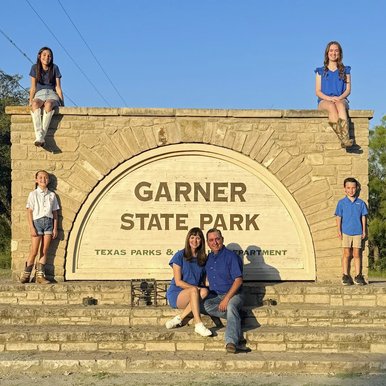
They bring their four children to continue the tradition.
Courtesy of Osburn Familly
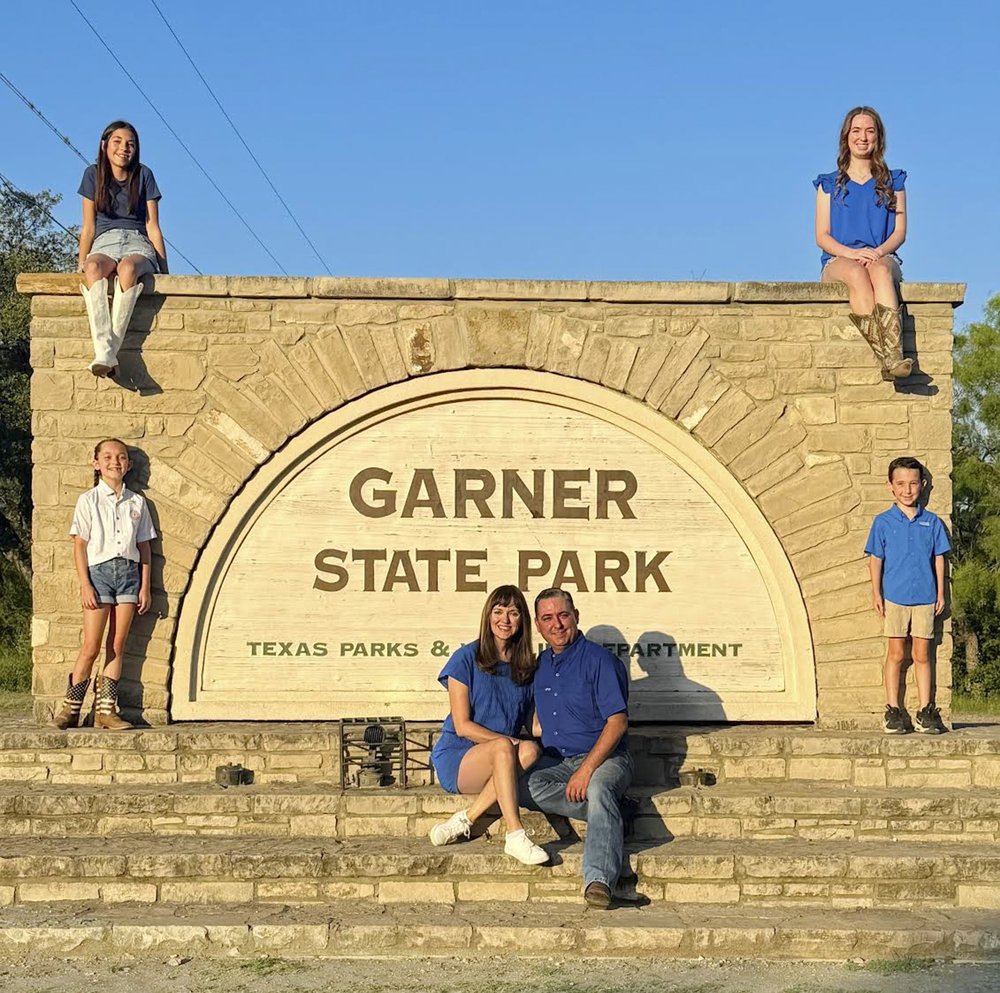
They bring their four children to continue the tradition.
Courtesy of Osburn Familly
The Osburns, who now live in the small town of Fannett near Beaumont, make the seven-hour drive (including a stop at Buc-ee’s) to visit Garner a few times each summer, but now they make it with their own four children. Last year, they even staged their own version of a Garner summer dance at home, complete with little white lights strung under a big oak tree in their front yard, for their daughter’s 14th birthday.
“For me it’s nostalgic,” says William, 44, who works at a refinery in Port Arthur. “It’s always the same at the dance, except the outfits. When we were young, we wore boots and jeans and dressed up in our finest.”
It’s more casual now, but the songs and traditions have stayed constant — and so has the anxiety felt by the teenagers who hope to hit the dance floor.
“We have girls of our own now, and there’s that nervous anticipation of ‘Is someone going to ask me to dance?’” says Lindsey, 40. “They do not want to miss it, and they stay until it ends. We say we’re going to go home early, and we never do.”
The Osburns celebrated their 20th anniversary last June at the Frio River, and bought a travel trailer on the way home “so we can make even more Garner memories,” Lindsey says.
He Spotted Her at the Dance
Bob, 94, and Bobbie Jean Landrum, 89, met on the Garner dance floor in 1954.
Bob Landrum had just graduated from Texas A&M University and was working in Fredericksburg. He got off work early one Friday and planned to head to Crystal City, where his parents lived. Instead of taking his usual route through San Antonio, he drove through Kerrville and stopped at Garner, where he’d gone so often growing up.
“I looked across the dance floor and saw this cute little girl,” he says. Bobbie Jean had been raised in Uvalde but was living in Arizona. Her aunt ran the grill at Garner, and she spent time there each summer. “Pretty soon this darling little thing with a beautiful smile said, ‘Hi, I’m Bobbie Jean.’ And I fell in love,” Bob Landrum says.
Bobbie Jean, decked out in khaki pants, a white shirt and a western hat, was smitten too. They dated that summer and married in 1956, then went on to have two girls and a boy of their own. Today they have nine grandchildren and three great-grandchildren, all fans of the summer dances at the park.
Chase Fountain
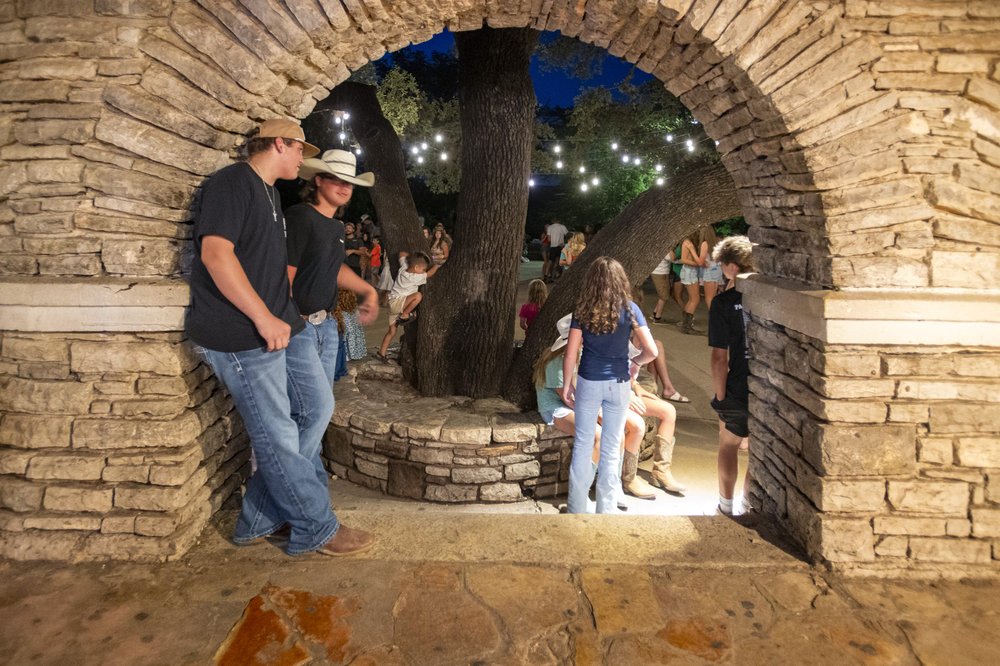
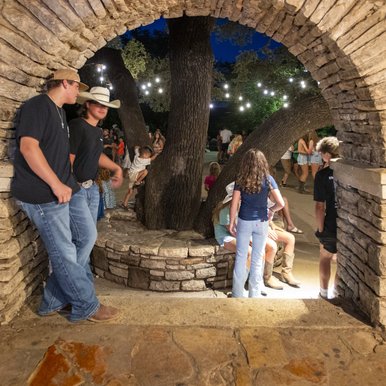
The Garner dances have a rich history of love stories that began under the arches and on the dance floor.
Chase Fountain
Pam LeBlanc
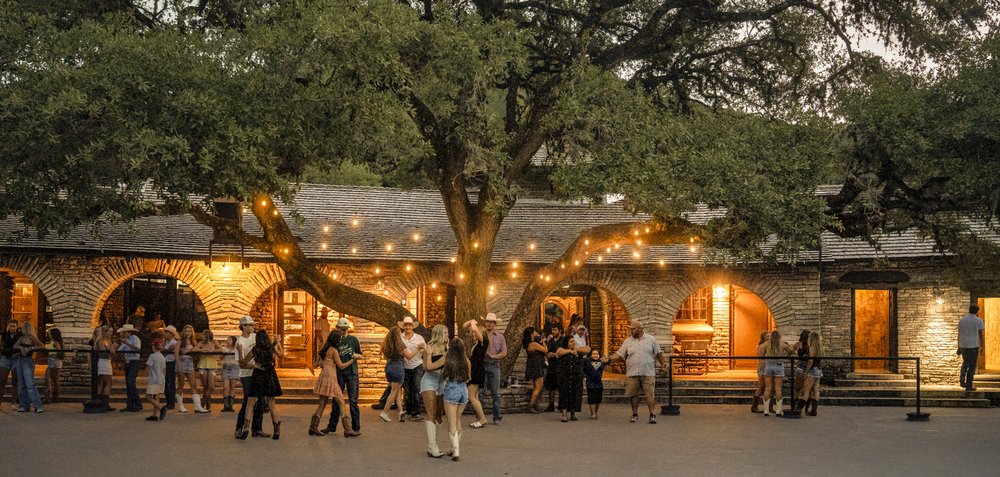
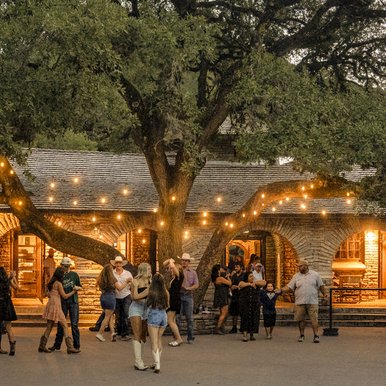
The Garner dances have a rich history of love stories that began under the arches and on the dance floor.
Pam LeBlanc
The Garner dances have a rich history of love stories that began under the arches and on the dance floor.
A little before 11 p.m. on dance nights, the Ronny Ricks version of the B.J. Thomas song Garner State Park begins to play. The remaining dancers head to the floor for one last spin before the music fades and the lights dim. Soon, the pavilion will clear, and by 11:15 p.m. the parking lot will be empty. Campers will head back to their cabins or tents or trailers, and a line of cars will stream out of the park.
“Garner State Park is a one-of-a-kind place, and I’ve been all over the world,” says John Gunn, 74, who is wearing a white shirt with a Texas flag on the back, a cowboy hat and jeans tucked inside his tall red boots.
The next day, the same thing will happen again. Park visitors will come, they’ll twirl around the dance floor with new friends or take a spin with old ones. And just maybe, someone will meet their future partner.
At the very least, they’ll wrap up the day with a reminder that the appeal of a spin under the stars in the Texas Hill Country never fades, no matter your age.
It’s the magic of the Garner summer dance.