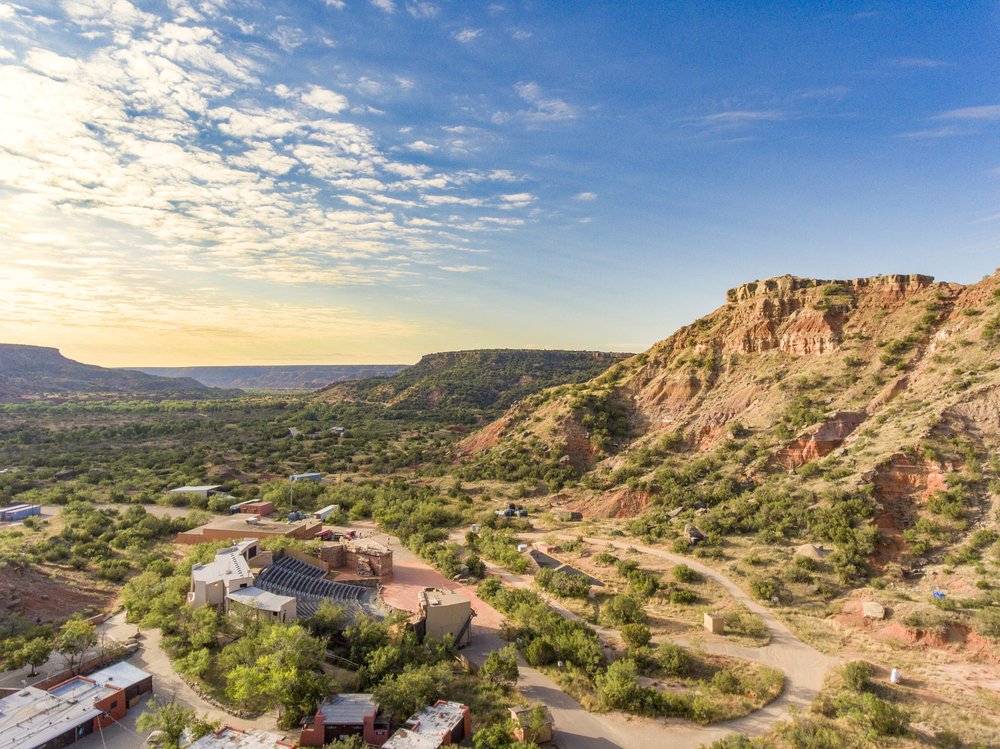
In 1985, Red Spicer held the first Palo Duro Ultra-Marathon on a 5-mile paved loop in Palo Duro Canyon State Park. Runners ran that loop 10 times to complete the 50-mile running race. Spicer had a vision to move that race to trails, but at the time the only trail that existed in Palo Duro Canyon was the Lighthouse Trail.
In 1991, Spicer, Bob Givens and Tom Lowry started building trails in the canyon. The Givens, Spicer, Lowry Trail is their namesake and legacy. They were runners and literal trailblazers who manifested an outdoor destiny for Palo Duro and for Canyon, the town outside of Palo Duro Canyon State Park.
Spicer and volunteers went on to build the vast network of trails in Palo Duro: Sunflower, Rojo Grande, Juniper Cliffside, Juniper Riverside. He also revived the Civilian Conservation Corps Trail that descends into the canyon. Spicer passed away in 2008 with over 22,000 hours of volunteer service at Palo Duro Canyon. Spicer knew that if he built the trails the adventure seekers would come. The Palo Duro Trail Run has been held continuously since 1985 (they took a break in 2020), with the current distances being 25 kilometers, 50 kilometers and 50 miles.
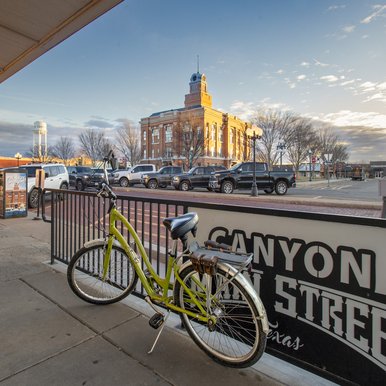
Canyon is small enough to be bikeable, a perk for outdoor enthusiasts.
Chase Fountain
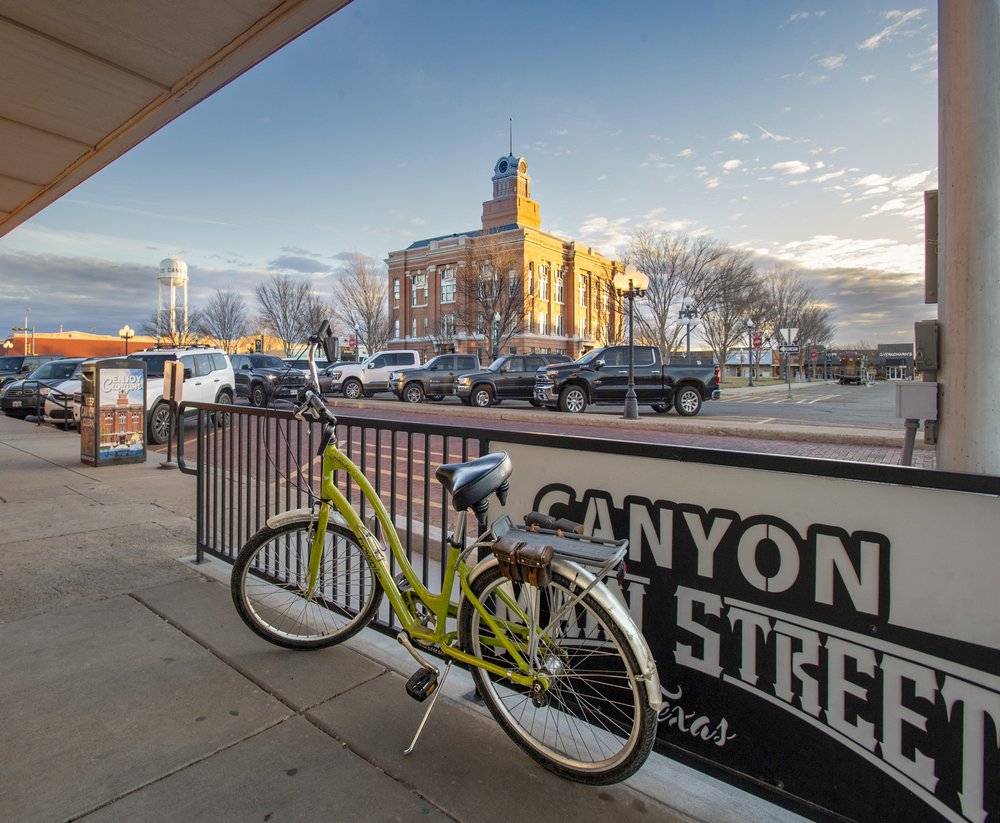
Canyon is small enough to be bikeable, a perk for outdoor enthusiasts.
Chase Fountain
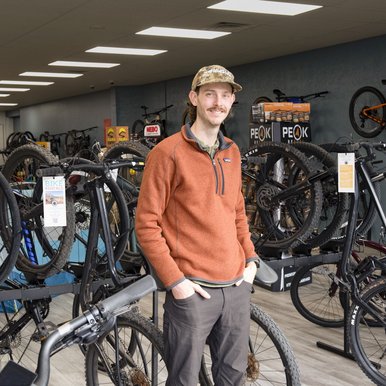
Palo Duro Outfitters and Bike Company store manager Matthew Wright is a native of Canyon and an outdoors advocate.
Chase Fountain
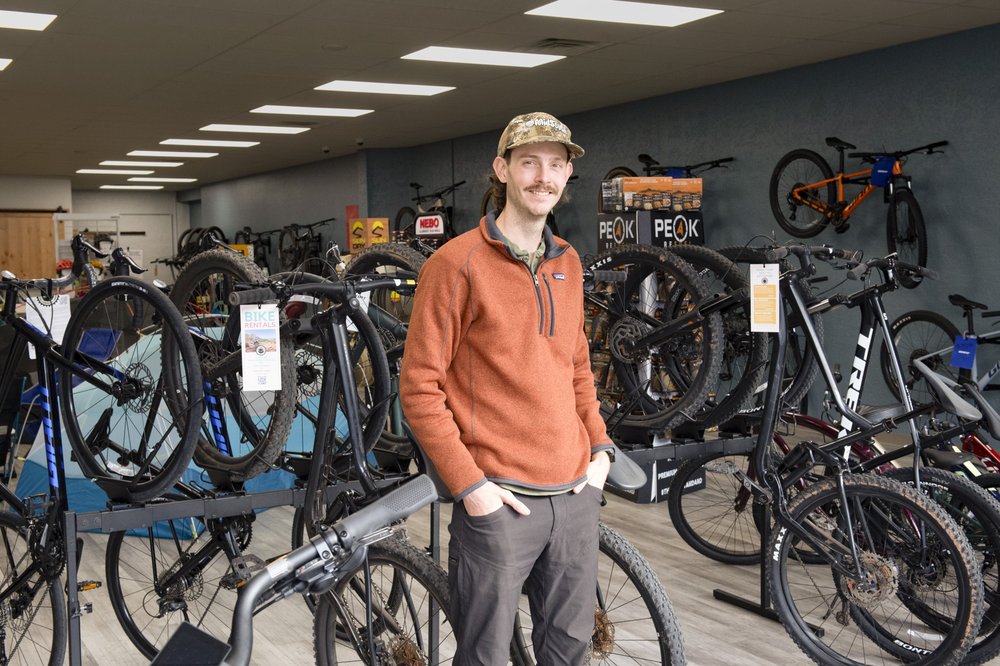
Palo Duro Outfitters and Bike Company store manager Matthew Wright is a native of Canyon and an outdoors advocate.
Chase Fountain
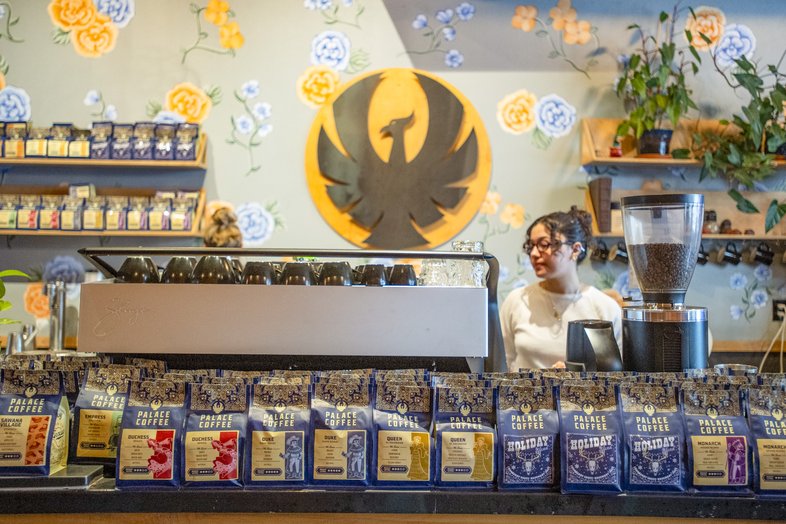
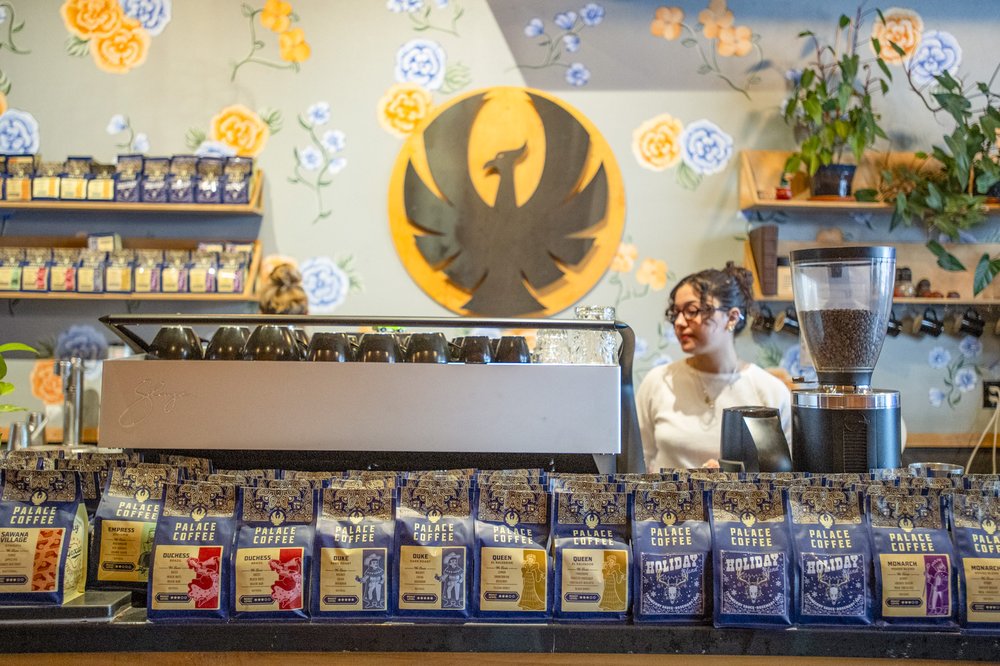
Palace Coffee resides in a historic building formerly the Palace Hotel.
Chase Fountain
Palace Coffee resides in a historic building formerly the Palace Hotel.
Chase Fountain
My first mountain bike ride at Palo Duro was in 1998 on my Specialized Stumpjumper with very little suspension. I rode with my cousin, who was a professional triathlete at the time, for three hours. We drove out of the canyon that afternoon covered in red dirt and completely spent. I was hooked. It was my first taste of wilderness, and it inspired me to dedicate my life to chasing trails across the country. I’ve made a visit to Palo Duro nearly every year since then. I ran the 50K at the Palo Duro Trail Run in 2002 and ran the 25K in 2003. At those races, I met athletes from across the country, and I met fellow Texans from Austin, Dallas-Fort Worth, Houston and parts beyond. For many, it was their first time in the Panhandle, and they were always awestruck by the juxtaposition of the Plains and the massive chasm that hides in clear sight.
Since 1998, I’ve watched Canyon transform from a sleepy college town (West Texas A&M University) to one of the best adventure communities in Texas. Local eateries and hangouts pop up every year. When I’m in town, I always hit Palace Coffee on the square and then make a stop at Palo Duro Outfitters and Bike Company. The shop rents bikes and hosts group rides and hikes. Matthew Wright is the store manager. He’s a Canyon native and seasoned backpacker who has hiked the Appalachian Trail. “Canyon is a good outdoor town because it’s small enough to feel tight-knit,” Wright says. “You have easy access to Palo Duro Canyon from your front door. It’s only a 15-minute drive to great trails, great views and wildlife.” Wright also says Canyon’s small size makes it very bikeable. He walks or bikes to work every day.
Another perk for outdoorsy folk is Canyon’s elevation. At 3,500 feet, it’s just high enough that you acclimate more quickly when you travel to the mountains, and New Mexico and Colorado are close enough for weekend excursions. Canyon also features a rarity in Texas: It’s sandwiched between two swaths of public land. Just southwest of town lies the Buffalo Lake National Wildlife Refuge, 7,664 acres of pristine grassland owned by you.
Biking
Palo Duro's trail system has something for every skill level. Paseo del Rio, Sunflower and Juniper Riverside are great beginner trails. If you’re an expert or just want a challenge, ride (or push) your bike up the Rock Garden Trail and descend Lower Comanche and you are ready for anything Moab or Sedona can throw at you. You can connect Upper Comanche and Lower Comanche for one of the most challenging rides in the canyon and a true backcountry experience. I feel lost, in a good way, when I ride out Little Fox Canyon Trail and do that loop at the end. The one trail I always ride in the park is Rojo Grande. I love the way it skirts along the canyon wall next to the Prairie Dog Town Fork of the Red River. And I like riding past the plaque at the trailhead honoring Red Spicer and all the work he did to bring folks like me to this wonderful place.
No outdoor town would be complete without a proper in-town trail system. The Canyon Trails at Buffalo Hill are five-plus miles of expertly engineered single track. Nestled in the crux of U.S. Highway 87 and Interstate 27, Buffalo Hill is a fun little trail system that rides bigger than the space it occupies.
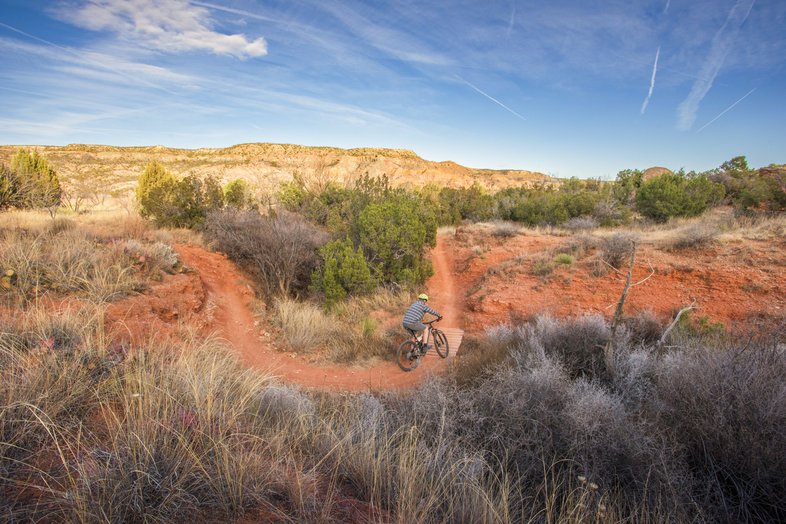
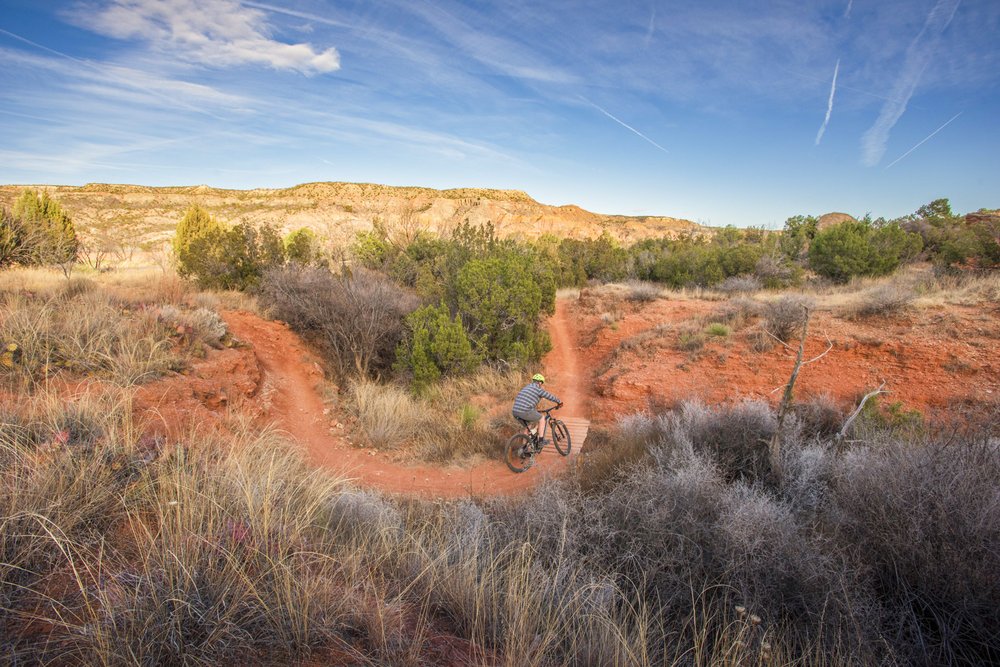
Biking at Palo Duro Canyon.
Chase Fountain
Biking at Palo Duro Canyon.
Chase Fountain
Canyon Endurance Culture
Since Red Spicer's inaugural Palo Duro Ultra-Marathon in 1985, a slew of events have followed where athletes test their stamina in Palo Duro Canyon. The classic Palo Duro Trail Run features three distances: 25K, 50K and 50 miles. The 3 Chaparrals is named in honor of Red Spicer, Bob Givens and Tom Lowry. It is a three- or six-hour race where runners compete to see who can cover the most distance in those times. The Fire Ball is a half-marathon (13.1 miles) or a four-mile run. The Palo Duro Canyon Mountain Bike Marathon features three distances: 49 miles, 35.5 miles and 18 miles. And finally, there is 24 Hours in the Canyon, which has six- and 12-hour bike races in addition to the namesake 24-hour race. In this format, you ride for that allotted time and you are ranked by how much distance you cover. The full 24-hour race has riders climb the road out of the canyon and ride 100 miles before returning to the canyon and then, depending on which class they’re in, finish their remaining time on either trails or the road.
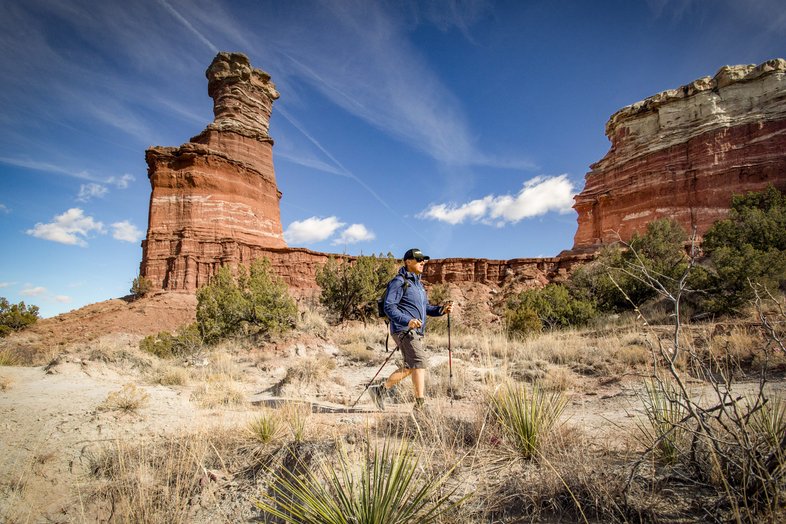
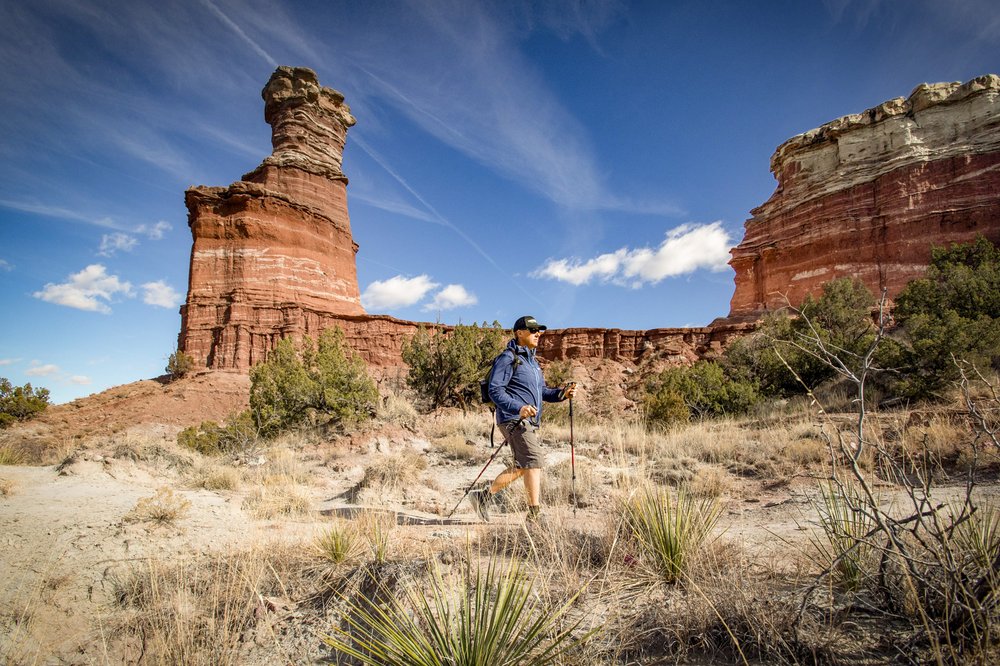
Hiking to the Lighthouse.
Hiking to the Lighthouse.
Hiking
More than 30 miles of trail wind through Palo Duro Canyon State Park. Here are two of my favorites. Earlier this year my wife and I were invited by some good friends to do Palo Duro Canyon’s 11-mile rim-to-rim route. It utilizes the CCC Trail, Kiowa Trail, Upper Comanche Trail, Lower Comanche Trail and Rock Garden Trail. I had never done the CCC Trail nor had I stood on the canyon’s east rim. We rented a house outside of Canyon for our base camp and started our day watching the sun rise over the prairie. We drove to the canyon, did some car shuttling and hit the trail. Dropping off the lip of the CCC Trail felt like the beginning a grand expedition. At the end of the CCC Trail we walked through the parking lot of the Pioneer Amphitheater, picked up the Kiowa Trail and then proceeded along the trails I knew well. The final push was up to the east rim of the canyon to a place I’d never been. The rim-to-rim hike was like learning new things about an old friend. We returned to our rental house just west of Canyon and watched the sun set over the unobscured plain.
This winter, I finally made it to Palo Duro’s most iconic rock formation. In all my decades of venturing into Palo Duro Canyon, I had never made it to the Lighthouse. This winter I finally stood in the shadow of the grand hoodoo; it was bigger than I expected. I scrambled up to the sandstone platform that connects it to the sheer cliff face and stood on nature’s stage, and it hit me. This elevated red spire embodied all that I love about Palo Duro. It was perfect and imperfect at the same time. It reminded me of places I’ve been and inspired me to see the places I yearn to go.
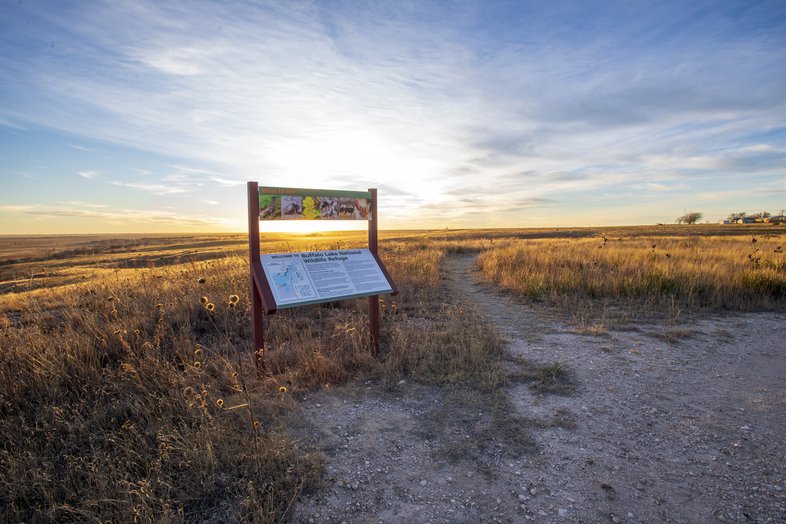
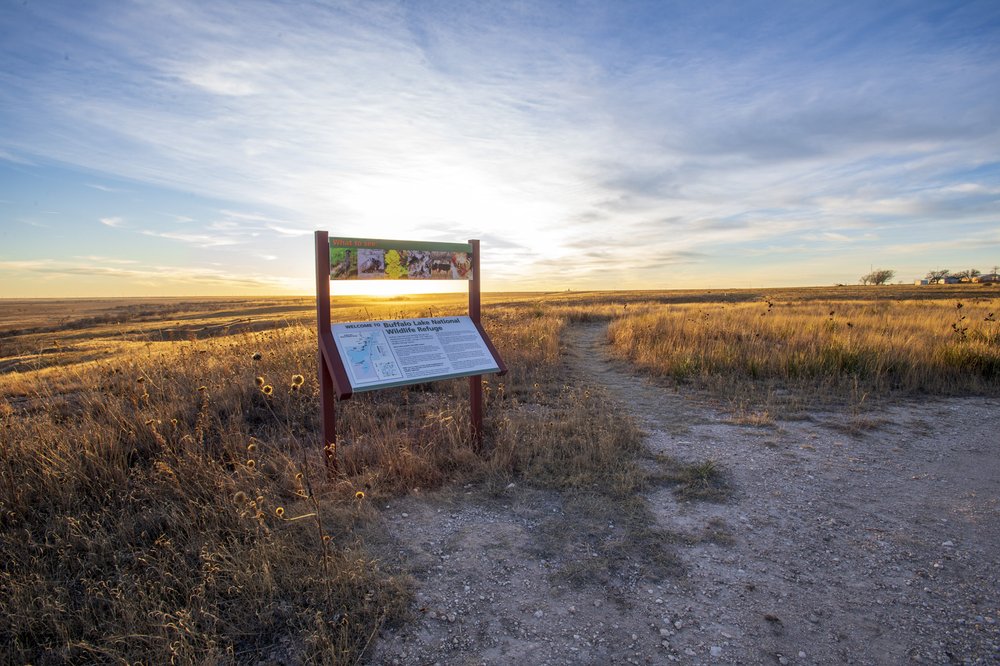
Welcome sign for Buffalo Lake National Wildlife Refuge.
Chase Fountain
Welcome sign for Buffalo Lake National Wildlife Refuge.
Chase Fountain
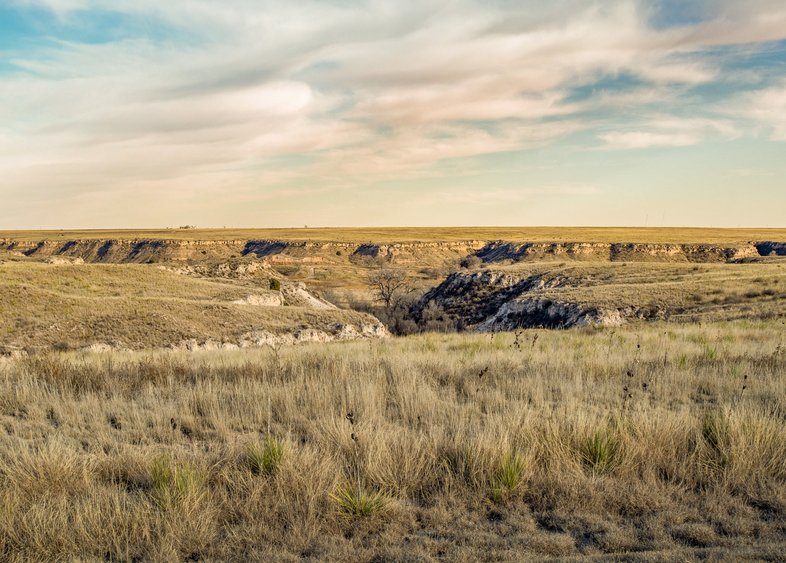
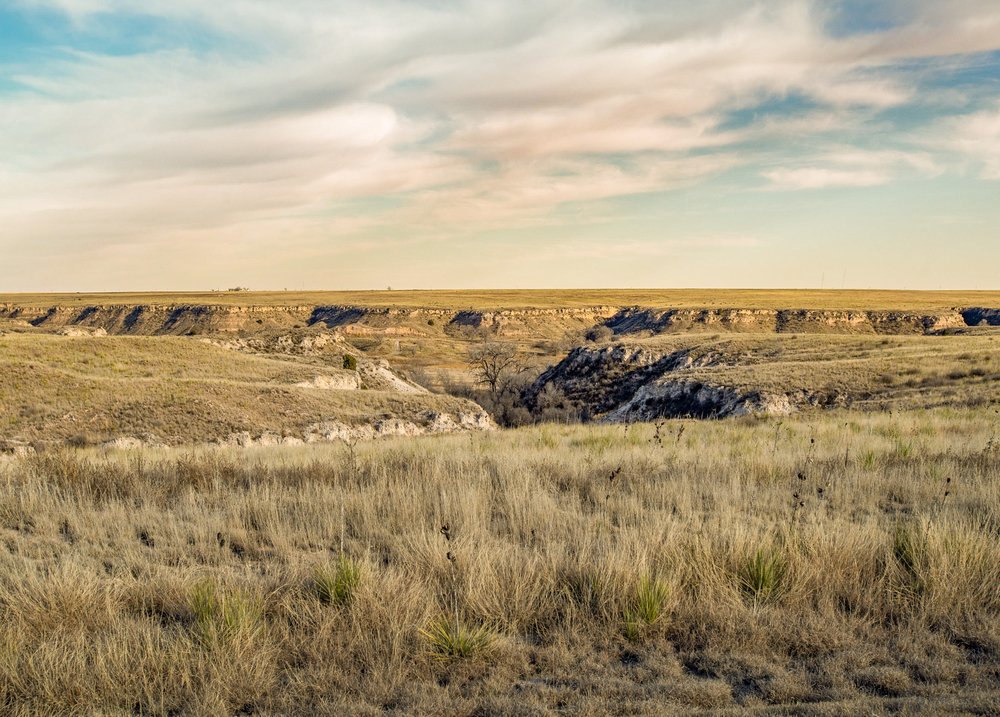
Buffalo Lake National Wildlife Refuge
Chase Fountain
Buffalo Lake National Wildlife Refuge
Chase Fountain
Wildlife Viewing
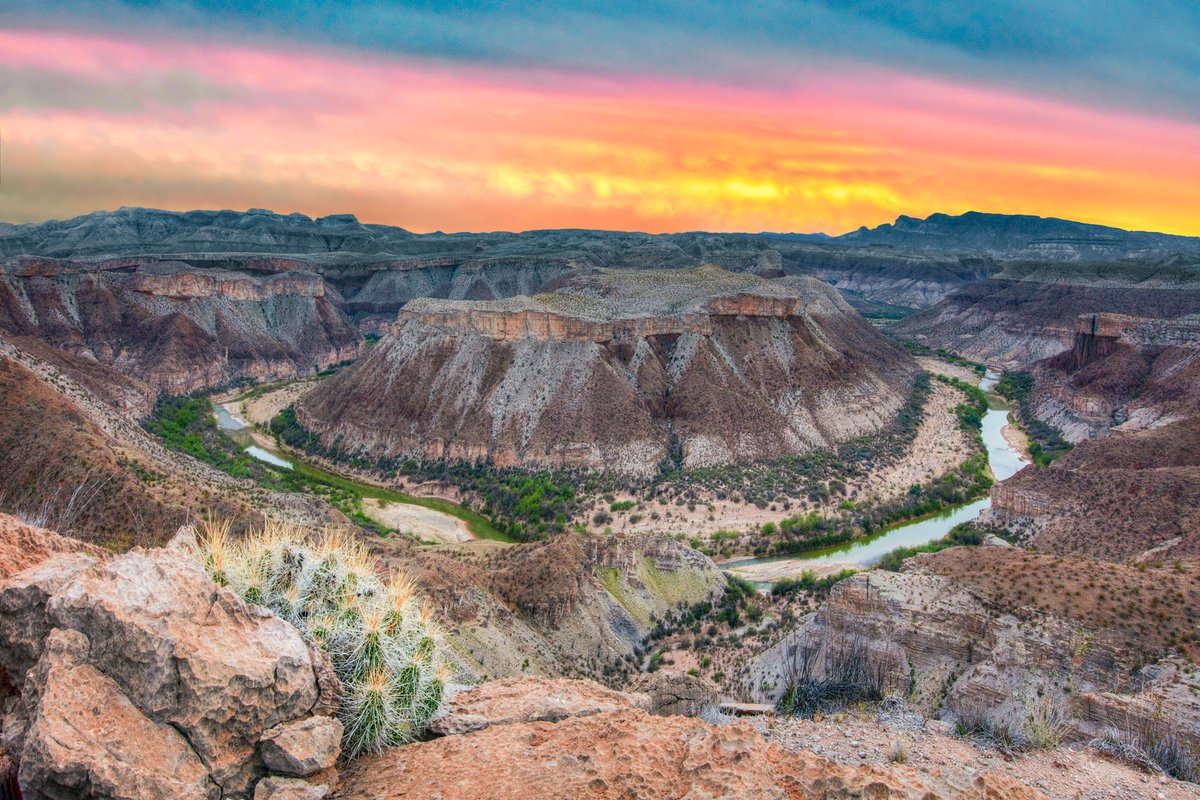
Palo Duro Canyon cuts nearly 120 miles through the Texas Panhandle, dropping 800 feet from the surrounding plains into a vivid landscape of red and orange rock formations. This dramatic terrain creates a diversity of habitats — canyon floors, streamside corridors along the river, shaded juniper slopes and exposed mesa tops — each supporting its own cast of wildlife. The canyon shelters mule deer, wild turkeys and the rare Texas horned lizard among its rust-colored walls. Coyotes can be heard yipping at dawn and dusk, and the canyon’s rocky ledges provide habitat for golden eagles, roadrunners and canyon wrens.
Southwest of town, Buffalo Lake was formed in 1938 by the construction of Umbarger Dam. Longtime Canyon resident and Master Naturalist Bernice Blasingame remembers people swimming and water skiing on the lake in the 1950s. In 1958, the 7,664 acres were transferred to the Department of Interior, and Buffalo Lake National Wildlife Refuge was established in 1959. The lake is now dry, but the surrounding grasslands and small canyon cut by Tierra Blanca Creek are a haven for wildlife. Mule deer and white-tailed deer, badgers, ornate box turtles, coyotes, raccoons, prairie rattlesnakes and horned lizards are just a few of the critters roaming the refuge. Show up in December and you might catch a bald eagle. “You don’t realize how big they are until you look through a pair of binoculars,” Blasingame exclaims.
“We’ve had wildflower workshops out there, and when the flowers are blooming, it’s gorgeous,” Blasingame says. “You can’t imagine the different plants that are out there.” The untouched grassland of big bluestem, little bluestem, Indiangrass and sideoats gramma is a sight to behold.
I paid $2 to get into the refuge and $2 to camp. It was just me and an RV at the other end of the campground. The open plains are a great place to catch your breath and commune with nature. I fell asleep in complete solitude to the sound of coyotes yipping across the lakebed.
Buffalo Lake NWR has a birding blind and features over 5 miles of nature trails. There is no electricity, water or sewer connection at the campgrounds.
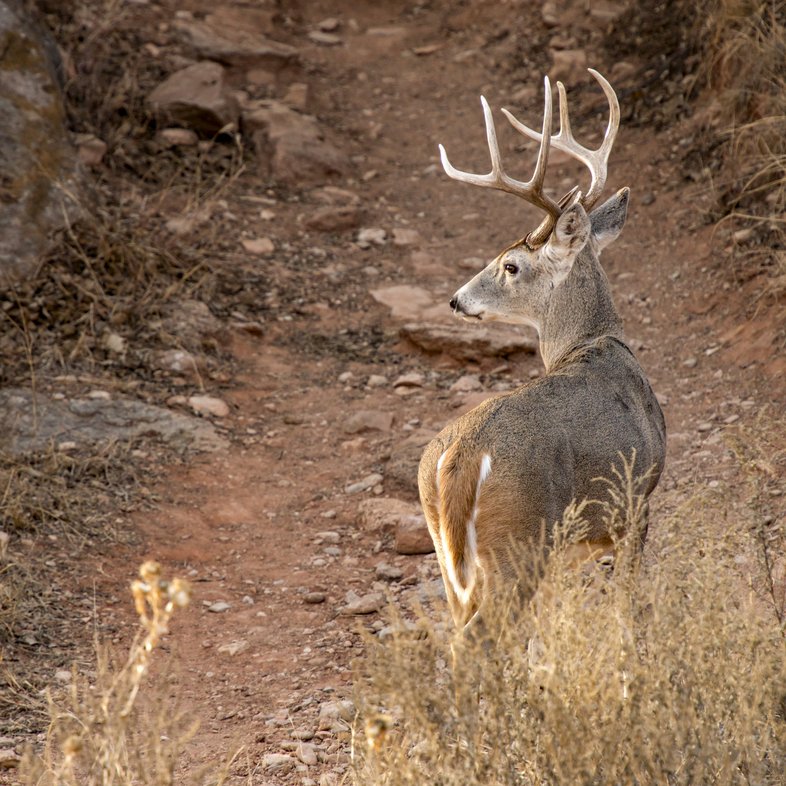
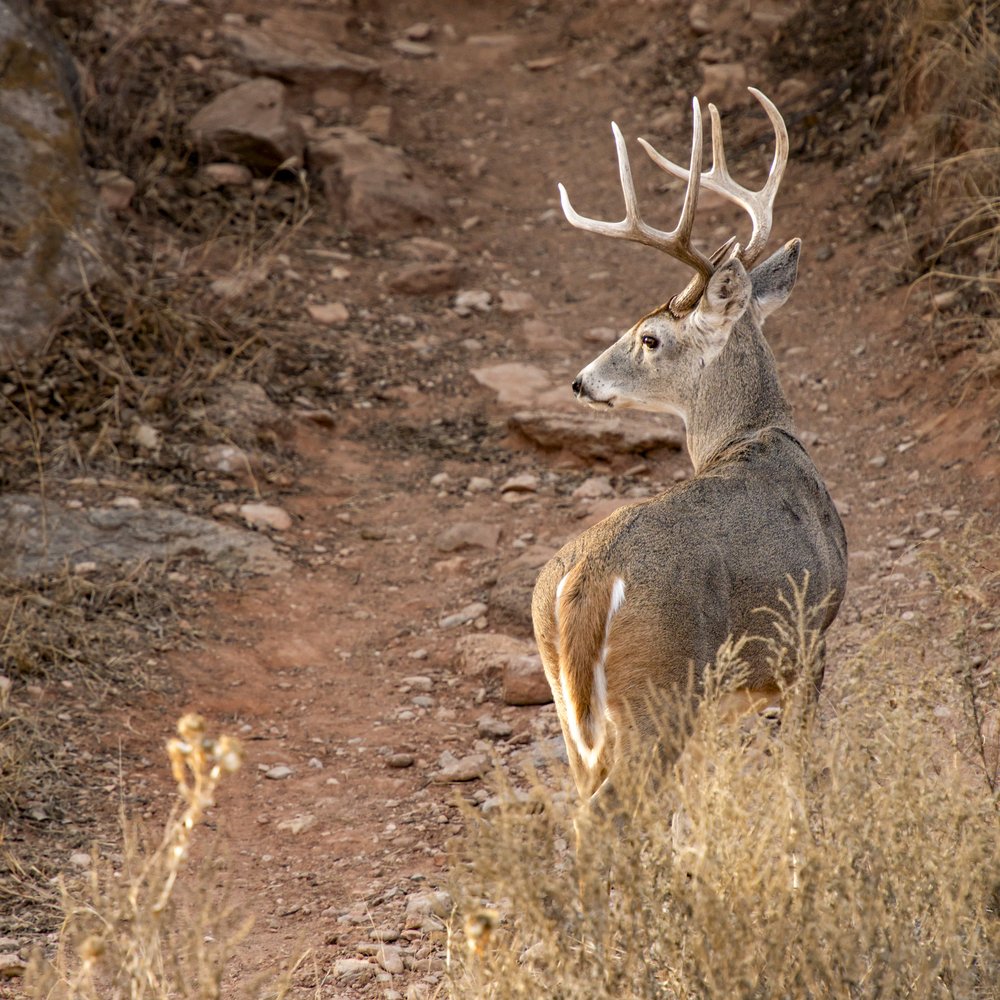
White-tailed deer
Chase Fountain
White-tailed deer
Chase Fountain