Val Verde County (“green valley” in Spanish) is an oasis in Texas’ dry desert borderlands. Located on the very western edge of the Edwards Aquifer, there is no shortage of water here. “The whole area is very, very special, because of the convergence of these three magical rivers,” says Aimee Spana, director of the White Shaman Preserve. “You’ve got the Rio Grande, you’ve got the Pecos and the Devils River, with them all converging there at Lake Amistad.”
It’s this abundance of water, in part, that has drawn people to the Del Rio area for millennia. When I visited in March, I stopped by Seminole Canyon State Park & Historic Site for a tour of the amazing rock imagery at Fate Bell Shelter. Standing under the huge red and yellow painted figures on the overhanging rock, our tour guide Tanya Petruney told us that the indigenous people who created these murals lived in the area for more than 4,000 years (from around 3700 B.C.E. until 900 C.E.). That’s the span of around 180 generations.
The whole experience made me feel very small — a tiny dot on a timeline stretching endlessly in either direction. That birds-eye perspective is something I seek in the outdoors, and I definitely found it in Del Rio. As I explored the wild lands around Val Verde County, I was, at various points, a tiny dot on a paddleboard floating above the cobalt depths of Lake Amistad; a tiny dot taking in the unfamiliar sounds of bird species I’d never heard before; and a tiny dot at a campsite at Devils River State Natural Area, where it felt like my sister and I were the only people for miles and miles.
Of course, a key aspect of any outdoor town is what you can get up to in town after a long day of hiking or biking or paddling, and Del Rio did not disappoint. The town’s historic neighborhood of South Del Rio offers plenty in the way of in-town entertainment, from the state’s oldest winery, Val Verde Winery, established in 1883, to the upscale new restaurant Ocho Dos Dos, to the Gin House Jazz Club, a local wine bar and restaurant that occupies a historic cotton gin building and features live music. Just across the Rio Grande is Del Rio's Mexican sister city, Ciudad Acuña. The two towns have fostered a culture of friendship throughout the years.
“Del Rio has a long history of being a fairly rural area; the outdoors is always our neighbor,” says Karen Gleason, longtime Del Rio resident and reporter for Del Rio news outlet the 830Times. “We have a long hunting tradition; we have lots of fishermen that come here because of the lake; and it’s really just an area that lends itself to being outdoors because we have so much water here, which is really unusual because it’s right on the edge of the Chihuahuan Desert.”
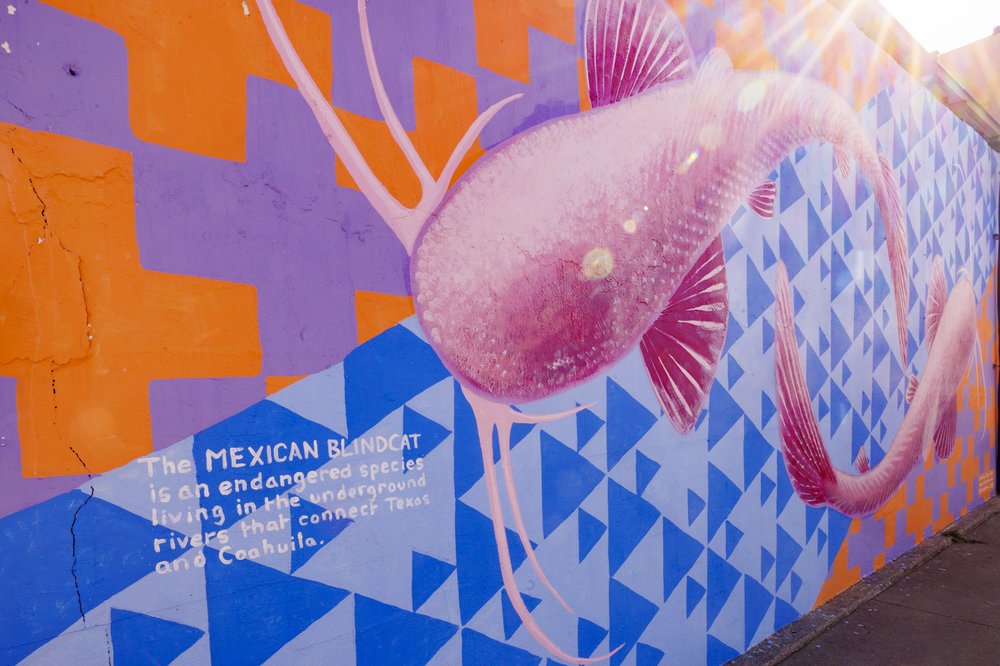
That outdoor spirit and love of wild places shines through in town, where brilliantly colored murals depict native wildflowers, an endangered catfish and several local birds. It’s kind of beautiful that after all these thousands of years and a million changes big and small, the people of this abundant green valley are still sharing their culture and values by painting them on walls.
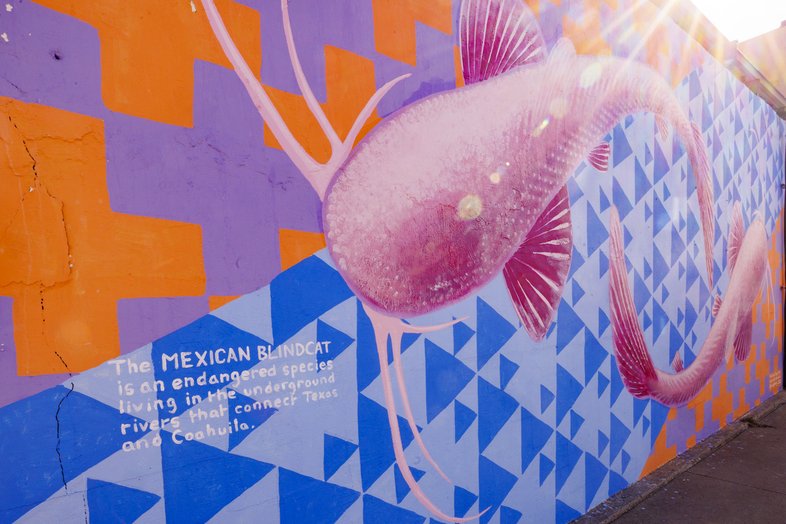
Catfish mural in Del Rio.
Sonja Sommerfeld
Catfish mural in Del Rio.
Sonja Sommerfeld
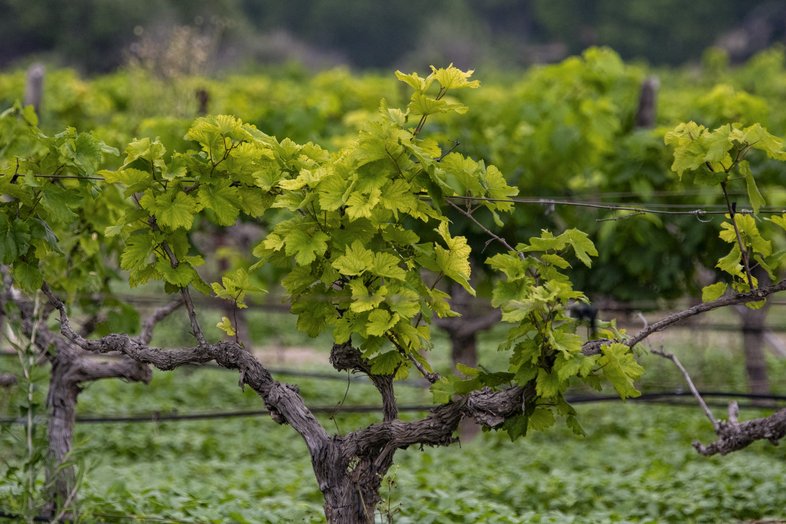
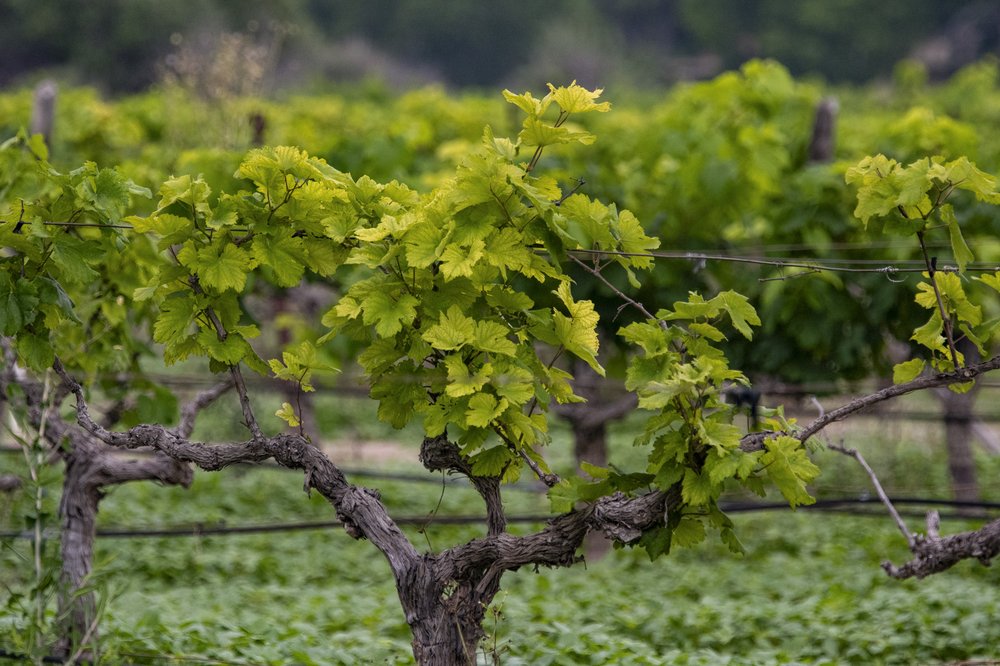
Del Rio is home to the state's oldest winery, Val Verde Winery.
Chase Fountain
Del Rio is home to the state's oldest winery, Val Verde Winery.
Chase Fountain
Get on the Water
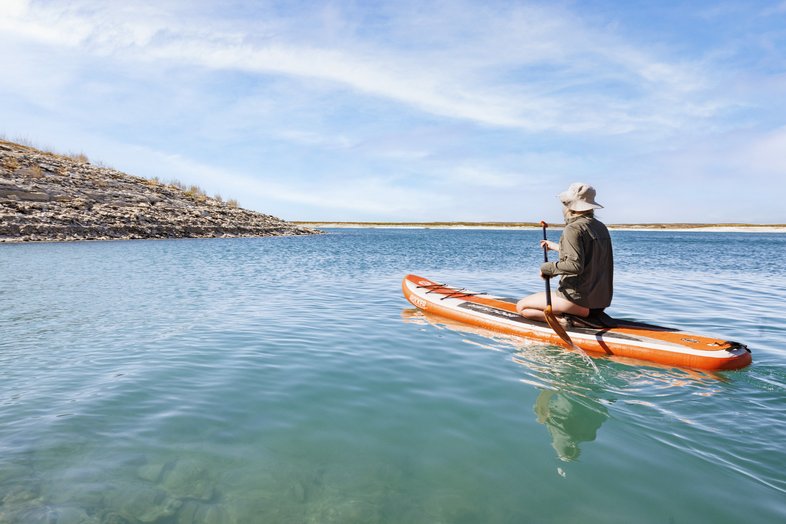
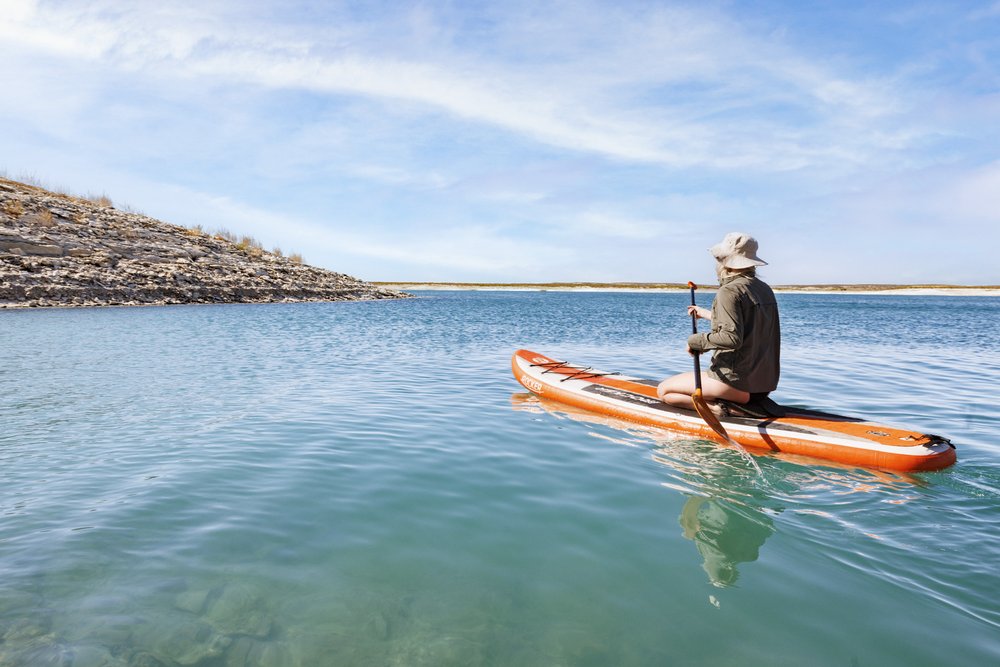
Paddleboarding Lake Amistad.
Sonja Sommerfeld
Paddleboarding Lake Amistad.
Sonja Sommerfeld
Swimming, paddling and boating opportunities abound in the Del Rio area, from the joyful sparkling blue of San Felipe Creek to the turquoise of the Devils River to the deep cobalt depths of Lake Amistad.
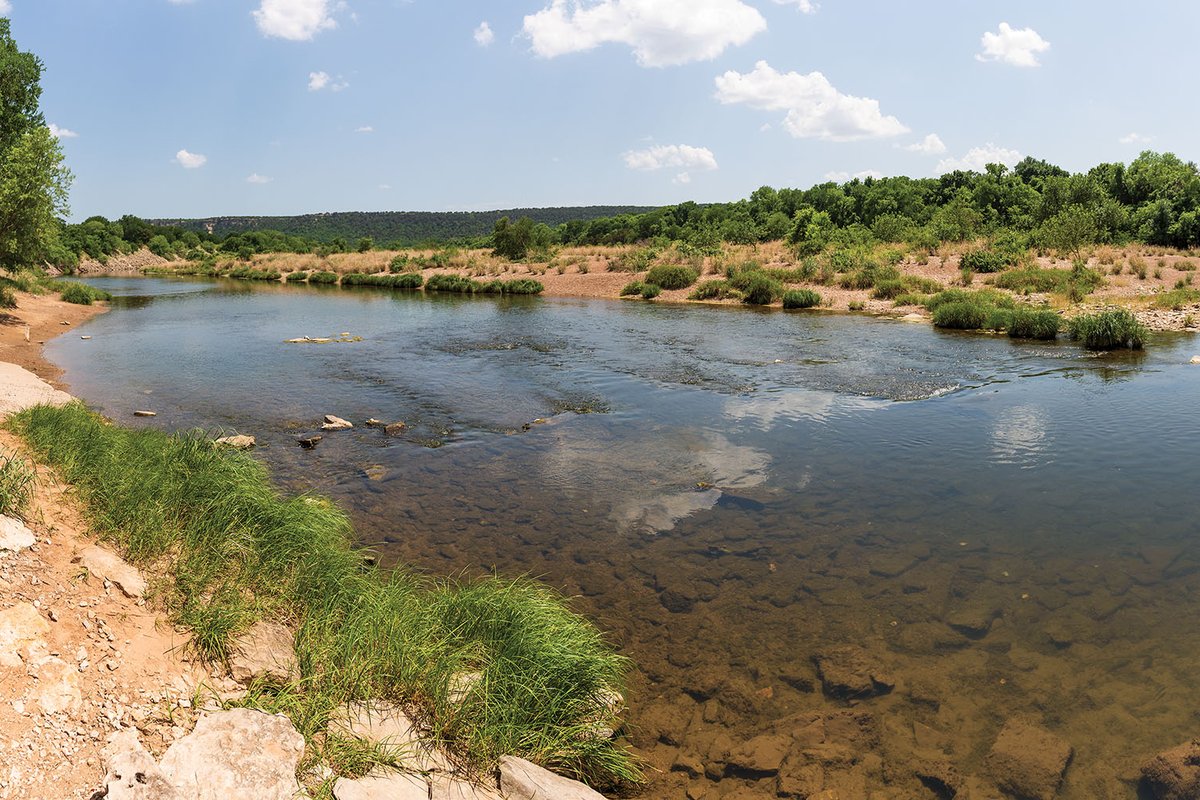
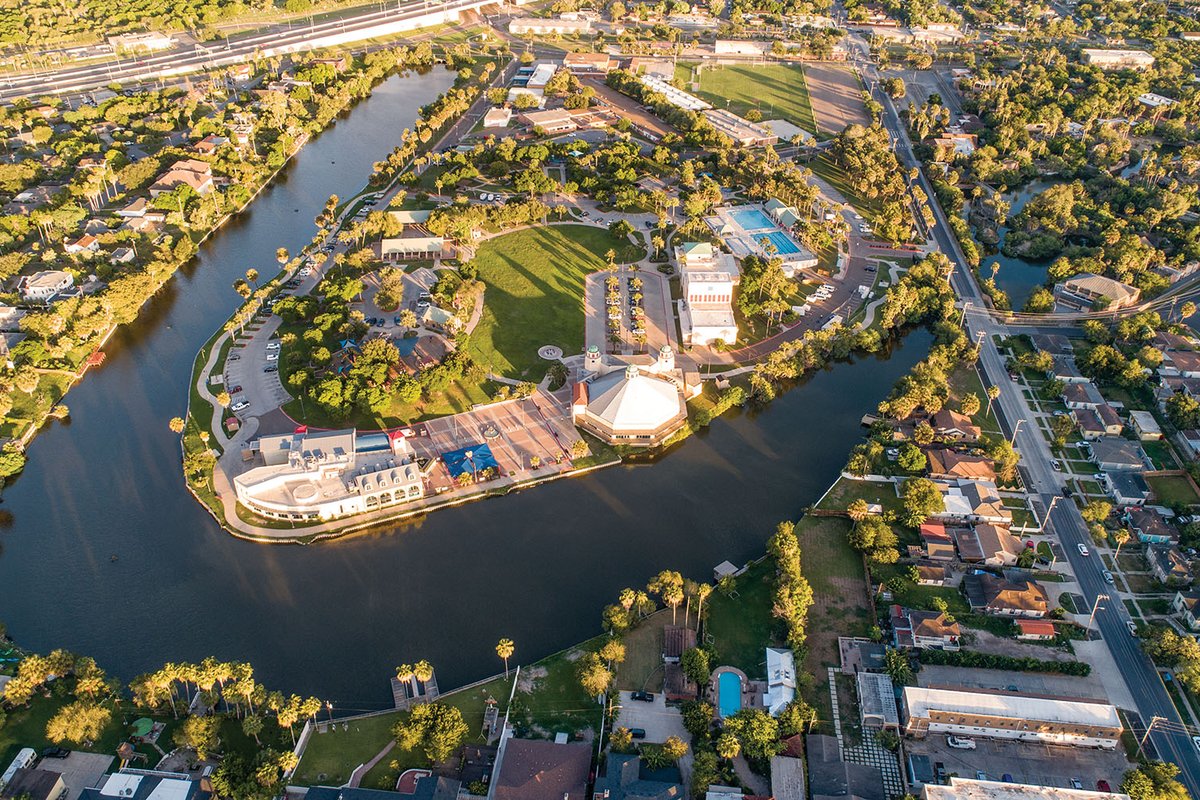
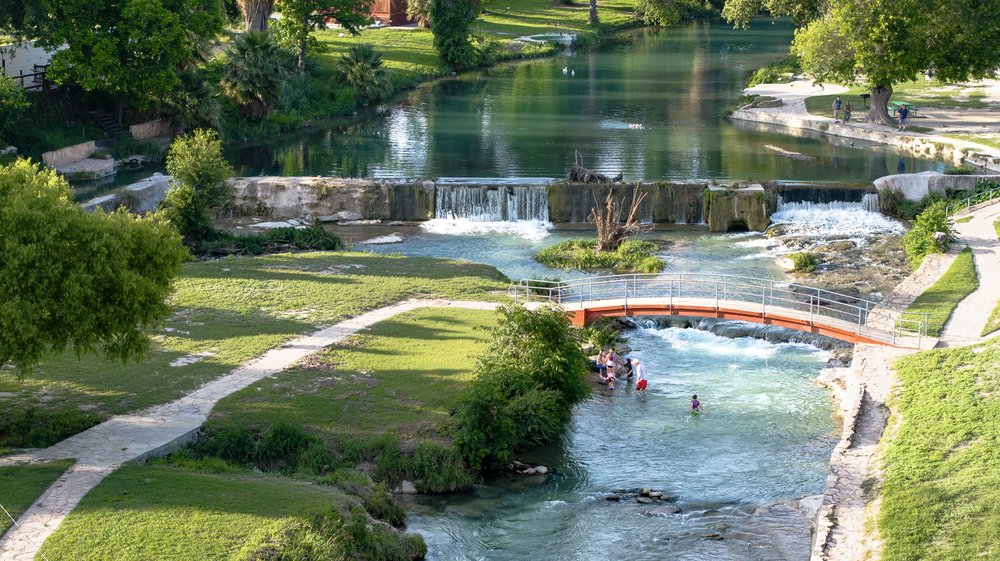
You don’t even have to leave town to immerse yourself in clear, blue spring water. San Felipe Springs feeds a clear blue ribbon of spring water that flows through the heart of Del Rio. At several public parks along the creek, turtles sun themselves and cormorants dry their feathers in the hot air. Del Rio residents can often be found swimming and picnicking along its grassy banks.
About an hour north of Del Rio lies one of Texas’ newest public properties: the Dan Allen Hughes Unit of Devils River State Natural Area. The Devils Back Takeout, a wide, turquoise section of the river beneath a cliffside eagle’s nest, is a beautiful place to swim or paddle around.
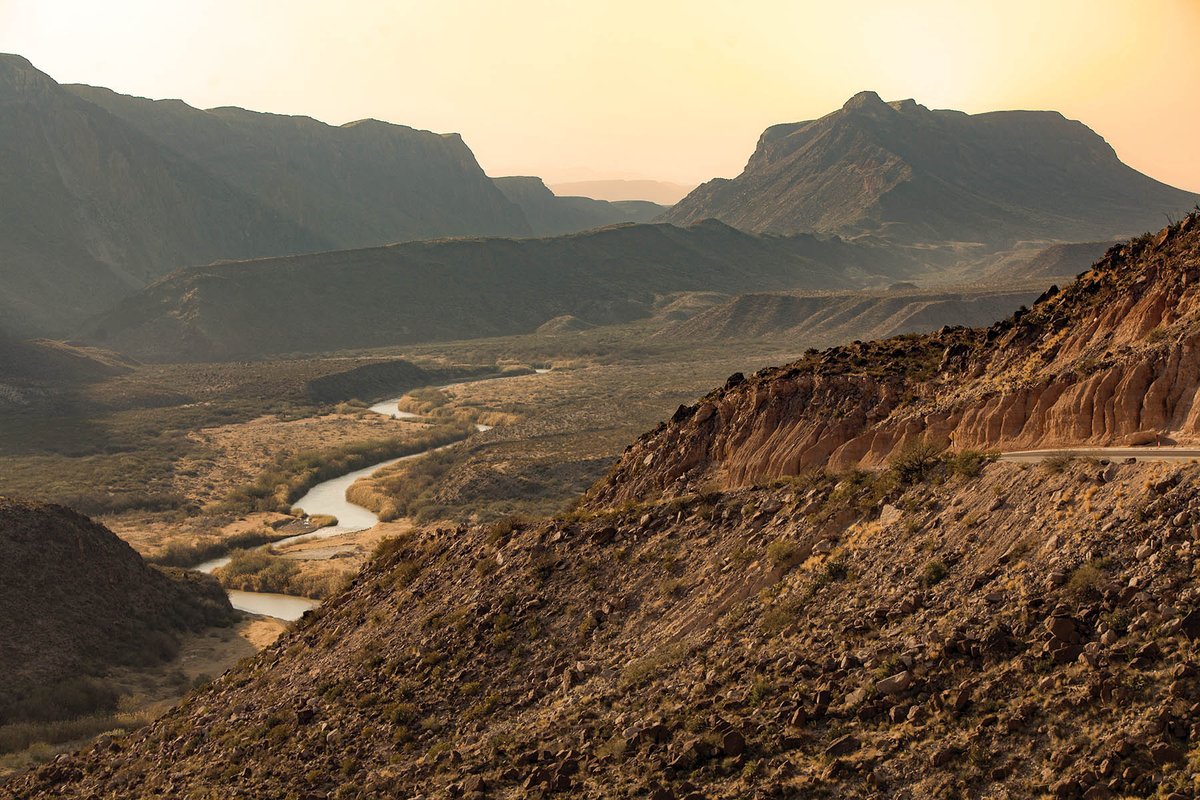
The Pecos River flows a total of 926 miles from the Sangre De Cristo Mountains in New Mexico to its confluence with the Rio Grande. The Pecos was important in early Spanish exploration of the area, and has remained a legendary river in Texas history.
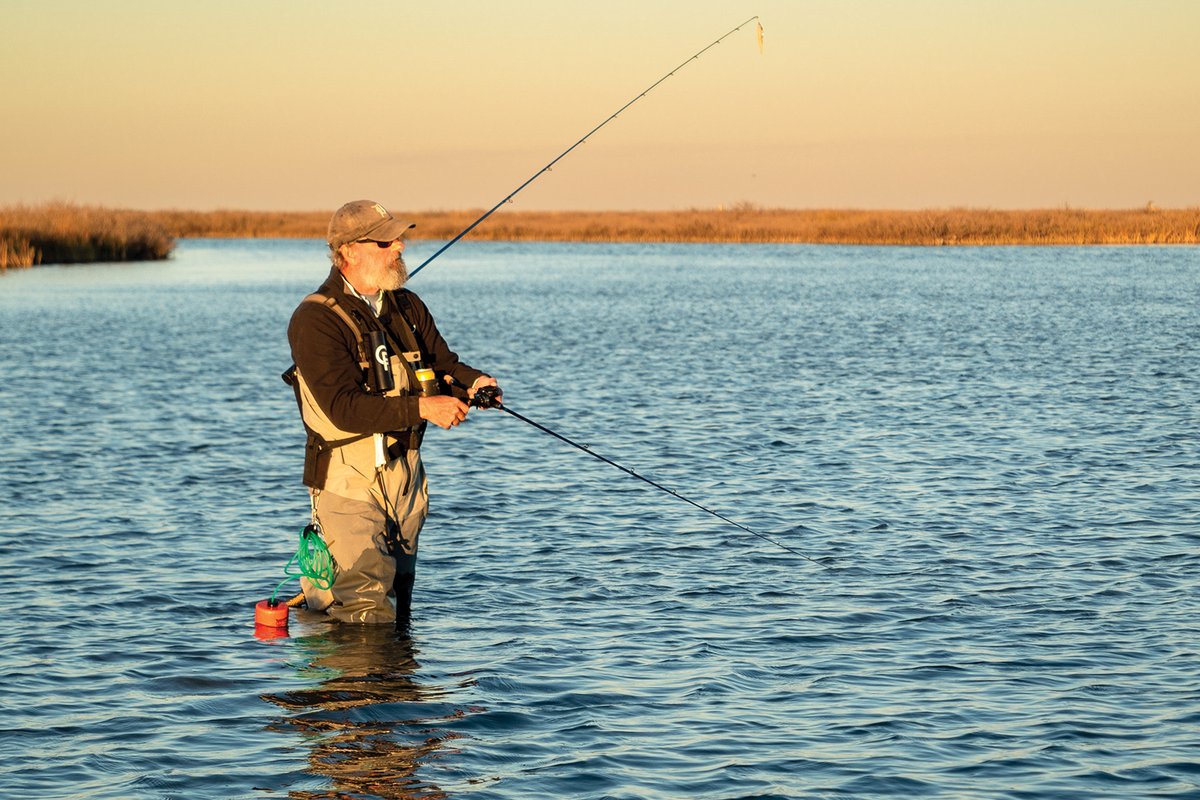
The Devils, Pecos and Rio Grande rivers converge at Lake Amistad, a reservoir created in 1960 as a flood control measure for the Rio Grande after a 1954 flood devastated the area. Now, Amistad is a popular destination for fishing, swimming, boating and paddling. It’s particularly known for its excellent largemouth bass fishing.
Just 30 minutes away from Del Rio is Fort Clark Springs, a former military fort that operated for almost 100 years, from 1852 to shortly after World War II. The site is now a mixed-use community, where private residences rub shoulders with a sparkling public pool.
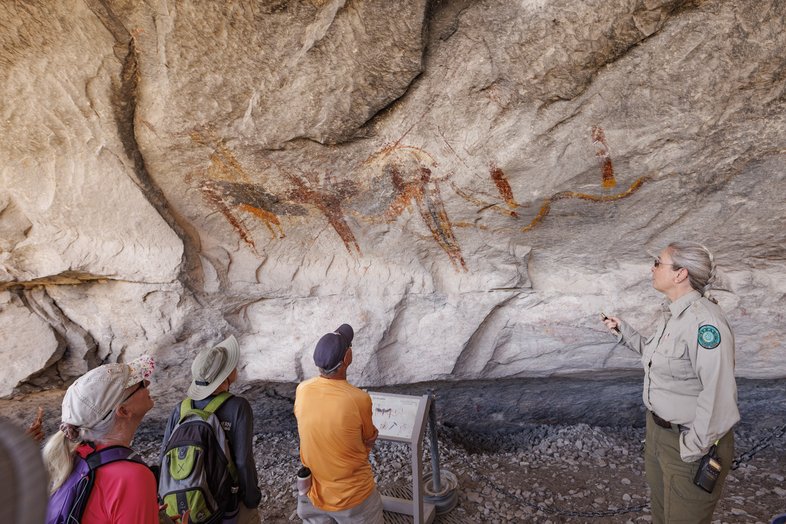
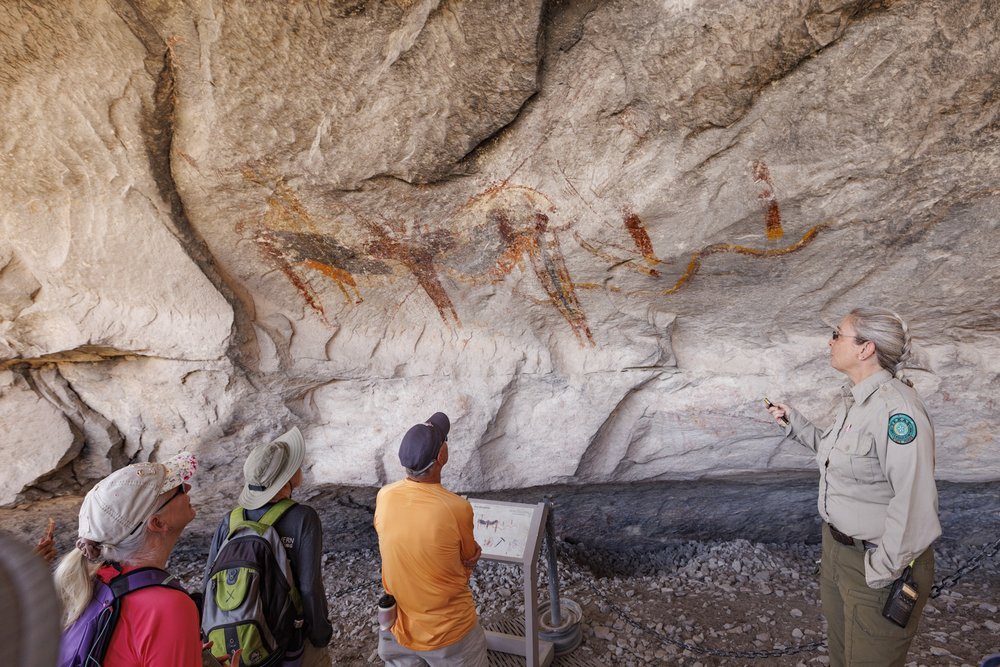
Pictographs at Seminole Canyon State Park.
Pictographs at Seminole Canyon State Park.
See Some Rock Art
In 2021, the Lower Pecos Canyonlands region was designated as a National Historic Landmark for its stunning and unique pictographs, found in the area’s deep canyons. The paintings were made over a long span of time starting around 5,000 years ago by nomadic hunter-gatherers. The Pecos River style of rock imagery is striking, painted in bold shades of red, yellow and black, and features human-like figures (sometimes with antlers or masks), felines, deer and serpents, among other motifs.
“Within about a 90-mile radius, there are almost 400 documented rock art sites that are unique to the Lower Pecos,” says Spana of the White Shaman Preserve, a pictograph site located 45 minutes northwest of Del Rio managed by San Antonio's Witte Museum. “So while there’s rock art all throughout the world, what you find in the Del Rio area is extremely unique and only found in the Lower Pecos Canyonlands.”
To see the Pecos River rock imagery, start at Seminole Canyon State Park. The park offers tours to the stunning Fate Bell Shelter, accessible via a short but steep hike from the visitors center. Look up at the pictographs, of course, but don’t forget to look down at the ground, which is covered by drifts several feet deep of ash and plant material, left over from thousands of years of food preparation in this shelter. Another iconic site in the park is Panther Cave, which is visible at the end of the 4.9-mile Canyon Rim Trail.
The White Shaman, located right next to Seminole Canyon, is an excellent pictograph destination. Tucked high on a cliffside over the Pecos, the White Shaman mural’s enigmatic figures have intrigued researchers and visitors alike for decades. Tours are available through the Witte Museum website and take place every Saturday, with the exception of the summer months when temperatures soar.
The Witte Museum also offers periodic tours to several local sites on private land, including Halo Shelter near the Devils River, Meyer’s Spring Ranch in Dryden and Bonfire Shelter in Langtry. Spana recommends booking the private ranch tours far ahead of time; they take place only twice a year and usually sell out.
Watch the Birds
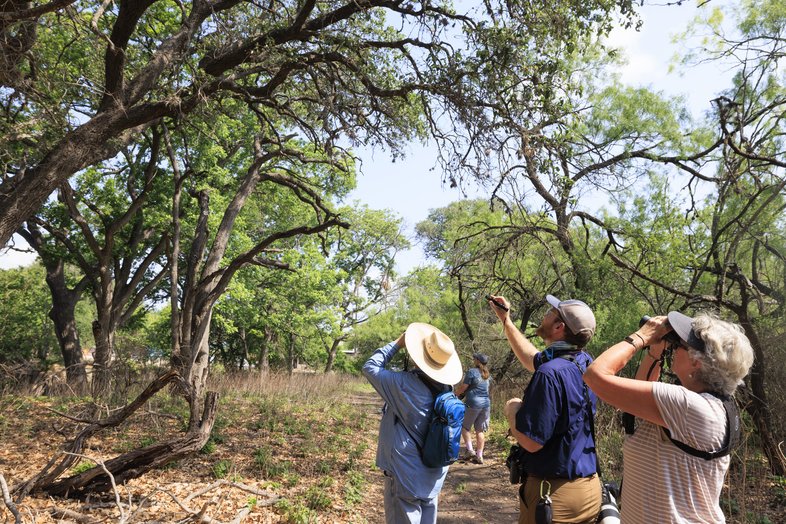
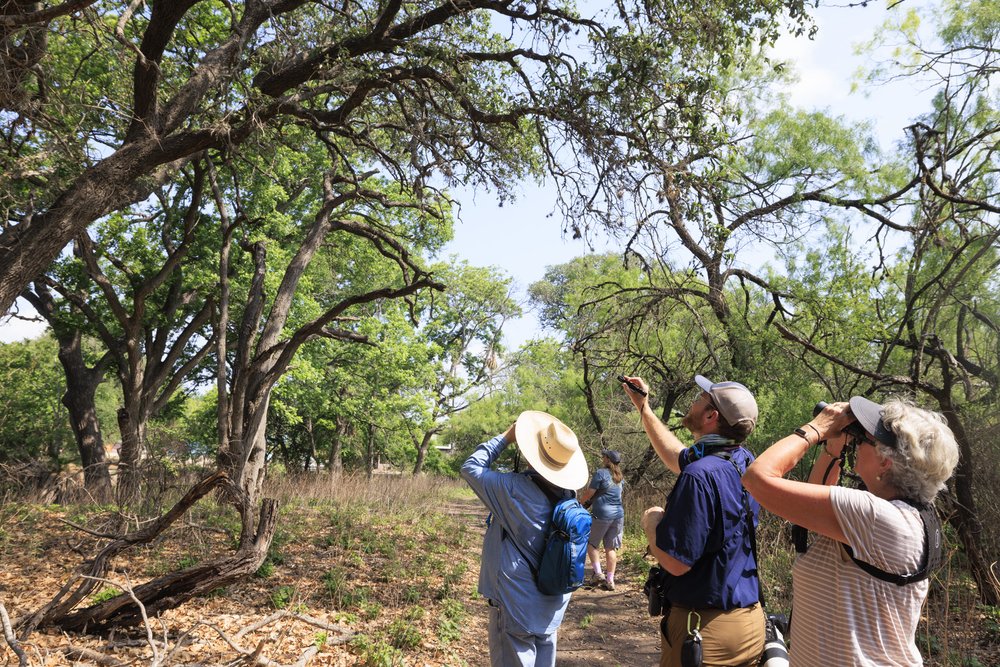
Sonja Sommerfeld
Sonja Sommerfeld
Like many border towns in Texas, Del Rio is a great spot to see some mostly tropical species at the very northern tip of their range. Where three rivers converge at Lake Amistad, so do three ecological zones: the Chihuahuan Desert, the South Texas Shrublands and the Edwards Plateau.
“Every once in a while we’ll get some species from Mexico — like we had the rufous-backed robin for about a month in December a couple years ago,” says Karen Gleason, the 830Times reporter, who has been birding for more than 30 years. “People traveled from all over the country to see it, just to add it to their United States count. You never know what you're going to see here, and that’s really the beauty of it.”
The area is home to all three species of North American kingfishers — the ringed kingfisher, the belted kingfisher and the green kingfisher. One relatively new resident bird is the great kiskadee, which has made its way to Del Rio in the last few decades. “We’ve also very recently gotten green jays — a breeding population of green jays” says Gleason. “They’re making their way slowly along the Rio Grande riparian corridor, and they’ve finally settled here.”
There are several good birding spots in the area, including the trails at Lake Amistad and San Felipe Creek. “Del Rio is very special because its best birding areas are public areas, where anybody can visit for free,” says Gleason. “Along San Felipe Creek, any of the city-owned properties that go from Highway 90 for about five miles downstream, that’s an excellent, excellent area to see birds.”
For a more curated birding experience, Del Rio hosts the Birding the Border festival, where local landowners open their private ranches to bird-watchers. Attendees can embark on numerous tours led by expert birders to properties that the public does not usually get to see.
Or drive out to Fort Clark Springs, where more than 250 bird species have been identified. Tell the clerk at the entrance you’re there to bird. A network of hike and bike trails skirts Las Moras Creek and ventures back into the woods; as you walk, keep an eye out for the tropical parula, zone-tailed hawk, great kiskadee, green jay and green kingfisher.