There was a time in the mid-1800s when Jefferson was the sixth most populous city in Texas, bustling with steamboats moving goods between New Orleans and East Texas via the Mississippi River and Big Cypress Bayou. The brick streets and antebellum architecture from that time are reason enough to visit the former inland port city. But the winding bayou fronting Jefferson’s historic district suggests another reason to visit the town of 2,000 — it’s the perfect staging ground for enjoying a variety of outdoor activities in the surrounding lowland swamps and upland pine forests of Northeast Texas.
Caddo Lake and its eponymous state park, wildlife management area and national wildlife refuge offer countless opportunities to recreate in nature, while the possibilities continue at Lake O’ the Pines to the west of Jefferson. My family parked our RV at Caddo Lake State Park and spent our days blissfully paddling, hiking, birding and exploring backroads. Fishing, hunting, boating and swamp tours provide additional choices.
In its heyday, Jefferson’s shores were lined with wharves and steamboats laden with wares. After a massive logjam on the Red River was removed, water levels fell in the bayou and Caddo Lake, effectively ending the town’s riverport boom. Railways followed, and visitors can admire the 1897 Howe Truss Bridge over the bayou. Nearby, don’t miss the 6-foot-tall Bigfoot statue; Jefferson is the officially recognized Bigfoot Capital of Texas.
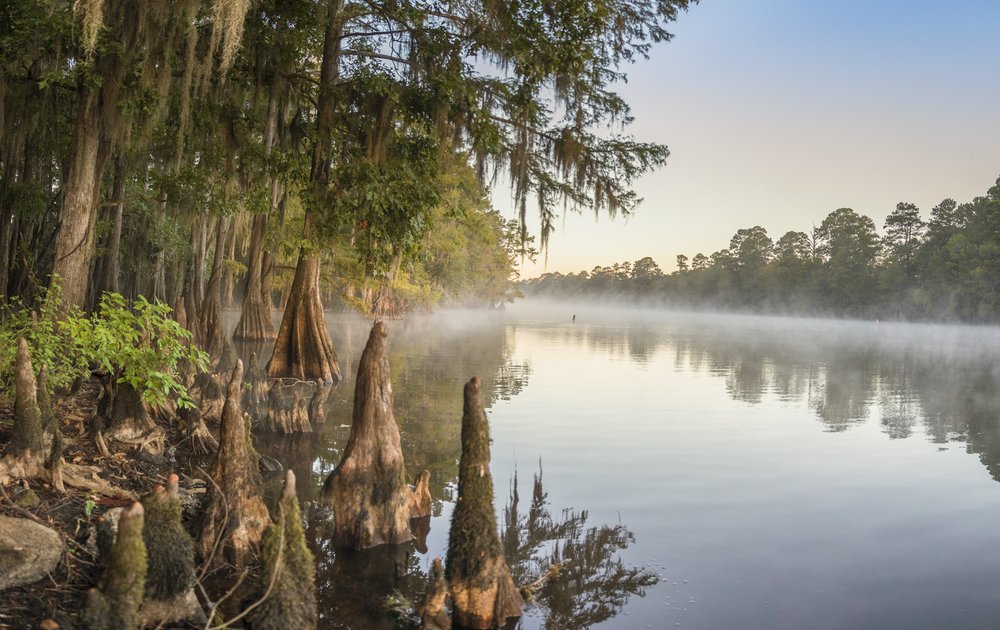
To the east of Jefferson, Caddo Lake and its surrounding watershed support the largest bald cypress swamp in the world, covering 25,000 to 27,000 acres. These wetlands are designated as an area of international importance under the Ramsar Convention on Wetlands, much of it protected by the state and federal public lands enjoyed by visitors.
On the edge of this flooded forest lies the town of Uncertain (population 85). The charming lakeshore community offers lodging and down-home restaurants, as well as a bevy of outfitters providing swamp tours and watercraft rentals. Three Texas Parks and Wildlife Department paddling trails can be accessed in Uncertain. Local guide Chaz Warren describes the seasonal beauty of Caddo’s watery world: “millions of beautiful white [water lily] flowers and gigantic American lotus, three feet wide with gigantic two-fist-sized flowers, [bloom] all over the lake” on summer mornings. During the first two weeks of November, the cypress trees “turn fire red and orange, and photographers flock here from all over the world for that brief little window,” he says.
With so many natural wonders and seemingly endless outdoor recreational opportunities, Jefferson and Uncertain rank undeniably as top Texas outdoor towns.
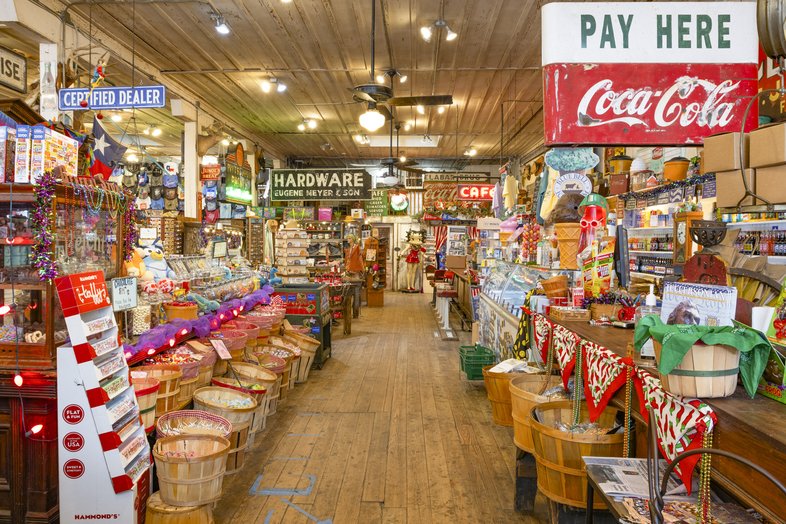
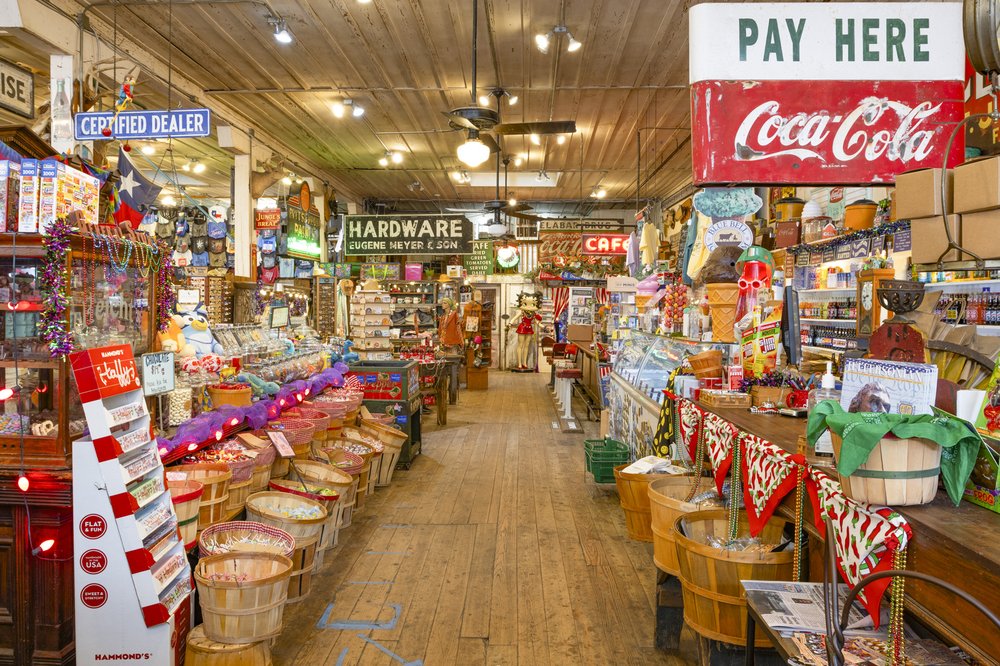
Jefferson General Store has a fun retro feel.
Robert Gary
Jefferson General Store has a fun retro feel.
Robert Gary
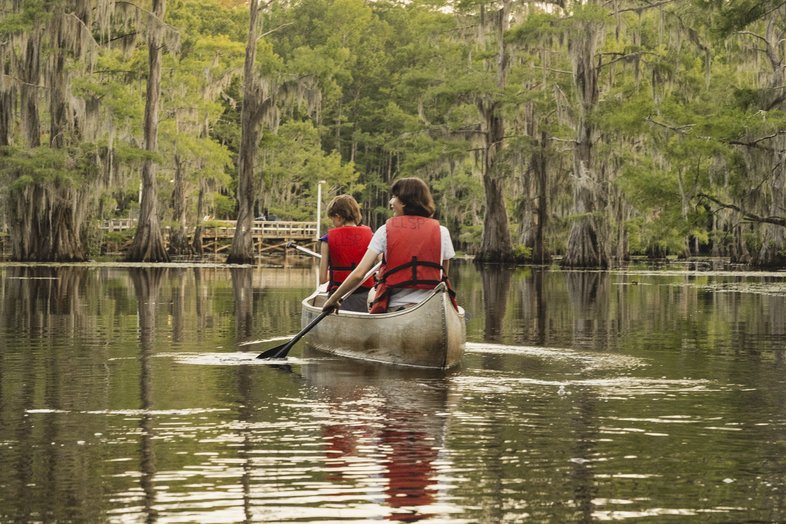
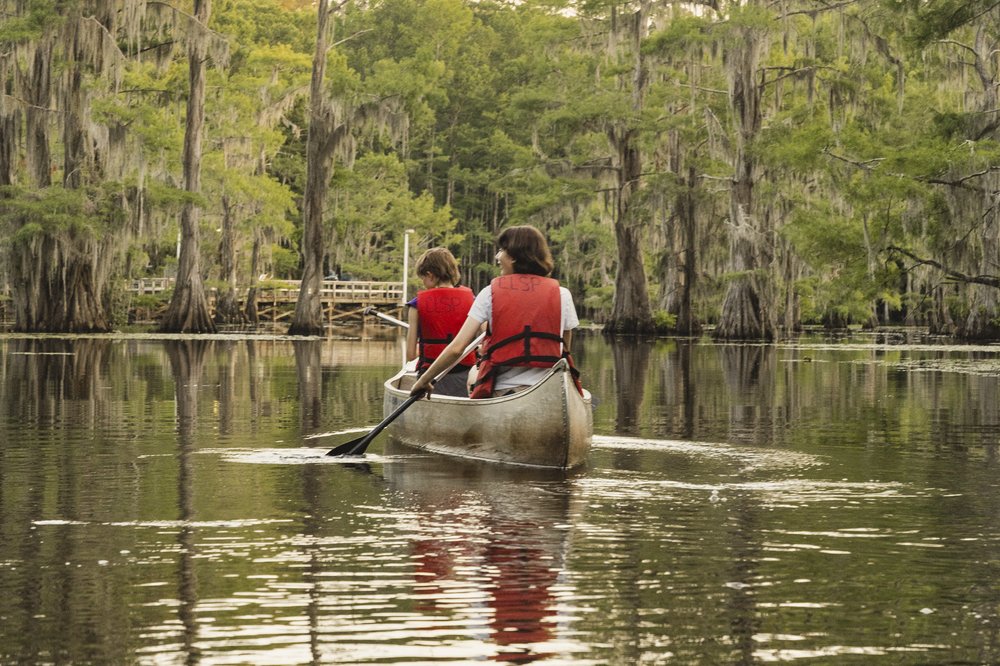
Paddling Caddo Lake.
Earl Nottingham
Paddling Caddo Lake.
Earl Nottingham
Paddle Sunken Forests
Before we depart Ole Mossy’s Up River for a paddling excursion, I ask co-owner Robin Boyd if we might see a gator while we are out. “On a sunny day like today, if you're very quiet and look around real good, you might see an alligator,” she says. “They are the world’s greatest social distancer, so, you know, if you get too close or anything, it’s going to be gone.”
As soon as we shove off into the shady backwaters, we are transported into what seems an unearthly lost world. Thick curtains of Spanish moss hang low over dark emerald water, suspended from towering cypress trees. The silence is surreal, broken only by the soft dips of our paddles and the occasional calls of red-shouldered hawks and pileated woodpeckers. Out on Big Cypress Bayou, turtles crane their necks as they regard us with suspicion from their basking logs. Squirrels scramble with amusing dexterity among the cypress knees.
We divert from the bayou into the sunken bald cypress forests of Stumpy Lake, then Benton Lake, which Boyd asserts is world-renowned. I find myself enthralled as we navigate around massive cypress buttresses and explore mystical side channels. We keep an eye out for wood ducks and flying squirrels peeking out of old pileated woodpecker holes in the cypresses. Though we don’t spy any sneaky, holed-up critters, we do rouse two wood ducks.
There are 10 official TPWD paddling trails representing over 50 miles in the Caddo region, including the Benton Lake Paddling Trail.
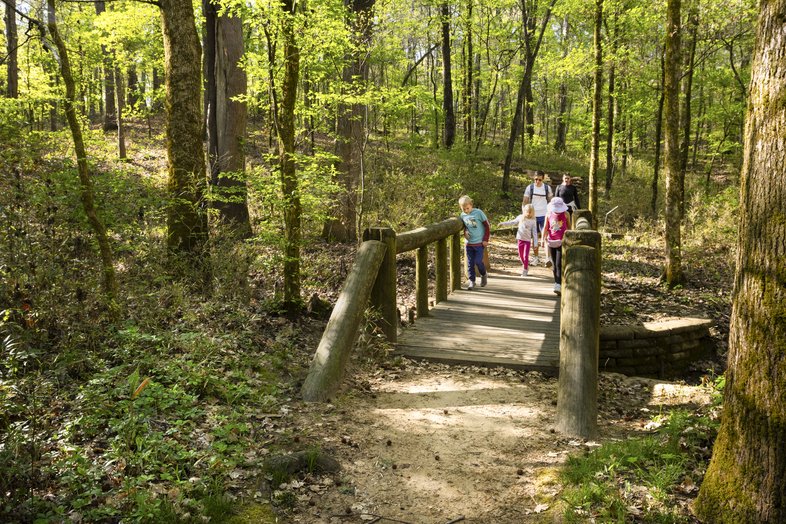
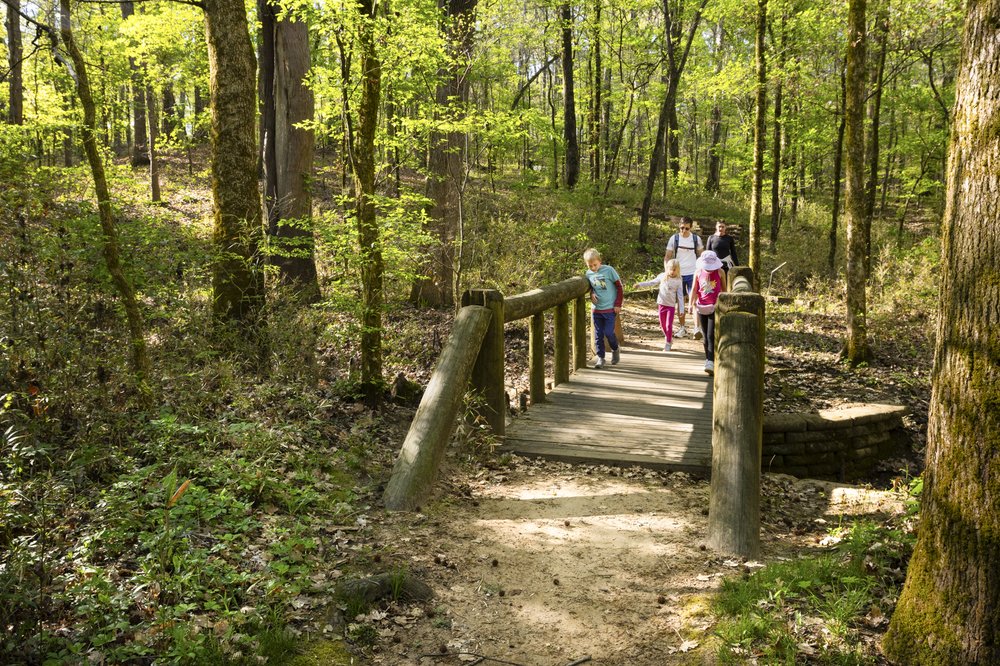
Hiking the Caddo Forest Trail.
Robert Gary
Hiking the Caddo Forest Trail.
Robert Gary
Wander the Wild Side
The diverse environments surrounding Jefferson support a wide array of wildlife. A great place to start looking is along the trails at Caddo Lake State Park, according to Assistant Superintendent Daniel Rios. “Our trail system goes through different ecosystems,” he says, yielding deer and gray foxes in the pine uplands, river otters and pileated woodpeckers along creeks in the bottomland hardwood forest, and swamp rabbits, egrets and herons in the bald cypress swamps. Springtime brings colorful prothonotary warblers and floating carnivorous bladderwort plants, while firefly mating displays occur from late spring into early summer.
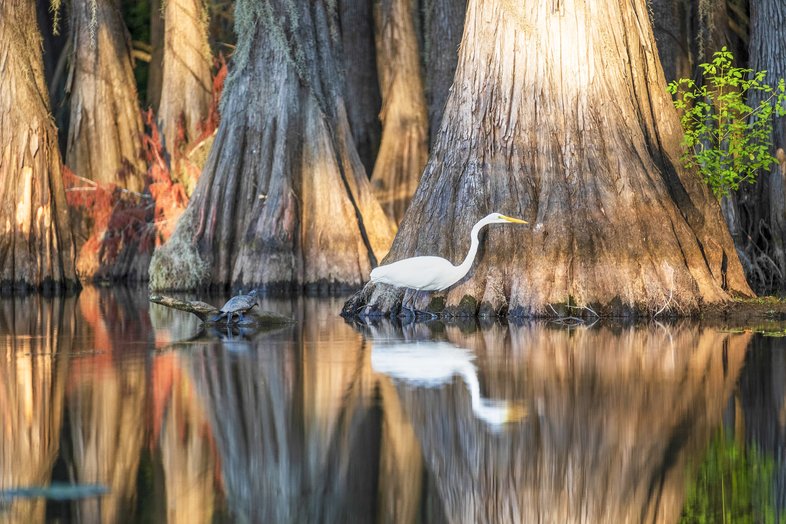
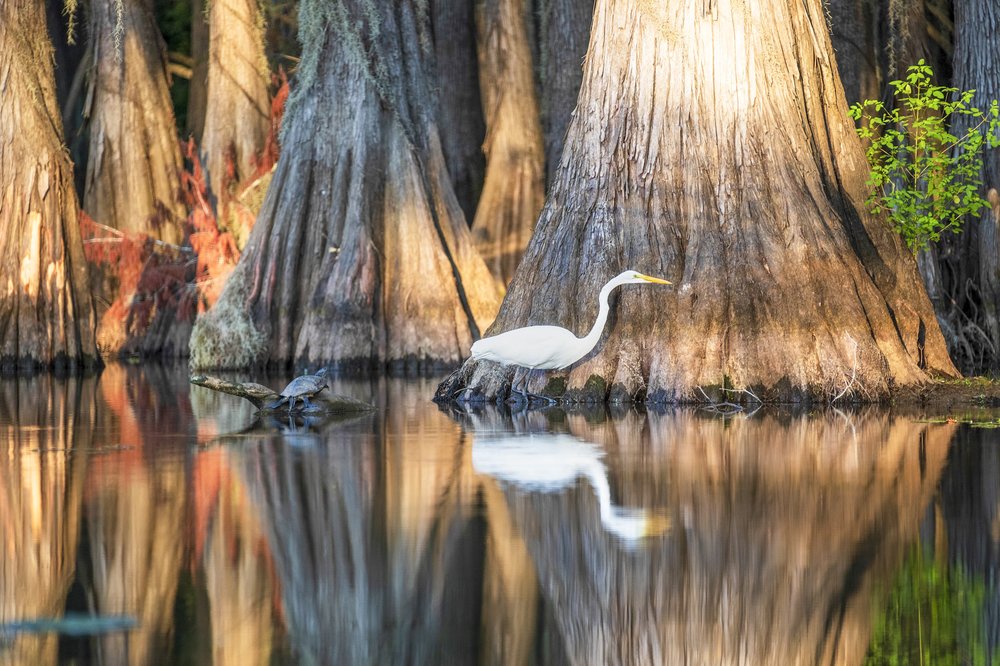
A great egret stalks the swamp.
Maegan Lanham
A great egret stalks the swamp.
Maegan Lanham
Caddo Lake Wildlife Management Area features lake access, hunting, fishing and primitive camping. Boating is the best way to see wildlife at the WMA, including beavers and reintroduced paddlefish; the thickets around the campground proved to be a rich haven for birds during our visit.
Miles of hiking and equestrian trails meander through Caddo Lake National Wildlife Refuge. Birds are bountiful around the wetlands near the boat ramp. The short but sweet Magazine Trail meanders through a spectacular sugar maple forest. We enjoy a cricket frog concert and numerous white-tailed deer just before sunset. Scheduled hunts are offered.
For a change of scenery, we meet up with TexasBirder.com operator Michael Mathews at Lakeside Park on Lake O’ the Pines. We spot a bald eagle as we arrive. Enormous numbers of waterfowl fill the coves. “I'm sure it is theoretically possible to have a bad birding day at Lake O’ the Pines, but it hasn’t happened to me,” says Mathews.
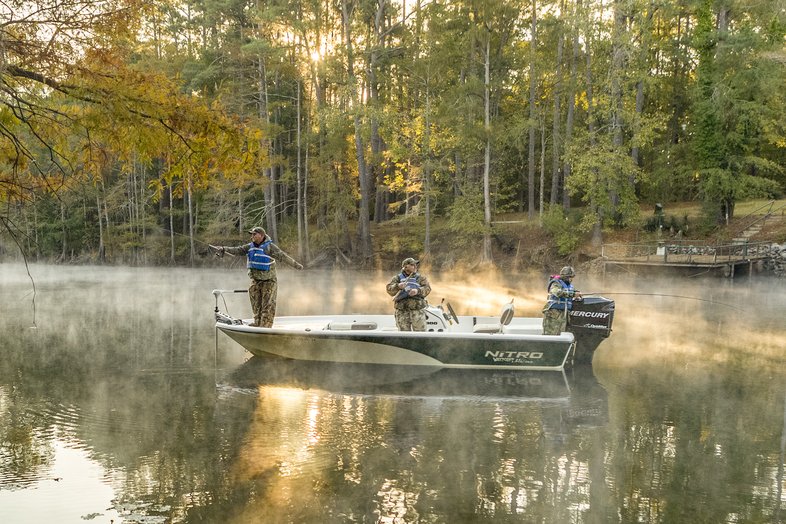
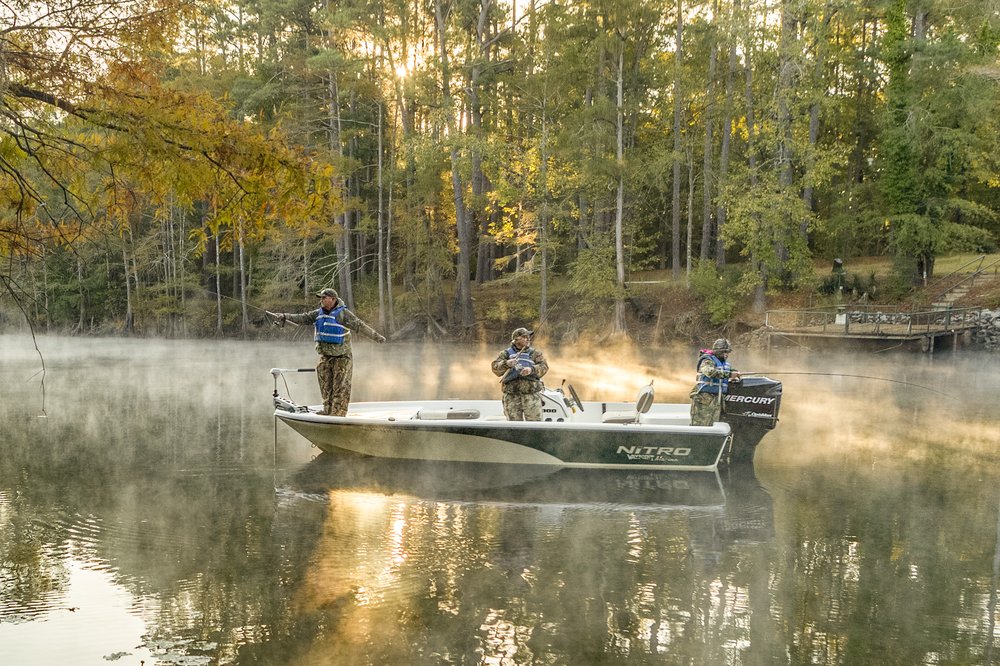
Fishing Caddo Lake.
Earl Nottingham
Fishing Caddo Lake.
Earl Nottingham
Fish the Swamp
Daniel Rios of Caddo Lake State Park tells me that because Caddo Lake was formed naturally, it contains more species of fish than any other Texas lake, with more than 70 different species. He recommends Saw Mill Pond at the state park as “great for kids,” because it has a fishing pier and lots of smaller fish for them to catch. Launch a boat at the park or other local ramps to hook larger sportfish in Big Cypress Bayou and Caddo Lake. Largemouth bass is the most popular catch, followed by crappie, white bass and sunfish. Catfish and chain pickerel are also abundant choices.
Cypress knees and lily pads provide outstanding habitat for Caddo’s acclaimed year-round fishing. Rios explains that angling choices are dependent on temperatures and seasonality. Largemouth bass fishing is good throughout the year, but if it’s big largemouth you are after, springtime is the most productive. Crappie catches are excellent in winter and early spring.
Chaz Warren guides fishing trips for Johnson’s Ranch Marina in Uncertain. Describing himself as “bayou born and raised, romp stomping the swamp,” he knows Caddo’s confusing cypress mazes intimately. Air-cooled mud motors allow their longtail boats to run in three inches of water, negotiating over stumps and logs to reach inaccessible spots. He likes to take youngsters fishing “right after the full moon in April for bream — red ear, bluegill, big chinquapins — something that the kids can continuously catch, so they’re not bored. They’re just jerking one after another out.”