It was the first day of 2026.
Cars filled with excited passengers lined up outside the gate at Palo Pinto Mountains State Park, Texas’ newest public property, which was opening for a special preview First Day Hike.
Park Superintendent James Adams got to the park early that day, met with staff and volunteers and then sized up the line outside. “I walked out to the gate and started talking to the first people in line. I told them, ‘You two are the very first official visitors to Palo Pinto Mountains State Park.’ They were pretty excited about that.”
Adams opened the gate and let the cars start rolling in.
Palo Pinto Mountains is not just the latest addition to the parks system — it’s the latest addition to the lineup of abundant outdoor recreation available in Mineral Wells, our No. 9 top outdoor town of Texas.
Mineral Wells, the Wellness Capital of Texas, has for decades been synonymous with its legendary healing waters and the grand, ghostly Baker Hotel that towers over downtown. For this North Central Texas town of roughly 15,000 residents, wellness is a concept that very much includes the great outdoors.
“I think if you’re going to talk about wellness, you have to have access to outside activity,” says Zach Balch, tourism director for Mineral Wells. “Having outdoor access is a key tenant to being the Wellness Capital of Texas.”
Besides Palo Pinto Mountains, Palo Pinto County contains two other state parks — Lake Mineral Wells and Possum Kingdom — along with the blue water and scenic shores of Possum Kingdom Reservoir, the meandering Brazos River and a landscape of rolling hills. The parks, lakes and terrain offer hiking, rock climbing, kayaking, boating, fishing, paddling and more.
The Palo Pinto Mountains, a rugged and scenic range in the western Cross Timbers, bear some similarities to the Texas Hill Country. Oak and juniper trees cover ridges and hillsides, and creeks cut through the canyons. “When you start coming west from the Metroplex and get past Weatherford, the landscape just kind of jumps up out of nowhere,” Adams says. “A lot of the folks who come here from the DFW area don’t realize that this sort of terrain is out here. It’s relatively flat and then all of a sudden, bam, you think you’re in the Hill Country.”
In the 1800s, settlers moved to the area to partake in what were considered healing waters. Word spread about the magical waters, and people flocked to Mineral Wells to experience it for themselves. Bathhouses, drinking pavilions and spas flourished in the early 1900s. After being shuttered for decades, landmarks such as the Crazy Water Hotel and the Baker Hotel are being renovated and reopened. Crazy Water, the only mineral water bottled in Texas, expanded its distribution.
The long-awaited opening of Palo Pinto Mountains State Park is yet another step in turning Mineral Wells from a nostalgic waypoint into one of Texas’ most exciting outdoor destinations.
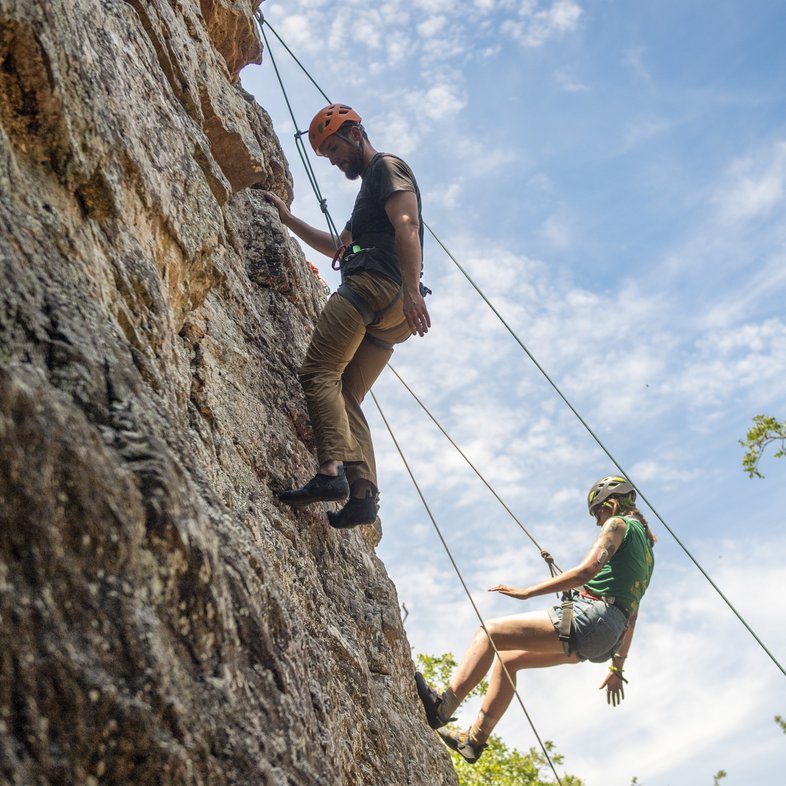
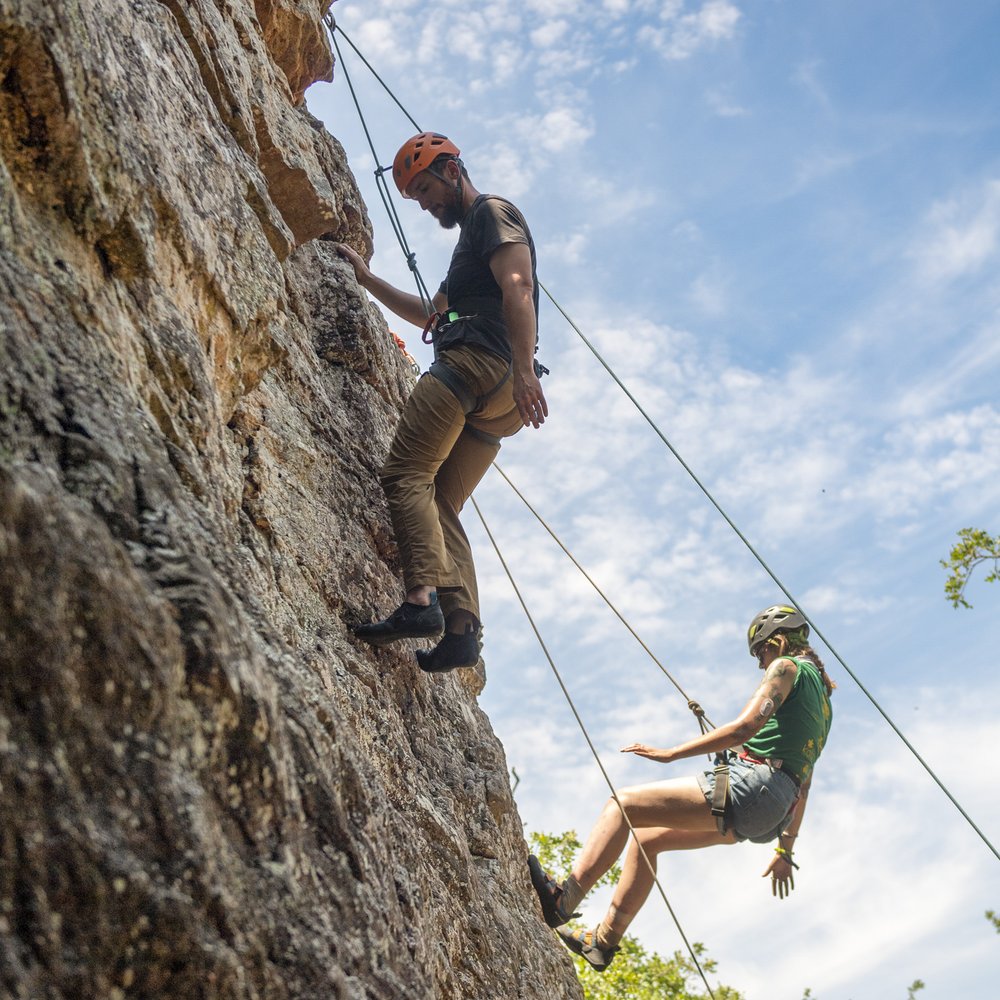
Rock climbing opportunities abound at Penitentiary Hollow at Lake Mineral Wells State Park.
Maegan Lanham
Rock climbing opportunities abound at Penitentiary Hollow at Lake Mineral Wells State Park.
Maegan Lanham
Get on the Rocks
The caves and cliffs that make up Penitentiary Hollow at Lake Mineral Wells State Park were formed by sandstone sediments that cemented into rock. As water trickled through the formation over millennia, large blocks cracked and gravitated downhill, creating the 30-foot cliffs that I find myself clinging to as I try to make my way up the climb known as In Search of Green.
Penitentiary Hollow is one of the only outdoor rock climbing destinations in North Texas. “It’s an amazing resource,” says rock climbing guide Adam Mitchell. “It’s beautiful and cool, with interesting rock.”
The 80-plus climbs at Mineral Wells range from beginner to expert, with most falling in the intermediate range. The climbs are toprope only, meaning climbers have to scramble to the top by an easier route and use anchors installed at the tops of climbs to secure their ropes. “It’s a place where everyone can feel successful rock climbing,” Mitchell says.
My foray up In Search of Green takes me up a series of pockets and ledges, skirting an overhang at the top and leading me, thankfully, to bigger handholds at the top. After my belayer lowers me back down to the ground, I’m ready for another. On weekends, the canyons fill with the sounds of climbers assessing routes, setting topropes, messing with gear, discussing the details of body movement and rock formations and letting out victory whoops when they reach the top.
I’ve been climbing for almost 40 years now, and some of my earliest climbing trips occurred at Mineral Wells. I still go back when I get the chance, and I harbor many fond memories of the times my friends and I were literally learning the ropes of our newfound outdoor passion.
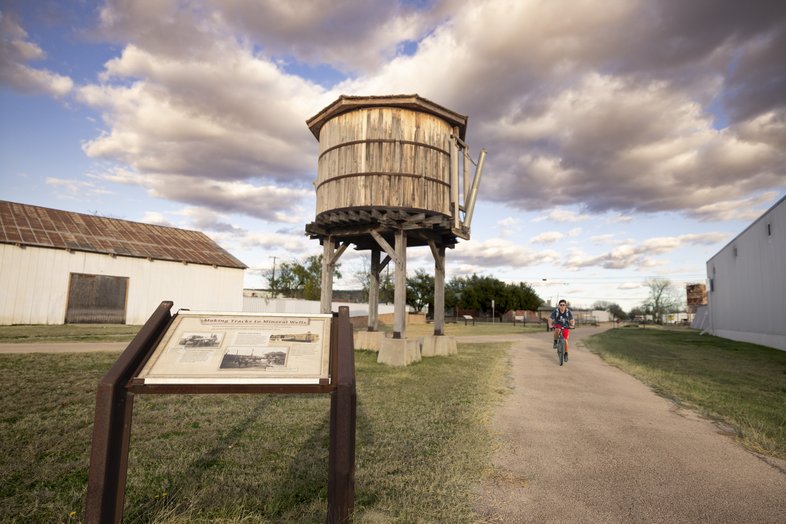
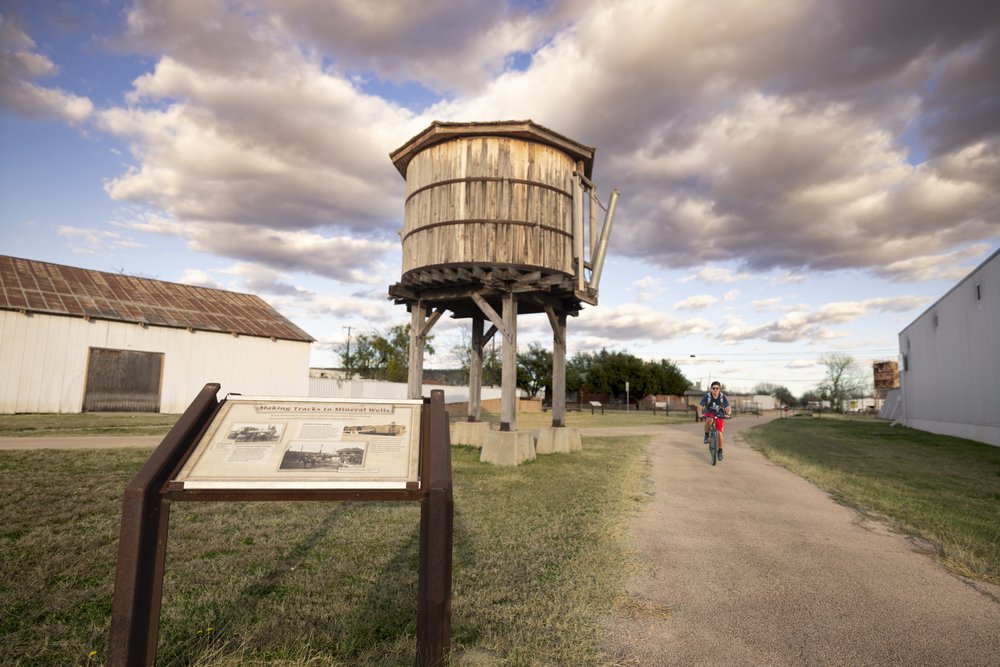
A water tower and interpretive sign at Lake Mineral Wells State Trailway.
Sonja Sommerfeld
A water tower and interpretive sign at Lake Mineral Wells State Trailway.
Sonja Sommerfeld
Get on the Bike
Tens of thousands of passengers headed west by rail to reach Mineral Wells and partake of the town’s healing waters. When the rail line was decommissioned, advocates turned it into the Lake Mineral Wells State Trailway. The crushed limestone trail runs from downtown Mineral Wells to Weatherford, 20 miles to the east.
Cyclists roll through classic Texas landscapes over the route’s length. The trail passes through shaded creek bottoms, where sycamores and pecans create cool tunnels of green, and emerges onto open prairie where wildflowers explode with color each spring. Bluebonnets, paintbrushes and winecups carpet the ground from March through May, creating scenes that justify multiple photo stops.
“Visitors to the park use the trailway, and some people come just for the trailway,” says Nikki Nuttall, superintendent of Lake Mineral Wells State Park and Trailway. “There are only a few trailways in the state park system. It's just us, Caprock Canyons, Fort Richardson and the Ray Roberts Greenbelt.”
A bridge replacement completed in 2025 means the trailway is fully open for the first time in several years.
For mountain bikers, the Hike and Bike Trails at Possum Kingdom Lake crisscross the lake’s central peninsula, giving riders scenic views of the lake over 16 miles of paths.
“These trails are basically in my backyard,” says local bike rider Ron Naiser. “I ride them a couple of times a week. I like the climbs to the top. There are good downhills, too.”
Biking the Possum Kingdom Hike and Bike Trail.
Sonja Sommerfeld
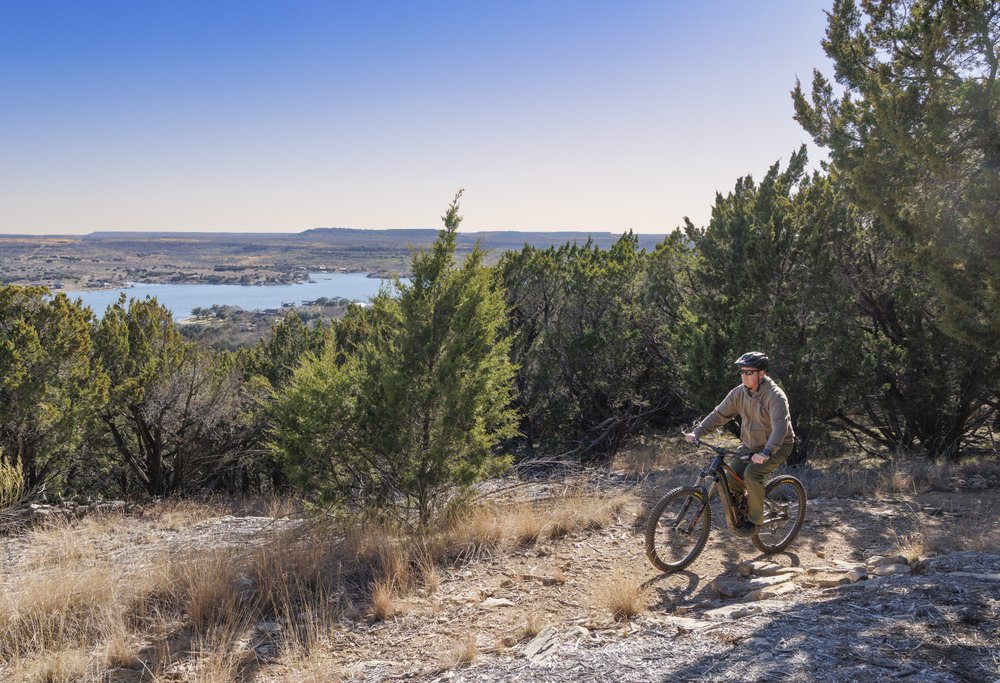
Biking the Possum Kingdom Hike and Bike Trail.
Sonja Sommerfeld
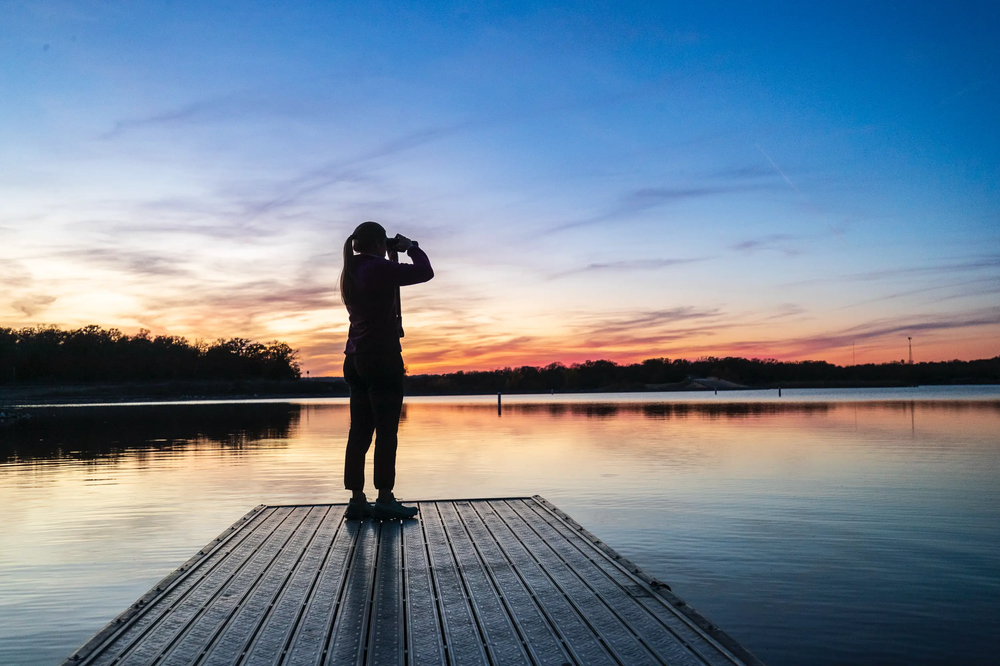
Possum Kingdom Lake at sunset.
Sonja Sommerfeld
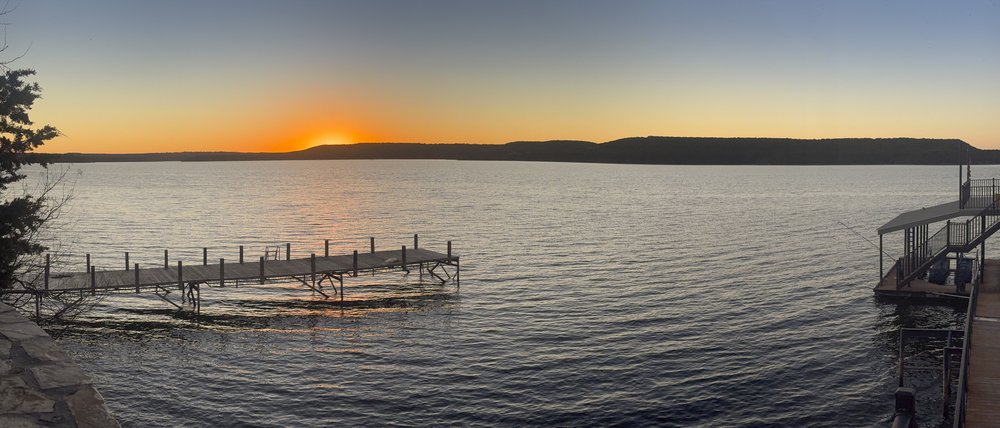
Possum Kingdom Lake at sunset.
Sonja Sommerfeld
Fish the Kingdom
The twin bluffs of limestone known as Hell’s Gate rise out of the waters of Possum Kingdom Reservoir, creating a rocky landmark on the sprawling 16,000-acre lake west of Mineral Wells. Under the water, striped bass and white bass swim in strong numbers, offering good fishing in a scenic setting. Striped bass are stocked in most years, providing fish with good growth potential and strong fighting characteristics. Good-size white bass are abundant, too.
“Possum Kingdom Lake has a tremendous largemouth bass and striper fishing community,” says Balch, who grew up in the area and fished PK, as it’s known locally, regularly with his dad. “I don’t know how many striper fish I’ve caught out of that lake in my lifetime, but it’s a lot.”
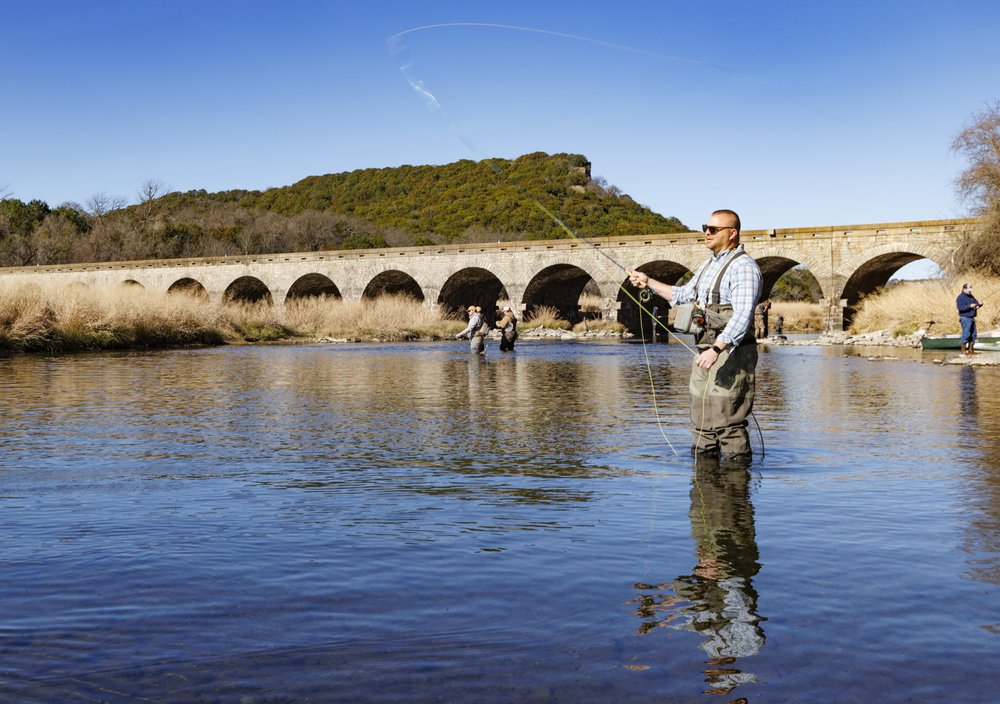
Don’t overlook the area below the dam, where the Brazos River runs cool, clear and quick. Striped bass congregate year-round in the cooler waters discharged from the dam. The fish grow large here, with many weighing 10 pounds or more. (The state record for striped bass was set here in 1999 with a 53-pounder.) While stripers can be caught year-round, a special winter treat occurs with the stocking of rainbow trout. The area below the dam receives the second-largest stocking of rainbow trout after the area below Canyon Dam on the Guadalupe River, providing an irresistible draw for fly anglers.
“To a lot of fly fishermen, that stretch of Brazos is a place that you want to make a pilgrimage to at least once in your life,” Balch says. “It’s a tremendous fishery, and it’s one of the more accessible destinations from greater DFW area for catching trout.”
If you like paddling as well as fishing, the Brazos River below the dam takes paddlers on a literary journey down one of Texas’ most storied rivers. John Graves pushed his canvas canoe into the river on the afternoon of Nov. 11, 1957, and spent the next three weeks on the river documenting his experiences and the changes along the river. His trip turned into the classic Goodbye to a River, and this stretch of the Brazos is now known as the John Graves Scenic Riverway.
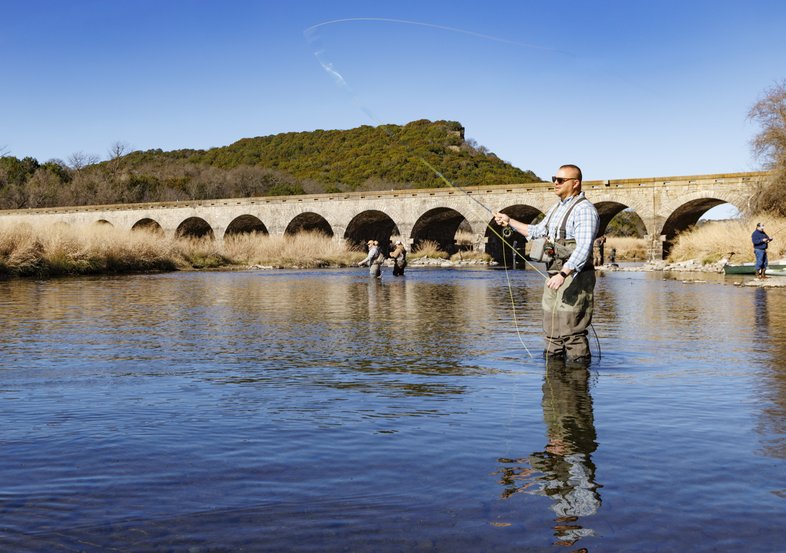
Fishing the John Graves Scenic Riverway.
Sonja Sommerfeld
Fishing the John Graves Scenic Riverway.
Sonja Sommerfeld