Six dramatic Texas sunrises and sunsets, and all the hours in between. A buffet of natural beauty felt, heard and seen. And birds. Lots of birds. That’s what the Great Texas Birding Classic means to me.
Our version of the Classic is an intense 2,500-mile mad dash across the state each April to identify as many birds as humanly possible in six days. It’s a quick but meaningful immersion in the ecoregions of the state — from the “sky island” mountains of the Chihuahuan Desert, through the intimate oak forests of the Edwards Plateau, onward to the lush Gulf prairies and marshes, to completion in the Brush Country of South Texas.
Each bird that fills my binoculars, camera lens, scope or ear brings me joy. I know what’s going on inside of me when it happens: the sense of discovery elicits a positive rush of dopamine, the neurotransmitter and hormone in the brain that rewards pleasurable experiences and behaviors. And I’m OK with that.
But I digress.
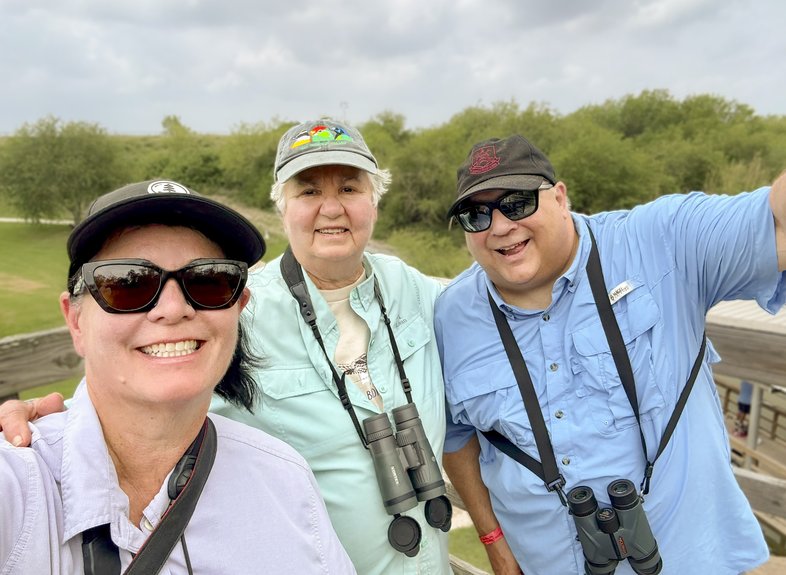
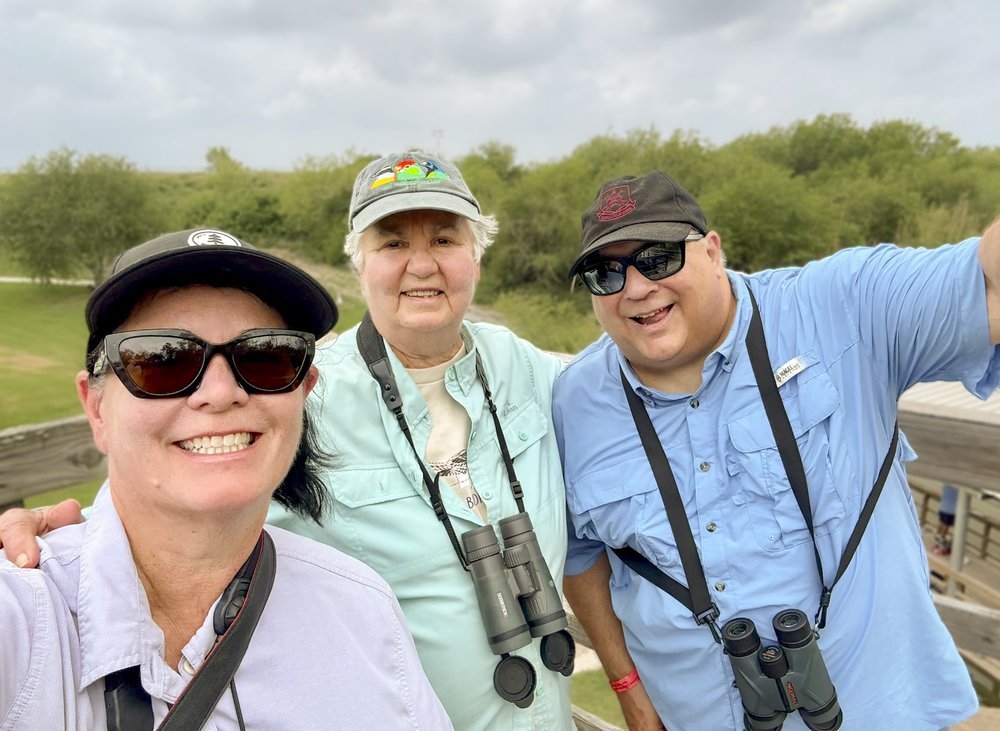
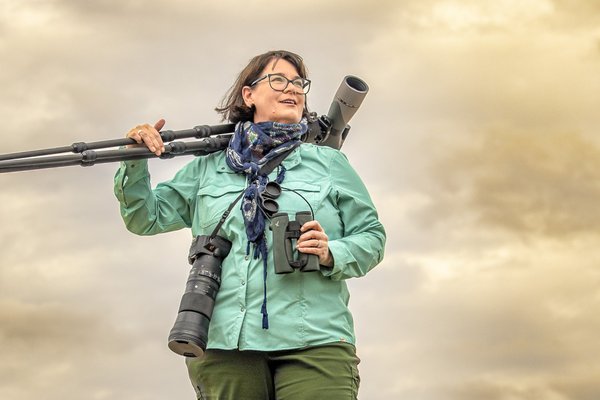
Bristol with her husband, Thomas Nilles, and mother, Valarie Bristol.
Jennifer Bristol
Bristol with her husband, Thomas Nilles, and mother, Valarie Bristol.
Jennifer Bristol
In order to find 300-plus species of birds in six days, it takes an understanding of what habitat each one favors. The birds do not randomly disperse across the state during the spring migration. Each one has preferred habitat and a migration route that keeps them on target to their breeding ranges. In our early years of competing in the Classic, we had a limited understanding of those details. And because of that, our team struggled to identify over 100 species.
Who’s the team? Well, they are about the only people on the planet that I would willingly spend six days birding and riding in a car with — my husband, Thomas Nilles, and my mother, Valarie Bristol.
We compete in the Classic’s weeklong statewide challenge. There are other options available — regional challenges, daylong challenges, state park challenges and more.
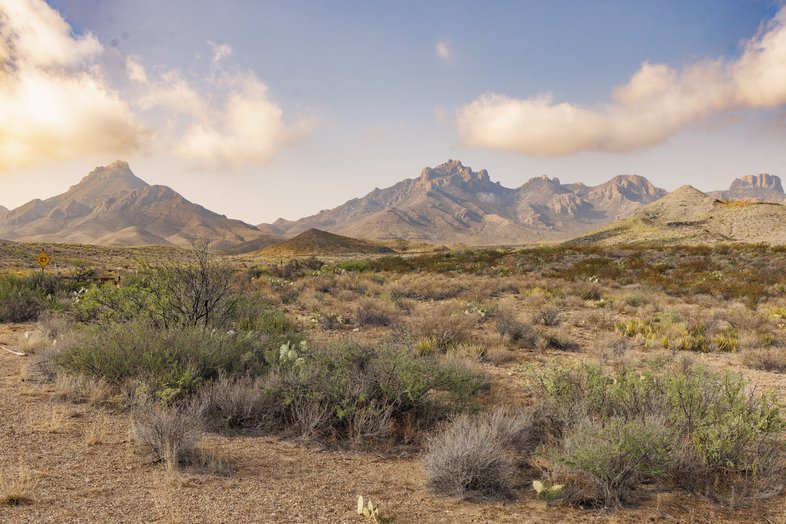
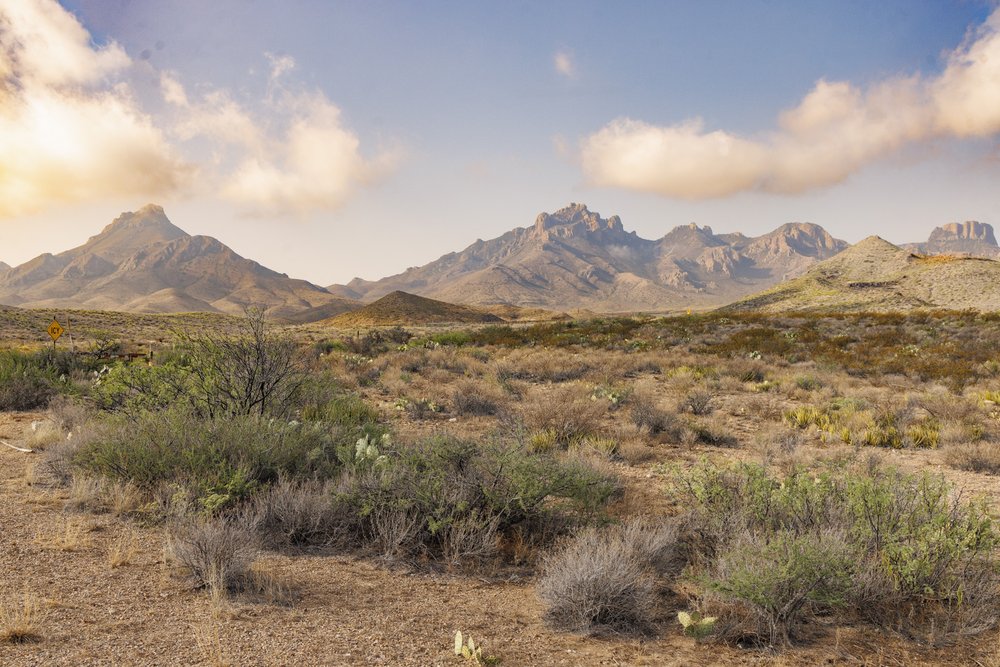
Big Bend National Park is a great place to look for birds.
Sonja Sommerfeld
Big Bend National Park is a great place to look for birds.
Sonja Sommerfeld
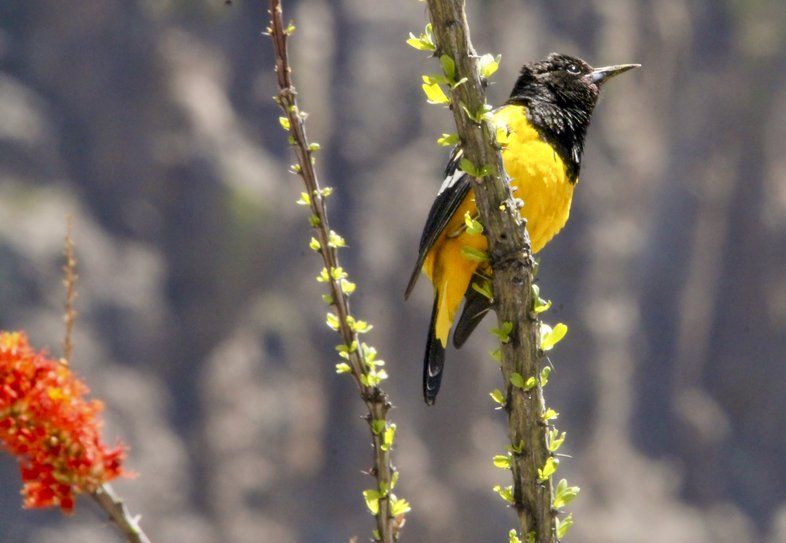
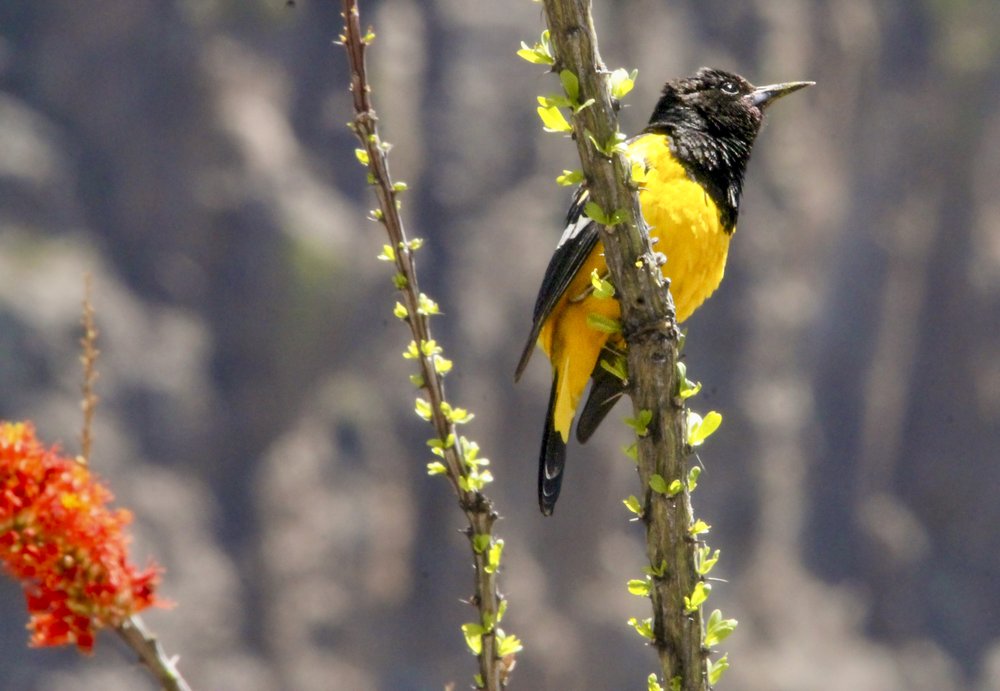
A Scott's oriole perches on an ocotillo.
Jennifer Bristol
A Scott's oriole perches on an ocotillo.
Jennifer Bristol
Getting Started
As the sun rises at Panther Junction in Big Bend National Park, a spreading blanket of light slowly illuminates the folds, valleys and peaks of the Chisos Mountains. The cactus wren casts his raspy song into the cool morning air to greet the day. He cuts his song short as he snatches an insect that flies too close. Like most avian desert specialists, the cactus wren can acquire most of the fluids it requires from the insects and fruits it consumes.
The warm hues of sunrise color the cactuses and wispy grasses that quiver in the still morning. The star of the morning’s bird symphony is the lemon-yellow and black male Scott’s oriole perched on a blooming spire of the ocotillo. His flute-like song rises effervescently to drift away on a ray of sun. The warm colors of morning last only a moment before they are blasted away by the midday sun and become a study in faded greens and dusty taupes.
Before the sun becomes too intense, we check for the tiny elf owl that often nests in a telephone pole near the visitors center. Its elfin laugh is one of my favorite bird calls. From there we drop down to the Rio Grande Village, and the temperature rises dramatically. So does the number of species. By the time we exit the west entrance of the park, we have over 70 species counted. Our day is not done as we struggle up the rocky 4x4 road to the privately owned Christmas Mountain Oasis to watch for the Lucifer hummingbird and varied bunting. By sunset, we are close to 100 species for the day, and we retreat to the White Buffalo Bar at the Gage Hotel for cool libations and warm laughter. I even squeeze in an evening swim at the pool and spy a common nighthawk. Night birding is allowed and encouraged.
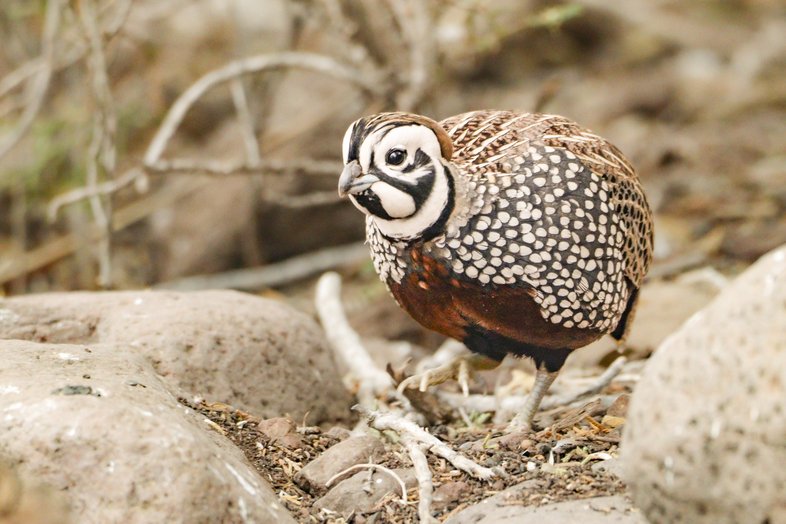
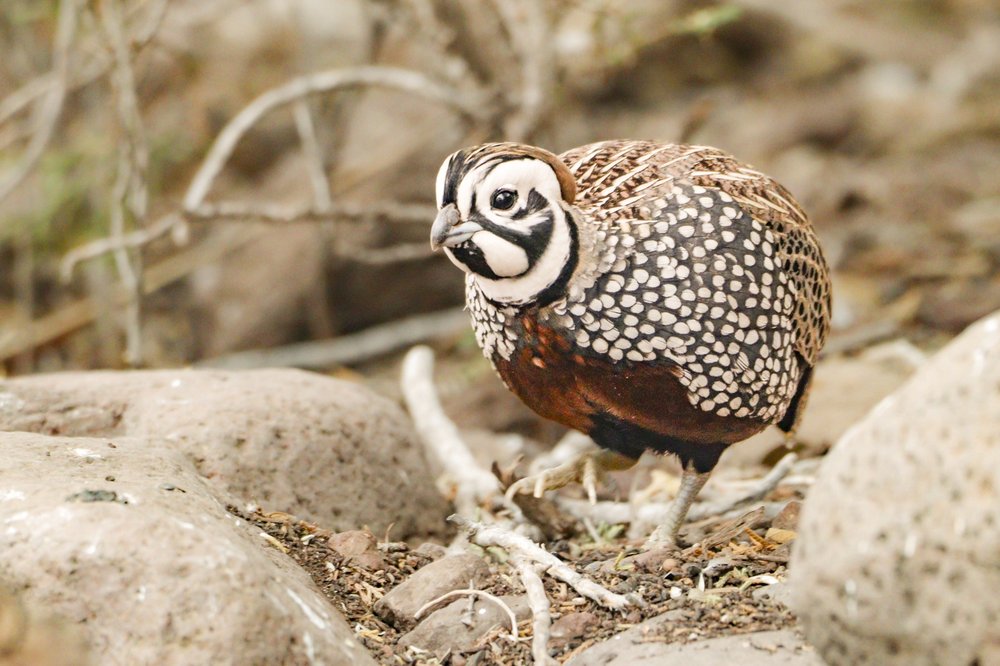
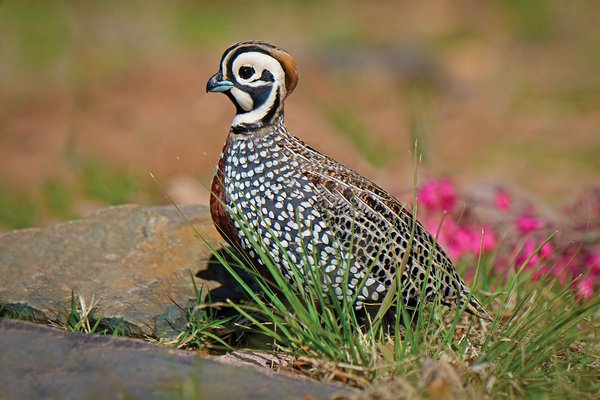
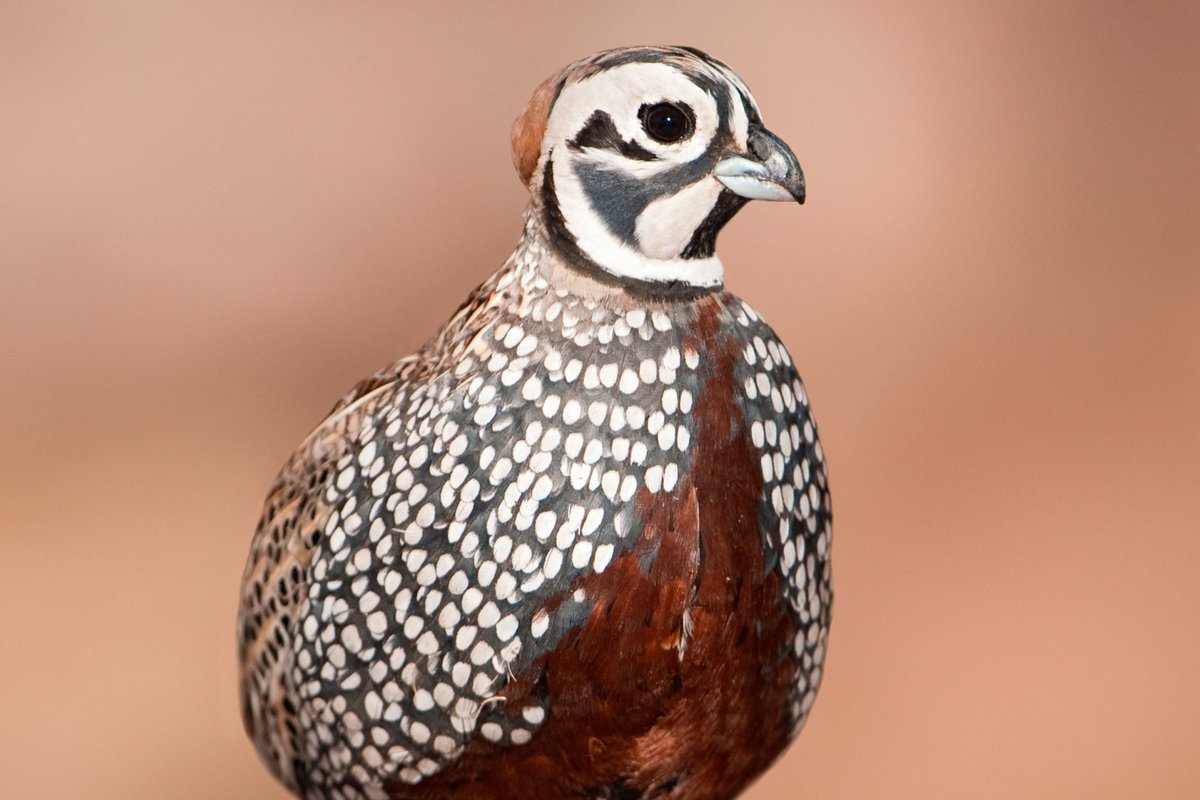
Montezuma quail live in the West Texas desert.
Sonja Sommerfeld
Montezuma quail live in the West Texas desert.
Sonja Sommerfeld
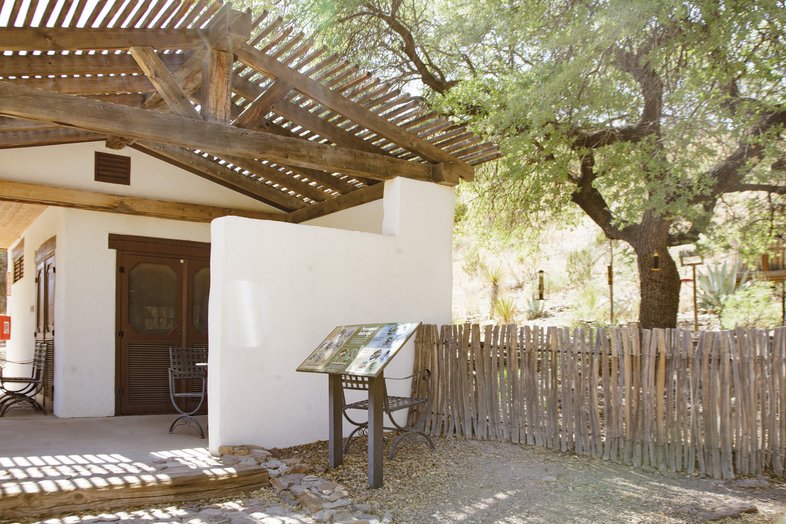
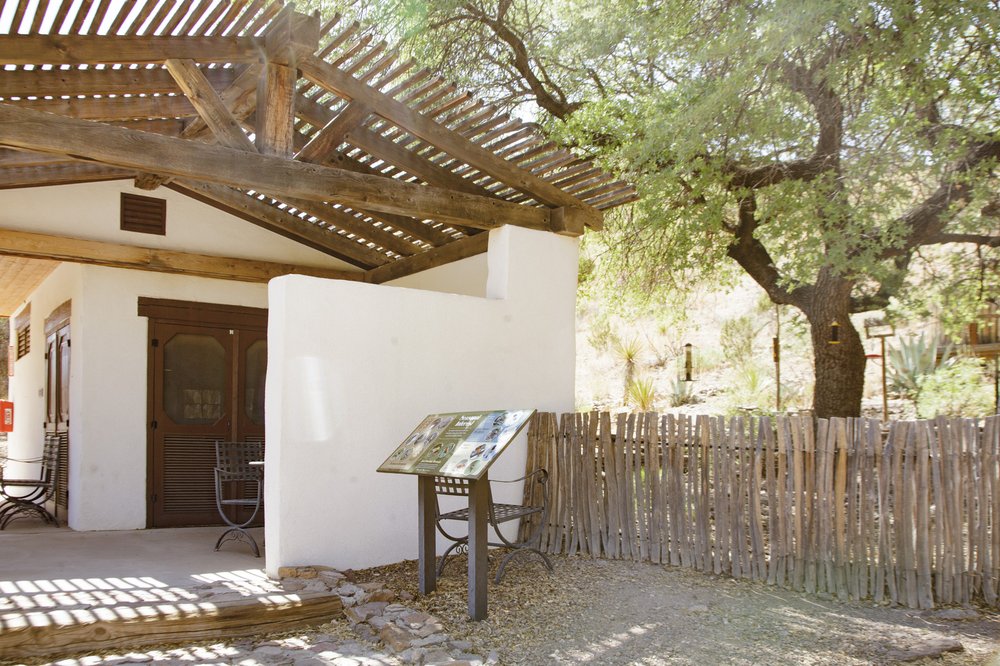
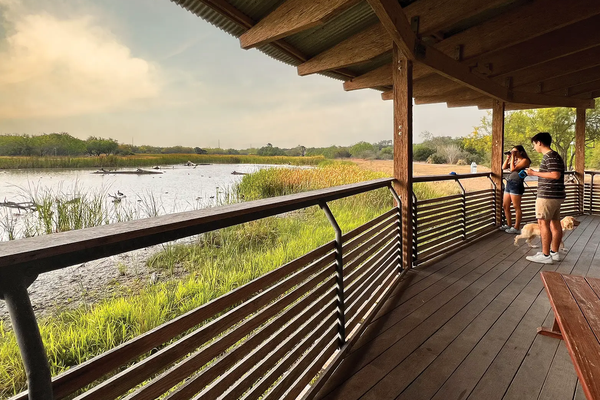
The Emory Oak Wildlife Viewing Area in Davis Mountains State Park.
Sonja Sommerfeld
The Emory Oak Wildlife Viewing Area in Davis Mountains State Park.
Sonja Sommerfeld
Day two, we are up long before the sun to drive to a location high in the Davis Mountains. The morning is cloudy and cool — perfect weather to listen for the myriad species belting out their dawn-songs in the otherwise silent high-desert pine forest. Like most stops on the Classic, we can’t stay long. After picking up some of the mountain-loving species we need such as the gray flycatcher and Steller’s jay, we head to the bird blinds at Davis Mountain State Park. To our delight, a pair of Montezuma quail waddle to the feeding and watering station to dazzle the gathering onlookers. Their round body, round head, round spots and circular feeding pattern are a study in all things ... round.
Onward to Balmorhea Lake for the dancing Clark’s and western grebes. However, no birds are dancing on this day as a howling wind picks up and almost blows over the spotting scope and my mother. Drought is apparent across the region, and most clearly at the lake. Friend and Davis Mountains resident Pam Harte reports that she has not received measurable rain in two years at her place. We use the spotting scope to salvage a few birds — some waterfowl and shorebirds huddled on the backside of the lake. I fix a much-needed lunch in the back of the truck before we settle in for a long drive to Junction. We discuss what birds we need next and feed each other a running dialogue of random Texas history facts and fables in addition to lunch.
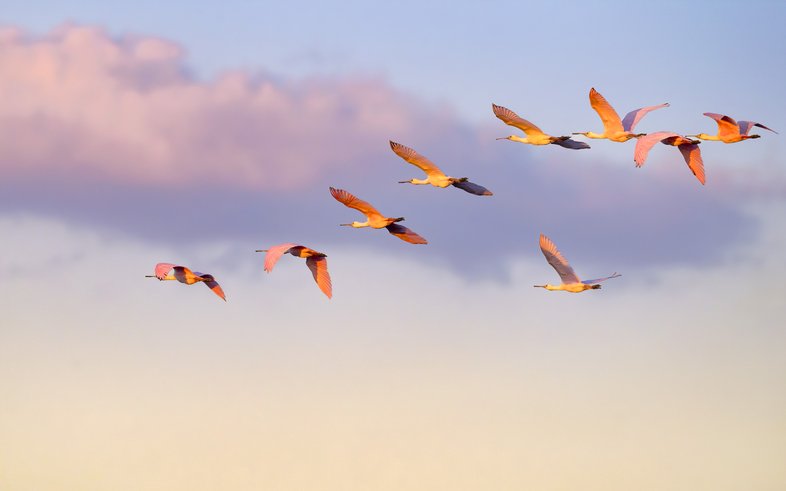
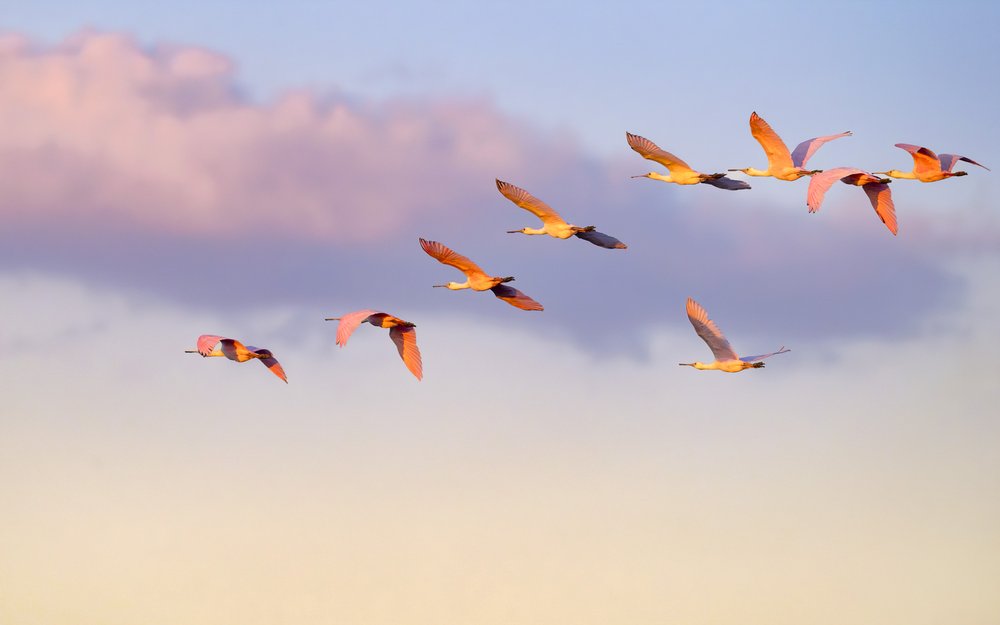
Roseate spoonbills flash their pink wings as they fly.
Natailia Kuzmina | StockAdobe.com
Roseate spoonbills flash their pink wings as they fly.
Natailia Kuzmina | StockAdobe.com
Decision Time
Junction is always decision point for us during the Classic. Our decision hinges on the appearance of two birds and the weather. If we can locate both the black-capped vireo and endangered golden-cheeked warbler at South Llano River State Park, then we will head to the coast. If we don’t find them, then we will head to Austin. Heading to Austin — aka home — is dangerous for morale. There is often a flagging of enthusiasm by members of the team as we pass too close to the comforts of home. In the morning air at South Llano, we hear the distant call of the warbler as we chase a dashing green, black and buff vireo down the trail. The oracle of birds has spoken — we are off to the Coastal Bend region.
A short five hours later, we are in birding bonanza land. We are anticipating scooping up warblers as they arrive on their journey across the Gulf. However, I make a major mistake. The high winds are taking the bouquets of warblers, decorations of buntings and zippers of flycatchers deeper inland instead of letting them land at the coast. Regardless, watching roseate spoonbills ease through the turquoise blue and burnt orange sky at sunset is worth the mistake.
“Being on the Birding Classic is constant calculation to try to predict where the birds are going to be and then to stand in front of them as they arrive and move. When we get it right, it’s a rush. When we get it wrong, it’s still not a bust.” Sage words from Thomas Nilles.
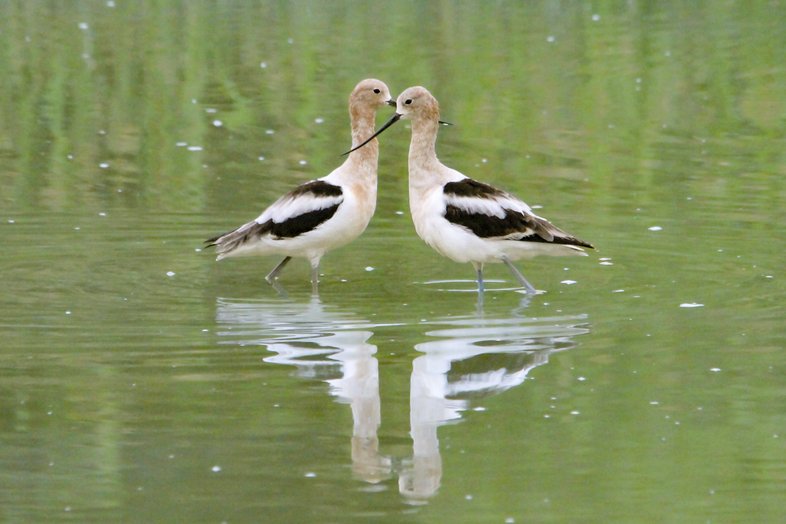
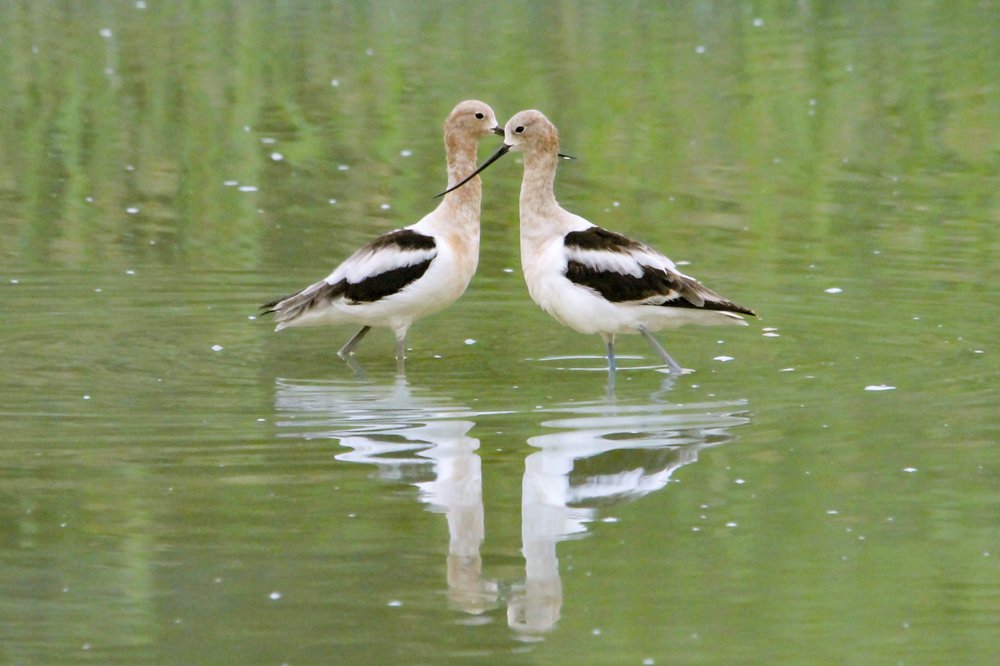
Two plovers stand head to head.
Jennifer Bristol
Two plovers stand head to head.
Jennifer Bristol
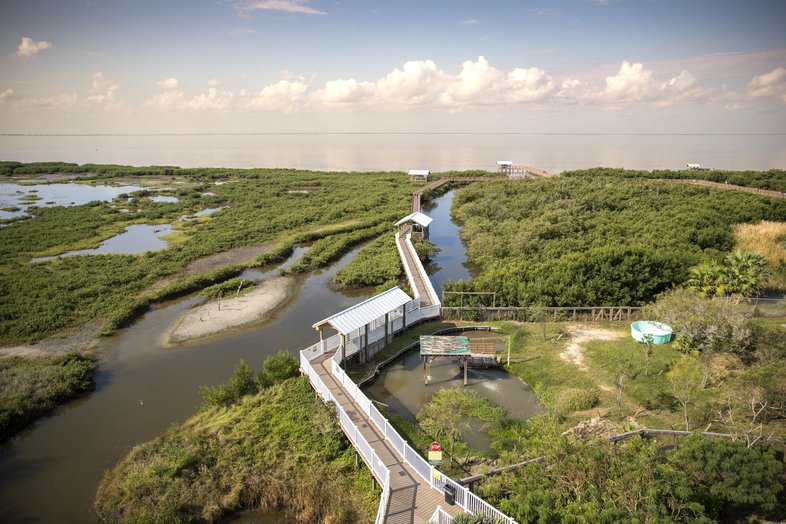
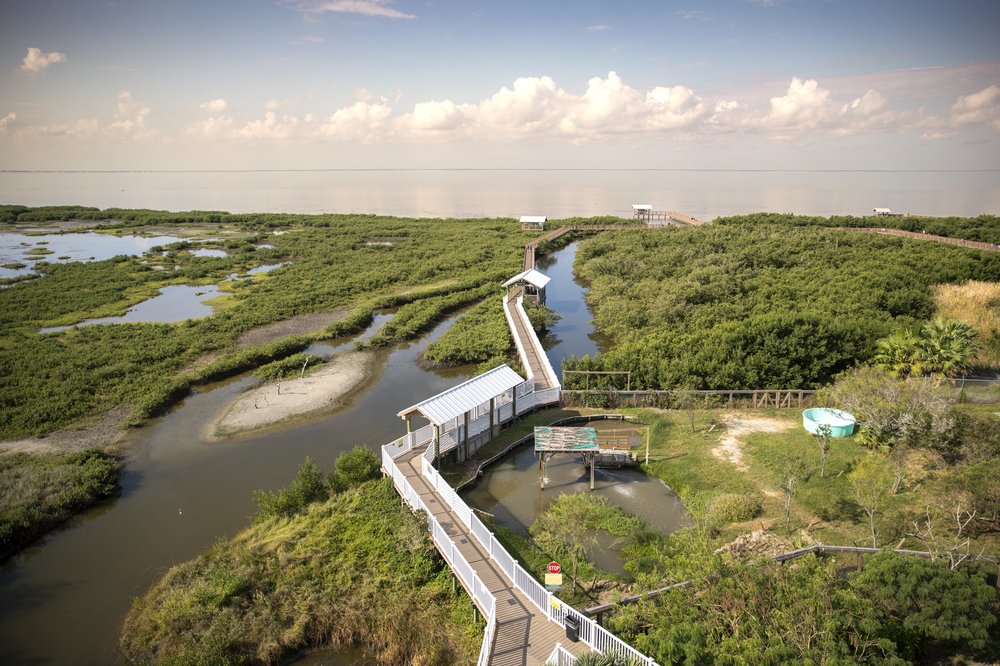
South Padre Island Birding and Nature Center's boardwalk takes visitors out over the marsh.
Maegan Lanham
South Padre Island Birding and Nature Center's boardwalk takes visitors out over the marsh.
Maegan Lanham
Sunrise on Mustang Island is calm, mercilessly humid and threatening to storm. We hustle down the new trails of the Port Aransas Nature Preserve where flocks of American golden plovers, avocets, dunlins and black-necked stilts are feeding voraciously. We move efficiently and with purpose, each member calling out or whispering species for me to record. An occasional excited “What is that?” is yelled out, and we converge to identify. The clouds are turning an ominous black as we pull to the side of the road to watch an Aplomado falcon hunting low along a field and then perch on a fence post. Thomas grabs the scope and places it in the vehicle just as the tempest arrives. Time to go to the Rio Grande Valley.
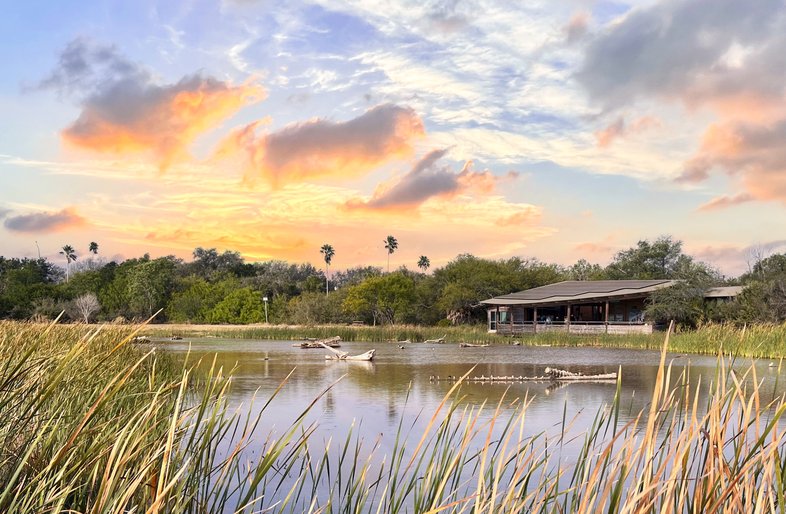
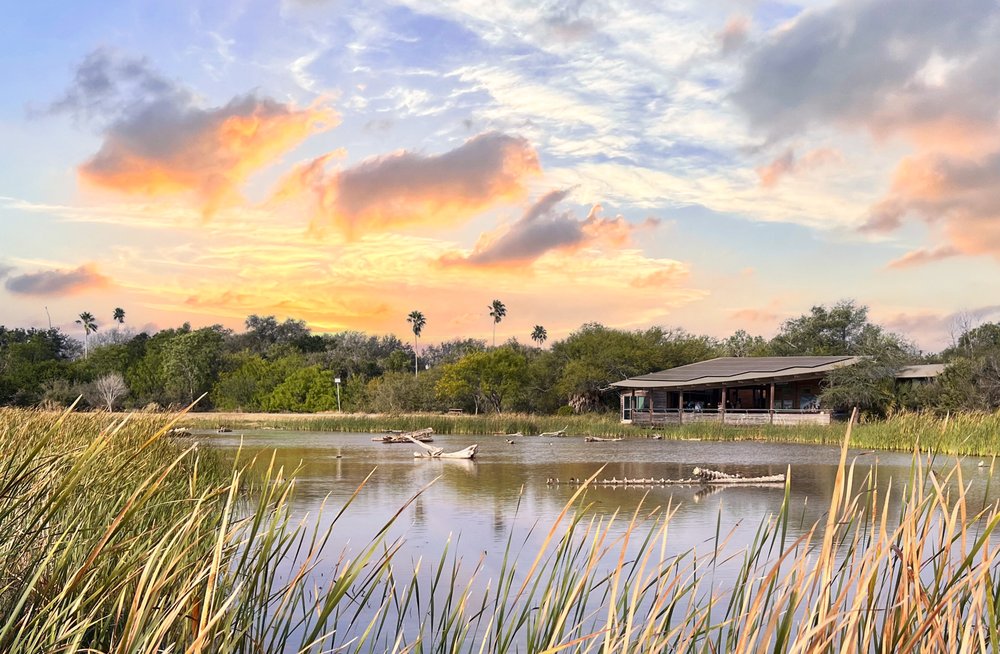
Estero Llano Grande State Park draws a high number of bird species.
Sonja Sommerfeld
Estero Llano Grande State Park draws a high number of bird species.
Sonja Sommerfeld
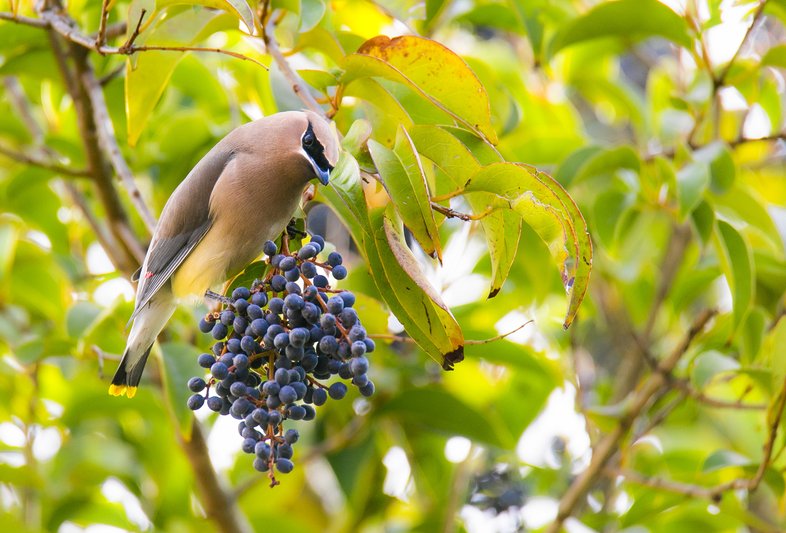
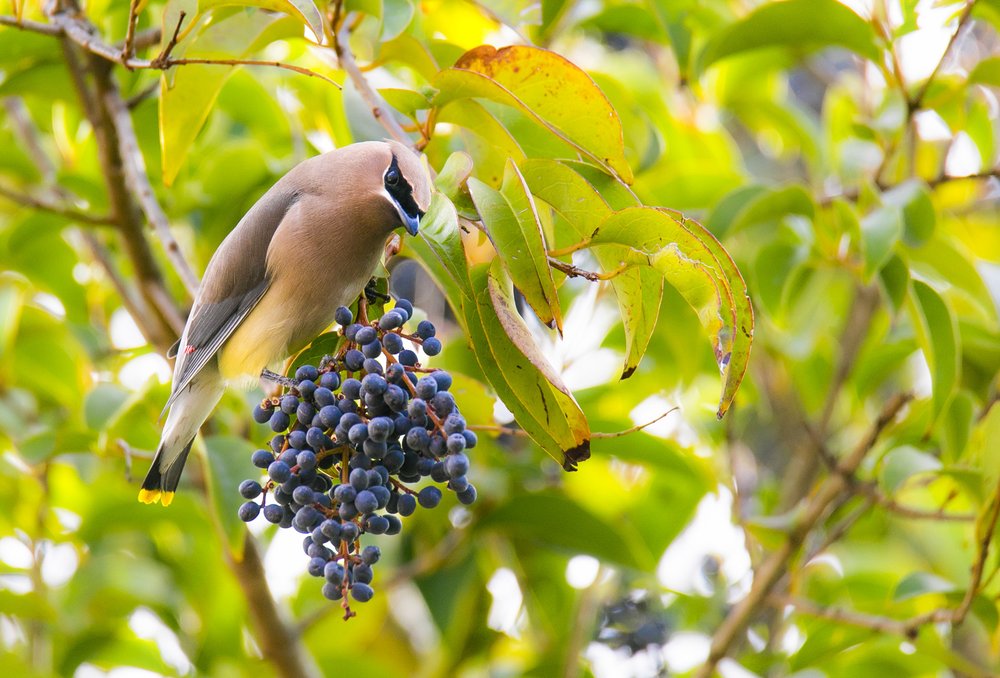
A cedar waxwing perches on a cluster of berries.
N Canamar And Nature Collaborative.com
A cedar waxwing perches on a cluster of berries.
N Canamar And Nature Collaborative.com
Final Push
While driving off Mustang Island we have a revelation that we still need a reddish egret. We make a quick detour and locate it. It isn’t the only red-related bird we need. We still have not observed a red-tailed hawk. One of the most common hawks in Texas has eluded us as we click over 1,000 miles on the trip odometer.
At South Padre Island, there are plenty of birds to fill our optics. Still lacking the red-tailed hawk, we spot a red knot just before sunset on the fifth day. These long-distance migrants winter along the Gulf and nest in the tundra of the Arctic. Once abundant, these birds have lost over 50 percent of their population in the past 50 years. I whisper “safe journey” to them.
With over 250 species counted, it is time to go inland to pick up the Rio Grande Valley specialties. Not an easy task as the heat and raging winds return. The effects of the drought can be seen here, too, as the ebony and scrub forests are dry and brittle. I am determined to get a white-tailed kite at Estero Llano Grande State Park. We are rewarded for our efforts, but we are unable to find a common pauraque. Common pauraques are masters of camouflage as they blend into the sticks and leaves on the ground where they sleep during the day.
Mile 1,935 and still no red-tailed hawk! We drive to “hawk alley” and sight a pair of white-tailed hawks, but still no red-tailed. The final birds are not coming easy. The last few birds we need are not located in the Valley, so we head north. My competitive mind races as I consider where to go next. We spot a magnificent frigatebird in Rockport — target acquired. We also pick up the common loon.
The sun marches across the sky as we barrel through nature preserves and wetlands. Piping plover, blackpoll warbler, a kettle of Mississippi kites ... the last birds trickle in. Finally, at mile 2,407 not far from Refugio, I pull the car over so everyone can see the red-tailed hawk. She looks down at us from her perch on the telephone wire as if to say, “What took you so long?”
The final sunset is a magical blue, sherbert orange and rosy pink. Somewhere outside of Lockhart, the final bird of our 2025 Great Texas Birding Classic flies across the road. A flock of cedar waxwings goes on the list as our 306th species.
In total we traveled over 2,500 miles. On that journey we looked intensely at each ecoregion with the lens of what makes suitable or unsuitable bird habitat. What plant communities are the most enticing for the birds of that region? Where are the good water sources? And of course, we cannot escape being aware of the human impact, which makes each park, nature center and national wildlife refuge seem more important than ever.
The sun has set as we spot the twinkling lights of Austin on the horizon. In those final miles together we are already planning our 2026 trip and the celebration of the 30th anniversary of the Great Texas Birding Classic.