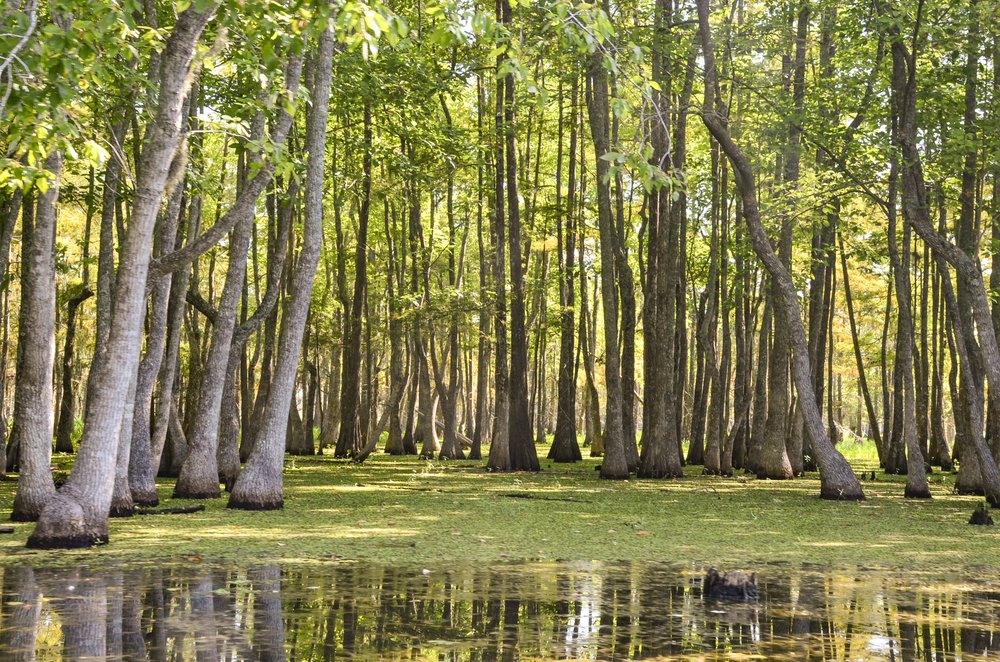
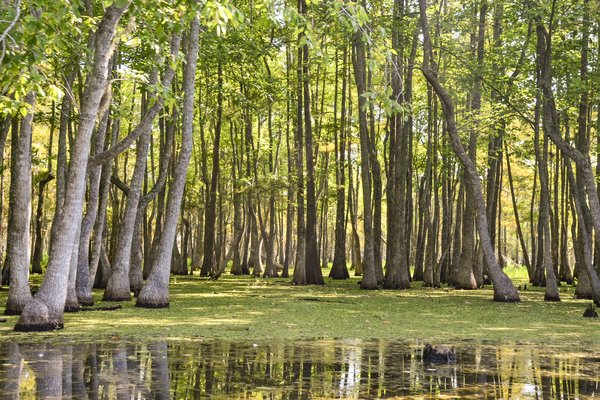
Caddo Lake’s bayous and swamps are a unique and precious Texas ecosystem. Tens of thousands of people visit the lake each year, fishing and paddling among the towering cypresses, and leave filled with love and respect for this magical place.
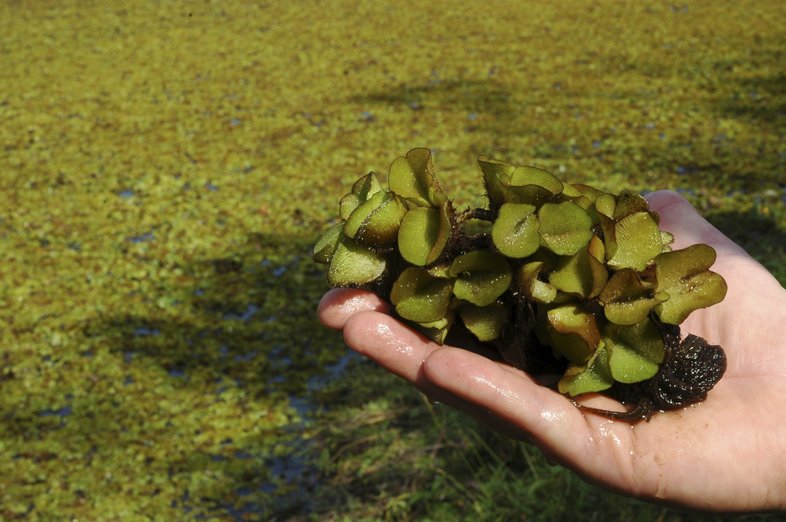
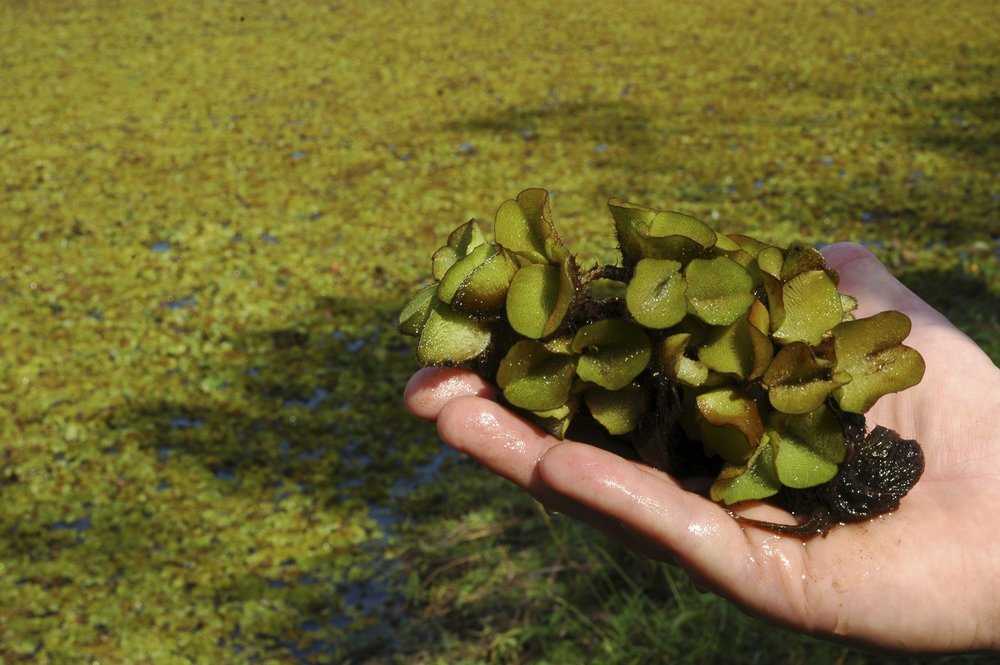
But for the past two decades, Caddo Lake has faced a looming issue in the form of giant salvinia, a fast-growing invasive plant native to Brazil. The Texas Parks and Wildlife Department has been battling this threat for years, with varying degrees of success.
Giant salvinia was first found in Caddo Lake in 2006, and by 2017, the plant covered around half of the Texas side of the lake. “Giant salvinia can double in size in seven to 10 days — so one football field becomes two in a week,” says John Findeisen, who oversees TPWD’s Aquatic Vegetation Management Program.
When giant salvinia takes over a lake, it blocks sunlight and outcompetes native plants that provide food for fish and other creatures. If left untreated, giant salvinia can kill off whole underwater ecosystems, impacting fish, turtles, aquatic vegetation and more.
TPWD currently manages giant salvinia using a seasonal rotation of herbicides, all of which are legally approved for aquatic use by the EPA and applied strictly by label instructions. The agency and the Caddo Lake Institute have employed other methods, too, including weevils that eat only giant salvinia, and machines that can physically remove the plant. Neither of these techniques is very effective in the lake; temperatures drop too low in the winter for weevils to be a sustainable option, and the physical removal is extremely expensive, as well as difficult given the swampy, tree-filled nature of Caddo.
In 2015, the Texas Legislature began appropriating around $3.2 million annually for aquatic vegetation work across the state, and Caddo Lake was a driving force behind the funding. Thanks to that investment and the work of TPWD biologists over the years, the agency has worked out a system that keeps the plant at bay. Between spring and fall, the agency uses a mix of contact herbicides, which kill only the parts they touch, and systemic herbicides, which are taken up into the plant’s system and kill the entire organism. Contact herbicides are used in the winter, when the plant is more dormant and systemic herbicides would not work as well.
While giant salvinia may never be fully eliminated from the lake, the current herbicide regimen prevents the weed from covering the majority of the lake’s surface. Each year is different — some years, such as 2021, when Texas experienced the weeklong winter storm, are great years for salvinia management. The cold temperatures, combined with regular application of herbicides, killed off much (but not all) of the plant in Caddo Lake. This year, with warm weather and sporadic rainfall, Findeisen has seen an explosion of giant salvinia populations throughout the state.
Some community members, notably Caddo Lake boat tour guide Danny Sullivan, have raised questions in recent months about the safety and efficacy of treating the lake with certain herbicides, including contact herbicide diquat, which the TPWD team uses as part of the rotation. Sullivan fears the herbicide could interfere with the food chain and throw the ecosystem out of balance. Diquat is EPA approved and works well in cold temperatures, and adding additional herbicides to the rotation can prevent resistant strains from developing.
While herbicide may be an imperfect solution (it does cause some damage to other aquatic plants), it is necessary to keep the giant salvinia at bay. “This is our best option at this present time, because if you do nothing, that lake will be covered up in a matter of months,” says Laura-Ashley Overdyke, executive director of the Caddo Lake Institute, in an interview with NBC. “Back in 2013, half of the lake was covered. You could crash that lake out, and have everything underneath the water die.”
Overdyke likens the use of herbicides to treat salvinia to treating cancer with chemotherapy. “The salvinia is the cancer, the herbicide is the chemotherapy,” she says. “It may have some downsides to it, but without it, we don’t have a lot of tools in our toolkit.”
TPWD welcomes questions or comments, and in January the agency will host a public meeting where community members can come meet experts, including Findeisen, state herpetologist Paul Crump, Inland Fisheries Director Tim Birdsong, Texas A&M AgriLife forester Allen Smith and others.
In the meantime, thanks to a federal grant, Caddo Lake will have a community water advisory group. Water samples will routinely be sent to labs with community members kept informed of the results.
Caddo Lake is one case study of the damage an aquatic invasive species such as giant salvinia can wreak on an ecosystem. While it’s too late for Caddo, Findeisen emphasizes that the best cure for invasive species is prevention.
“The biggest thing we need to do is just make sure, when we get off the water, we clean, drain and dry our boats,” he says. “That way, we prevent the spread of any unwanted plants elsewhere.”
Larry Hodge
Larry Hodge