I. D. FAIRCHILD State Forest rests in early morning stillness. Wisps of fog thread through towering pines jutting up through a low understory of native wildflowers and grasses.
It is April 2025, and my son, Robert, and I have arrived at Fairchild to enjoy its centennial celebration. This 2,788-acre woodland in Cherokee County was acquired by Texas A&M Forest Service in 1925 and is now used as a demonstration forest to provide education and resources to Texas residents interested in forest stewardship and wildlife management practices.
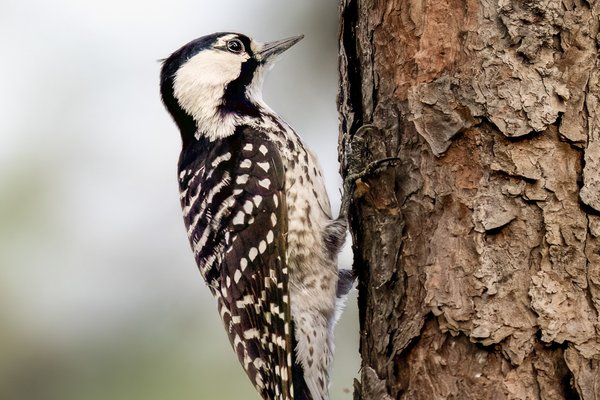
It is a particularly special time at the forest; not only is Fairchild celebrating its 100th anniversary, but the red-cockaded woodpecker, which inhabits this forest, was downlisted in October 2024 from federally endangered to threatened after 54 years of recovery. I am interested to learn what effect the reclassification will have on the diminutive woodpeckers.
Forest Service biologist and woodpecker coordinator Donna Work spills out years of accumulated knowledge and expertise on the life histories and management of red-cockaded woodpeckers to attendees of Fairchild’s centennial celebration. She has been managing the woodpeckers at Fairchild, as well as W.G. Jones State Forest in Montgomery County, for nearly three decades. During this time, Work has been monitoring, banding and occasionally bringing in new birds to increase genetic diversity among the isolated woodpecker populations residing in Fairchild and Jones state forests.
“What they need is large, contiguous spans of live, mature, open pine forests,” says Work. Unlike most woodpeckers that nest in dead trees, the red-cockaded woodpecker “is the only North American woodpecker that builds the cavities that it roosts in at night and that it nests in during nesting season … in live pine trees,” Work says. This is due to their particular habit of pecking out sap wells around their cavity holes every morning, allowing the sap of the living pines to flow down “fresh and sticky” as a “protection mechanism.” This deters predators, especially snakes, from scaling the trunk to raid the eggs or nestlings inside.
District forester Jason Ellis wears his passion for forestry on his sleeve. He constantly scans the trees and reaches out to examine forbs as he passes through the forest. Besides keeping the forest healthy, Ellis manages Fairchild as a busy training hub for landowners, forestry students, wildland firefighters and new Forest Service hires.
Despite the woodpecker’s downlisting, Ellis has no intention of deviating from Fairchild’s current stewardship policies, which include timber thinning and prescribed burning to maintain open pineland. “As far as the management goes, at least while I’m here, we’re still going to manage for the bird,” Ellis says. “And in doing the management practices that we do for the bird, other wildlife species are benefiting from that.” Indeed, Fairchild supports a population of eastern wild turkeys — uncommon in East Texas and a point of pride for Ellis.
Forest restoration work at Fairchild is not a solo endeavor — the Forest Service partners with other organizations, including the Texas Parks and Wildlife Department, to help with controlled burns, eastern wild turkey assessments and more. “[TPWD] has always just been big champions of what we’re doing out here,” Ellis says.
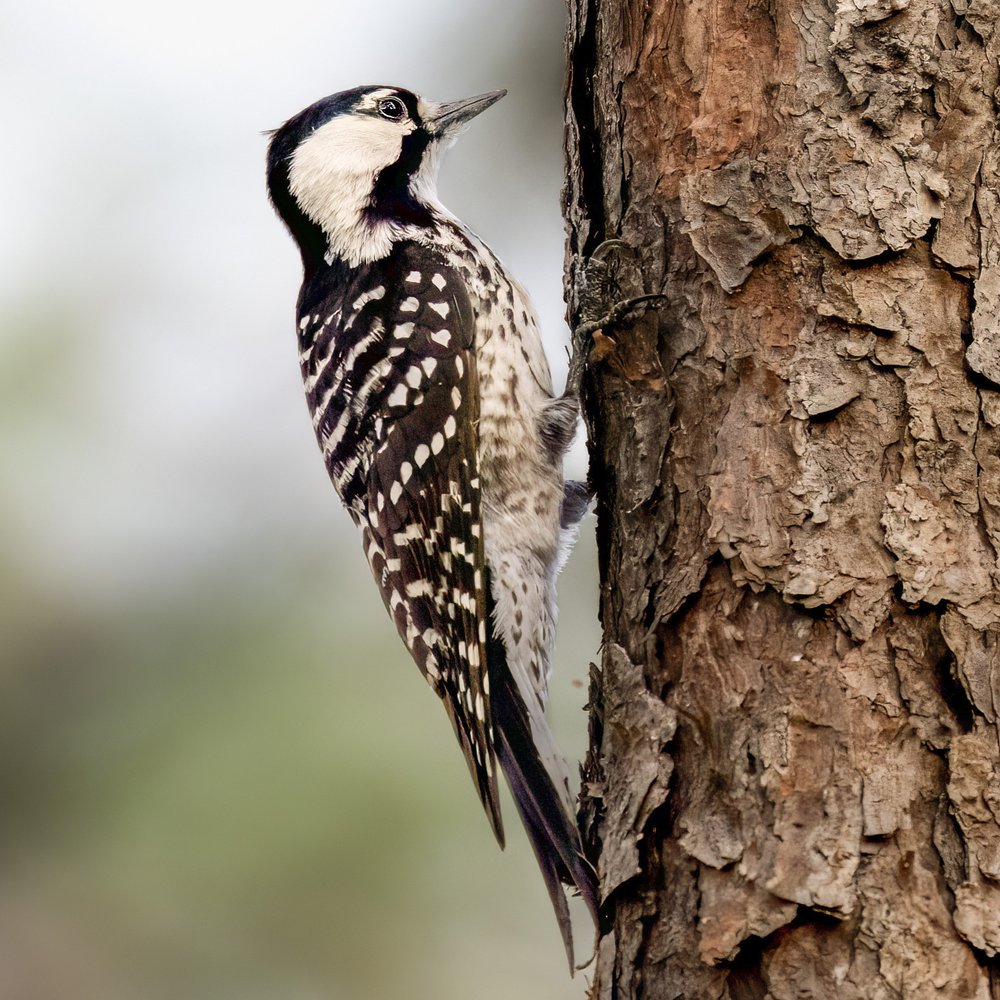
On a sultry May morning, Robert and I return to join Work on a nest check of two active red-cockaded woodpecker clusters (colonies of related woodpeckers). She drives us along a maze of muddy two-track roads before parking deep within the forest. We follow the nimble biologist as she carries her peeper scope to some colored ribbons tied to a branch, then veers off-trail to nest cavity number one. Just as we pick out a good spying spot, a chattery seek-seek-seek breaks out in the pines — a red-cockaded woodpecker! Its large, white cheek patches make the bird look quite jaunty and, well, cheeky! (“Cockaded” refers to a small red streak on each side of a male bird’s head.)
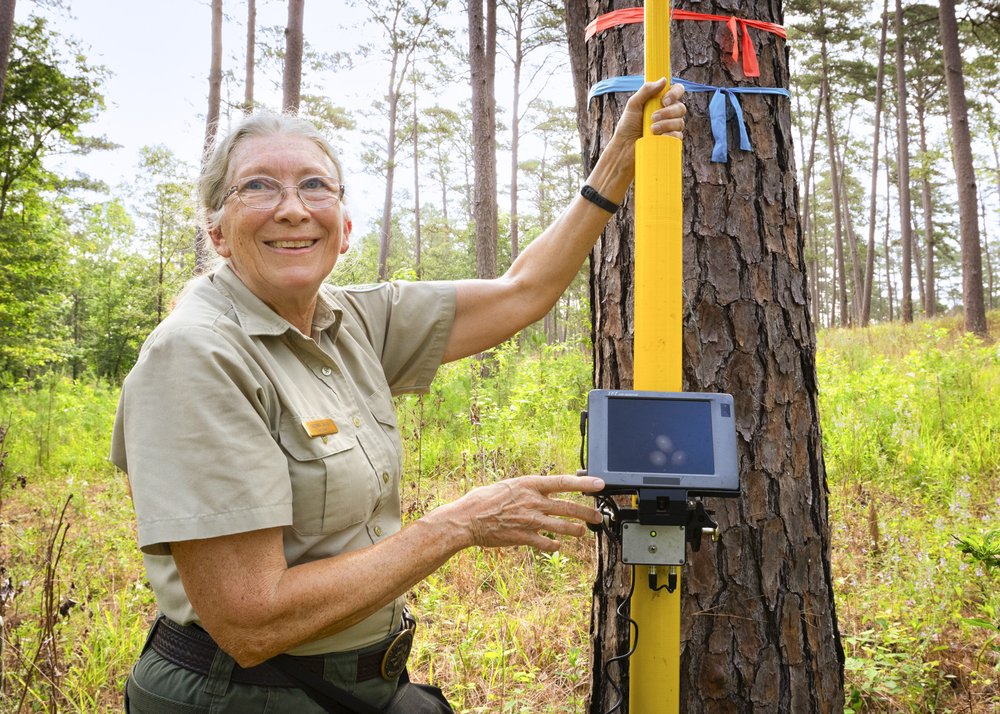
Once the adult leaves, I assist Work in deploying the wobbly telescoping peeper scope 32 feet up into the small cavity hole. My contribution consists of guidance: “About a foot more, a few inches more, almost, almost, now!” Work pops the elongated lens into the hole, and we gather around the ground-level monitor to view what is inside. To our delight, the nest contains three eggs nestled among wood shavings. It is a sweet sight, but Work is somewhat concerned the chicks have not hatched yet.
We move on to cavity number two. As I am asking Work a question, I hear Robert’s hushed exclamation, “Babies, I hear babies!” An adult has entered the cavity and set the chicks a-twitter. I cannot withhold a soft squeal of glee. Knowing the passion and labor that has been poured into saving this species by Work, Ellis, the Forest Service and so many others, hearing this new life is magical.
Concerned about the red-cockaded woodpecker’s future, I turn to Work for hope. She assures me that their threatened status still provides some protections, and like Fairchild, many state and national forests remain dedicated to continued red-cockaded woodpecker management. Work further indicates that conservation easements on private landowner properties will also be vital to the ongoing success of the birds. “We’ve got some really good private landowners here in Texas that want the birds and want to do the best they can for them … so I think [the red-cockaded woodpecker’s] future is still bright,” she says.
We linger at Fairchild after Work departs. The forest floor is carpeted in the sunny blossoms of yellow crownbeard, peppered by purple pleat-leaf and sanguine purple coneflower. Twenty-two species of birds sing their joy. This abundance of wildflowers and birdlife is a byproduct of sound woodpecker management and a thrilling testament to the productivity of a healthy forest ecosystem. The truth is, this forest provides a haven to many creatures struggling to thrive within a world of fragmented and disappearing wildlands. For them, Fairchild State Forest is a home.
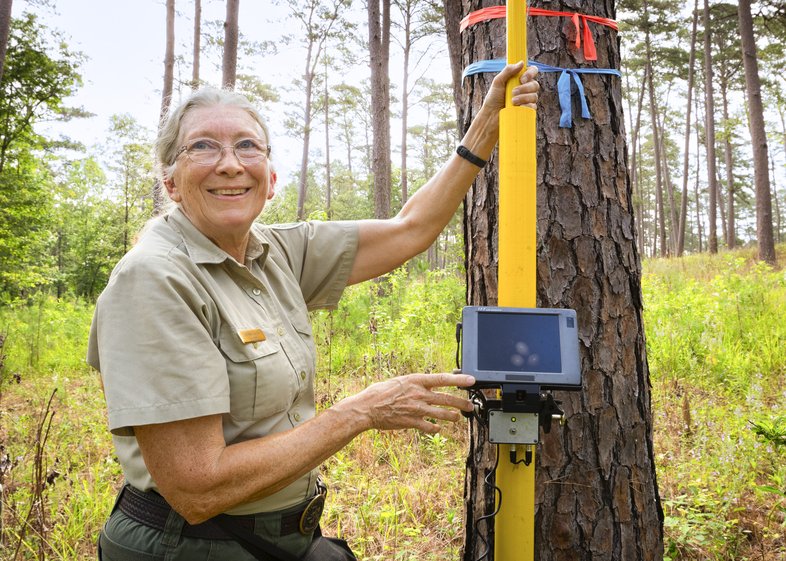
Biologist Donna Work displays red-cockaded woodpecker eggs in the peeper scope monitor.
Robert Gary
Biologist Donna Work displays red-cockaded woodpecker eggs in the peeper scope monitor.
Robert Gary
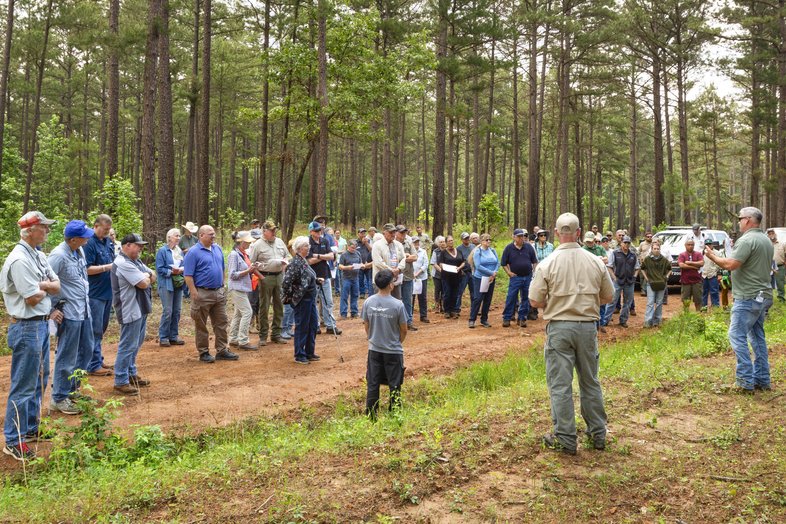
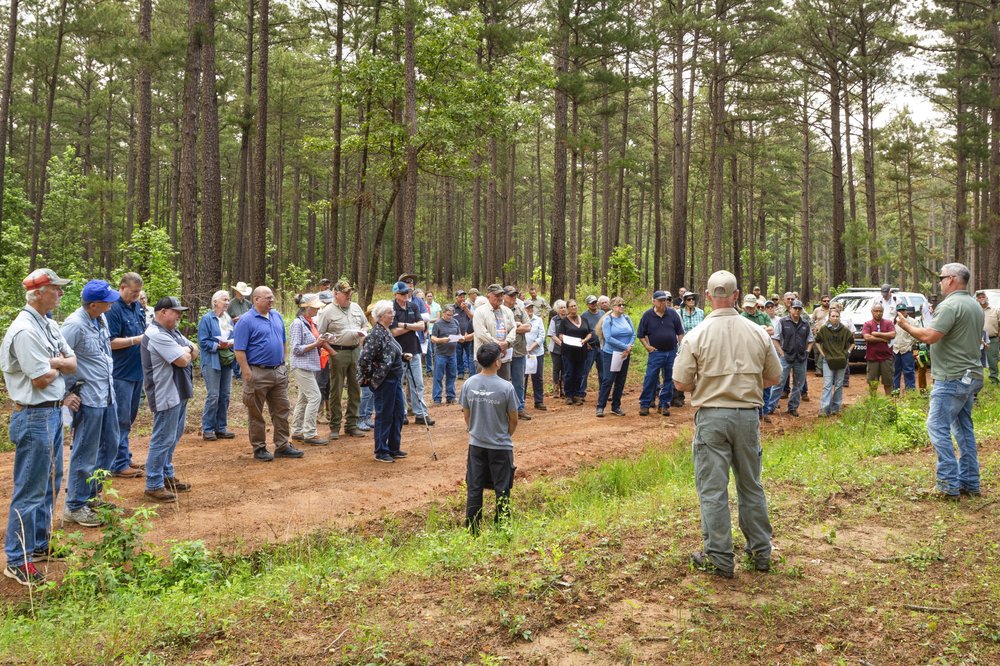
Centennial celebration attendees listen to expert presentations at I.D. Fairchild State Forest.
Robert Gary
Centennial celebration attendees listen to expert presentations at I.D. Fairchild State Forest.
Robert Gary