WE PADDLED DOWN from Bevilport, a spot on East Texas’ Angelina River that served as an important river navigation point in the 1800s.
Our destination: the Forks of the River, the Y formed where the muddy waters of the Neches River merge with the clearer waters of the Angelina.
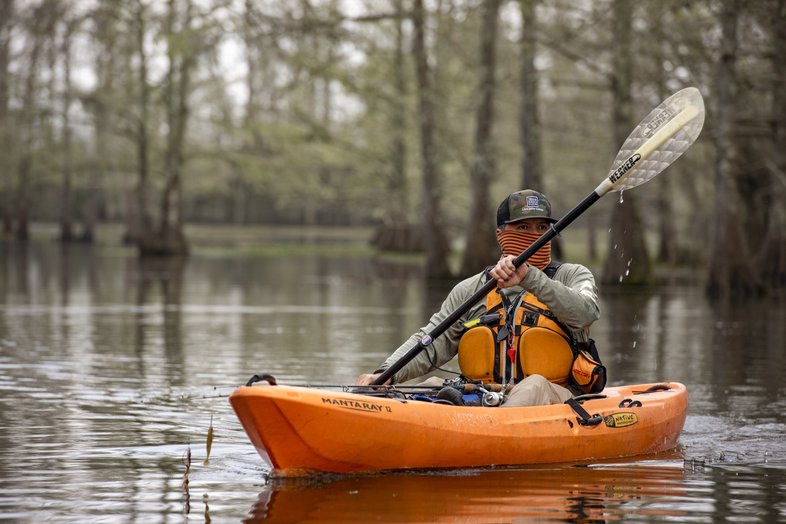
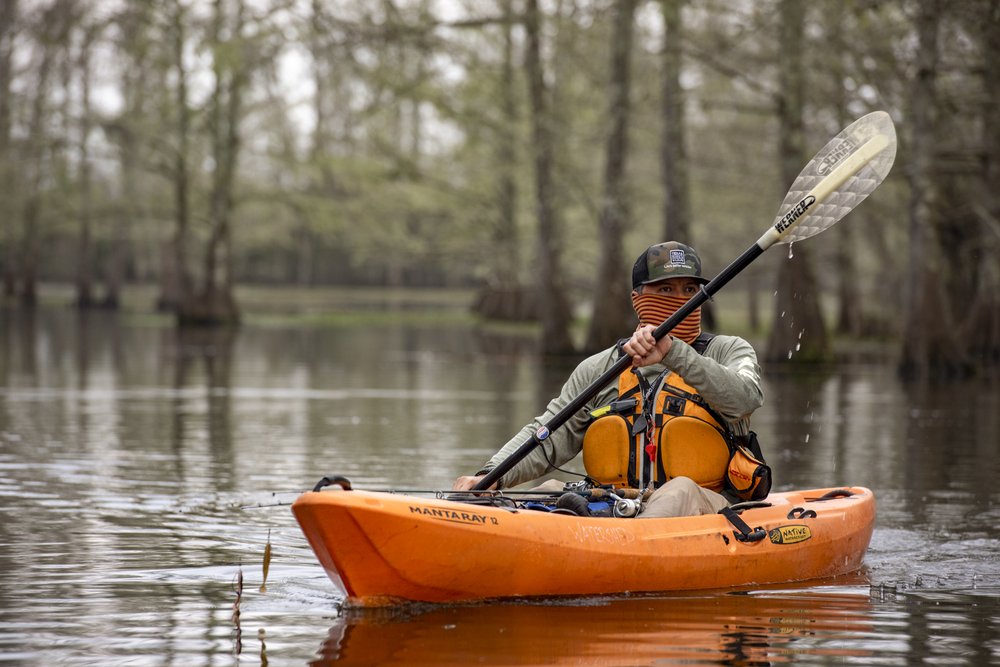
A kayaker paddles the Forks of the River.
Chase Fountain
A kayaker paddles the Forks of the River.
Chase Fountain
I had wanted to visit the Forks, on the edge of the Big Thicket, for years after reading the East Texas natural history classic, Land of Bears and Honey.
“The Forks was wild country,” wrote authors Daniel Lay and Joe Truett of a 1928 boat trip through the area. “Endless sloughs snaked among cypress and tupelo gum trees, and oaks lined the banks. Alligators sank beneath the water. A few years before, deer hunters on one of the sloughs shot a gator that weighed more than 1,200 pounds. According to legend, ivory-billed woodpeckers still lived there.”
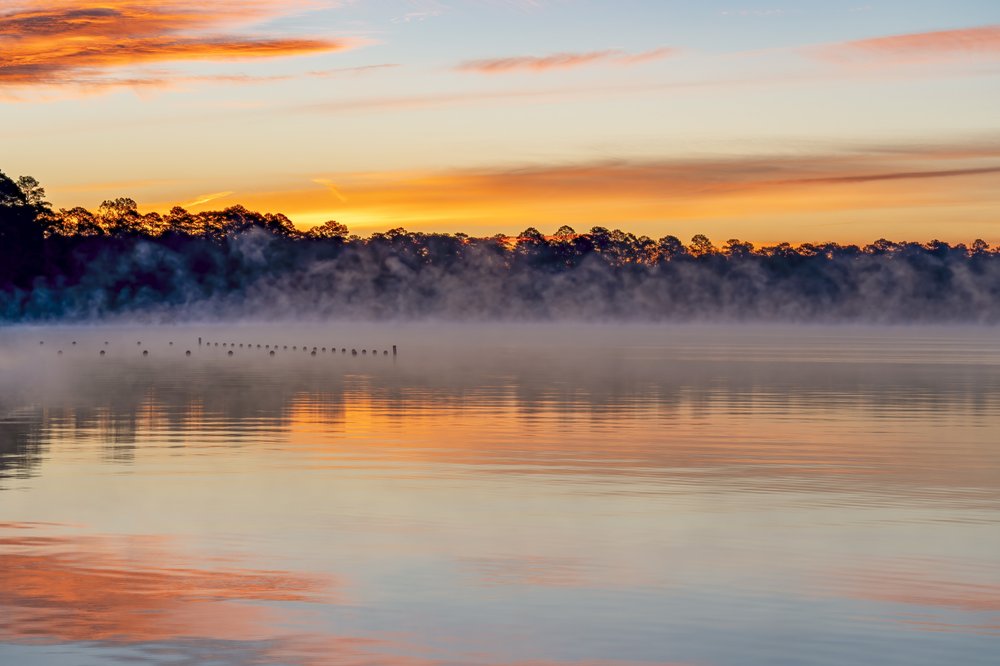
Today the Forks are part of the Angelina-Neches/Dam B Wildlife Management Area. Accessible only by boat, the shady, winding backwater sloughs harbor a rich diversity of birds, animals and legends.
The WMA covers 12,636 acres, of which about 7,000 are covered by B.A. Steinhagen Reservoir. The WMA boasts several species of native mature hardwood trees, including water oak, cypress, sweet gum and red oak. “We have lots of cypress — tons,” says Cody Dunagan, WMA manager. The uplands support stands of mature loblolly and shortleaf pine. The Forks remain one of the only large tracts of pristine bottomland hardwood forest that is accessible to the general public.
As we paddled through the Forks, our path wove between submerged logs and protruding cypress roots like a maze, and we stayed alert for alligators lurking nearby.
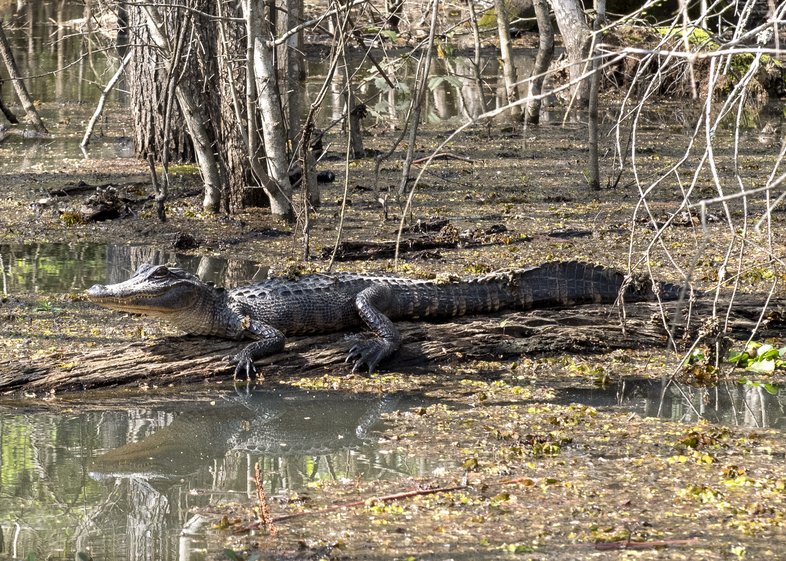
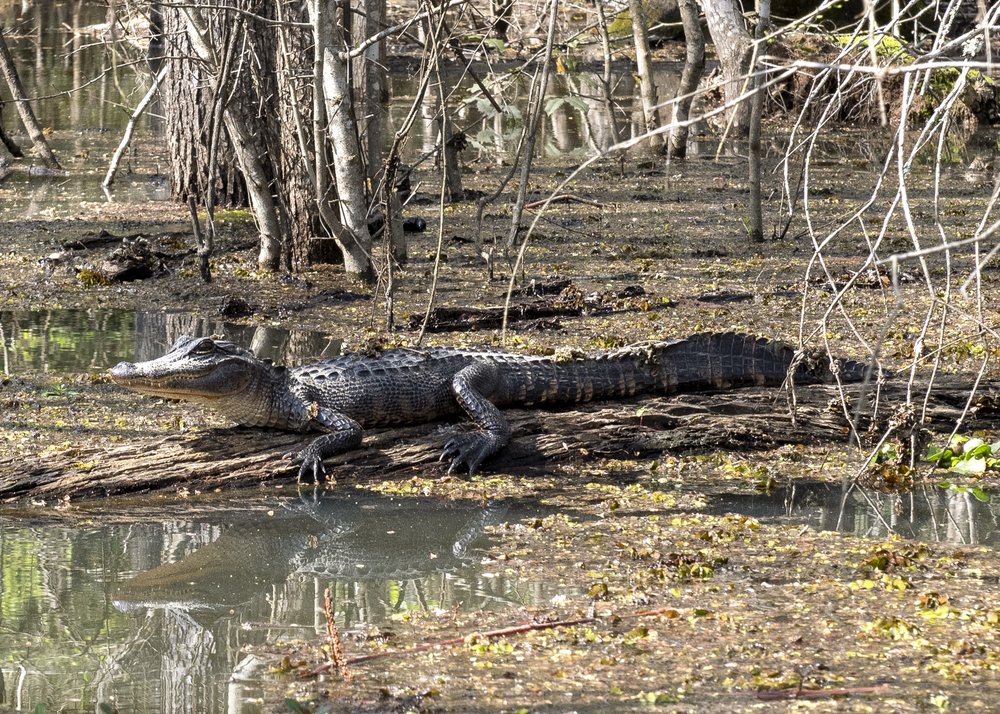
An alligator rests along the river.
Chase Fountain
An alligator rests along the river.
Chase Fountain
“I’ve been here 9 1/2 years, and there’s still little connecting waterways that I haven’t been down,” Dunagan says. “I could go out today and find a brand new one. I’ve spent plenty of days just kind of exploring through there, and eventually you just pop out somewhere and think, ‘How’d I get here? I didn’t think that was possible.’ If you wanted to boat around and find all those little backwater sloughs, it would take you years.”
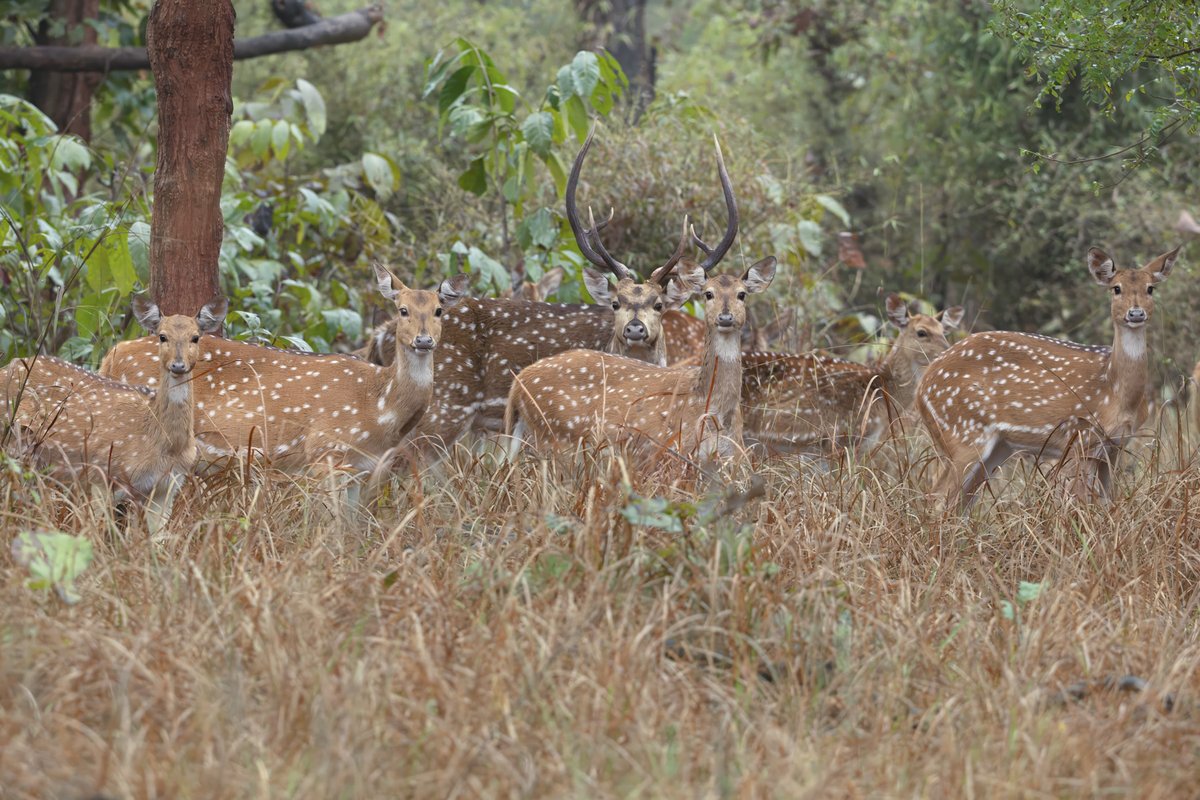
Besides swampy explorers, the WMA attracts hunters and anglers. “We’re really popular with waterfowl hunters, popular with fishermen,” Dunagan says. “Gator hunting is popular, too. As far as terrestrial hunting, squirrels, hogs and deer are big.”
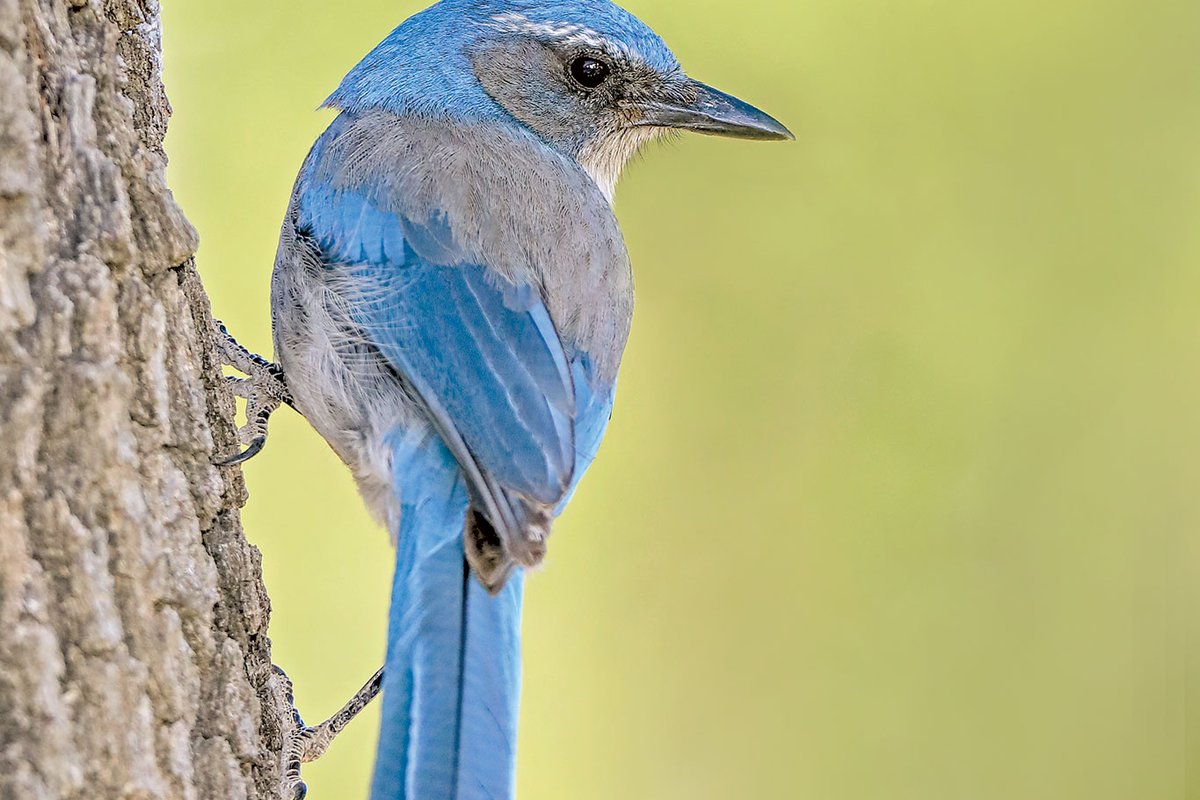
The abundant wildlife diversity offers chances to see many different creatures. “There’s life everywhere,” Dunagan says. “We get a lot of really cool waterfowl species — ducks, rails, gallinules and wading birds, things like that. I’ve seen some white-fronted geese out there. We have a lot of black-bellied whistling ducks. I’ve watched an alligator eat a bird out here.”
Bald eagles are so common, “they’re not even worth mentioning anymore in East Texas,” he says. “They’re everywhere.”
The vibrant, watery habitat also means invasive species can be a problem. “We get a lot of invasives,” says Dunagan, who spends much of his time on invasives management. “We have giant salvinia, we have water hyacinth, we have water primrose. There are tons of things that just shouldn’t be here. We’re working all the time to keep them knocked back to the bare edges. But it’s just a never-ending battle.”
What to Do
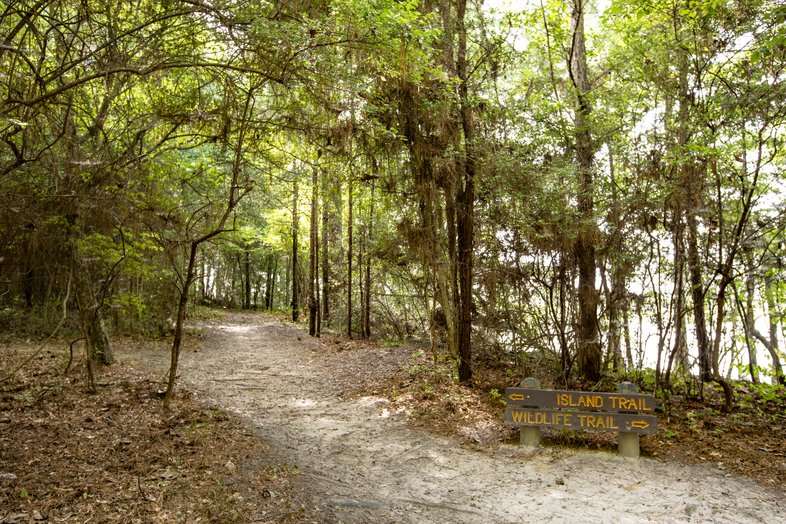
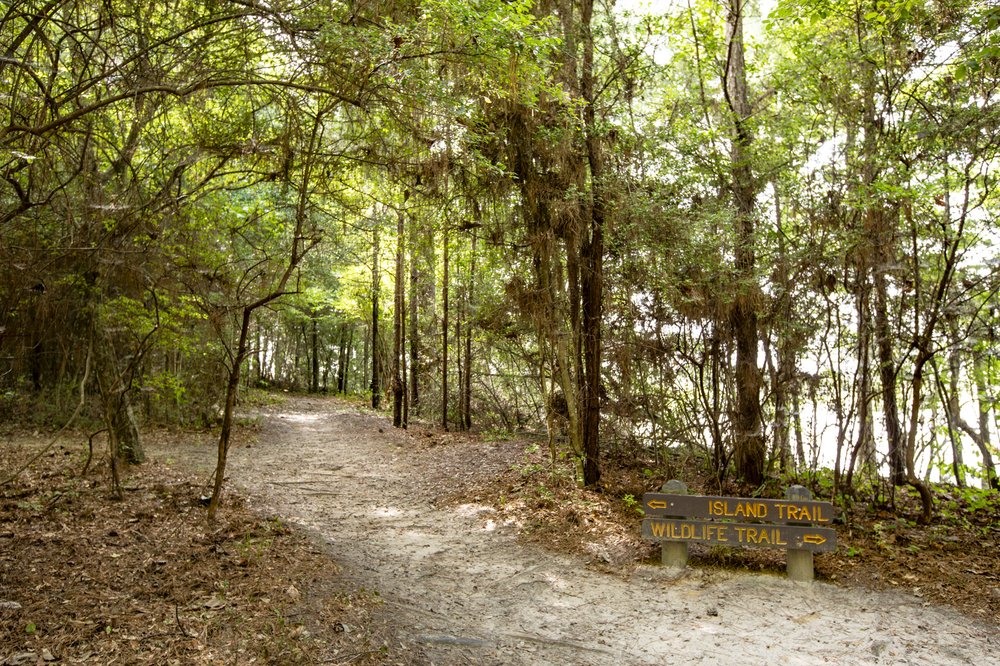
Nearby Martin Dies Jr. State Park contains miles of trails.
Sonja Sommerfeld
Nearby Martin Dies Jr. State Park contains miles of trails.
Sonja Sommerfeld
Hunting: Waterfowl, white-tailed deer, squirrels and hogs provide the best hunting opportunities. Rifle hunting is prohibited; hunters must use shotguns, muzzleloaders or archery gear. Hunters need a hunting license and Annual Public Hunting Permit. Most hunts are walk-in (or boat-in) hunts; alligator hunts are conducted through a drawing.
Fishing: The shallow waters of Steinhagen Reservoir offer good fishing for catfish, crappie and bass.
Hiking: The adjacent Martin Dies Jr. State Park provides miles of trails.
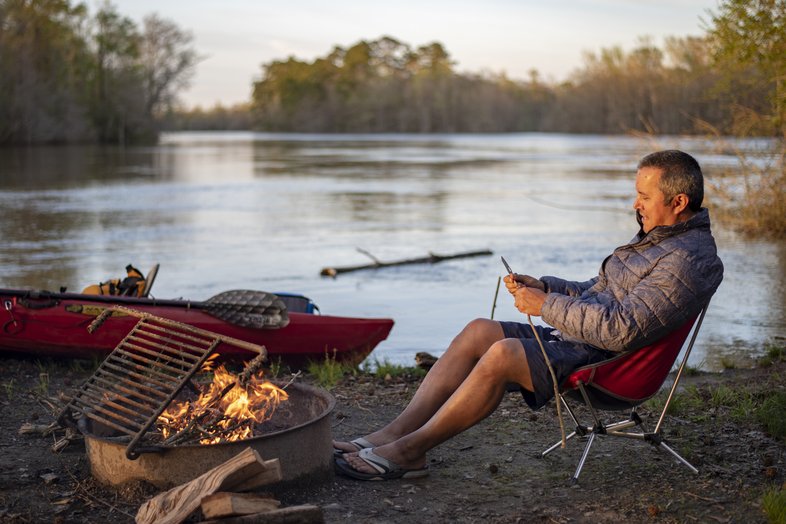
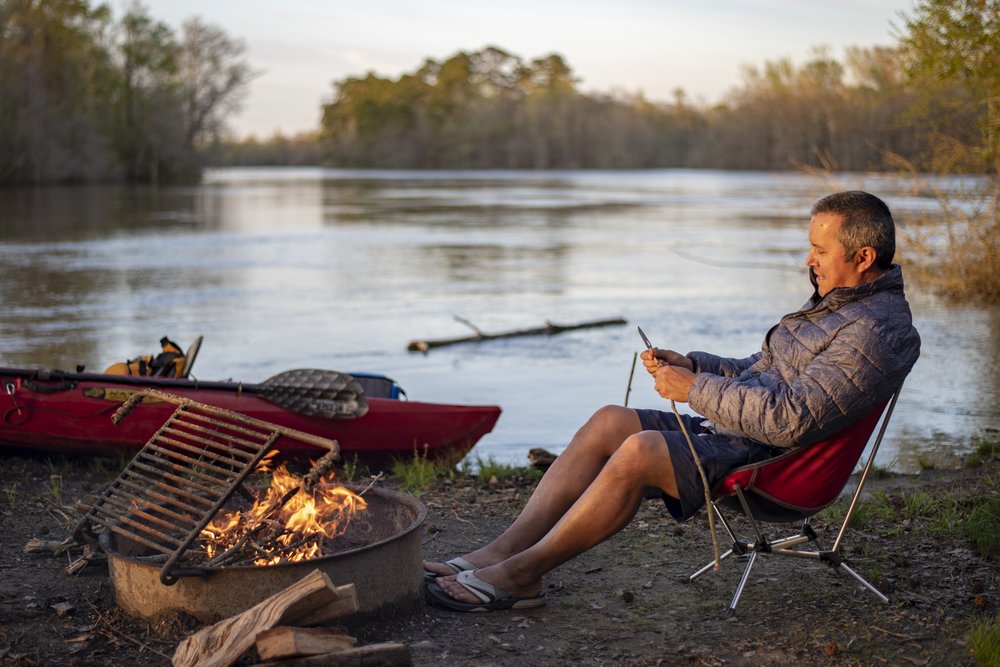
Reservable boat-in campsites are available along the Angelina River.
Chase Fountain
Reservable boat-in campsites are available along the Angelina River.
Chase Fountain
Camping: Primitive campgrounds, accessed by boat, are available on the Angelina River. These sites are some of the few reservable riverside sites in Texas. Reserve them through the U.S. Army Corps of Engineers.
Paddling: The trip from Bevilport to Martin Dies Jr. State Park is 10 to 12 miles. It can be done in a day or broken into two days with a night of riverside camping along the way. Either way, allow extra time to explore the Forks.
How to Visit
Access to the majority of the wildlife management area is by boat only. Airboats are prohibited. Public boat ramps are located at Bevilport, Martin Dies Jr. State Park and the Magnolia Ridge Army Corps of Engineers Park. Hunters 17 years of age and older must possess an Annual Public Hunting Permit and valid hunting license. No permit is required for nonconsumptive use.