From giant sharks to tiny minnows, from seemingly tailless ocean sunfish to eels which appear to be all tail, fish are an incredibly diverse group of animals. One thing they all have in common is the ability to glide through the water in a way that looks nearly effortless. But behind their subaqueous grace is a complex array of adaptations developed over millions of years. Read on for a glimpse into the science behind how fish swim.
Part 1: The Swim Bladder
In order to exist in the water, fish must strike a balance between floating and sinking. This is called establishing a neutral buoyancy. When humans want to dive down and explore the underwater world, we create neutral buoyancy by adding weights — around 10 percent of our body weight in salt water and a bit less in freshwater. Fish obviously don’t need external weights; they have their own internal way of attaining the necessary buoyancy.
More than half of the fish in the world have a special organ called the swim bladder, which is a gas-filled sac located below the spine and above the digestive tract. Fish draw in surrounding water across their gills, allowing dissolved gases such as oxygen and nitrogen to enter their bloodstream, similar to how our own blood carries oxygen.
A gas-regulating gland on one end of the swim bladder converts the stored oxygen and nitrogen in the fish’s blood into gaseous oxygen and nitrogen. As a fish swims deeper, pressure from the surrounding water forces the fish down. To compensate for the increased pressure, fish must inflate their swim bladders to attain neutral buoyancy. When a fish rises in the water column and the pressure decreases, it loosens a muscular ring in the swim bladder, allowing the gases to pass into another chamber containing a gland called the oval body. Located at the other end of the swim bladder, the oval body removes the gas by absorbing it into a network of small blood vessels.
Some fish, such as trout, gar, catfish and eels, have a tube that connects their swim bladder to their digestive tract, allowing them to fill their swim bladder with air at the surface, as well as “burp” out air to reduce their buoyancy.
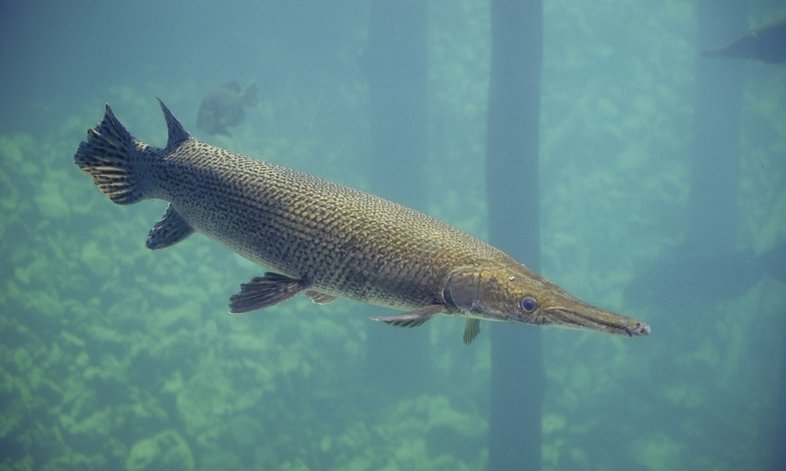
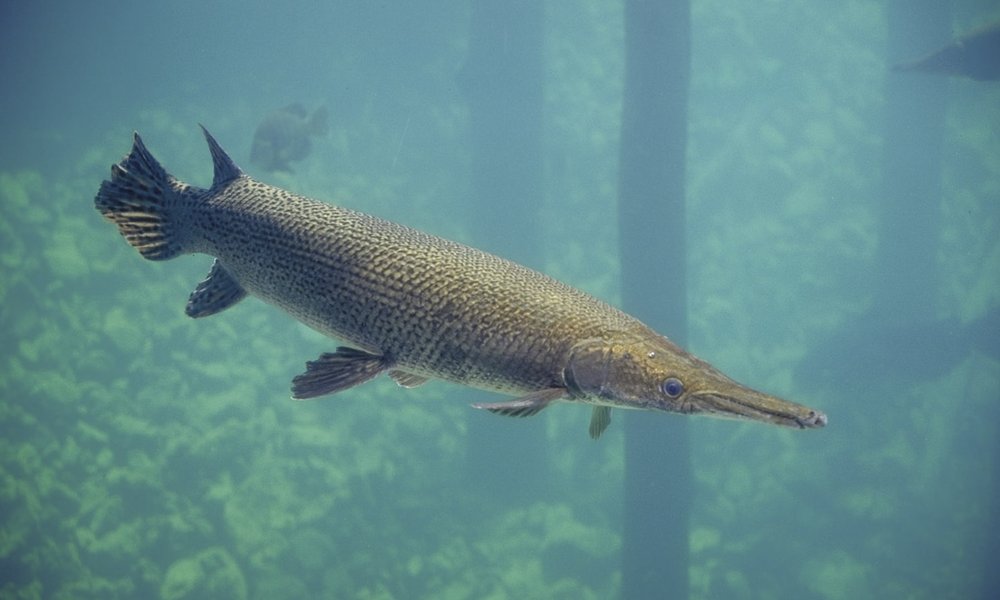
A gar swims in murky water.
TPWD
A gar swims in murky water.
TPWD
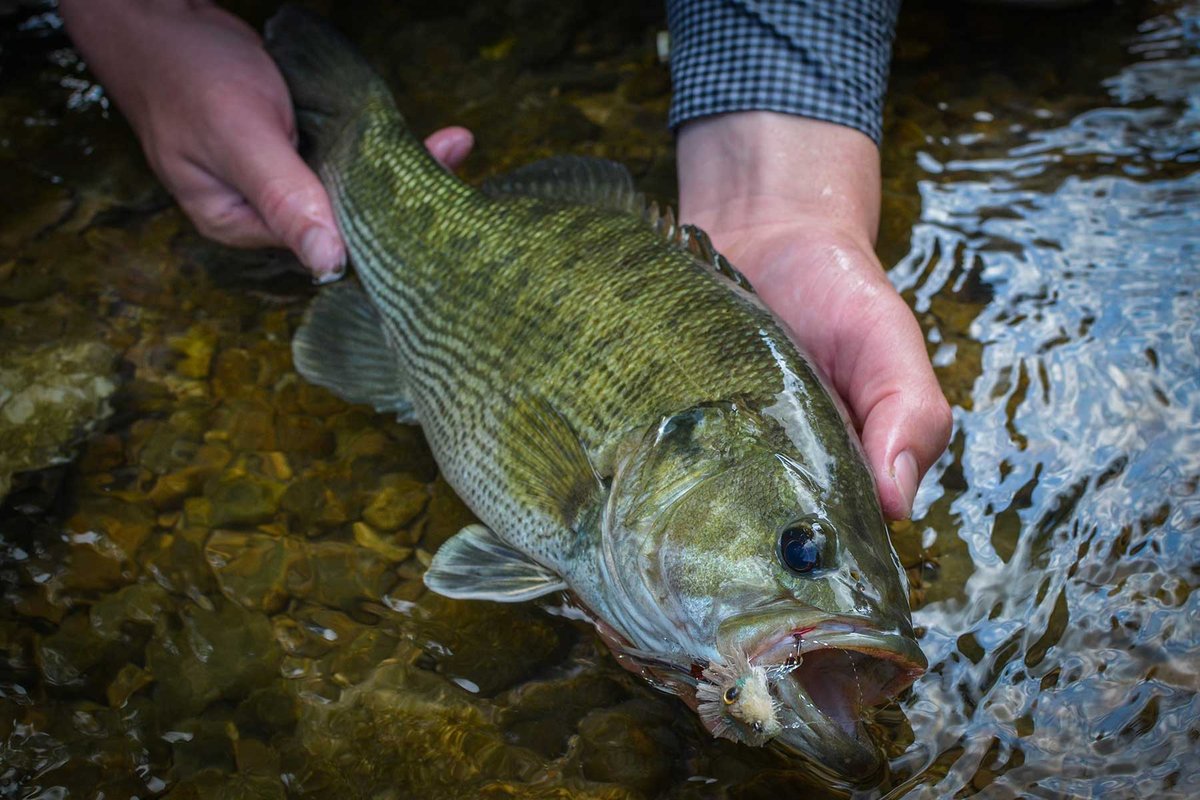
Other fish such as bass have a slower system — it takes a bass about 24 hours to add or reduce pressure in its swim bladder.
That’s why a bass that is brought up too quickly by an angler can experience barotrauma, causing it to bloat with air when brought to the surface. Anglers sometimes use a technique called fizzing, in which a hollow needle is inserted into the fish’s side to remove pressure caused by an overinflated swim bladder.
What about the fish that don’t have a swim bladder? Some fish, such as sharks, have fatty livers to help with buoyancy. Squalene (an oil) makes up much of their liver tissue. Squalene is less dense than water and helps offset the density of their other tissues that are more dense than water.
Fun Fact
Swim bladders can do more than help a fish sink or float — fish in the drum family are so named because they can use their swim bladders in combination with other organs to make low booming/grunting sounds. These sounds help them attract mates and warn other fish of danger.
Part 2: Body and Fins
With the problem of buoyancy handled, fish must also propel themselves forward through the water. With their varied body shapes, fish swim in different ways. Some fish undulate (pass a wave through their entire bodies), while other fish oscillate (swish their tails back and forth). Different species use their fins to varying degrees for propulsion, protection and balance. Scientists have broken down swimming styles into a few main categories, although not all fish locomotion styles can be neatly classified.
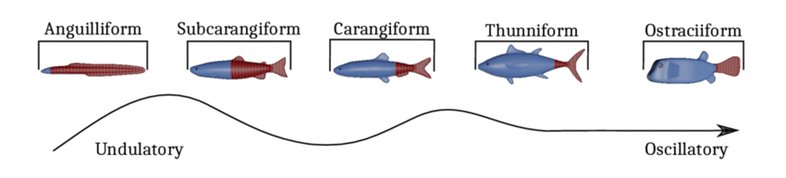
Locomotion modes of fish range from undulatory to oscillatory.
TPWD
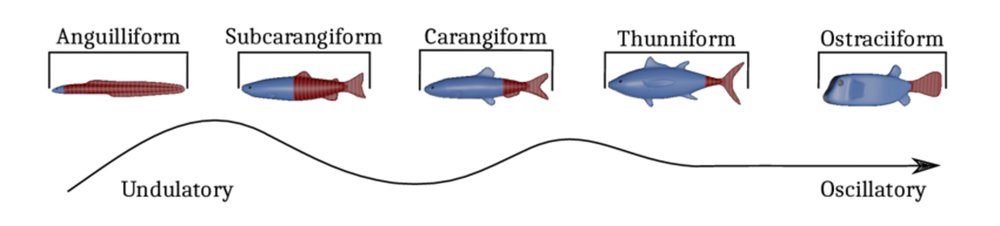
Locomotion modes of fish range from undulatory to oscillatory.
TPWD
Anguilliform swimmers are long and skinny. This group is named for eels, genus Anguilla, and they swim by undulating. Anguilliform swimmers use muscles along the sides of their body to pass a wave through almost the entire length of their slender forms, propelling them forward (in the chart above, the red indicates which part of the body moves to propel the fish forward).
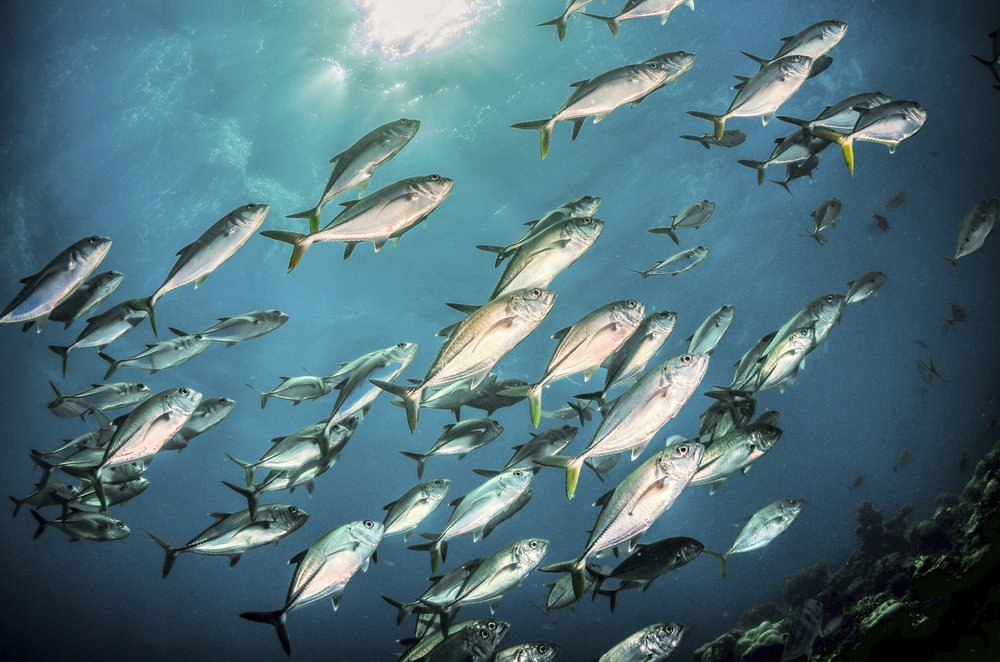
Carangiform swimmers such as jack and pompano move by rapidly oscillating the ends of their bodies (about one-third of their total length), starting shortly before the tail fin.
Sub-carangiform swimmers such as trout and salmon have a similar style to carangiform swimmers, but utilize a bit more of their bodies; the oscillating wave that propels them through the water starts around halfway through their bodies and increases quickly in amplitude toward the tail fin.
Thunniform swimmers such as tuna, mackerel, wahoo and great white sharks swim rapidly by oscillating their powerful, crescent-shaped tails. By restricting movement mostly to their tails, they can reach speeds of more than 40 miles per hour.
Ostraciiform swimmers are a group of boxy, sometimes armored fish that also swim by oscillating their paired front fins and tail fins, but usually quite a bit slower and more awkwardly than the sleek thunniforms. Examples of ostraciiform swimmers include longhorn cowfish and pufferfish.
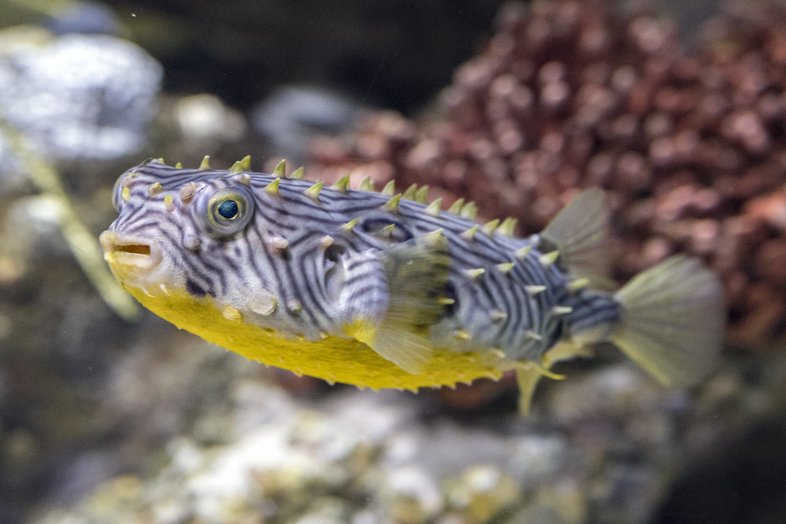
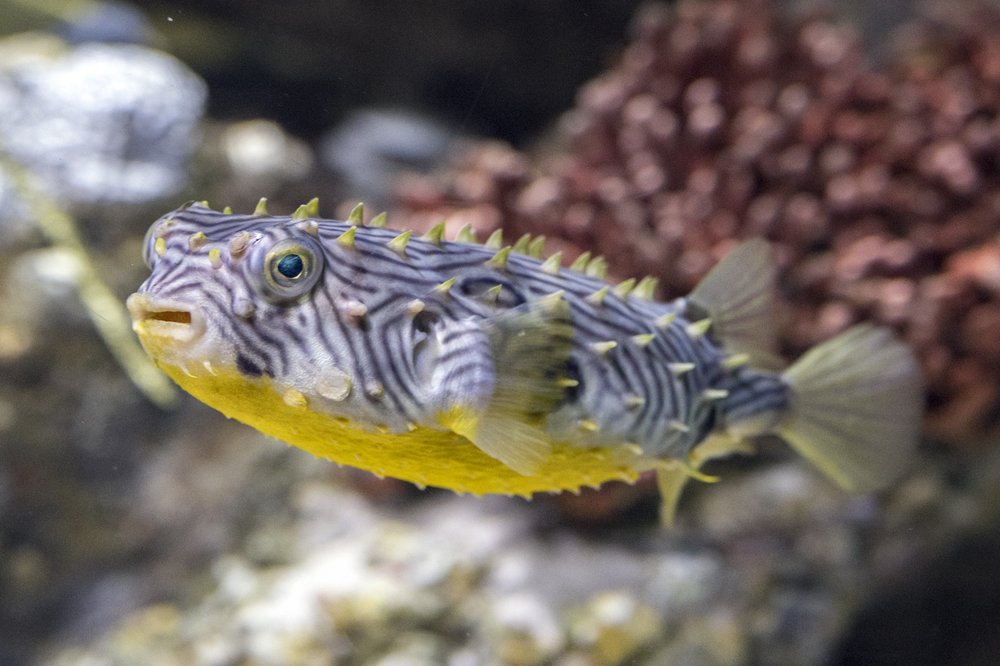
A striped burrfish is an ostraciiform swimmer.
StockAdobe.Com
A striped burrfish is an ostraciiform swimmer.
StockAdobe.Com
Next time you pay a visit to your local pool, take some inspiration from our underwater neighbors and try a new method of swimming. Whether you’re attempting to wiggle side to side like an eel or speed through the water moving only your feet like a tuna might, you may gain a new appreciation for the amazing abilities of fish.