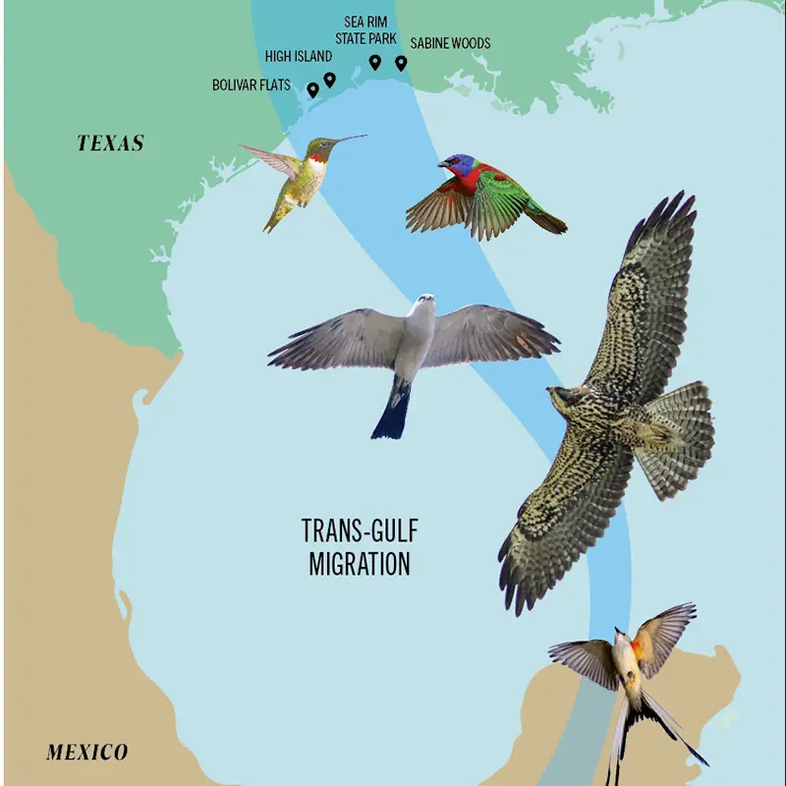
It has been called one of the greatest migration events on Earth, and the state of Texas serves as ground zero for much of this miracle of nature.
It begins in Mexico and South America, crescendos along the Texas coastline and quietly filters through forests, grasslands and wetlands extending northward. This monumental translocation constitutes the North American spring bird migration. Approximately 2 billion birds move through Texas, or one-third of the total spring migrants across the United States, thanks to the state’s fortuitous location along the Central and Mississippi flyways. However, grave challenges await avian travelers along their journey.
TPWD
TPWD
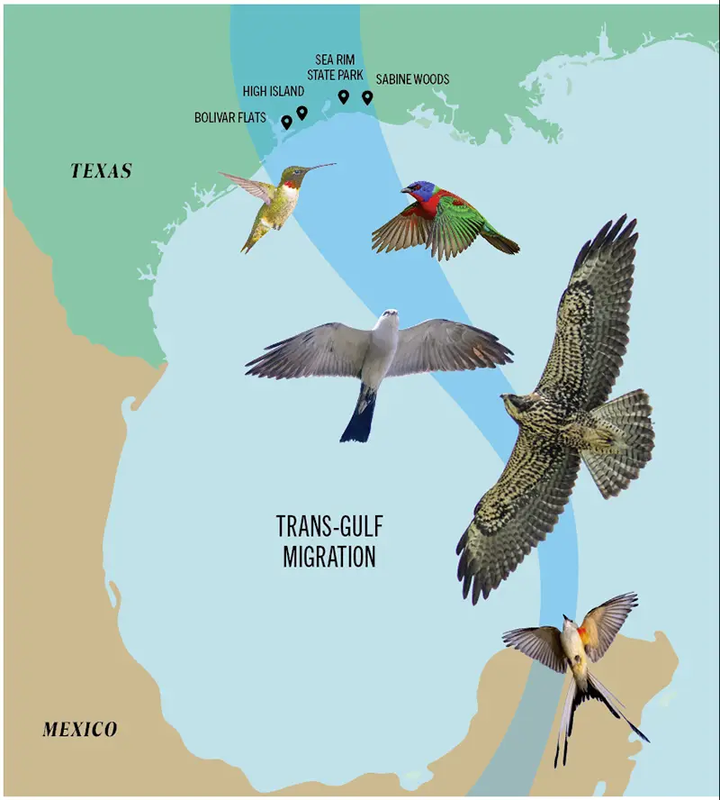
Imagine a tiny songbird perched at the edge of the Yucatán Peninsula in Mexico around sunset. It awaits just the right environmental prompts to spread its wings. Once it commits, our feathered friend must stay aloft for 18 to 24 hours without eating, drinking or resting as it pumps its wings nonstop across nearly 700 miles of open ocean. To rest means certain death in the Gulf below. If it is lucky, it won’t encounter storms from the north to hinder its forward progress; forceful northerlies mean far fewer survivors. Just as its stored fat becomes depleted, relief appears on the horizon — a grove of trees, known as an oak motte, rises slightly above the low coastal plain. Our bird has found sanctuary.
Coastal woodlots serve as lifesaving stations when survivors of the brutal trans-Gulf ordeal land in a state of exhaustion, dehydration and starvation. Birds migrating around the Gulf Coast, known as circum-Gulf migrants, rely on oak mottes, too. Because the mottes attract so many birds along these migratory pathways, they are often called migrant traps. Providing plentiful food, water and cover, these stopover habitats often make the difference between life and death, especially during heavy fallouts, when storm fronts force desperate migrants to ground and they appear to “fall out” of the sky. The birds rebuild their energy stores before completing their flights to northern breeding grounds. Of equal importance to the woodlots are undeveloped beaches and coastal mudflats for migrant shorebirds.
Because of ongoing coastal development, many of these vital landing grounds have disappeared in modern times, providing additional challenges to the avian endurance marathon. Fortunately, forward-thinking individuals and groups procured some of the most important pieces of coastal property, thus ensuring fragments of safe harbor to these marvelous travelers of the sky. The world-class bird sanctuaries of the Upper Texas Coast also provide places where people can witness this grand spectacle in a manner that is both thrilling and enlightening.
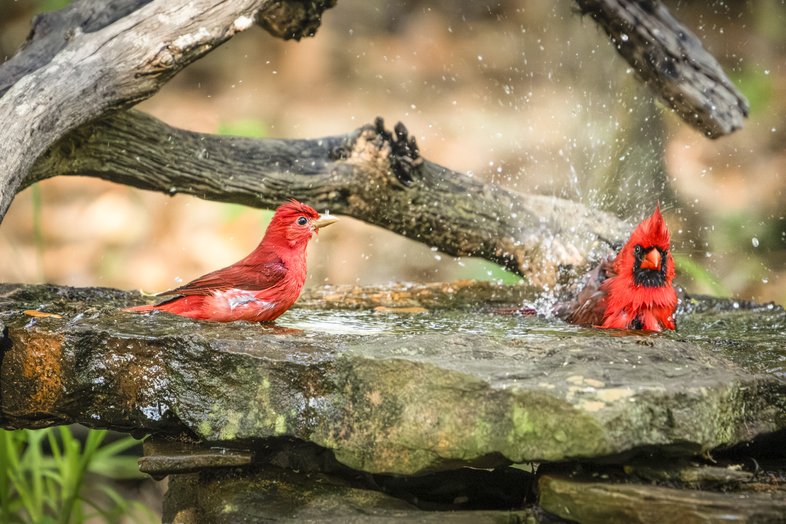
Summer tanager and cardinal at Sabine Woods.
Robert Gary
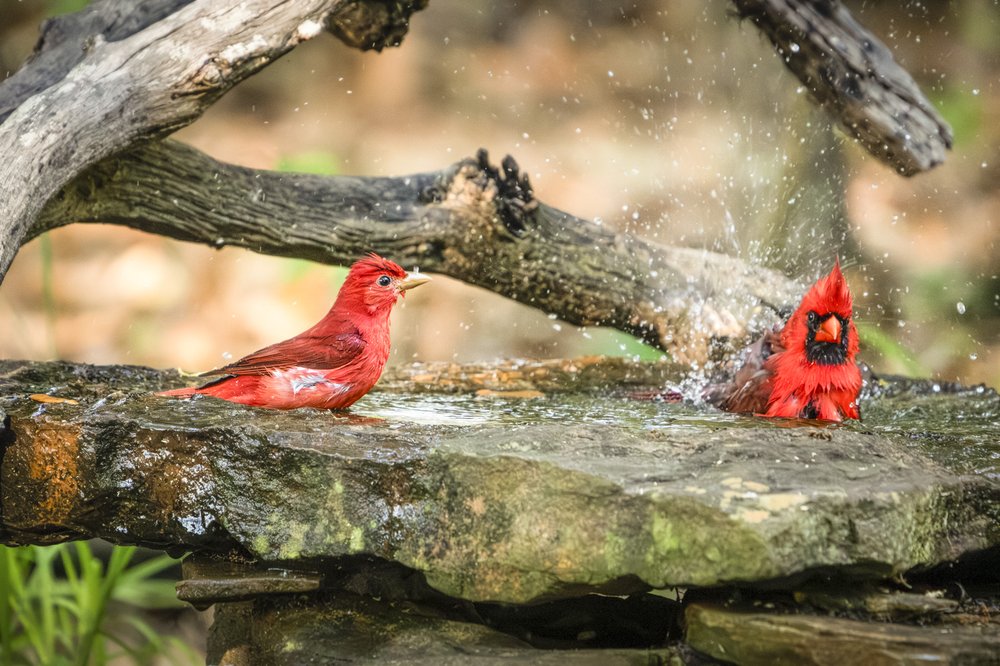
Summer tanager and cardinal at Sabine Woods.
Robert Gary
Sabine Woods Bird Sanctuary
We sit transfixed by two of the brightest red birds in North America — a summer tanager and a northern cardinal — bathing together in a pool of water. In an adjacent mulberry tree, neon scarlet tanagers gorge on plump fruits. Red, however, is not the only color du jour; yellows, oranges, blues and greens stir the air in a grand color palette.
I am with my family at Sabine Woods Bird Sanctuary, a prime migrant trap procured by the Texas Ornithological Society (TOS) in 1989. Trails meander through woods, wetlands, prairies and pines. The drips, however, attract the greatest attention. These constructed water features dispense water onto stone basins, ponds or earthen puddles, proving irresistible to weary feathered migrants, as well as their human admirers.
“This is almost like a resort for birds; all of the Gulf Coast is really. And it’s just magical,” says Dania Sanchez, wildlife photographer and vice president of the Golden Triangle Audubon Society, whose members help look after Sabine Woods in collaboration with TOS. “Our visitors that come out here, they all have the same sentiment, whether they come from Africa or Great Britain or Poland or the Netherlands … they feel like this is just one of the best places in the world to bird,” says Sanchez. The sanctuary functions “as natural as possible,” without supplemental feed. “Feeding some of these birds may attract hogs and other invasive species that may alter the cycle of our migration here,” says Sanchez. “So, we allow these birds to rejoice in the natural habitat.”
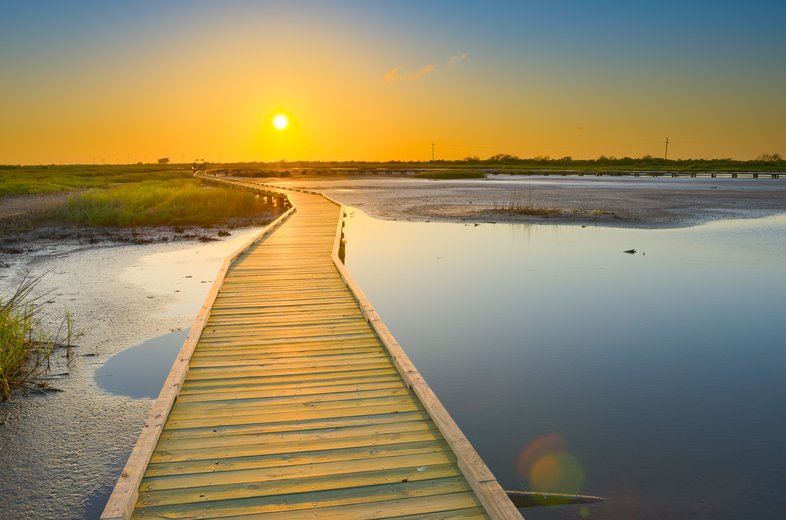
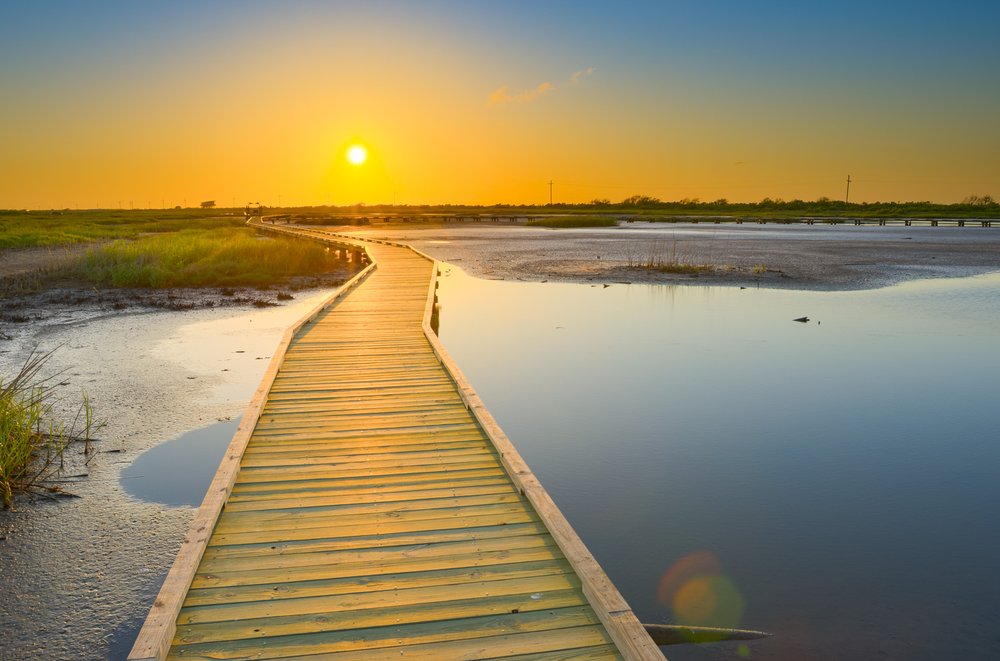
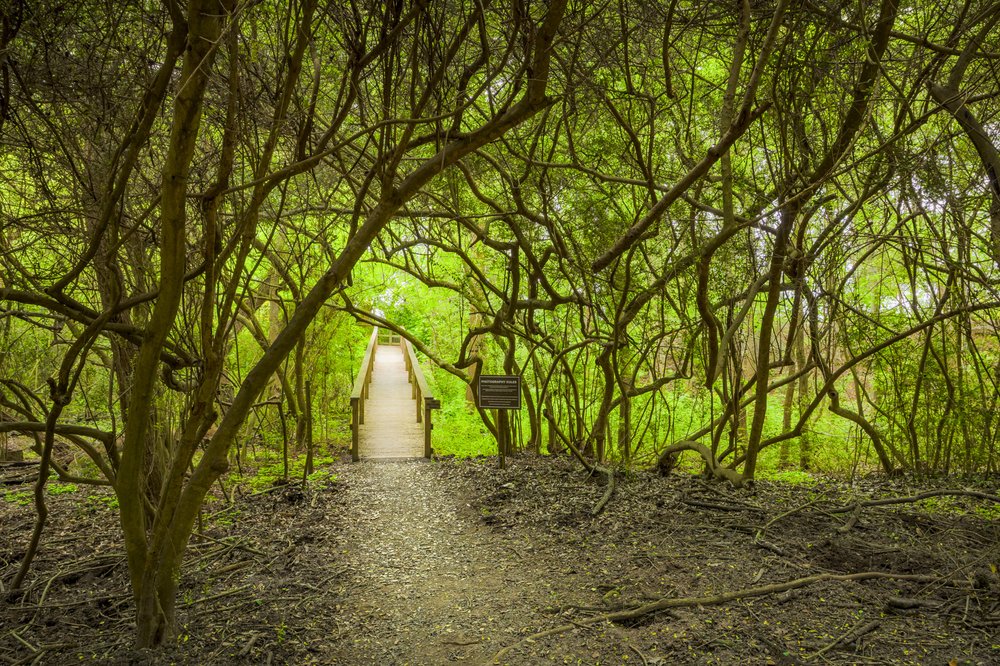
Sea Rim is home to the Gambusia Nature Trail, one of the most exceptional marsh boardwalks in the state.
Robert Gary
Sea Rim is home to the Gambusia Nature Trail, one of the most exceptional marsh boardwalks in the state.
Robert Gary
Sea Rim State Park
Six miles west of Sabine Woods is an extraordinary gem of another kind, Sea Rim State Park. Here, where the marsh extends to the edge of the beach and forms a “rim” along the Gulf, the Texas Parks and Wildlife Department provides a haven to scores of shorebirds and seabirds, including migrants. “This park is really known for its birding,” says TPWD customer service representative Madeline Amburg, who greets me at the park’s entrance station. She indicates that more visitors come for the birding than for beach recreation.
Sea Rim is home to the Gambusia Nature Trail, one of the most exceptional marsh boardwalks in the state. It loops for nearly a mile over mudflats, marsh grasses and shallow waters. Blue crabs are easily seen scurrying in the shallows, and abundant animal tracks run across the flats, including those of alligators, coyotes and bobcats. Both sedge wrens and marsh wrens sing from the reeds, while the music of buntings and orioles emanates from a row of stunted trees. But the showstoppers are the masses of shorebirds blanketing the flats: avocets, phalaropes, stilts, spoonbills, pelicans, terns, plovers and sandpipers. Many allow for close inspection as they forage alongside the boardwalk.
If you listen carefully at dawn and dusk, you might catch the soft singing of least bitterns hidden in the marsh grasses. One individual near our campsite awakens me with its sweet cooing just before sunrise each morning. I am bewitched.
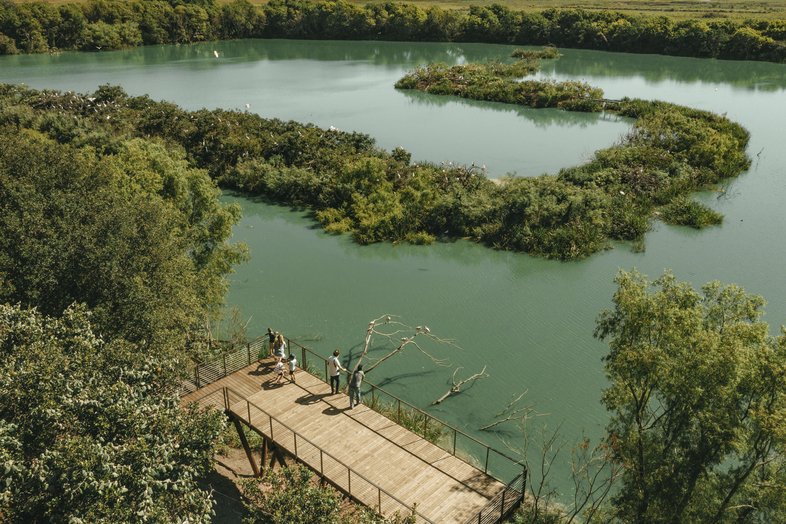
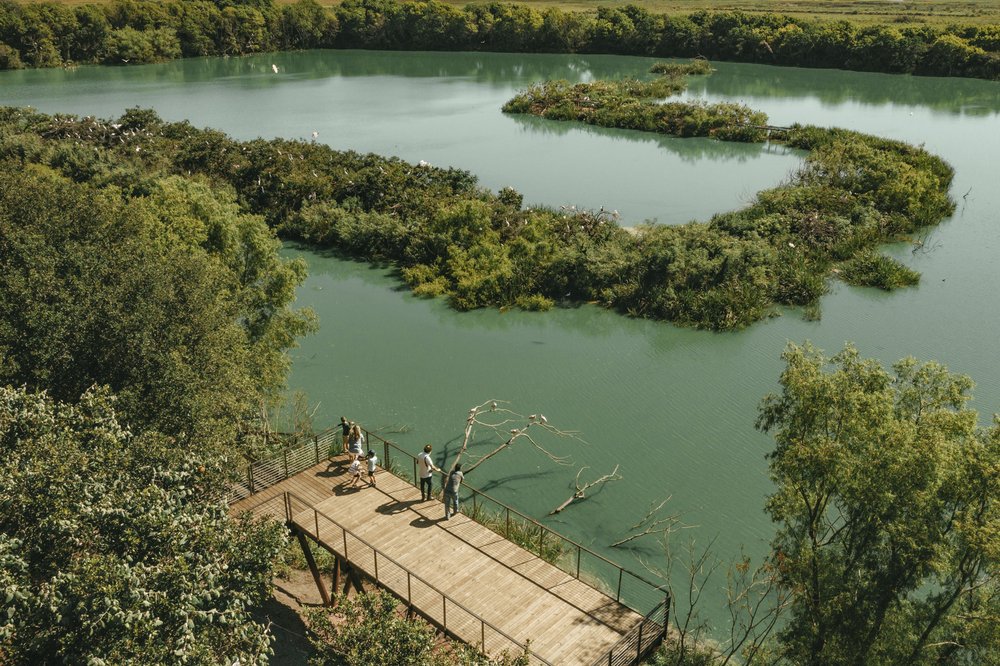
Canopy Walkway on High Island offers a view of foraging songbirds and water birds at eye level.
SWA Group
Canopy Walkway on High Island offers a view of foraging songbirds and water birds at eye level.
SWA Group
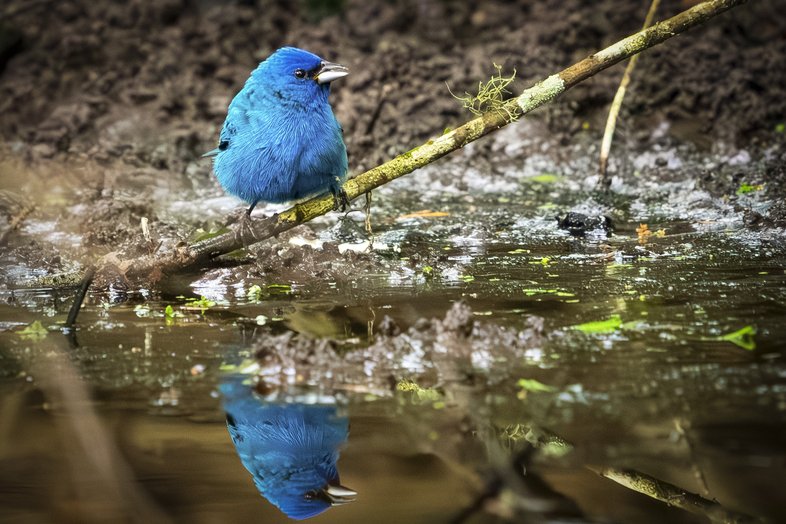
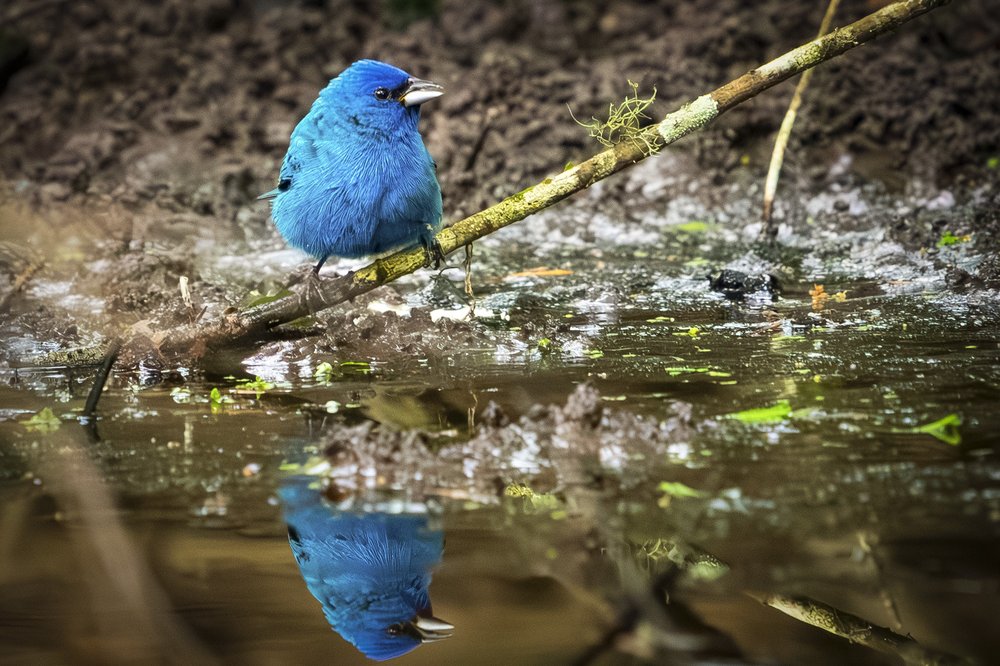
An indigo bunting descends for a bath at Boy Scout Woods.
Robert Gary
An indigo bunting descends for a bath at Boy Scout Woods.
Robert Gary
High Island
Farther west, High Island sits atop a subterranean salt dome protruding more than 30 feet above the surrounding coastal prairie. Because this land is the highest point along the Gulf Coast west of Mobile, Alabama, it stands out as a beacon to birds crossing the Gulf. Houston Audubon has worked since the early 1980s to save land from development at High Island, forming four distinct bird sanctuaries: Smith Oaks, Boy Scout Woods, S.E. Gast Red Bay and Eubanks Woods. (Additionally, TOS preserves Hooks Woods, which Houston Audubon assists in maintaining.) Legions of passionate volunteers toil to keep the woodland, wetland and prairie habitats in top condition for both birds and birders under the direction of Pete Deichmann, Houston Audubon’s land conservation director. “We manage all of these sanctuaries as stopover habitat,” Deichmann says. “We’re one small part of a much longer journey of the birds.”
“This is Chinese privet,” Deichmann tells me, pointing to a nearby shrub as we walk through Boy Scout Woods. “But what I always like to point out is … you have a piece of yaupon holly, and all the leaves are chewed. And then you have a piece of privet; none of the leaves are chewed.” Deichman is illustrating why it is so important to restore native plants. Chewed leaves indicate plentiful insects to fatten up the birds. The pristine leaves of invasive plants signify their unpalatability to native insects, which in turn deprives birds. “When … the understory is just privet, you basically have a food desert for the birds,” says Deichmann. In addition to insects, sugar-rich berries are vital to migrants. To assist in providing a natural bird buffet, Houston Audubon operates a coastal native plant nursery on High Island. “We use all that plant material for our restoration projects,” says Deichmann. Their diligence provides for a remarkable number and diversity of migrant species utilizing this renowned cluster of sanctuaries.
Anyone who loves the outdoors will enjoy the sights and sounds of Smith Oaks. No need to be a birder to revel in its alluring trails, rookeries and the ADA-accessible Canopy Walk through the treetops. Standing 17 feet high, the walkway offers a view of foraging songbirds at eye level. Volunteers armed with scopes are often available to explain the mysteries of the rookeries to visitors. This is arguably the best location in Texas to observe such an enormous number and variety of colonial water birds, and it presents an engaging experience for children.
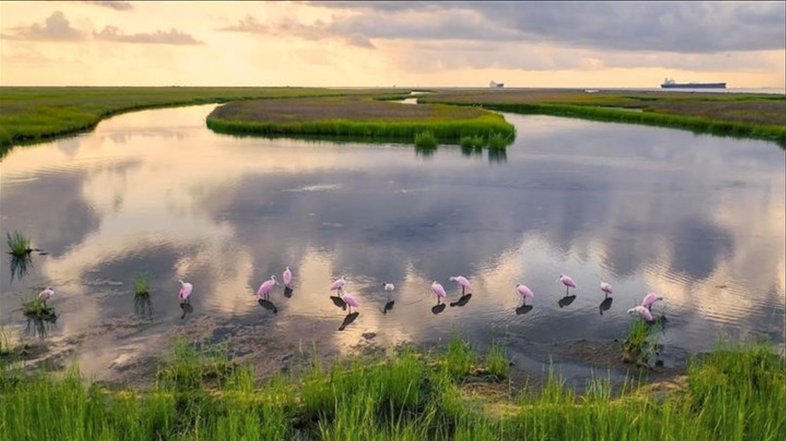
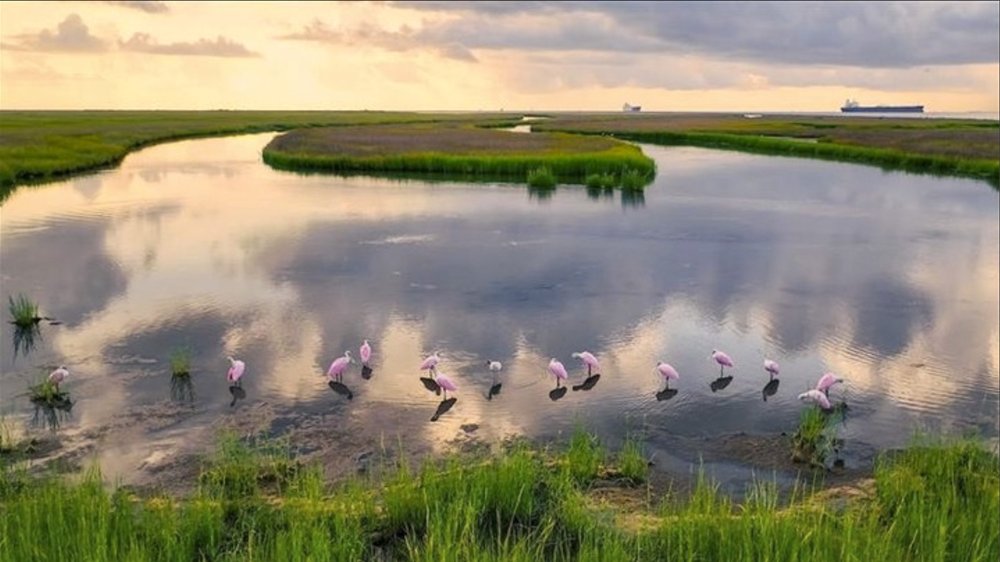
At Bolivar Flats, nesting and migrant birds are able to forage in peace.
Brian Traylor
At Bolivar Flats, nesting and migrant birds are able to forage in peace.
Brian Traylor
Bolivar Flats Shorebird Sanctuary
A male least tern is awkwardly cavorting around a female, flashing a small fish in her face. Repeatedly snubbed by the female, he takes to the air and dangles the offering above her. She accepts! Success at last!
We enjoy this humorous scene during a free guided tour conducted by SabreWing Tours and sponsored by Houston Audubon at their Bolivar Flats Shorebird Sanctuary. Our expert guides, Rob Ripma and Jay Carballo, spot birds one after another, and calmly ensure that attendees see them as well. I find myself geeking out over adorable snowy plovers and an endangered piping plover just as much as the colorful warblers found in the woodland sanctuaries.
Up until the area where the sanctuary’s beach and dunes are blocked off from vehicular traffic, the shoreline is occupied by cars, campers, people and pets.
In February, Houston Audubon officially closed on a 52.53-acre tract that served as the final missing piece of the Bolivar Flats Shorebird Sanctuary.
“This land that Houston Audubon's protected here at Bolivar is so important, because so much of the beach is already developed,” says Ripma, who founded SabreWing Tours. “Nesting birds, [migrants] and wintering species are able to have peace without all of the vehicles, all of the people.” Ripma believes that ecotourism, especially birding tourism, leads to increased conservation, land protection and support of local people who benefit from the income stream. Carballo, owner of Birding Experiences Costa Rica, agrees: “The more people that we get to like birds, the more we can potentially get interested in conservation, and that’s a win-win for everyone.”
A Prescient Warning
“Neither this little stream, this swamp, this grand sheet of flowing water, nor these mountains will be seen in a century hence, as I see them now. The fishes will no longer bask on the surface, the eagle scarce ever alight and these millions of songsters will be drove away by man. Oh America – Look upon her, see her grandeur. Nature still nurses her, cherishes her, but a tear flows in her eye.”
John James Audubon wrote this prescient warning in the mid-1800s. The artist and naturalist enjoyed the privilege of observing birds now gone from the American landscape, including the passenger pigeon, Carolina parakeet and ivory-billed woodpecker. We have come close to losing so many others. Conservationists have managed to correct some of our blundering, but plummeting North American bird populations are a continued cause for alarm, down by 2.9 billion breeding adults (one-fourth of our avifauna) since 1970.
Audubon’s art gave rise to the American conservation movement, and the groups that bear his name, along with others, are still at work protecting birds and other wildlife, as evidenced by the life-sustaining sanctuaries along the Upper Texas Coast and beyond. Sometimes, profound realities cannot be easily grasped, but on these hallowed grounds, the great North American bird migration can be palpably experienced. And like Audubon, we begin to understand.