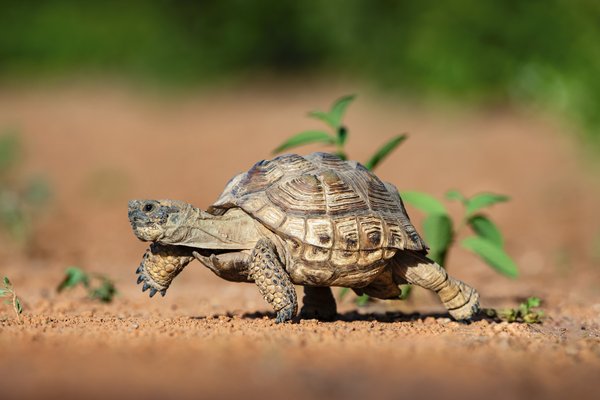
Saying Goodbye to a pet is always hard — but on a summer day in Laredo, dozens of people lined up to voluntarily do just that.
The pets were Texas tortoises, a state-threatened species which is illegal to possess. These people hadn’t bought them as pets — many of the participants had rescued tortoises from dangerous road crossings or from inhospitable urban landscapes and kept them in their yards. Others had inherited tortoises from a relative who had passed away (Texas tortoises can live 60 years). Now, they were here to turn in their tortoises, which would eventually, after a long re-wilding process, be set loose to live free in nature.
Organizers, expecting only about 30 tortoises to be turned in, were shocked when they ended up with 180 of
the reptiles.
“It was very emotional,” says Jacquelyn Tleimat, a postdoctoral research associate at Texas A&M Corpus Christi who helped host the event. “We saw people leave in tears. There was one guy who, as he was waiting for us to take his tortoise, was picking up these false mallows that the tortoises like to eat from the ground, and hand-feeding his tortoise. He prayed over them as he left.”
Tleimat, who has partnered with the Texas Parks and Wildlife Department to take in these tortoises and help prepare them for eventually living in the wild, felt a great weight of duty to protect the tortoises. “It just added this new responsibility to this project,” she says. “These people are wanting to do the best for the tortoises. And I’m so grateful for everyone who did that — they’re trusting me to do the best for their beloved animal.”
Now, six months later, Tleimat has made good on her responsibility. The tortoises, once kept in yards and fed by hand, are well on their way to being wild once again.
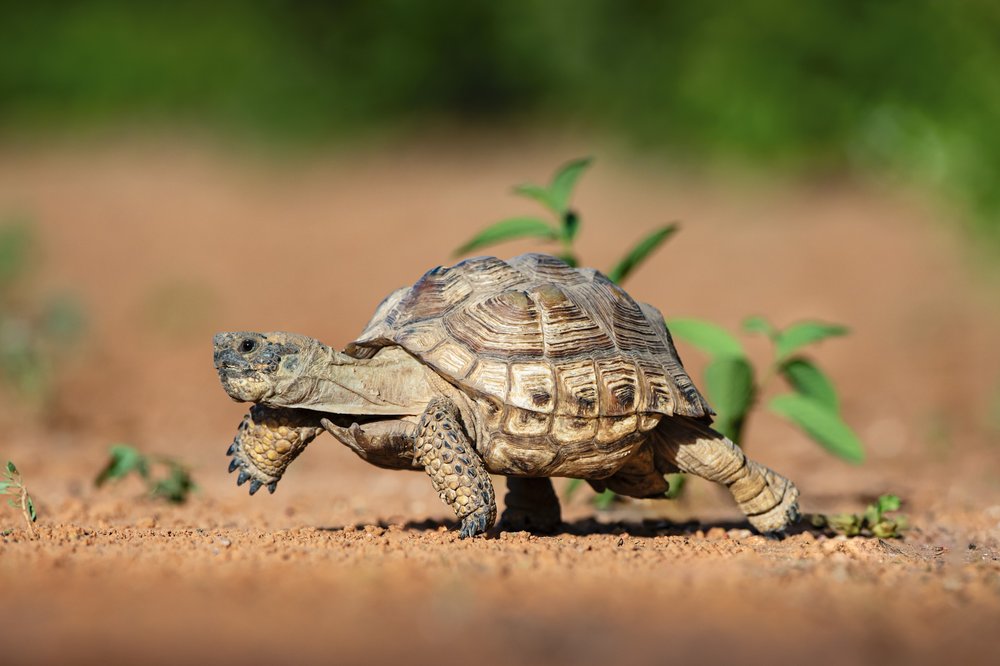
Texas tortoises, Gopherus berlandieri, are the smallest tortoises in North America (their shells grow to a maximum 8.5 inches). In Texas, they inhabit the southern reaches of the state from Del Rio to San Antonio. More than 40 percent of their range stretches into Mexico, where they’re called tortugas del desierto de Tamaulipas. They thrive in dry, hot climates; to stay cool, they use their claws to scrape out pallets, or resting areas, beneath shady bushes or cacti.
The tortoises eat a variety of grasses, forbs and cacti. Since water in their habitat is scarce, the cacti help them stay hydrated. “They love the nopales and the tunas of the prickly pear,” says Tleimat. “Those are their favorite things to be chomping on. I always like to tell people, if you see a tortoise and its mouth is really red, don't worry about it. It was probably just eating a tuna.”
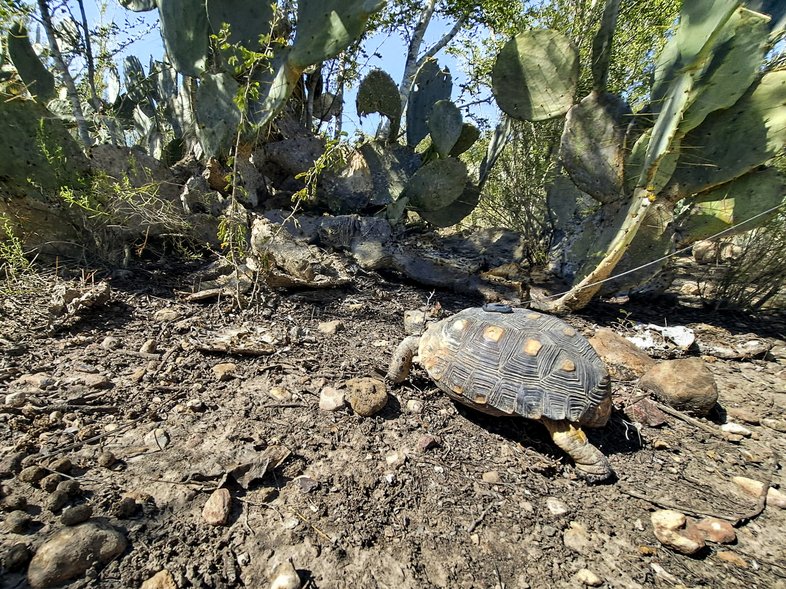
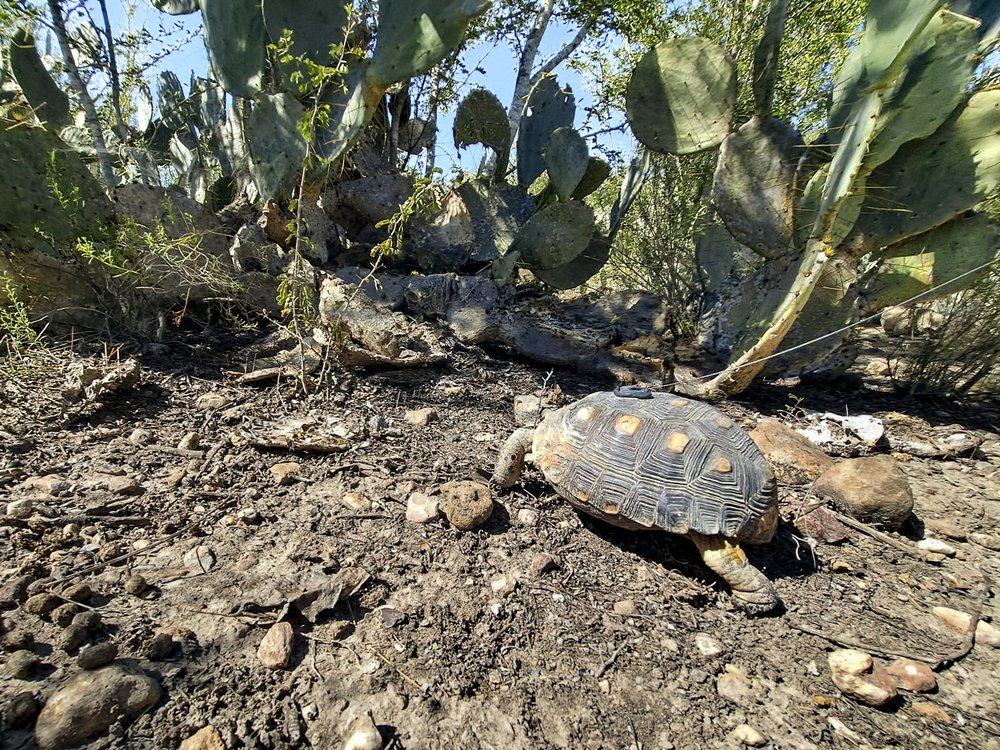
The tortoises are fitted with small trackers to help researchers keep tabs on them.
Jackie Tleimat
The tortoises are fitted with small trackers to help researchers keep tabs on them.
Jackie Tleimat
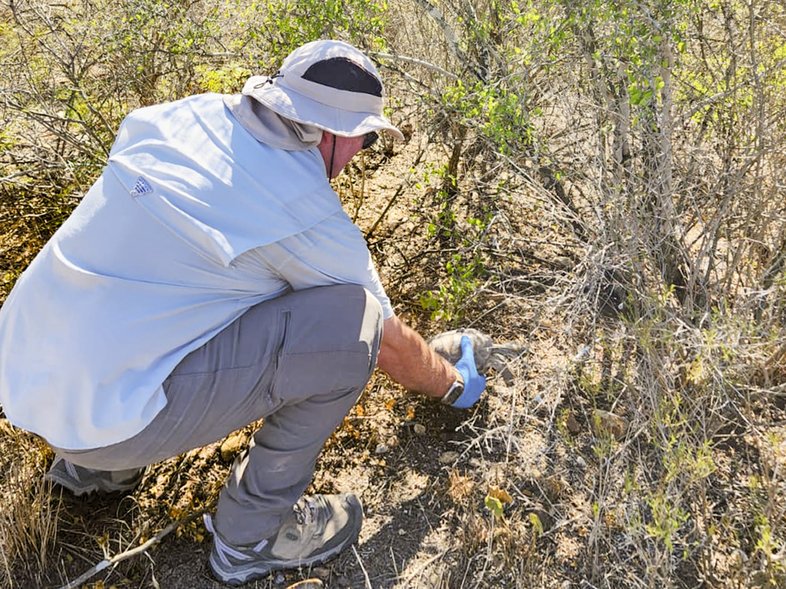
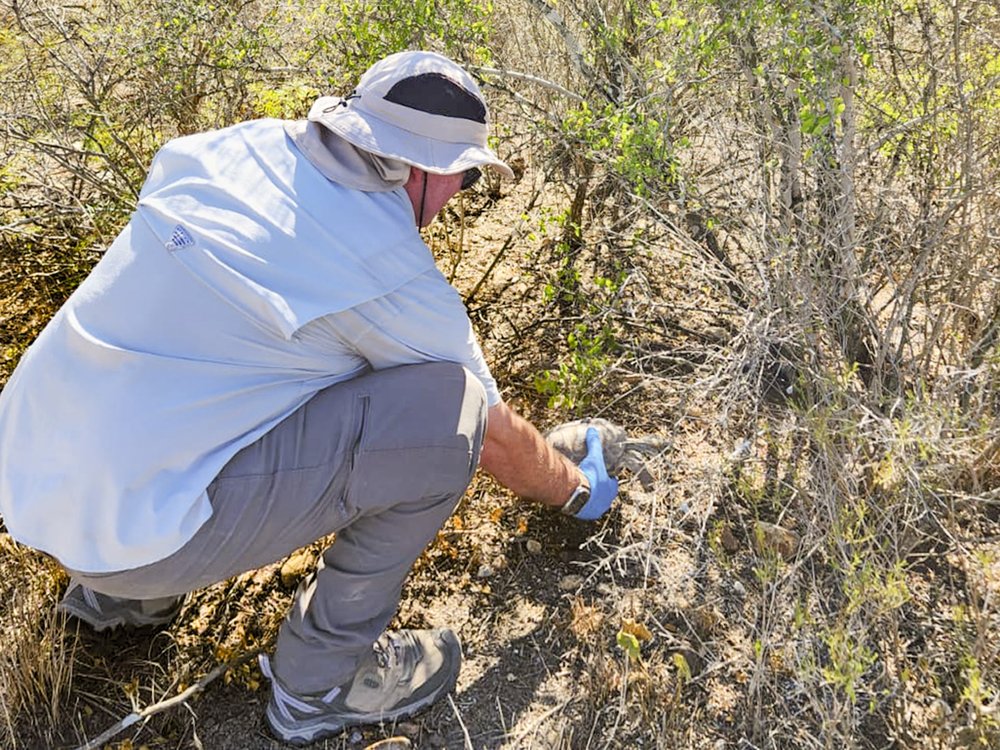
Releasing the tortoises fully into the wild is a long process.
Jackie Tleimat
Releasing the tortoises fully into the wild is a long process.
Jackie Tleimat
In the mid-1900s, the tortoises were targeted by the pet trade; people harvested them from Texas and sold them all over the country. “It was estimated that potentially as many as 1,000 Texas tortoises were leaving the state a month,” says Tleimat.
The Fort Worth Zoo and state Sen. Don Kennard led an effort to protect the tortoises, and by the 1970s, it was illegal to collect, possess or trade the state-threatened species. Since then, the tortoises have faced other threats, such as habitat loss and fragmentation, and the population density — at one point about 25 tortoises per hectare in South Texas — has now decreased to about six tortoises per hectare.
Once the turn-in event wrapped up, Tleimat and Texas state herpetologist Paul Crump had their work cut out for them. Having expected only around 30 tortoises, the biologists needed to find temporary homes for 150 more animals than they’d bargained for. “It was wildly successful,” says Crump. “We received an overwhelming number of tortoises.”
The group of 180 was spread out between various partners, including the Gladys Porter Zoo, the Central Texas Tortoise Rescue, Austin Wildlife Rescue and Reptile Conservation International. The facilities began the rewilding process, slowly transitioning the tortoises from being fed to foraging for their own food in their outdoor enclosures.
Before the event, Crump and Tleimat laid the groundwork for the release. They tested tortoises to learn whether there were genetically distinct populations in different areas of the state, the way there are with ocelots and some other animals whose habitat is segmented. These subgroups can arise when a population of animals develop adaptations to their specific environment, making them best suited for that area — and making releasing captive animals more complicated.
Crump and Tleimat took samples from tortoises for genetic analysis, which showed that there are not genetically distinct populations with specific adaptations, although there are some vague subgroups. This was good news for the rewilding project because it meant that the tortoises did not have to be separated out into regional groups.
Now, with tortoises safely installed in temporary housing, the researchers had to check whether collected tortoises had any communicable diseases that would endanger other tortoises. They swabbed the animals and tested them for a panel of more than 25 pathogens. When the results came back, some tortoises were sick and needed to recover, but the diseases were all normal pathogens that exist in their environment — similar to the human cold and flu. In their temporary homes, the tortoises received veterinary care for their illnesses or other issues.
During that time, Tleimat, Crump and partners set to work building the next stage of the release project: large pens on privately owned properties that could serve as soft-release sites. The pens were based on accounts of rewilding gopher tortoises. “It was a massive undertaking,” says Tleimat. “We got silt fencing, which is the black plastic fencing you might see on a highway [construction project] and we use that to build these one-hectare pens. We dug a trench so the tortoises couldn’t dig under, put up fencing and then we put a hot wire around it to prevent predators from getting in there.”
At the end of October, Tleimat, Crump and collaborators released the healthy tortoises into their pens. Each pen contained no more than 10 adults, since male tortoises can be territorial and fight each other for space. The tortoises have settled in, living as they would in the wild — foraging for food, making pallets and wandering around.
“Now we’re in the monitoring phase,” says Tleimat. “They’re going to be in these pens for about a year, before we rip up the pen walls and let them wander free. But in that time, we’re monitoring how everybody’s doing. We put a little solar tag on them so we can find them again later. And we’re just checking on everybody every month to see, ‘Are you doing good? Are you palletting down like you're supposed to?’”
If all goes well, the tortoises will be released into the wild this fall. The researchers still plan to monitor them through tags, and a Ph.D. student at A&M Corpus Christi will be studying their diets to compare them to the diets of tortoises born in the wild.
Tleimat is hopeful that the project can set a precedent for more tortoise turn-in events in the future. “It was great to see the support from the community,” she says. “It was overwhelming, but it was really encouraging to see that the community was receptive to this.”
As of now, TPWD does not have any turn-in events planned, but if you have a Texas tortoise or find one in danger, you can contact your local TPWD biologist at tpwd.texas.gov/landwater/habitat-management/find-a-wildlife-biologist.
Do Not Paint Tortoises
During the turn-in event, Tleimat and Crump noticed a few tortoises had been painted bright colors. “People paint them because they think it’s going to help prevent cars from hitting them,” says Tleimat. But while it may keep them safer on the roads, painting tortoises can harm them in other ways. “Not only does it make them more visible to predators, but it blocks them from getting UV and other important nutrients through their shells,” she says. “I totally understand the impulse, but it’s more damaging than helpful.”