Mention vinegaroon to a Texas history buff, and they might say, “That’s the town the infamous ‘Judge’ Roy Bean named!”
Say it to a Texas nature buff, and you might hear, “Those are whip scorpions, with long tails and huge pincers!”
Both are right — Vinegaroon the town was named for the abundance of these eight-legged arachnids in the surrounding area (they’re found mostly in West Texas).
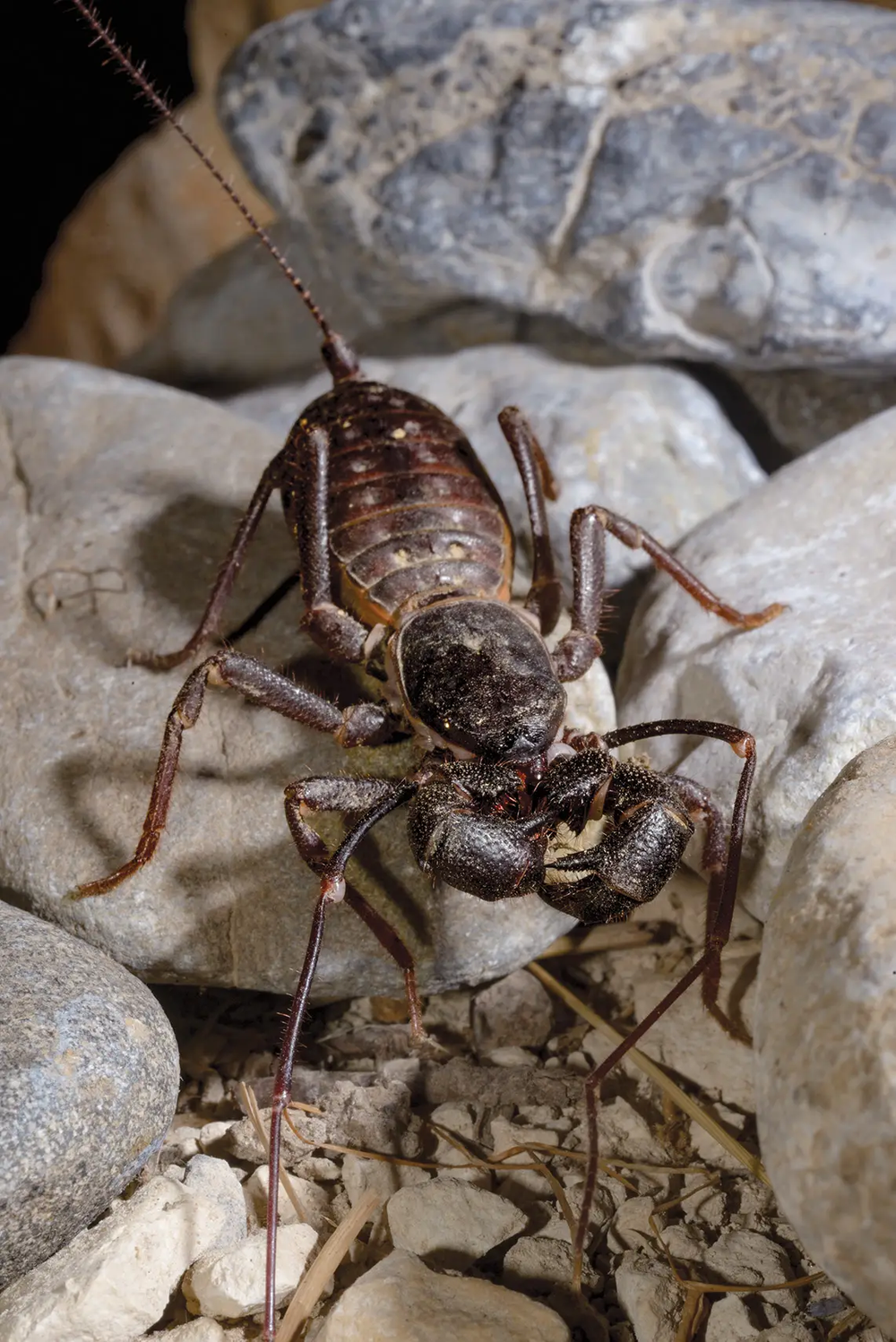
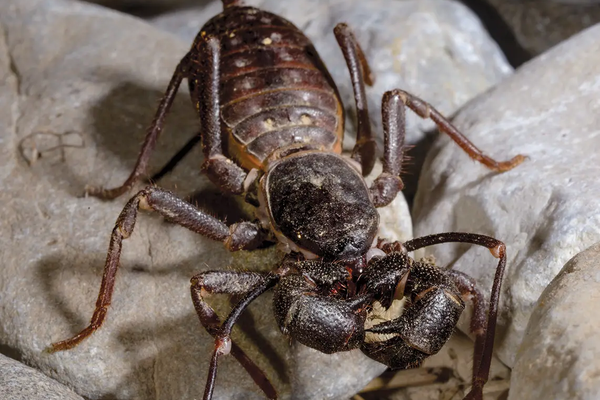
As arachnids, vinegaroons have eight legs and two body parts: a cephalothorax (i.e., fused head and thorax) and abdomen. The species found in Texas, Mastigoproctus giganteus, like many things Texan, is among the largest in the world, with adults reaching almost 2.5 inches in length. They have a whiplike sensory “tail” at the base of their abdomen (hence “whip scorpion”) and walk on three pairs of legs. The front, fourth pair is modified into long, thin sensory appendages.
A gland at the base of the creature’s abdomen produces a vinegarlike mist containing 85 percent acetic acid when disturbed (hence their other name, vinegaroon). While harmless, it stings if it gets in your nose or eyes. They have large claws called pedipalps used for crushing prey. Despite their formidable appearance, they eat small invertebrates such as millipedes.
They are not venomous but will bite if provoked. During the day they hide in burrows under leaves, logs or rocks. When threatened they retreat into their burrows or rear up and spread their front pedipalps while spraying acetic acid.
A 2022 Instagram post on vinegaroons by Big Bend National Park garnered more than 2,800 comments, an indication of public fascination with this critter’s unusual look and abilities.
Mating in the fall, the female carries her 30-40 eggs for several months inside her body, and then lays them in a sac that she holds under her abdomen.
She remains in her burrow until they hatch and crawl onto her back, hanging on for about a month. They then molt and leave the burrow to lead solitary lives, coming together again only to mate.
Whip scorpions live for as many as seven years, and despite being beneficial for the environment, their numbers are declining due to habitat loss and the pet trade, where they are sought after by collectors.
So, if you catch a surprising whiff of vinegar while out on a hike, it likely means a frightened vinegaroon is nearby, looking to get out of your way!