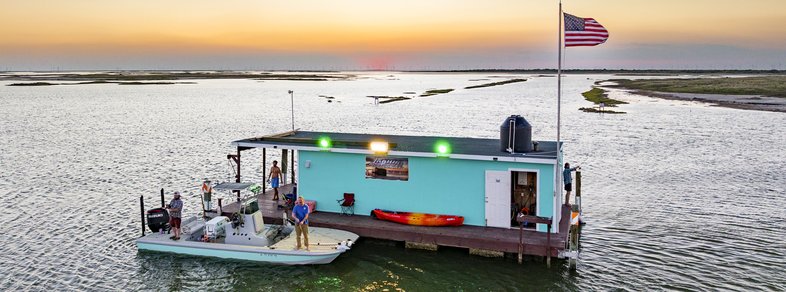
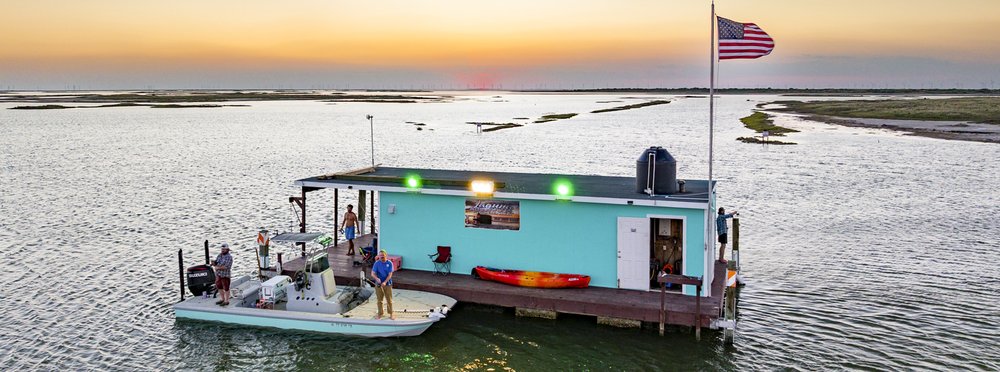
It’s a sunny and mild October morning when the four of us embark from Padre Island National Seashore. The green-blue Laguna Madre has a slight chop from the light southerly winds blowing up the coast. We putter into the Intracoastal Waterway, wait for a barge to pass and aim our boat toward a floating cabin we've rented 37 miles to the south.
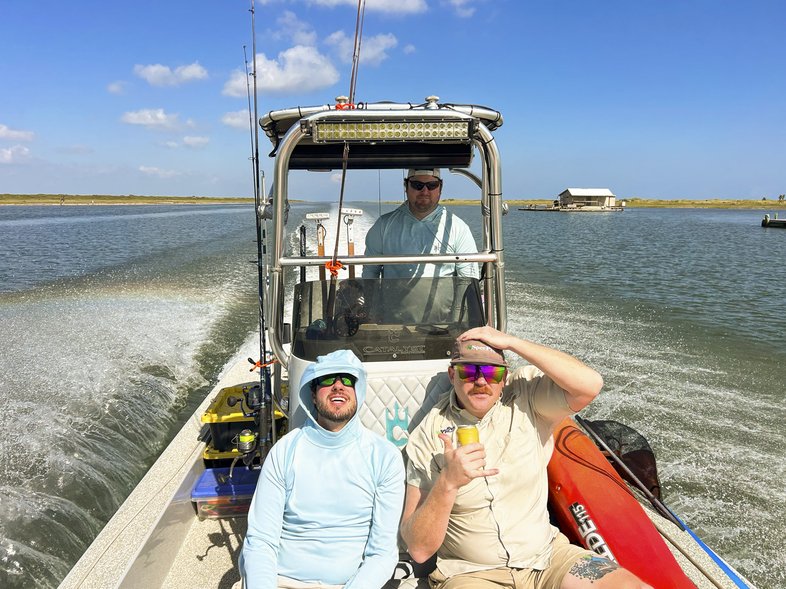
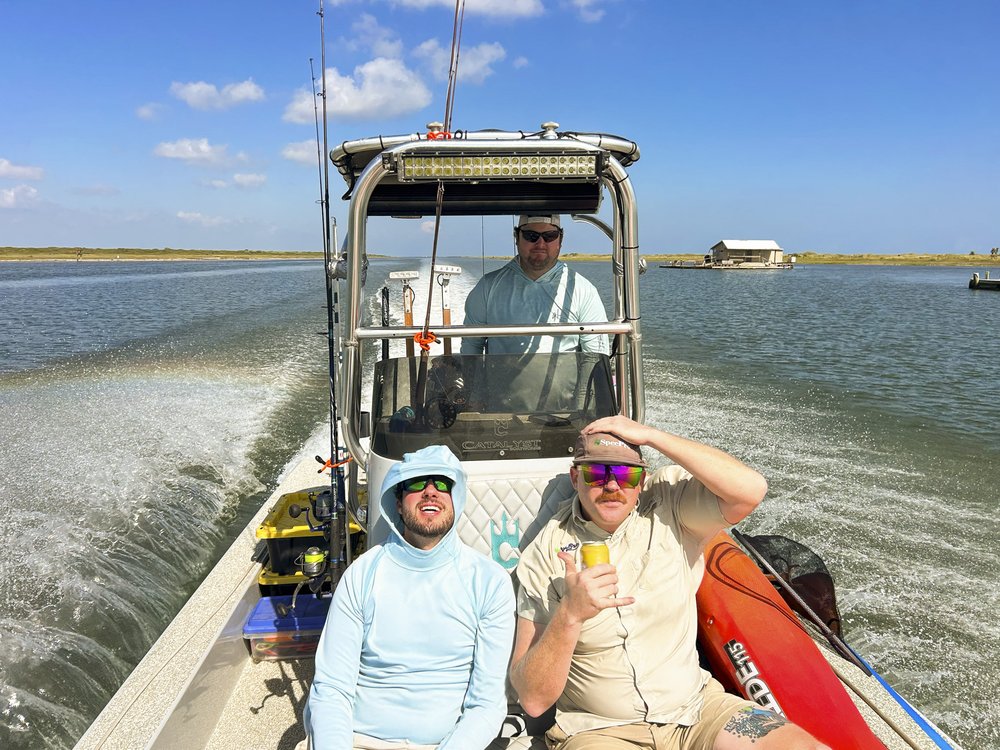
Captaining our vessel is Will Wolfe, hydrogeologist and Corpus Christi waterman. If it’s a legal method of take, Captain Willie has used it to catch sea creatures. First mate of the ship is Ryan Turner, geophysicist and philanthropist. Upon return he will be cutting off all 18 inches of his bright red hair to donate to someone in need; until then we can use it to measure trout. Rounding out the crew are the Vail brothers — professional wildlife photographer Jonathan Vail and myself, a freelance writer and aspiring surf bum.
We are all experienced anglers, meaning we know how to tangle line, jab ourselves with hooks and tell lies. We’re also opportunists, and our prerogative is to catch and eat as wide a variety of species as possible, including certain saltwater fish some people claim to be inedible. Our gear consists of spinning rods, surf rods, crab traps, flounder gigs, casting nets, bait buckets and the odd fly rod or two. We’ve christened ourselves, or been defamed as, the Croaker Soakers.
Shipping channel clear, we plane full throttle into the most remote, wild and productive fishery on the Texas coast, keeping Padre Island to our left and the King Ranch to our right. Sleek bottlenose dolphins breach off the port bow, and enormous brown pelicans glide overhead.
We pass many other fishing cabins, some floating, some on stilts, others on the banks of spoil islands. They range from multileveled houses with big docks to simple sheds bobbing in the water to crumbling shacks being swallowed by the bay. Some have been ravaged by hurricanes. Others look like they took a fresh coat of paint yesterday. At one point we pass a lone bench sitting on a solitary raft. We wonder how our own accommodations will compare.
We arrive at high noon and survey the scene. With the deck, the dimensions of the structure run about 45 feet long by 20 feet wide. Inside is a small kitchen and living area, three very small bedrooms and a bathroom. There’s a generator for electricity and a water tank on the roof for gravity-fed plumbing. This particular unit is somewhat deluxe in that it is equipped with a flushable toilet. The whole cabin sits on dock floats, and is anchored at the corners by spuds, keeping it from spinning around. From the deck we can see a couple of other cabins, the long narrow length of the shipping channel and tidal flats extending to the horizon.
Let’s Get Fishing
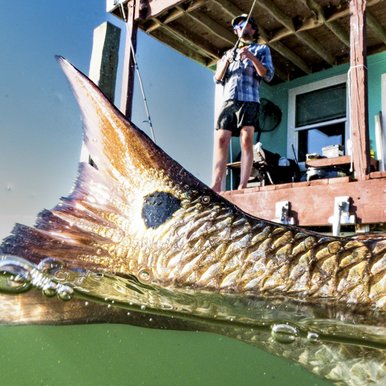
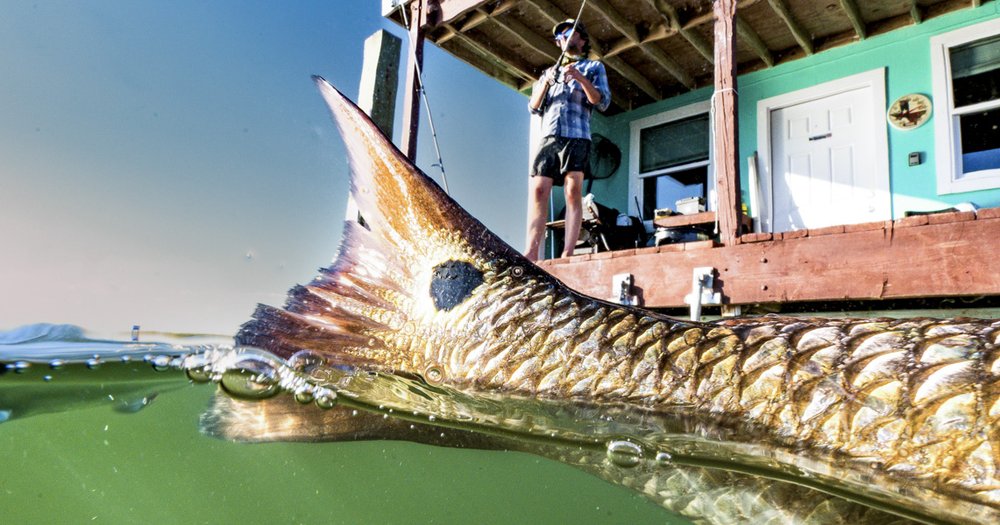
Grand tour over, we get to unpacking the boat and setting lines. We bait hooks with fresh dead shrimp or some mystery catch Captain Willie is thawing. Within minutes we’ve got a big hit. One of the spinning rods jerks wildly in its holder as the reel starts to whine. Captain Willie begins the fight, and as he cranks the fish closer we catch glimpses first of a plump, pinkish body flashing just beneath the sparkling surface and then a big tail with a single spot, bordered with blue.
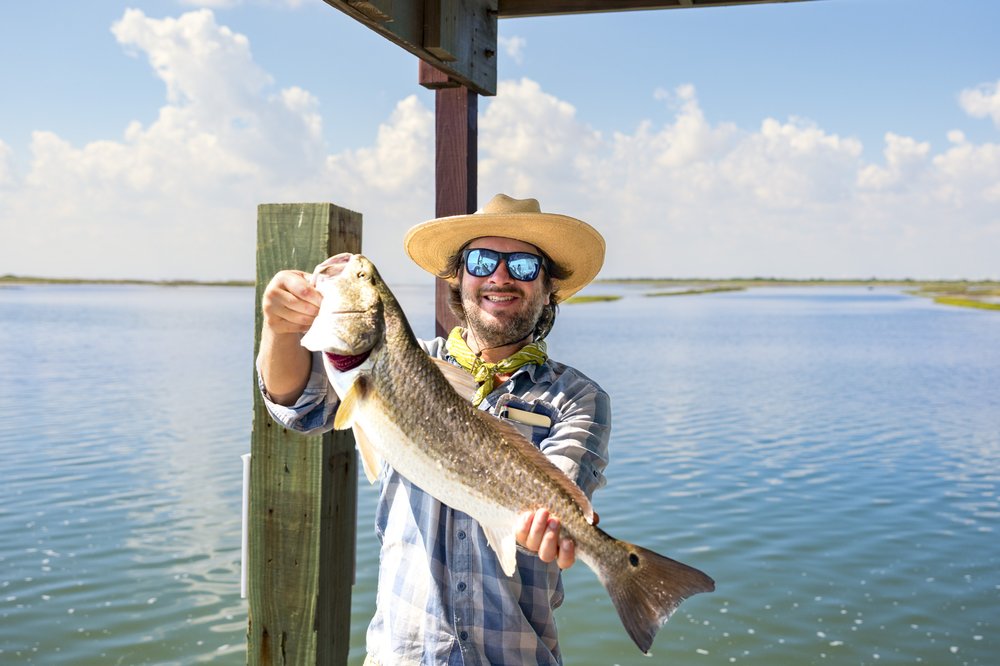
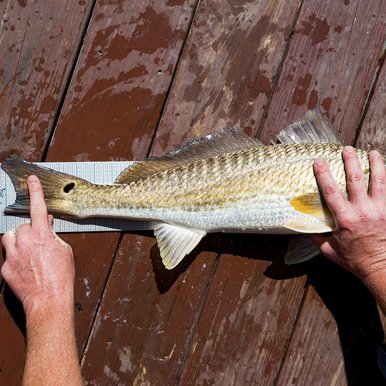
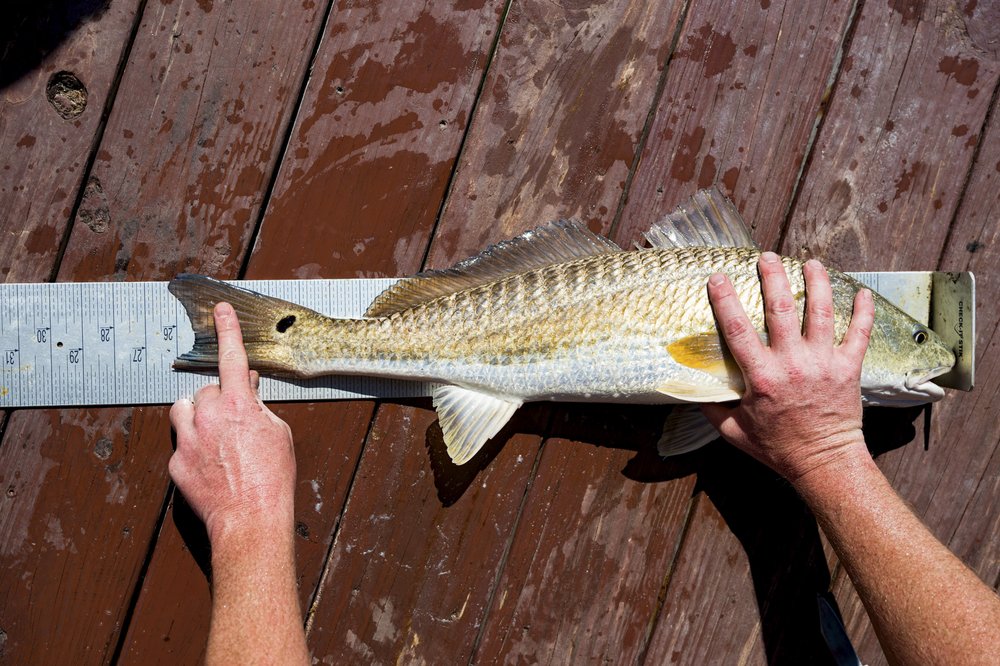
We land the redfish and measure it 26.25 inches from nose to tail. A keeper, comfortably in the 20- to 28-inch slot limit. It’s a beautiful fish. We have yet to even unload the boat, and we’ve already caught dinner.
Not long after, we’ve got a keeper trout on. It’s reeled in quickly and added to the livewell with the redfish. Then there’s another hit, this time on one of the big surfcasting rods. Ryan grabs the rig and starts fighting from the deck of the moored boat. The nine-foot surf rod is doubling over with whatever’s on the end of the line, and we’re jumping about like baboons in anticipation.
“It’s a donkey!” someone yells.
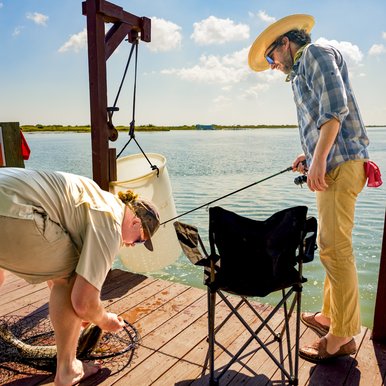
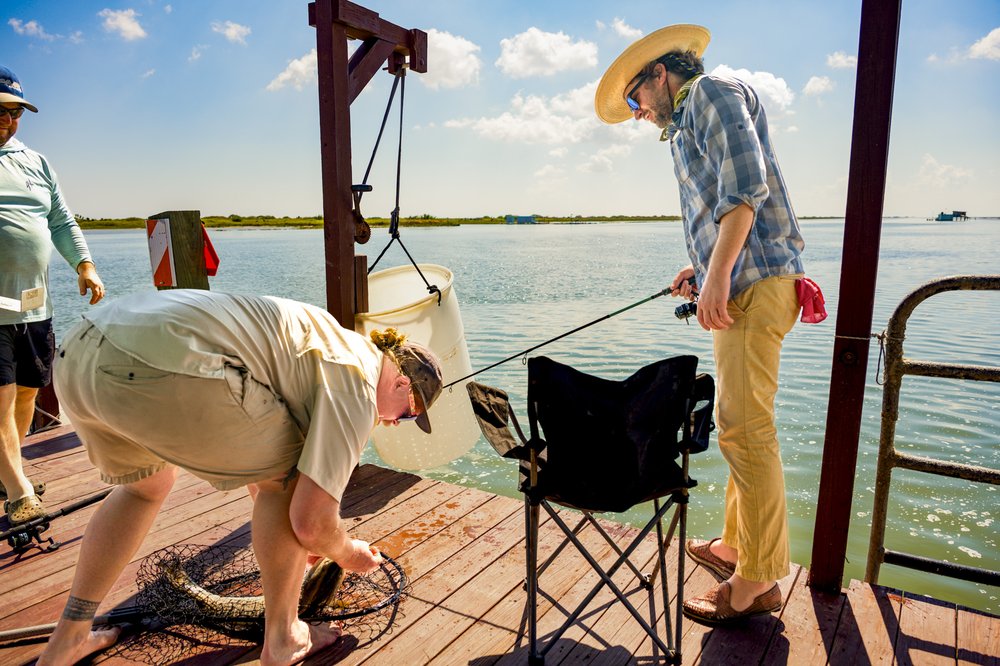
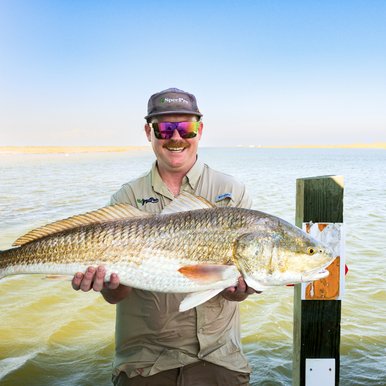
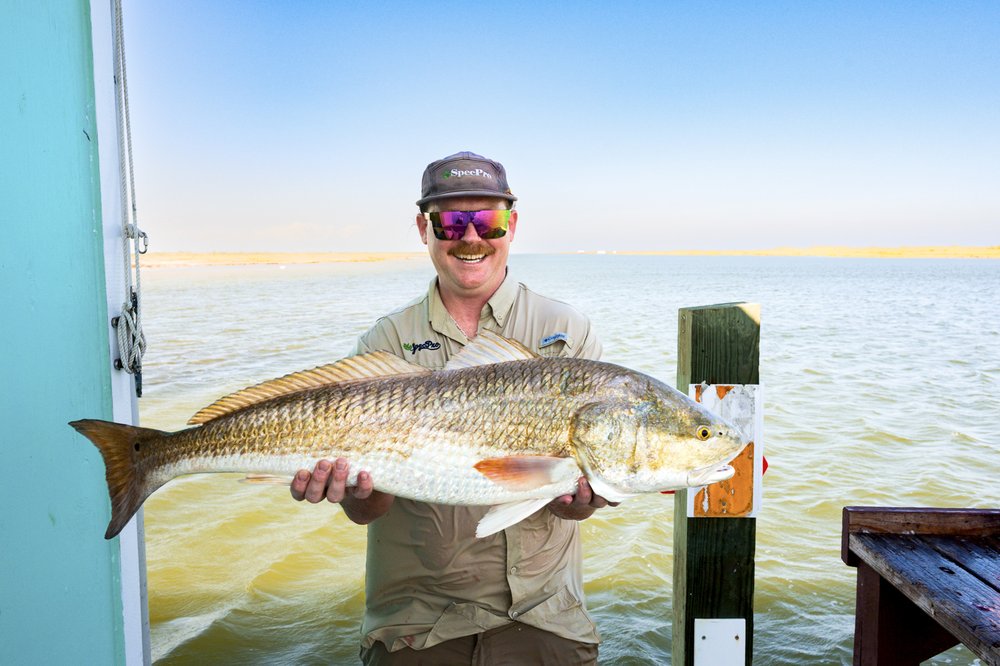
We seem to have found some sort of lost paradise, where the bite is consistent and the wind barely blows. I grab our biggest net and lean over the side of the boat as Ryan guides the hooked fish into the opening. It’s an enormous red. I try to lift it from the water, and the net can’t handle the weight, folding in half where the hoop meets the handle. Someone passes me another net, and it’s all I can do to not fold in half myself as I haul the giant up onto the deck of the boat. The ecstasy of the Croaker Soakers can’t be contained. We lay the fish on the 38-inch ruler, and it perfectly spans the entire thing. It’s the biggest fish I’ve ever seen come out of a bay.
Riches of the Laguna
The 130-mile Laguna Madre is an ecological treasure, and we spend the next 48 hours immersed in its splendor. Much of the coastline on either side of the narrow, shallow lagoon is uninhabited, with the federally protected national seashore to the east and vast stretches of privately owned ranchland to the west. These conditions make it a hostile environment for ambitious real estate developers and enterprising petrochemical companies. After we left the boat ramp, there wasn’t a single permanent structure.
These same conditions make it a particularly welcoming environment for wildlife. Both marine and bird species thrive here. The relatively pristine, shallow waters of the lagoon harbor a staggering 80 percent of Texas’ remaining seagrass habitat. These submerged meadows provide protective spawning grounds — as well as cover and feeding areas — for fish, shrimp and crabs. This abundance of sea life in turn supports healthy and diverse bird populations, from tiny piping plovers to giant white pelicans.
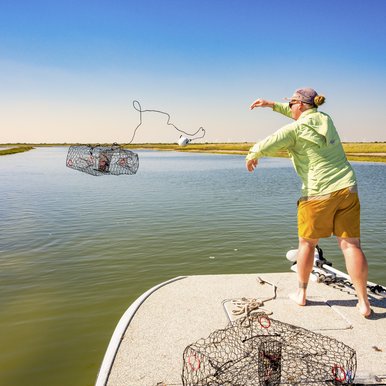
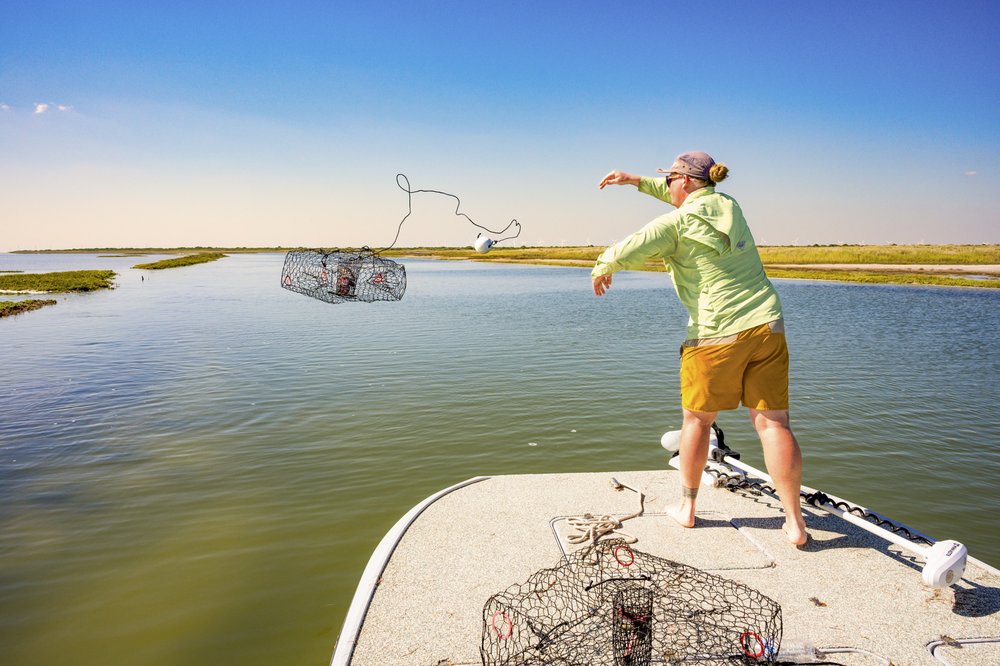
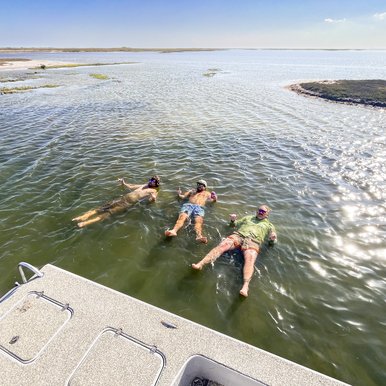
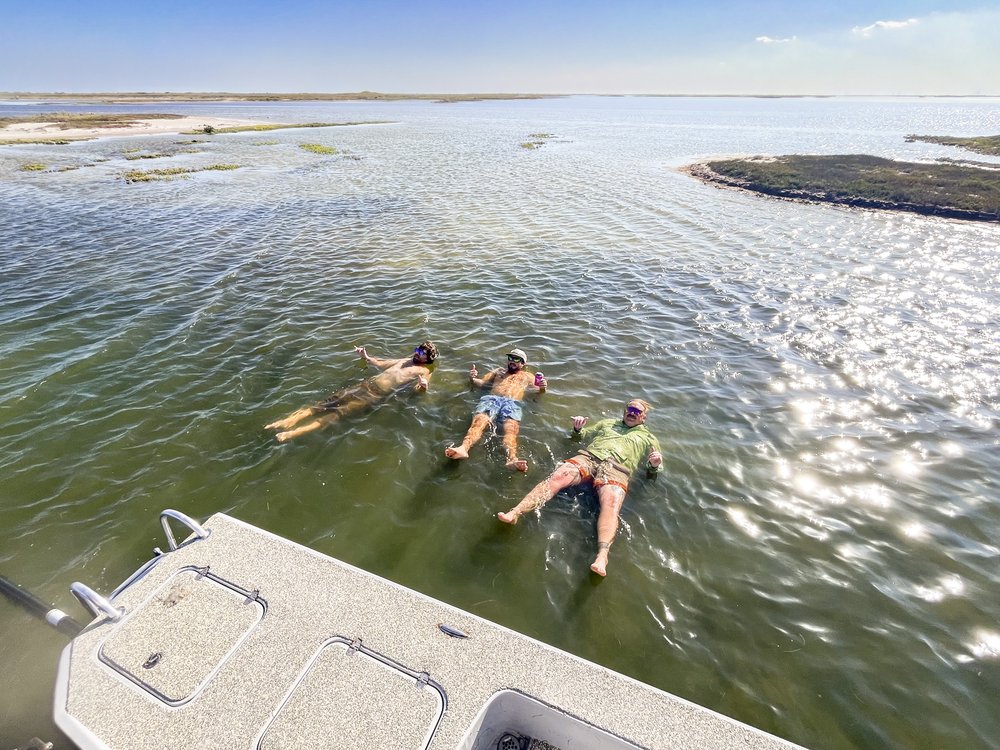
Our cabin sits in the Land Cut, a length of shipping channel dredged through the periodically submerged land bridge called Saltillo Flats, ultimately connecting the upper and lower Laguna Madre bays. We make forays into the shallow mud and sand to set crab traps and throw the cast net for mullet. The sun is shining and the air is fine. A couple times, we stop to take a dip.
As we float on our backs in the extra-salty water, Captain Willie reminds us that there are no major freshwater tributaries feeding the bay anywhere near this region. The mouths of the closest rivers — the Nueces and Rio Grande — are 150 miles apart, and we are right between the two. This lack of freshwater, along with high evaporation rates in the arid climate, contributes to the bay’s elevated salt content, rendering the Laguna Madre one of only six hypersaline bays in the world.
Time to Eat
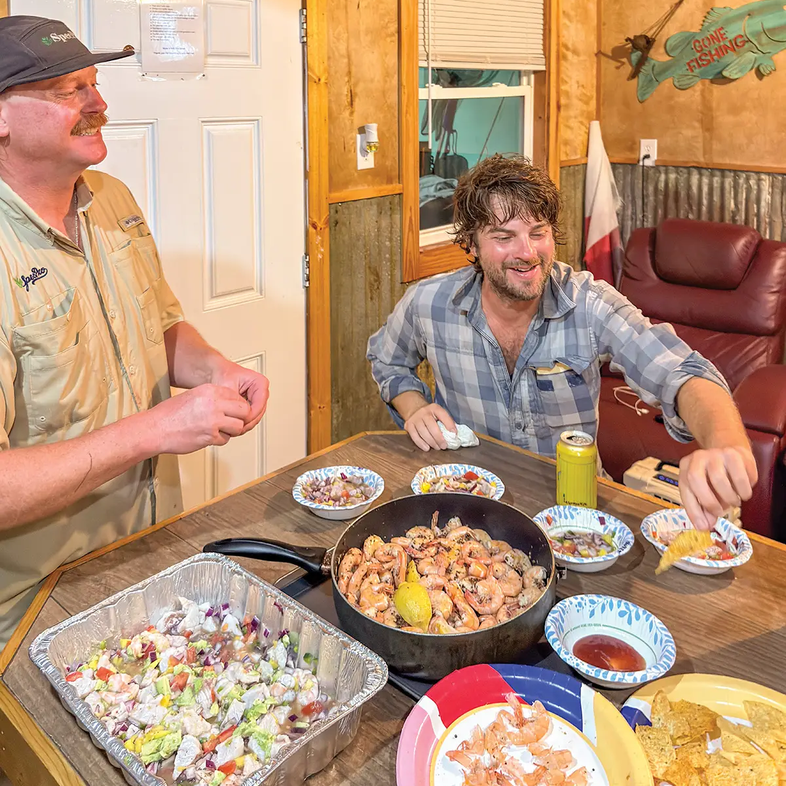
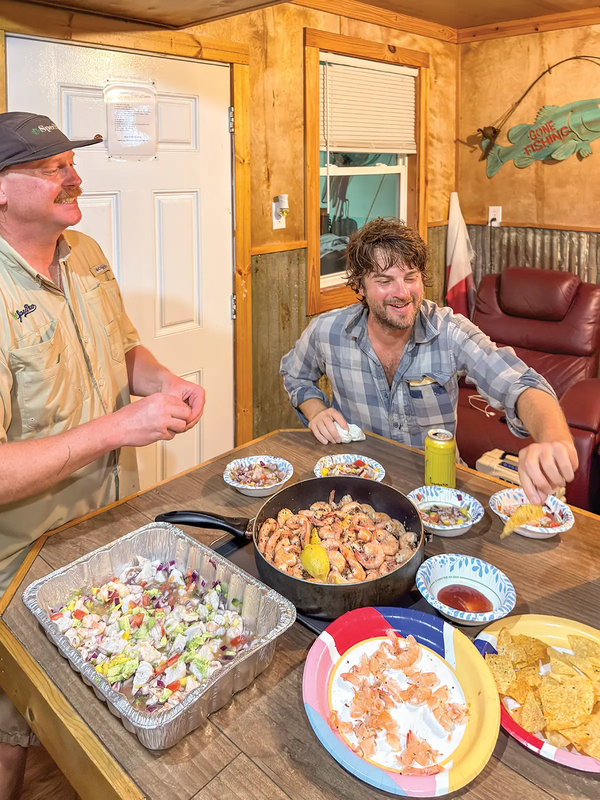
After our first day of fishing, we’ve landed several different species and decide to make ceviche out of each kind. It’s our goal to taste anything and everything that’s legal to keep, and we won’t discriminate. Jonathan and I squeeze citrus and chop red onions, tomatoes, jalapeños, mangoes and avocado, while Captain Willie and Ryan fillet fish out on the deck and bring it in piece by piece: red drum, speckled seatrout, gulf toadfish, hardhead catfish, and, yes, striped mullet.
Mullet? Have the Croaker Soakers lost hold of their jibs out there in the flats? Maybe. We slice and cube the filets and make several batches of ceviche, keeping each species separate. After letting everything marinate for about 20 minutes, we sample. The redfish and trout are delicious, of course, but what about the others?
The hardhead filets are surprisingly colorful, with a deep reddish hue that fades to amber as they soak in the citrus. The flesh is very firm, almost chewy, not unlike the texture of swordfish. It marinates well and has a surprisingly fresh, crisp flavor to it. As for the toadfish, Captain Willie had to identify this strange specimen for us when we pulled it up out of the water, so odd did it appear. An unfortunate-looking creature, the gulf toadfish is a muddy green color, with a knobby head that makes up most of its body. The filets are small, tubular and gray. After a good long soak in the marinade, they aren’t bad, certainly edible.
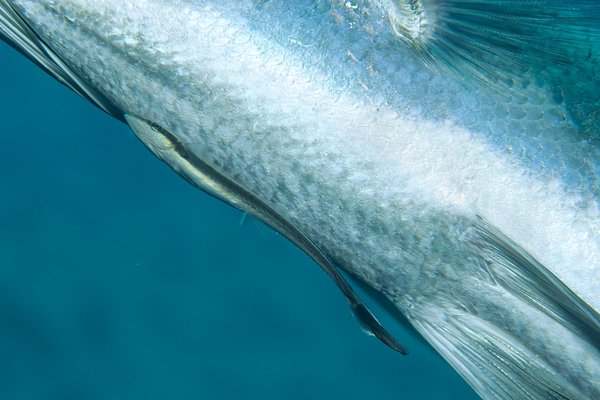
Finally, it’s time for the mullet. There are folks who fish the Texas coast who would eat just about anything before eating a mullet. Years ago, I was probably one of those people. But if redfish eat it and redfish taste delicious, can it be all that bad? And besides, it’s on the menus of restaurants in Florida.
I select a light, silvery cube out of the marinade and give it a try. It’s certainly not firm — it’s the softest of all the species of the Croaker Soaker Ceviche Platter — but it isn’t too oily, and the flavor is just fine. With crisp tortilla chips and hot sauce, we feast on our catch of the day, discussing why it is that some wild game and fish species are denounced as inedible in some cultures and revered as delicacies in others. We are most taken by the redfish, sure, but to our surprise the mullet bowl is soon empty.
The next afternoon, Captain Willie holds a blue and red crustacean aloft.
“These crabs are like meat puzzles,” he says, meticulously picking the flesh out of the carapace and legs. After cleaning a dozen, he takes the steamed crabmeat and sautés it in a skillet with butter, chipotle mayonnaise and egg whites, serving it on toasted bread with melted cheddar and pepper jack cheese. There’s no questioning the universal delicacy of this particular meal. Captain Willie says that if he could just live on the floating shack and catch and eat blue crabs all day, he would. The crew agrees, savoring our delicious sandwiches out on the deck as the sun goes down behind a line of turbines dotting the horizon.
Back From the Shack
That night a storm blows in from the north. We’ve been blessed with clear skies and very little wind all trip, but we knew this was coming. We stand out on the deck and watch thunderheads flare up miles off in the distance. Choppy waves are white-capping in the channel, menacingly rocking our floating shelter, and continue to do so through the night. The seatrout hardly seem to notice, and the feeding frenzy under our shack’s enormous green lights continues.
In the morning we embark back up the lagoon, trying to capitalize on a calm period when the wind is down. But by the time we hit open water at Baffin Bay, northers are gusting at 30 to 40 miles per hour, and the boat is rising and falling hard over heavy waves.
We cinch down our hoods and huddle together around the cockpit, the cold sea spraying our faces. There is salt in our hair, mud under our toenails and several pounds of redfish and trout in the cooler. We have seen, felt and tasted the riches of the Laguna Madre. With water beginning to splash over the bow, the Croaker Soakers can only grin and ride on.