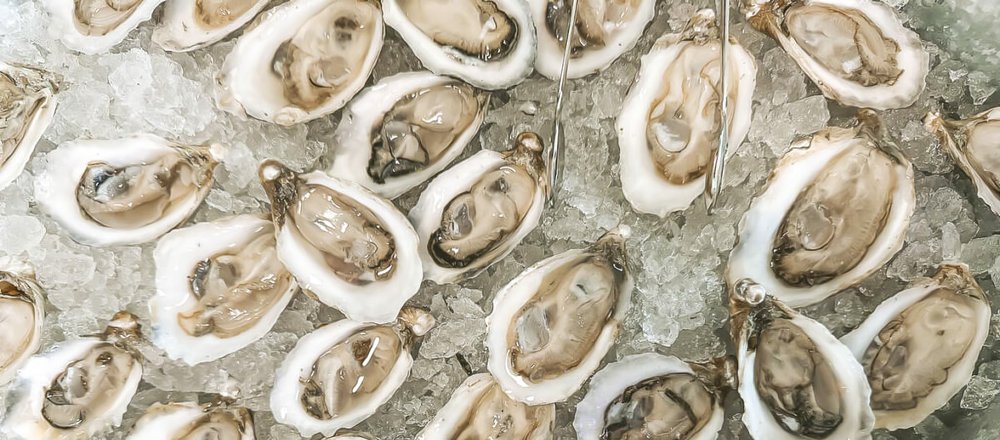
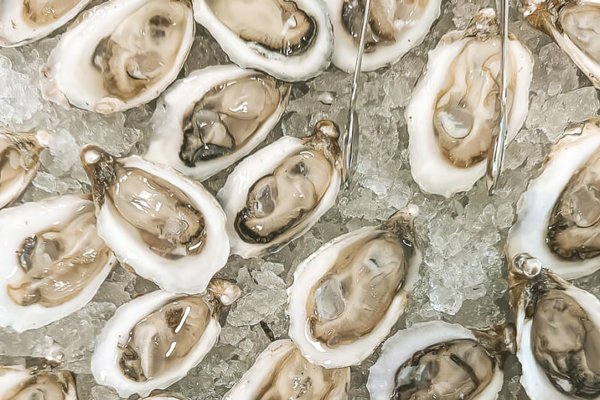
A beautiful array of pearlescent shells gleam in the light of an unseasonably warm February afternoon. In the center of each, a phlegmy, gray glob is appetizingly presented — like a prize jewel upon a velvet pillow.
Oysters are often priced like jewels, too. Served raw, on the half shelf, as they are here, they’re delicacies that can easily retail for prices upwards of $2 to $3 each. Especially the farm-raised variety in front of me, for which a high price tag reflects a labor-intensive process that puts them on the table. But, today at least, they’re free for attendees of the Texas Oyster Roundup, an annual festival that celebrates Texas’ burgeoning industry of farm-raised oysters.
Hundreds of curious locals, coastal scientists, professional chefs and general seafood enthusiasts from across the state have gathered here to taste samplings from 10 of the state’s current 19 permit-holding oyster farms, which are proud to show off the delicious results of their hard work. Serving as my guide is Lindsay Glass-Campbell, cultivated oyster mariculture program coordinator for the Texas Parks and Wildlife Department.
“It’s exciting looking around at all these people. A lot of them may have never had any of these oysters — this is the first time they’re trying them,” Glass-Campbell says, referring specifically to the farm-raised variety we’re trying today.
Farm-raised oysters are relatively new to Texas waters. In 2019, the Texas Legislature legalized oyster farming by creating the state’s cultivated oyster mariculture program. The first oyster farm was officially up and running by summer of 2021.
Texas’ wild oysters have been in decline for decades. TPWD has worked to reduce pressure on wild oyster reefs through restoration projects, harvest regulations and other management tools, including, now, oyster mariculture.
Five years into the program, the state’s oyster farming industry is gaining momentum as the 19 oyster farms operating in Texas Gulf Coast waters hustle to get their product to market through events like this. With recognizable, branded merch embellished with nautical names and imagery — and the undeniable appeal of farm-to-table fare — they’re working to catch the eye of both individual consumers and retailers who will put their shellfish on the menu of swanky bars and restaurants across the state.
“Getting that brand recognition — the eye‑catchingness — that’s huge. The permit holders have been really smart about that,” Glass-Campbell says.
It isn’t a hard sell. Farm-raised oysters are delicious. With controlled handling, uniform growth and a grit-free environment, the natural flavor of farm-raised oysters has a chance to shine, offering a delicate sweetness that balances out their oceanic brine.
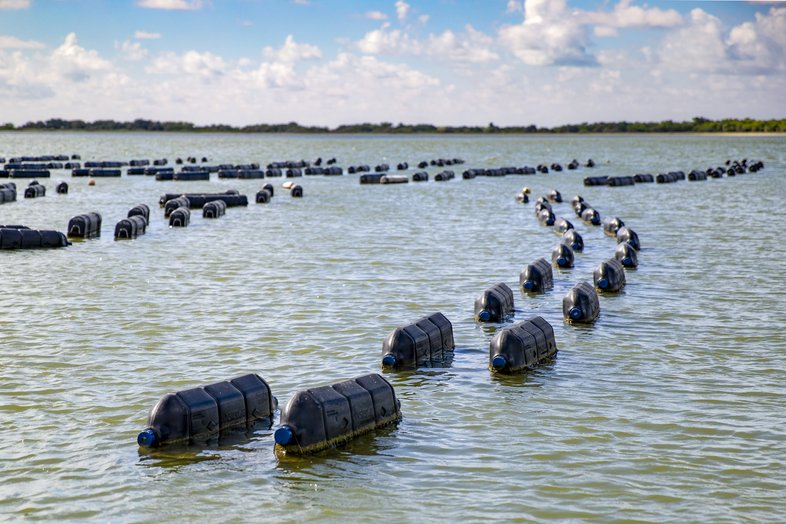
Oysters are grown in cages suspended in the water column.
Maegan Lanham
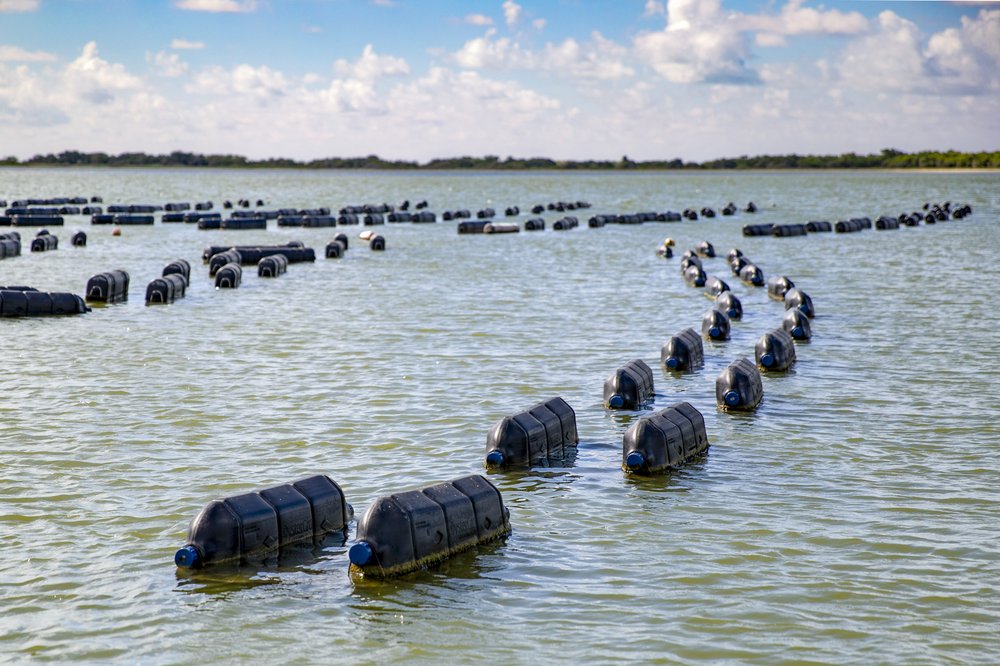
Oysters are grown in cages suspended in the water column.
Maegan Lanham
“These are hand‑crafted, hand‑raised, farm, mariculture, East Coast–style,” says Glass-Campbell, noting the common misconception that East Coast oysters are better than those reared in Gulf waters. “If you don’t tell somebody and just put them on the same plate as Prince Edward Island or Massachusetts oysters, they’d never know the difference.”
Nevertheless, it’s been hard work for these small-scale farmers to carve out a place in the market for their specialty products. Thus far, their strategy has been to target seafood grocers and upscale eateries that value farm-raised oysters for their uniformity — farm-raised oysters are more consistent than wild oysters and present beautifully when served on the half shell. In these contexts, farm-raised oysters are an easy sell to true seafood enjoyers.
“You have to understand that this isn’t just taking a boat out and picking up wild shell,” says Captain AJ Minns, founder of Blackjack Point Oyster Co. “You are working in 20-knot winds, hauling floating cages out of the water, scrubbing biofouling, and running mechanical tumblers week in and week out. And then, once you’ve grown a perfect product, you have to hit the pavement and explain to every chef and distributor why a Texas-farmed oyster deserves a premium spot on their ice bed.”
Between the numerous demands of raising oysters, selling them and navigating a complex regulatory environment, the life of an oyster farmer isn’t easy. Glass-Campbell is here to help. In addition to recommending policy changes, her job is to facilitate the new cultivated oyster mariculture program by seeing farms through their applications, permitting and beyond, as they continue the laborious cultivation process. Part of what makes her job enjoyable is that she loves the shellfish just as much as the farmers.
As I prepare to eat my first oyster of the day, I seek her advice. She recommends just a small pinch of lemon juice to complement the oyster’s natural brine. I slurp one down, savoring the rich flavor.
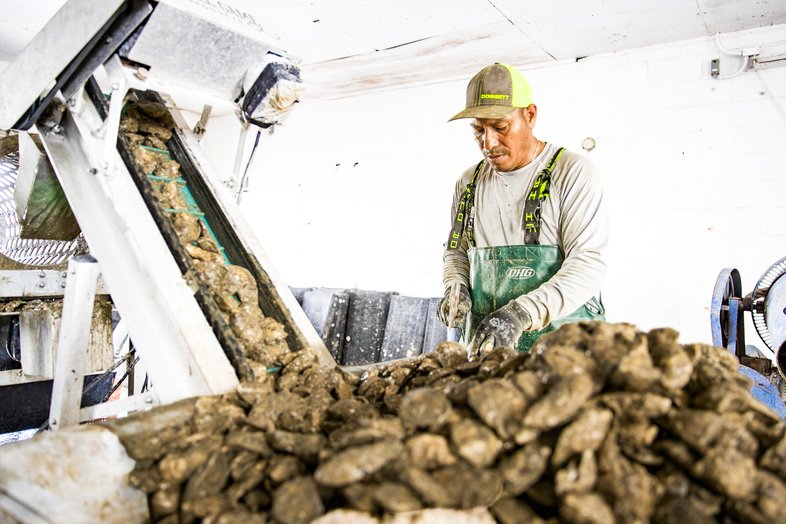
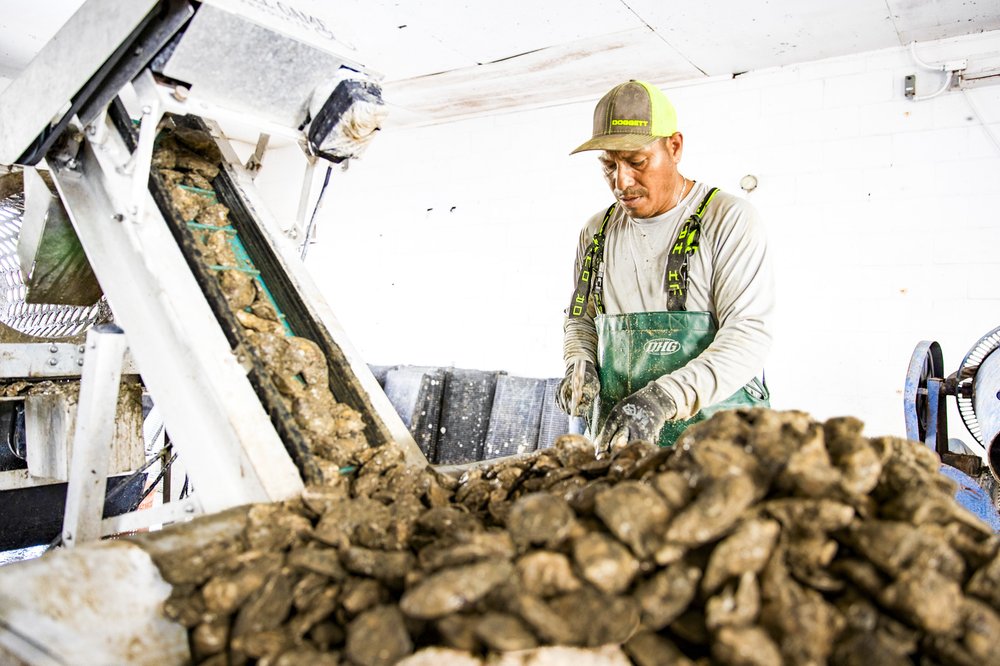
Oyster farming does not have the negative impacts on the environment as traditional wild harvest methods.
Maegan Lanham
Oyster farming does not have the negative impacts on the environment as traditional wild harvest methods.
Maegan Lanham
Shucking an oyster.
Maegan Lanham
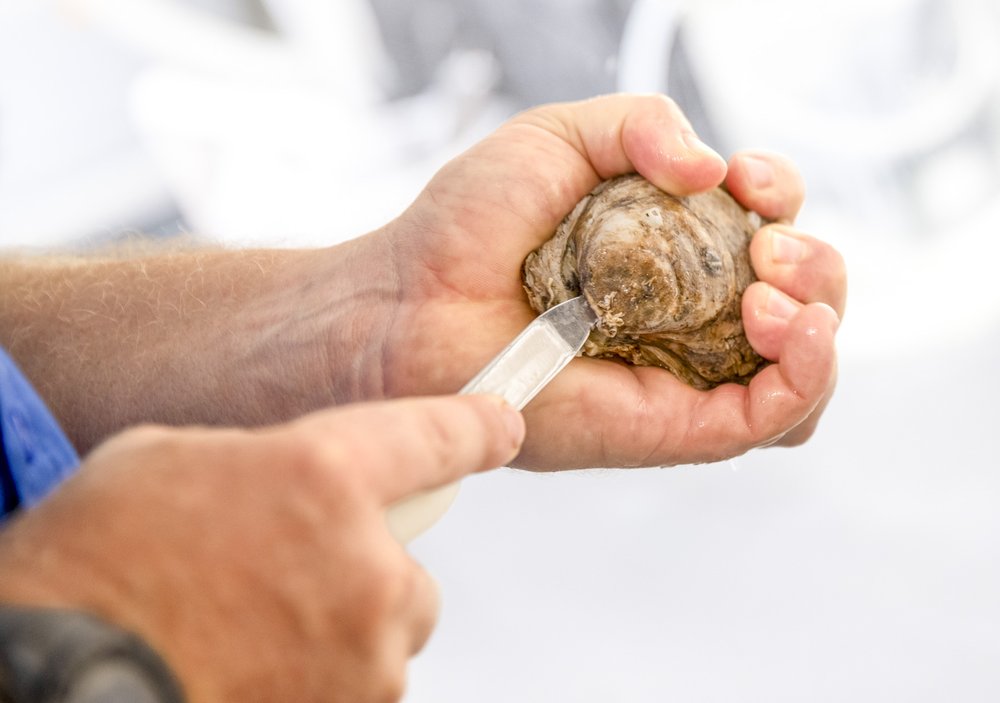
Shucking an oyster.
Maegan Lanham
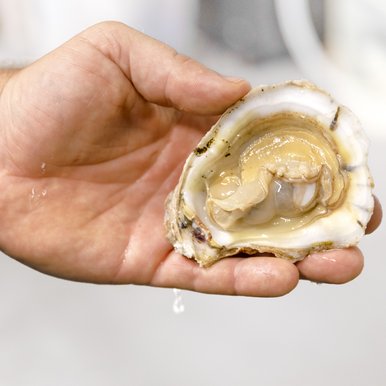
A perfect farmed oyster.
Maegan Lanham
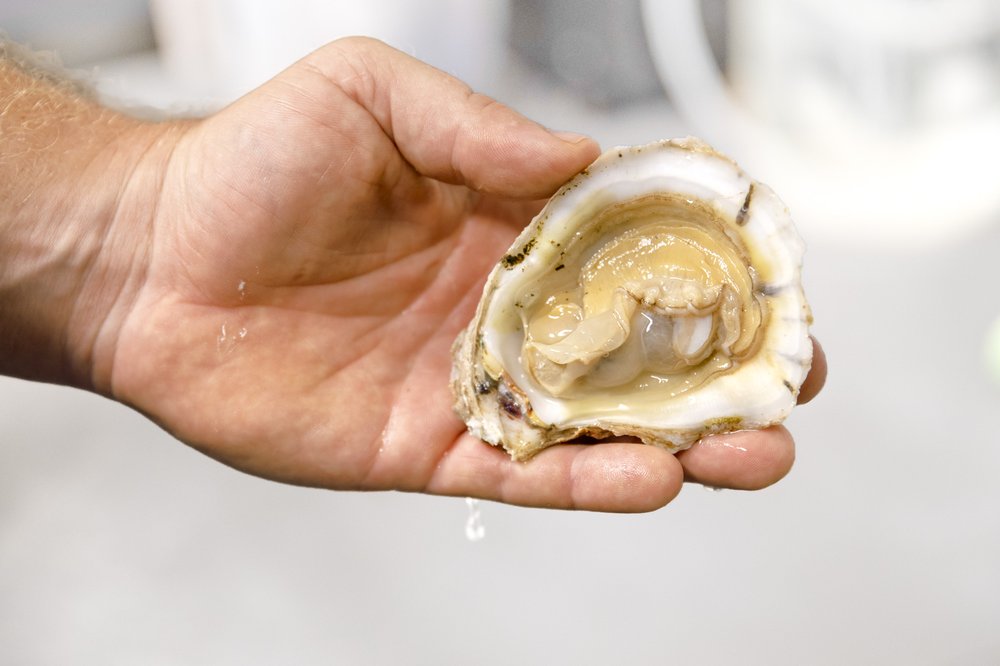
A perfect farmed oyster.
Maegan Lanham
Oyster farming, more formally known as cultivated oyster mariculture, refers to the practice of harvesting oysters from artificial reefs. This isn’t a new practice; it’s been around at least 2,000 years, when Romans innovated the use of mariculture to satiate voracious royal appetites. They did so by constructing gates, stakes, platforms and cages out of wood, reeds, stone and other materials to provide structure for mollusks, which grow in clusters and depend on shelter for reproduction and protection from predators.
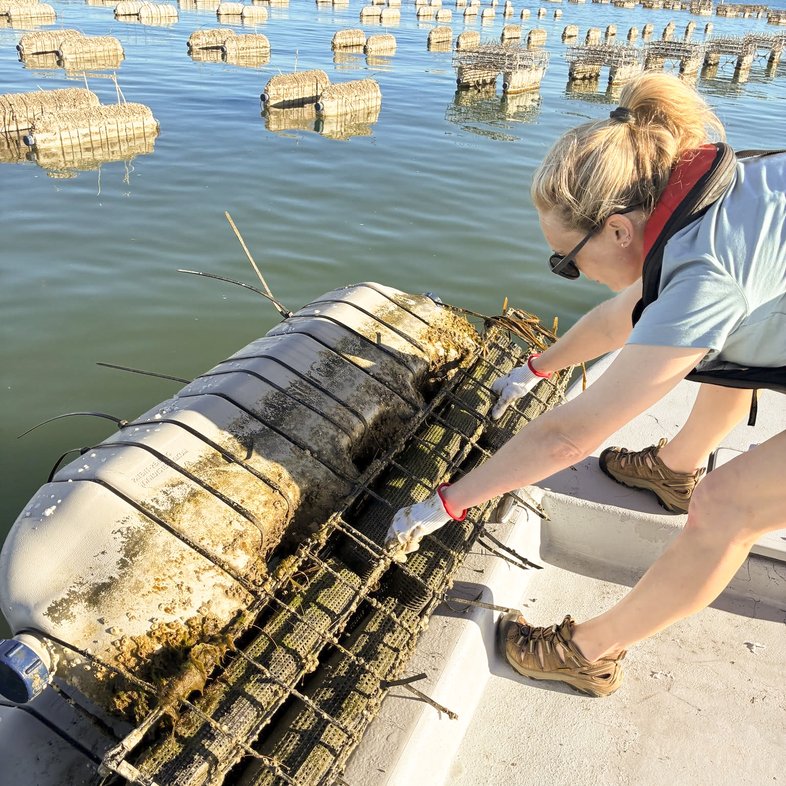
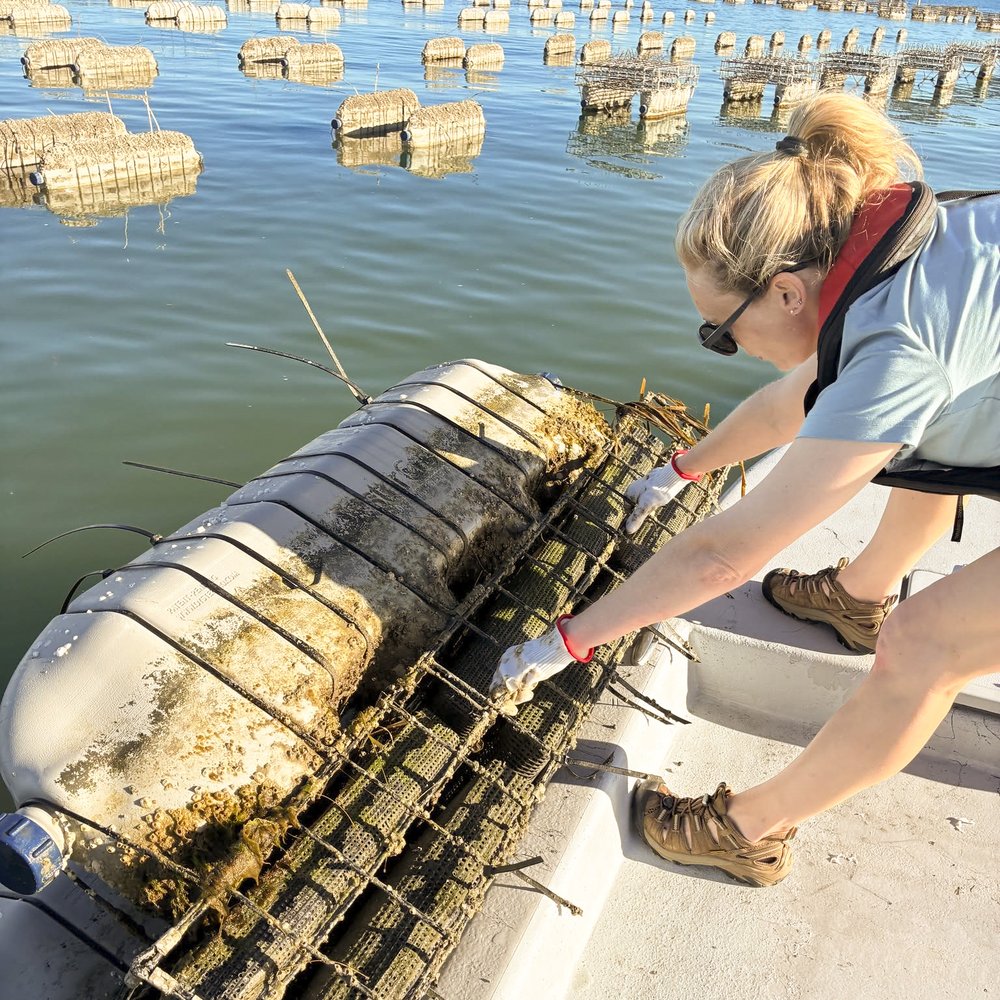
Lindsay Glass-Campbell, the newest Oyster Festival Queen, pulls in oyster cages to check on their condition.
Coastal Fisheries
Lindsay Glass-Campbell, the newest Oyster Festival Queen, pulls in oyster cages to check on their condition.
Coastal Fisheries
The first use of mariculture in the United States was by farmers in the Pacific Northwest, who imported hardy Pacific oysters from Japan during the 1920s to help meet demand for the popular seafood. Following the late 1800s California Gold Rush, skyrocketing populations in San Francisco drove the native Olympia oyster to near extinction within decades. Mariculture helped reduce the pressure on wild oyster reefs while still meeting demand and established states like Washington and California as world-class shellfish leaders. Later, modern mariculture expanded across the Atlantic states and into the Southeast. Texas remained a glaring outlier. For decades, state law prohibited private shellfish farming in public bays.
“We looked around and realized Texas was the only coastal state in the entire country where you couldn’t legally farm an oyster,” recalls Brad Lomax, a Corpus Christi-based conservationist and restaurateur who was among the early advocates for adopting oyster mariculture in the Lone Star State. “We had to bring together scientists, restaurateurs and lawmakers to change the law — not just to create a business opportunity, but to relieve pressure on our wild bays and establish a clean, sustainable industry for the future of Texas.”
Following a series of ecological crises — including the 2010 Deepwater Horizon oil spill, severe hurricane damage and disruptive amounts of freshwater runoffs from record river flooding — that decimated natural reefs and sent wild harvests plummeting, Lomax and others felt it was time to take action to improve the state of Texas bays.
Lomax partnered with Joe Fox of the Harte Research Institute and state Rep. Todd Hunter to draft legislation that would authorize TPWD to establish and oversee Texas’ cultivated oyster mariculture program.
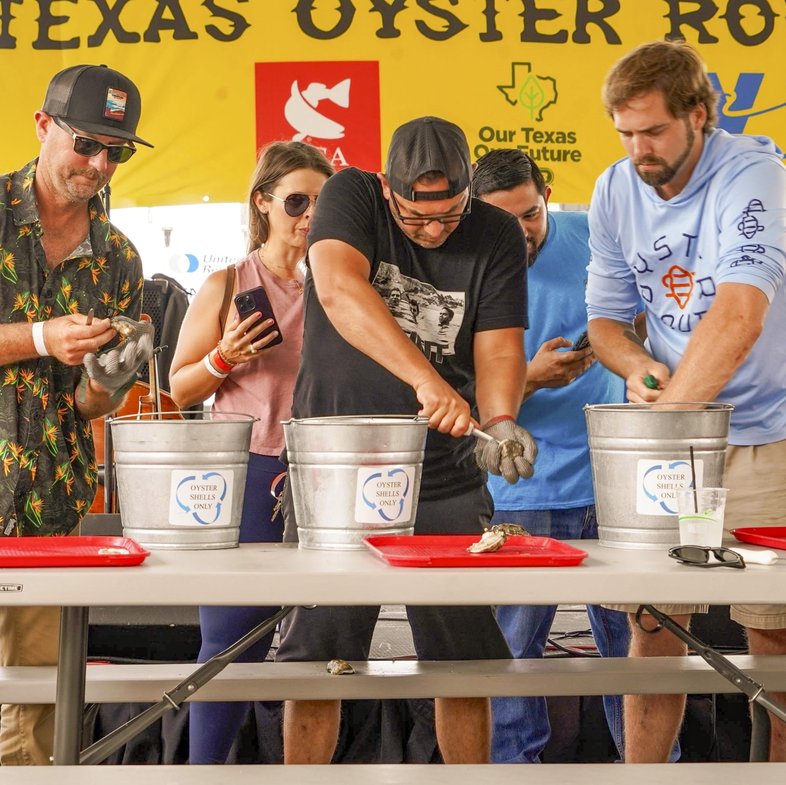
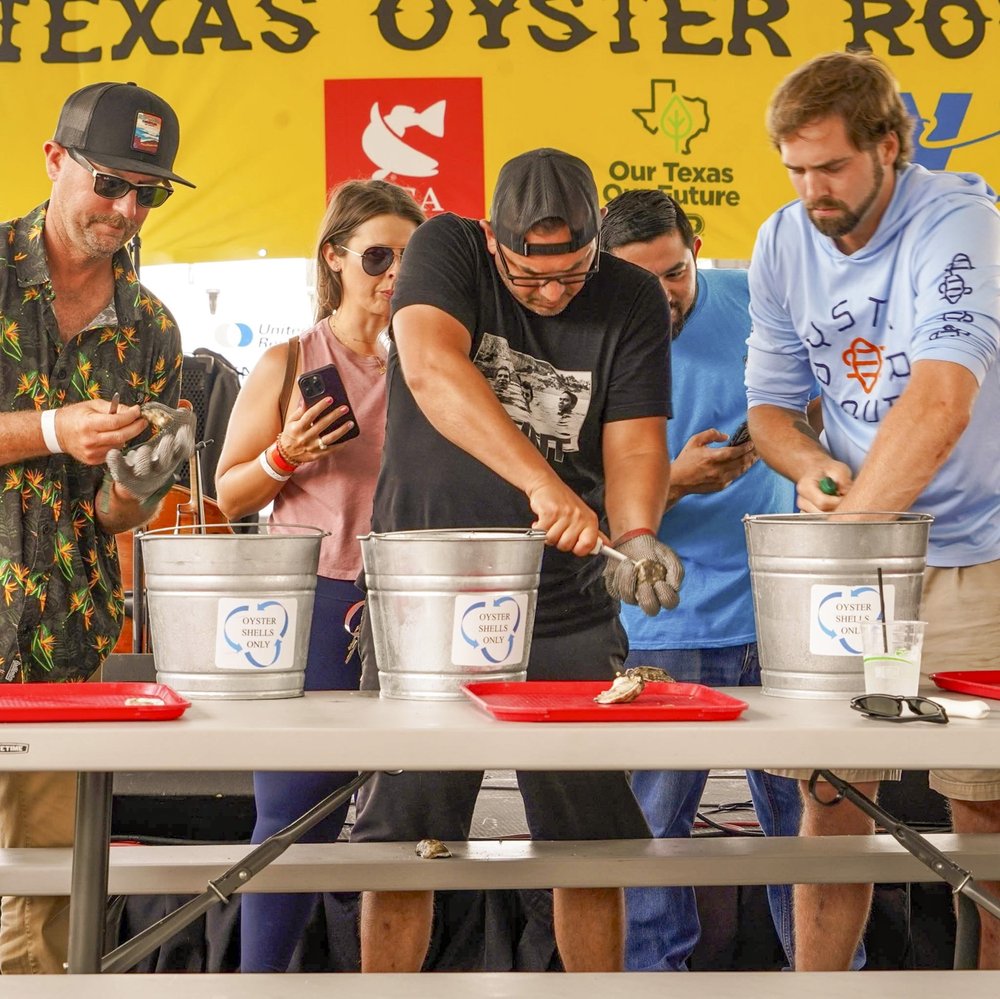
Participants at the Texas Oyster Roundup get a taste of delicious Texas-farmed oysters.
Texas Surf Conservancy
Participants at the Texas Oyster Roundup get a taste of delicious Texas-farmed oysters.
Texas Surf Conservancy
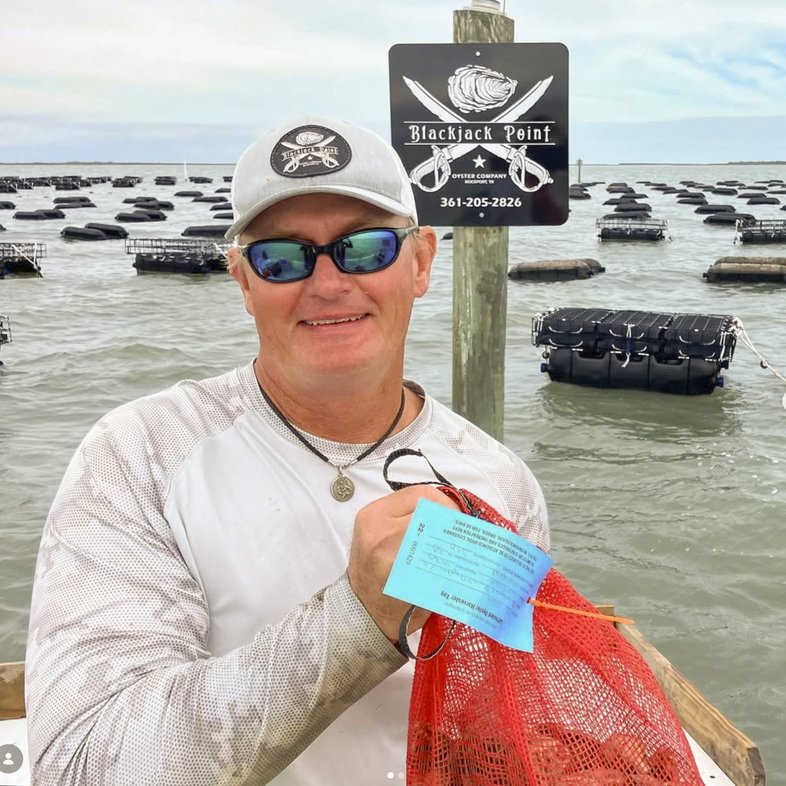
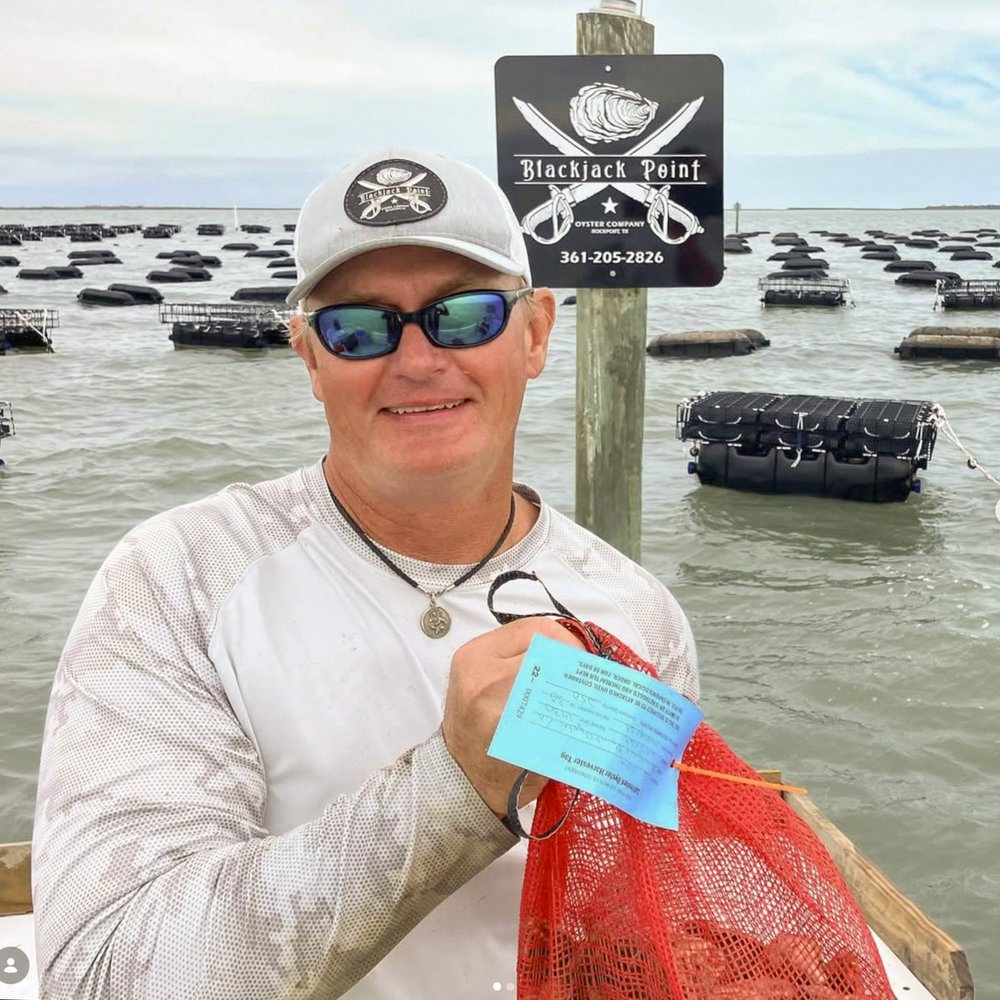
Minns of Blackjack Point Oyster Company enjoys the fruits of a healthier bay.
Courtesy Blackjack Point Oyster Co
Minns of Blackjack Point Oyster Company enjoys the fruits of a healthier bay.
Courtesy Blackjack Point Oyster Co
In May 2019, Gov. Greg Abbott signed that bill into law, a move that’s yielding meaningful results. The state’s 19 active farms span 159 acres of bay. In 2025 alone, Texas mariculture operations harvested and sold over 3 million oysters, generating $1.9 million in direct wholesale sales.
Those results also represent changing tides for the health of Texas bays and coastal waters. The legalization of mariculture not only expanded commercial options for those who make their living in Texas coastal waters but provided an ecological lifeline for fragile bay ecosystems.
Traditional wild oyster harvesting relies heavily on bottom dredging — a mechanical method where trawlers drag heavy steel scrapers across the seafloor, pulling up wild oysters alongside mud, reef structure and sometimes other organisms. Between natural disasters and decades of intensive dredging, an estimated 50 percent to 90 percent of historic wild oyster reefs across Gulf bays have been destroyed.
Because wild oyster reefs act as keystone marine ecosystems — anchoring bay sediments, tamping wave energy and providing nursery grounds for marine life — their structural collapse threatens the biological integrity of the entire Gulf Coast.
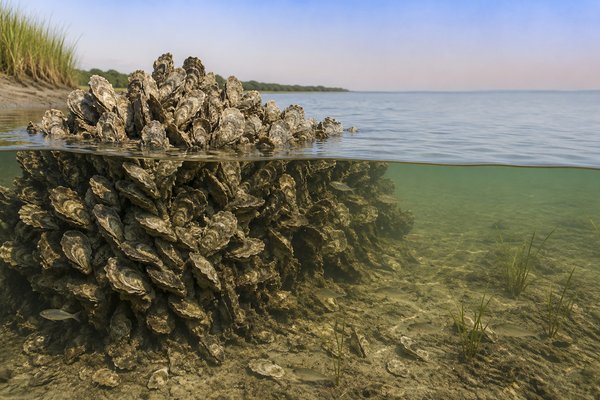
Off-bottom mariculture offers a restorative alternative to wild harvest. By growing in cages at the top of the water column, they are minimally disruptive to naturally occurring habitat and animals on the bay floor. Because they feed on naturally occurring wild microalgae suspended in the water column, they require no synthetic feed, fertilizers, antibiotics or chemical treatments. Not only do they lack the disruptive features of traditional wild harvest, but the farms may in fact be beneficial. They add to the population of oysters, which are filter feeders that provide an essential ecological role in Texas waters. Each oyster can purify 50 gallons of water per day, removing suspended solids, reducing excess nutrients and improving sunlight penetration for submerged aquatic vegetation. They also provide habitat for other species.
Minns of Blackjack Point Oyster Company says that he’s noticed significant improvement in the area of the bay where his farm is located since he started operating there four years ago.
“In spring of 2022, we took 576 core samples on our four-acre farm just to prove to Texas Parks and Wildlife Department that it was essentially all mud, because we could not be close to wild oyster reefs or natural seagrass beds. So I know for a fact that that four-acre plot was just mud on the bay bottom,” says Minns. “Today it is a thriving ecosystem. I liken it to a floating oyster reef, because the oyster cages and oysters attract juvenile shrimp, juvenile fish, juvenile crabs, which in turn attracts larger fish, and even sport fish.”
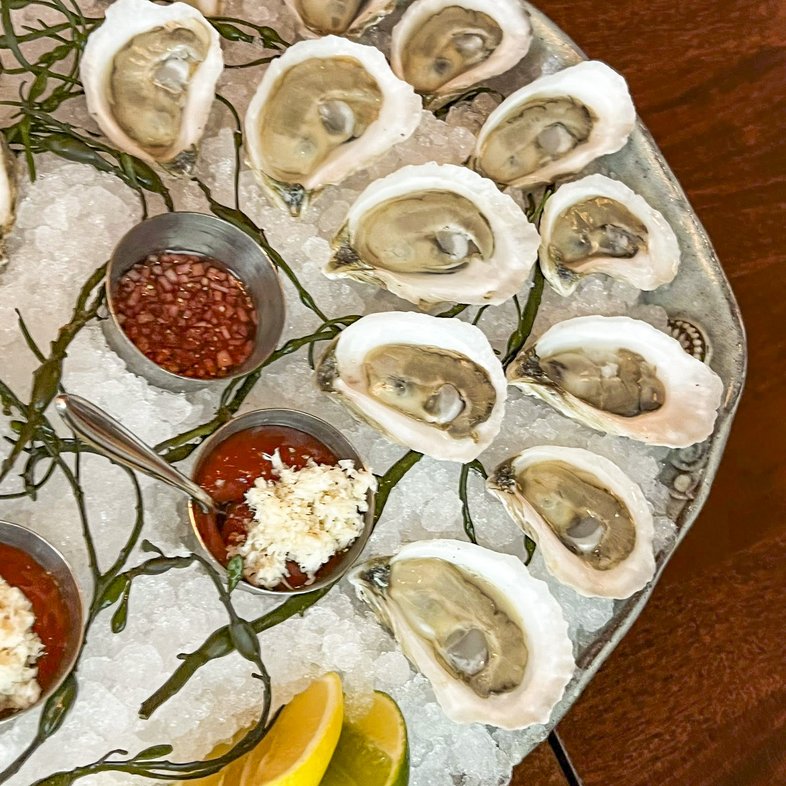
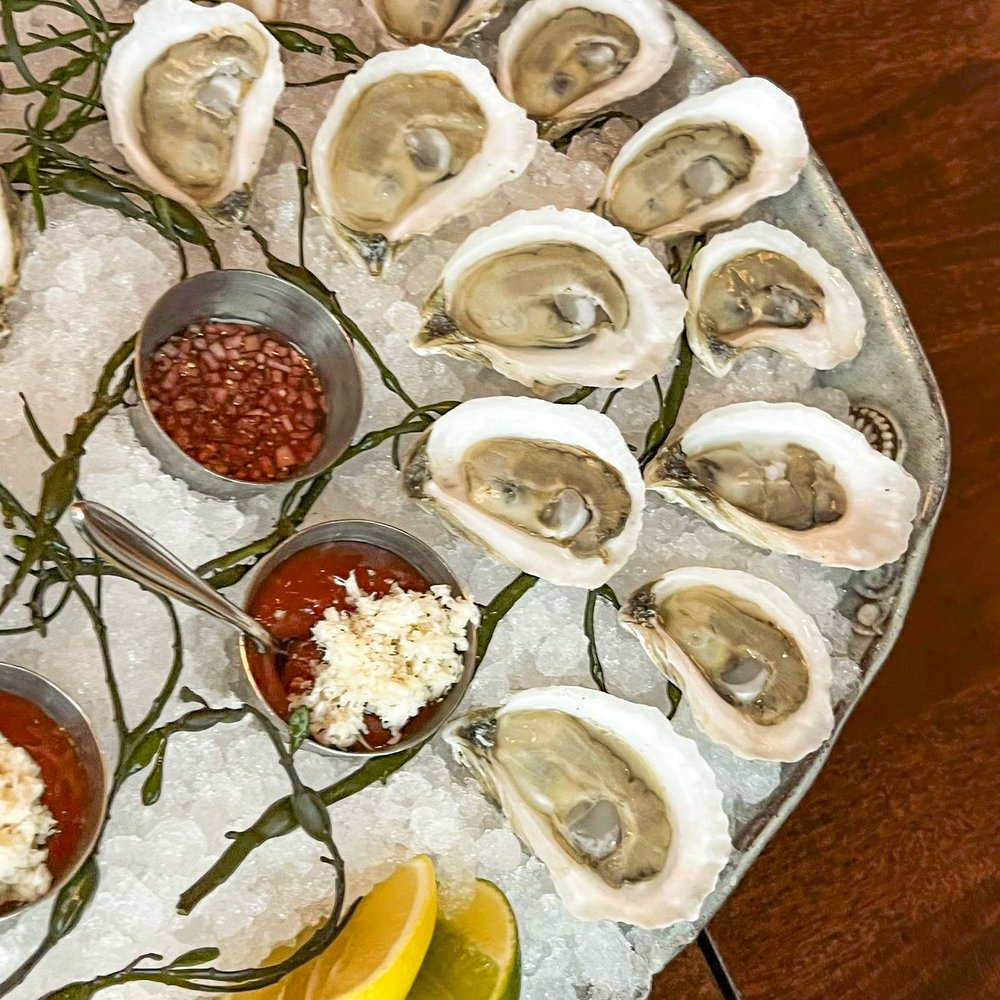
Texas-farmed oysters on the half shell.
Texas Surf Conservancy
Texas-farmed oysters on the half shell.
Texas Surf Conservancy
Half a dozen oysters later, I still haven’t tried all the options available at the Texas Oyster Roundup, but I’m beginning to gain an appreciation for their distinct flavors and characteristics. Because the growing conditions at each farm site can vary drastically in factors like salinity, water temperature and localized phytoplankton diets, they each have their own unique flavor profile. Some are sweet, others smoky, but most are salty like the sea in which they were grown.
Through mariculture, Texans have been introduced to the concept of merroir — the marine equivalent of wine’s terroir, a French word meaning “sense of place” that describes how climate, soil and terrain combine to give grapes their unique local taste.
But, even after all her time working with oyster farmers and tasting their products, Glass-Campbell says she’s more akin to a simple connoisseur than oyster sommelier.
After trying a few more offerings and eating our fill, we head back to the festival’s main stage, where the energetic chatter of the crowd subsides as festival organizers step up to the podium to announce the day's feature event: the announcement of the festival’s new oyster king or queen.
“There is nobody who has done more for Texas oyster mariculture than Dr. Lindsay Campbell,” Lomax announces to the packed room, declaring her the newest Oyster Festival Queen. “What this young lady has done for Texas oyster mariculture — you can't imagine. She is tireless.”
Lomax presents her with a custom ceremonial scepter, highlighting her dedicated work navigating complex coastal permitting, managing state agency regulations and advancing mariculture. Accepting the scepter with a wide smile, Glass-Campbell turns to the microphone.
“The real winners are our farmers and all of y’all who got to eat these delicious oysters today,” she says.