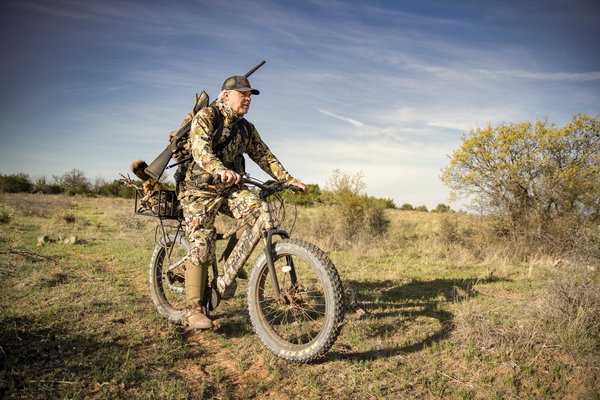
With a crunch of leaves and a barely audible whirr, Peter Fox III rolls into the pre-dawn darkness of a North Texas ranch, a shotgun slung over one shoulder.
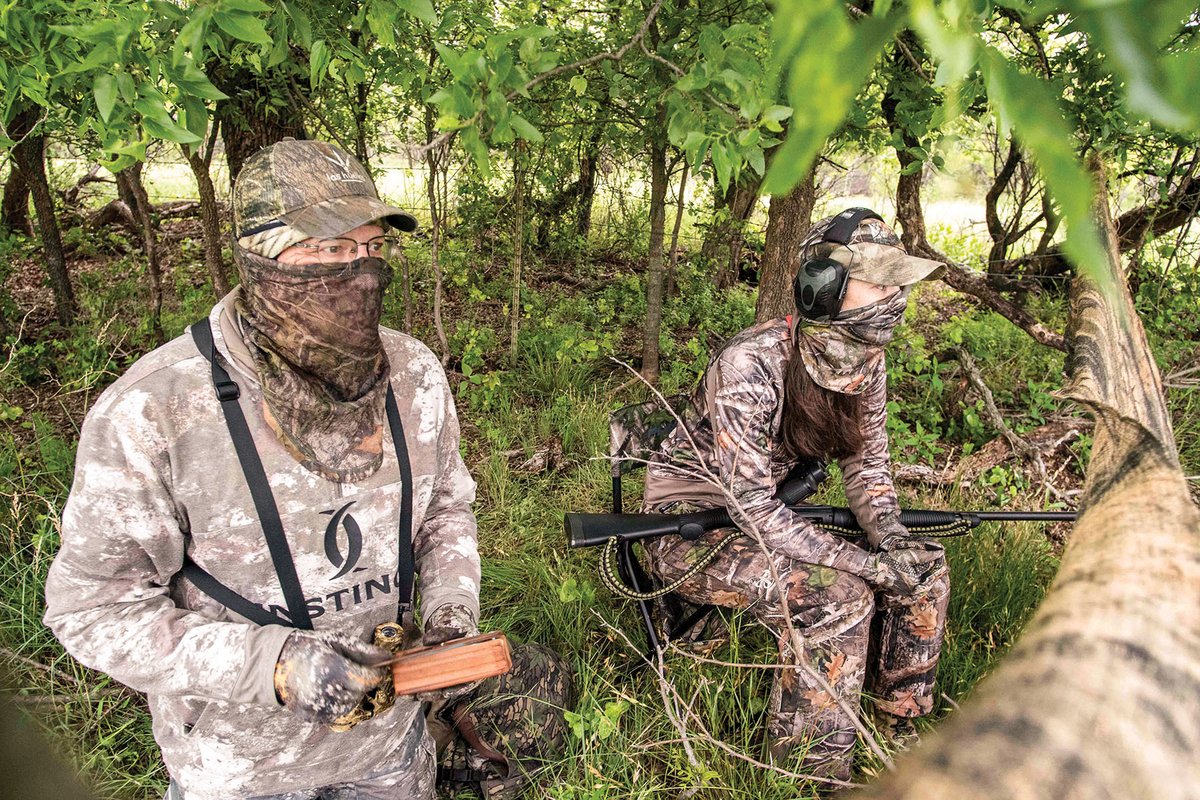
I scuttle after him on foot as he glides across a brushy field, past cactus and limestone boulders that glisten in the moonlight, then stops his electric bike at the top of a hill. There, he pulls a palm-sized turkey caller from the pocket of his camouflage vest and rubs a striker across it. When the clucking fades, Fox climbs back onto his bike and continues through the scrub, heading toward a cluster of oaks where he’s used branches and mesh fabric to build a small blind. He parks the e-bike, checks the position of half a dozen turkey decoys set up in a small clearing in front of the hiding spot, then ducks into the thicket.
While I catch my breath after scrambling up the slope after him on foot, Fox sips hot coffee from a Thermos and gazes into the still-dark clearing. He scrapes a few more chirps from his caller, hoping to chum up some turkeys. They gobble in the distance.
“They’re perched over there,” whispers Fox, the manager of Young Ranch, this 5,000-acre spread near Roscoe owned by his extended family. He waves toward a nearby creek. “They’ll get a drink of water, then come this way.”
But they don’t make an appearance. We sit quietly in the blind, listening to a faint gobbling in the distance, but after a while the sounds stop.
A coyote pads cautiously into the clearing in front of us, stares quizzically at the turkey decoys, then trots away.


Coyote in a clearing.
Coyote in a clearing.
Two-Wheeled Revolution
Fox, 59, started hunting when he was a college student. He’d visit the Young Ranch with his buddies, and they’d hunt for white-tailed deer and turkeys. They used their feet or four-wheelers to move around the property. Machines could get noisy, but at the time, the idea of hunting by bike seemed silly.
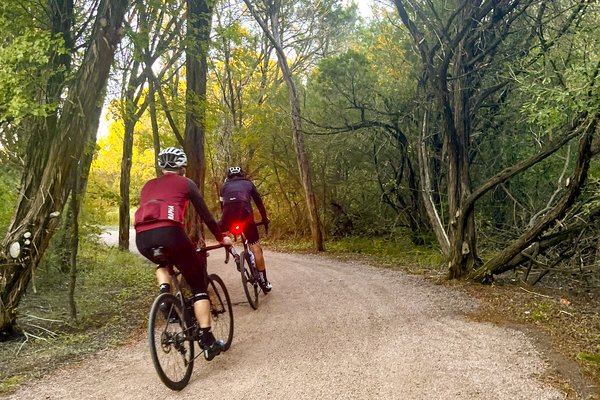
Not anymore. The popularity of e-bikes has surged in the last decade. In cities, cyclists hop on bicycles equipped with tiny electric motors to commute to work or zip to nearby restaurants and shops. (My husband and I have two in our backyard shed, and use them frequently for trips downtown, where it’s easier to park a bike than a car.) E-bikes, proponents say, make hills inconsequential and level the playing field among riders of different skill levels. Plus, they’re fun to ride.
Lately, hunters like Fox have taken notice.
In 2012, two brothers in Colorado began designing e-bikes specifically for use by hunters. The company they started, QuietKat, still sells bikes and accessories designed to take some of the work out of hunting. Other companies, including Bakcou, Rambo and Puckipuppy, target the same outdoorsy clientele.
Then, in 2019, the Department of the Interior approved policies allowing e-bikes on federal lands where traditional bikes were already permitted. Their use in the backcountry, especially in places like Colorado, where hunters sometimes need to cover long distances and steep terrain, surged. Hunters could now access public lands where gas-powered motor vehicles were once banned.
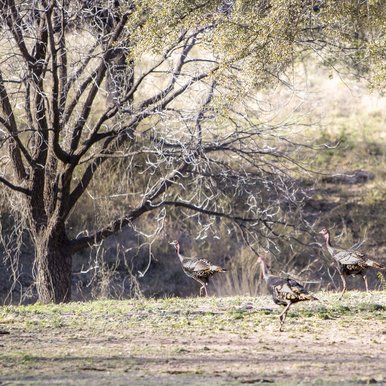

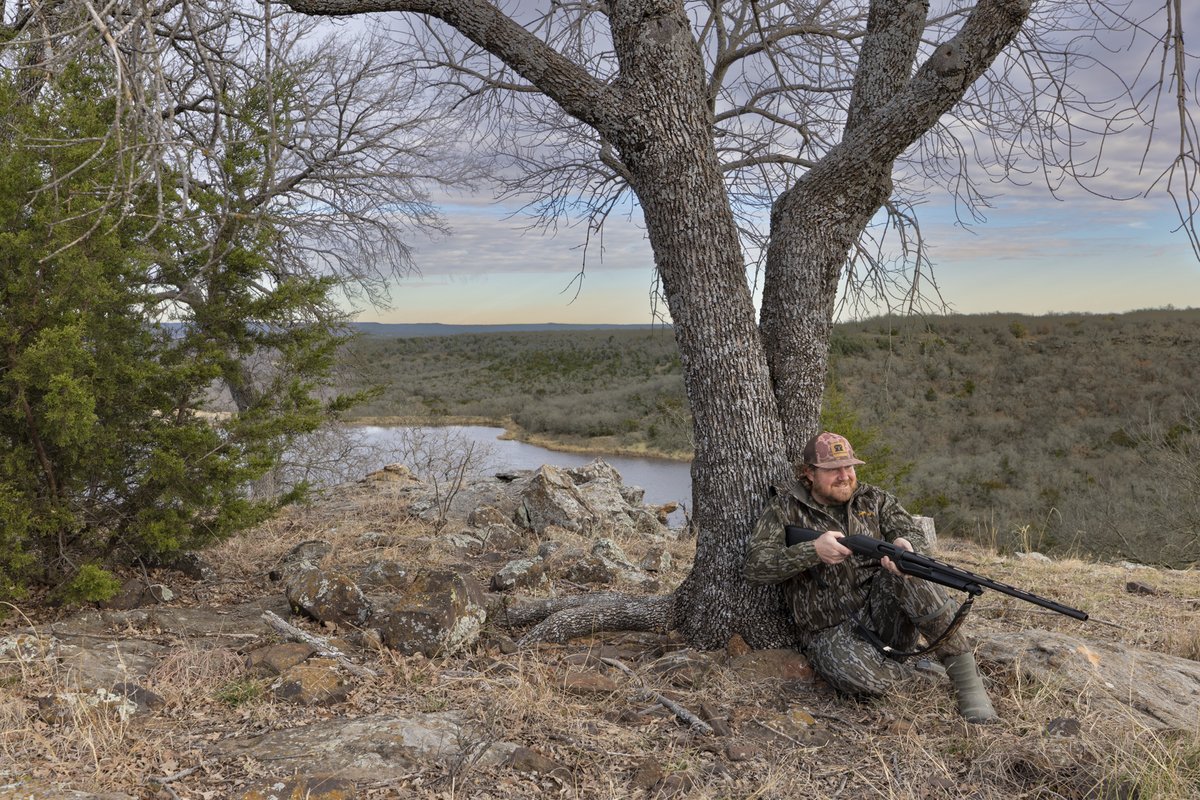
Turkey hunting requires stealth and skill; Fox uses a turkey call.


Turkey hunting requires stealth and skill; Fox uses a turkey call.
Turkey hunting requires stealth and skill; Fox uses a turkey call.
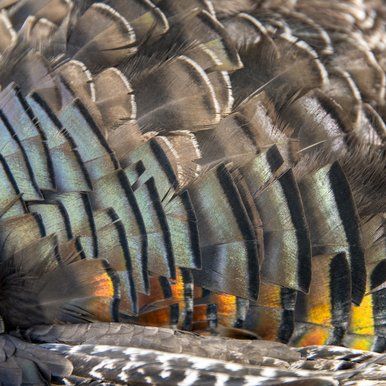
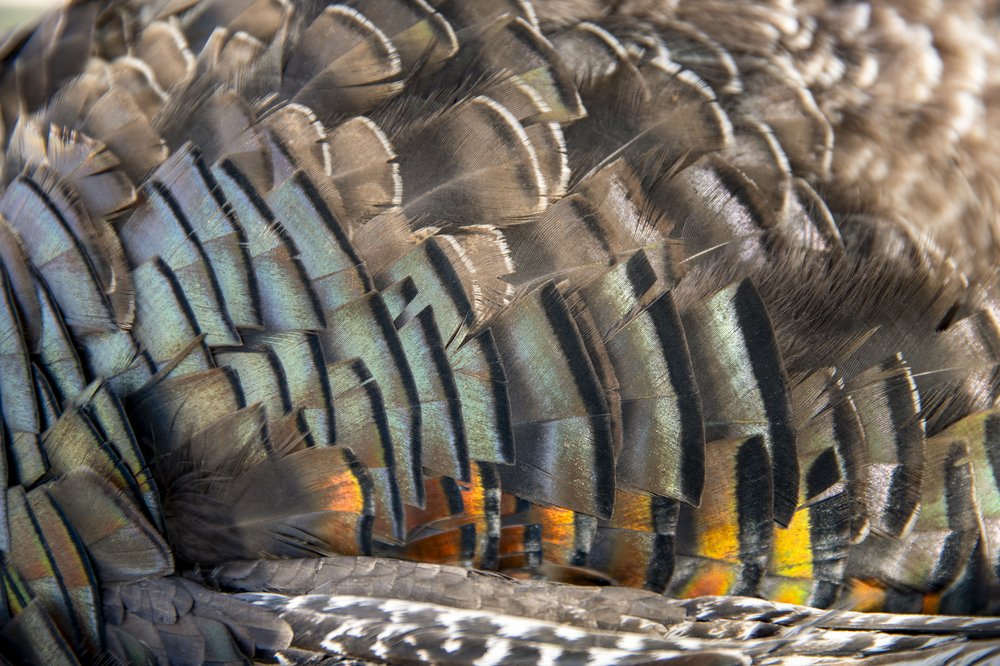
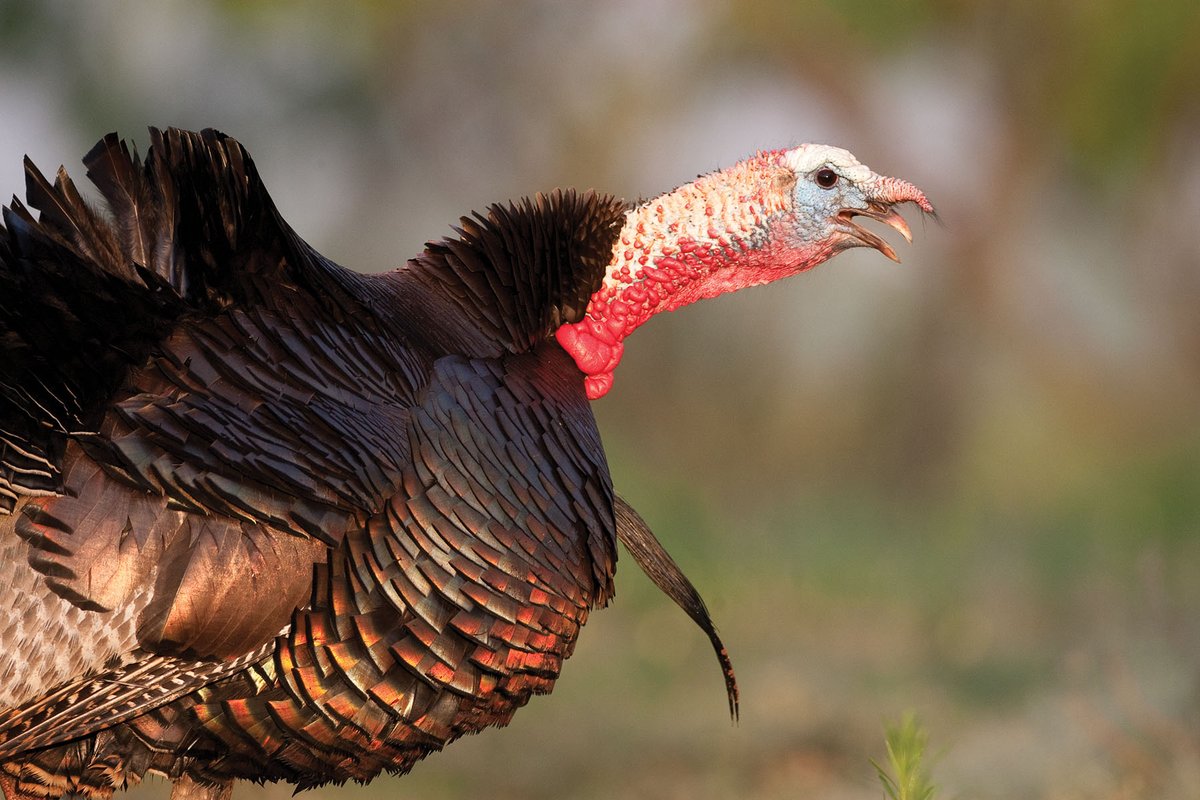
A turkey's colorful feathers; taking aim at game.


A turkey's colorful feathers; taking aim at game.
A turkey's colorful feathers; taking aim at game.
Benefits of the Bike
E-bikes designed for hunting, some of which have motors in front and others with rear hub motors, typically sell for between $2,000 and $8,000. That’s less than a side-by-side or four-wheeler, which can cost thousands more.
Hunters who use them point out several advantages, from their near noiseless ride to their efficiency.
“The main advantage is you can move from A to B quickly and it’s not a motorized vehicle that makes noise and pollutes,” says Eddy Padilla, a manager at Scheels in The Colony, which sells e-bikes for hunting.
Compared to a gas combustion vehicle, which pops and snarls and spooks away wildlife, e-bikes can move almost silently. There’s no loud motor or engine noise to alert prey, and the bike itself allows hunters to move quickly and access a location without using a lot of energy.
“On an e-bike, some of our customers can ride right up to animals because the bike is so quiet and unfamiliar to them,” says Sam Blethen, former national sales manager for QuietKat.
E-bikes can also help hunters avoid leaving a scent trail — a near impossibility for someone riding a horse or walking through the brush. “They’ll ride their bikes right up to an elevated blind, then step onto the ladder so their feet never touch the ground,” Blethen says.
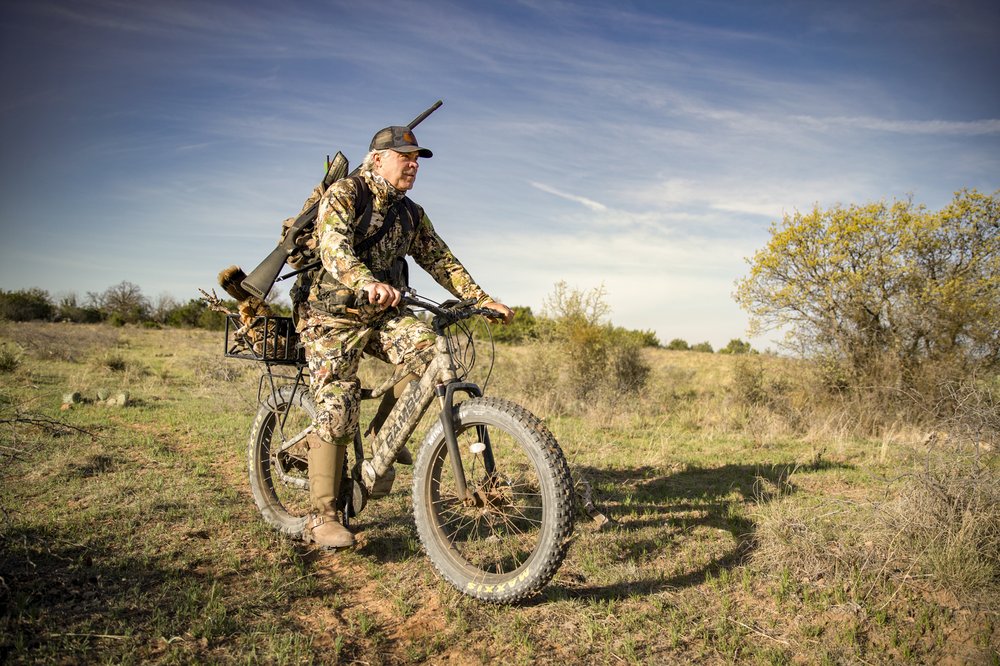
Hunting e-bikes are equipped with big wheels and extra-wide tires. Company websites show photographs of hunters wearing camo riding them, along with pictures of anglers heading out to waterways, the racks on their bikes filled with fishing rods, and ranchers out working their land by bicycle.
“They’re similar to an overlanding truck — they’re powerful and long range and carry lots of gear and accessories,” Blethen says.
That comes in handy when you’re stalking a deer or a turkey. Instead of hauling around a backpack weighed down with heavy gear, Blethen says, hunters can load their supplies onto a bike and simply press the throttle. Most e-bikes come with a rear rack that can carry up to 100 pounds, and some have a front rack, too. One- and two-wheeled trailers are also available, so hunters can haul out their harvest at the end of the day with ease. Other accessories include gun racks, rear gear baskets, handlebar grips, waterproof panniers, scabbards, and headlights with a red-light mode that is less distracting to wildlife.
“You sweat less and use less energy,” says Blethen, who uses an e-bike to hunt elk in Colorado, where they are becoming common in the backcountry.
An e-bike’s range depends on its battery, which is easily removed from the bike for recharging. Depending on the model, a basic e-bike can travel 20 to 40 miles on a single eight-hour charge; more expensive models can travel up to 90 miles per charge. Chargers plug into a regular 110-volt wall outlet.
In Texas, some hunting lodges keep a fleet of e-bikes. Guides use the vehicles to scout out where deer, hogs or turkeys are hanging out the day before a hunt. That helps them pinpoint hunting hotspots before clients arrive.
“It's getting people out there who haven’t used a bike in a while. It gives them the confidence to know they can ride harder and have assistance getting back when they need it,” Blethen says.
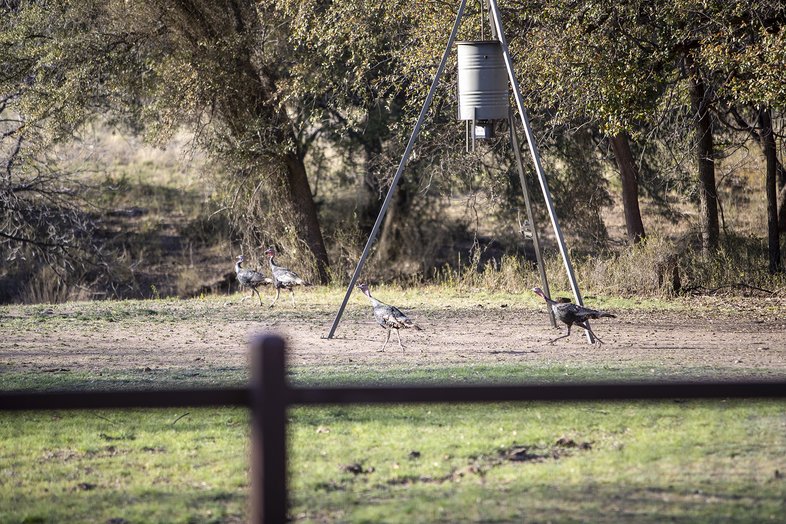
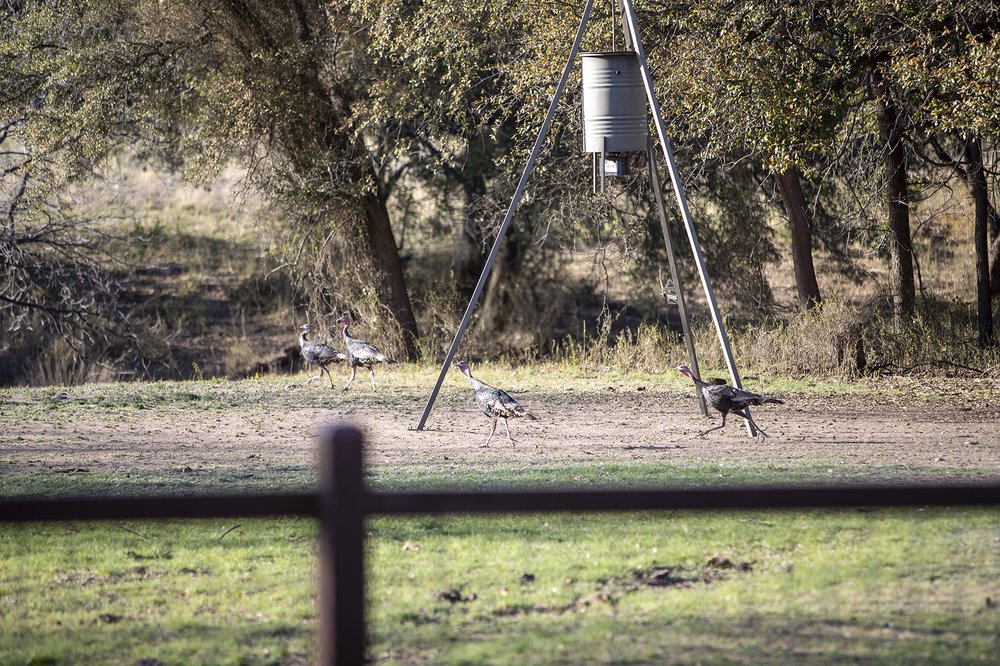
Turkeys explore an area near a ranch feeder.
Turkeys explore an area near a ranch feeder.
Turkey Time
Back at Young Ranch, Fox decides to leave the blind and continue his turkey hunt on foot. He pulls the camo-patterned buff higher on his neck, and creeps into the brush, leaving his e-bike behind for now.
I follow along, trying not to crack twigs or sneeze. Fox skirts a few big boulders, then dips into a ravine. It’s light outside now, and we can see into nearby fields of tall, golden grass.
After about 15 minutes, we hear a distant gobbling. We slow our step, then crouch behind some bushes. In the distance, we see two turkeys, visible only from the neck up, wading through the grass. Fox signals that he’s about to take a shot. I cover my ears as he aims and shoots.
Fox gets his turkey with the first shot, then strides into the field to retrieve it. He carries his prize back toward the blind, where he loads it onto a rack on the back of his e-bike. He loads up the rest of his gear, hops onto the bike and glides silently down the hill.
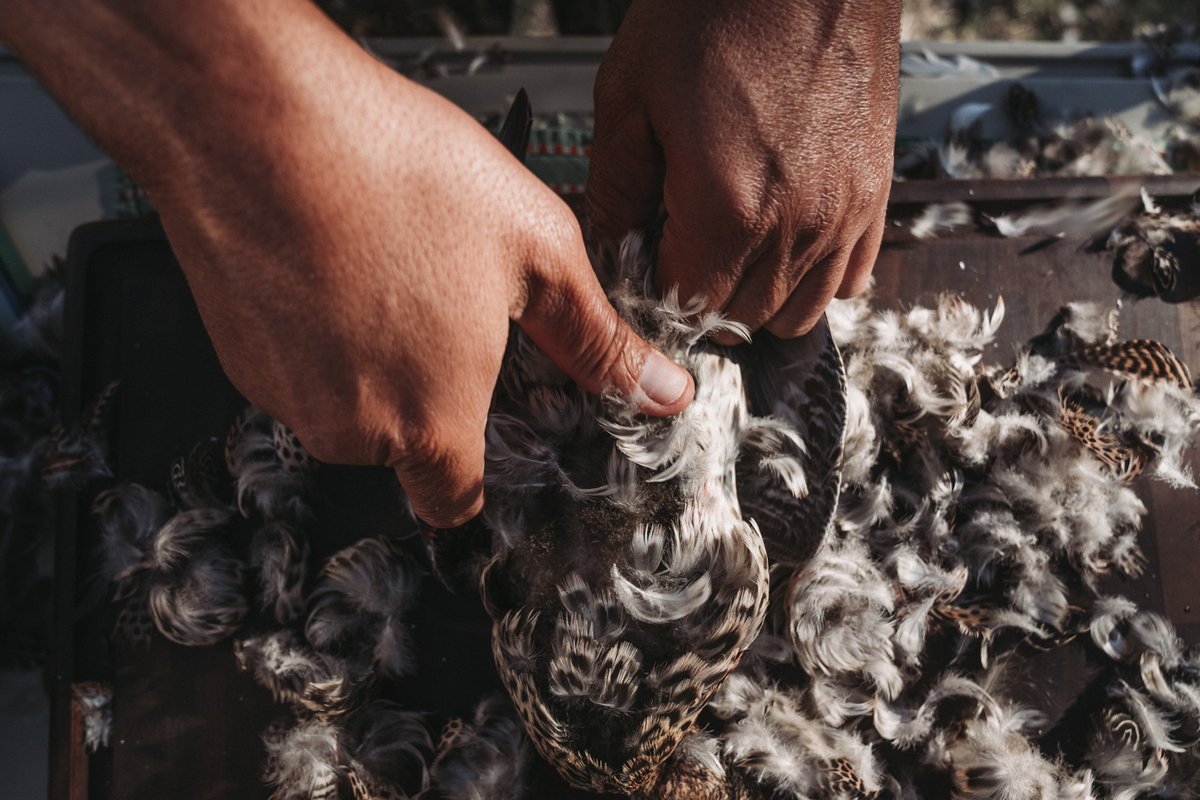
Back at the ranch house, Fox lifts the turkey off his bike and onto the tailgate of his pickup truck. He neatly cuts out the breast meat, then carries it into the kitchen.
There, he spends a few minutes with his hunting buddy Hank Anderson, 56, who’s just returned from another part of the ranch, debating the best way to prepare the meat.
“It tastes different than store-bought turkey,” Fox says. “It’s all in how you cook it.”
He decides to marinate it in evaporated milk and seasonings, then cut it into thin strips, which he’ll dredge in flour, and fry it in a skillet. Served with rice and gravy, it’s a hunter’s treat.
Texas Ranch Riding
Anderson has been hunting here with Fox for about 15 years, but so far, he hasn’t made the switch to an e-bike. The land where he usually hunts in northern Louisiana is swampy and muddy, making biking a challenge.
“But out here in Texas it works great,” Anderson says. “I’ve been wanting one.”
Fox stumbled into e-bikes unintentionally. A tech-savvy friend who loved gadgets and owned property along the Mississippi River bought one a few years ago. The bike didn’t work well in the muddy conditions where that friend hunted, but he thought it might work at Young Ranch. The friend never got to try it — he died in a small plane crash a few years ago. But his son gave the bike to Fox, who brought it to the Texas ranch.
At first, it didn’t work so well.
“Everything out here sticks,” Fox says. “I took it on my first hunt and didn’t get half a mile before the tires were flat.”
Still, he liked the idea of an e-bike. It gave him an advantage, and he could get a little exercise if he wanted, too. He did some research, then bought larger, sturdier tires for the bike he’d been given. He installed a skid plate to protect the bike’s small motor, and squirted sealant inside the tires in case he ran over a cactus.
Now he uses the e-bike at Young Ranch year-round. In spring he pedals the property, looking for turkeys. In fall he uses it to hunt deer or find wild hogs.
“Deer get very spooky and know the sound of a four-wheeler and a truck,” Fox says.
But on his e-bike, Fox can whiz through the brush, dip in and out of ravines and zigzag around boulders and trees. All the while, he can stay upwind of whatever he’s hunting. So far, at least, the deer, hogs and turkeys don’t seem to notice his e-bike.
“It’s so quick and easy, and you’re so stealthy,” he says. “And you can park it anywhere.”
It gives him a modern-day edge on an age-old sport.