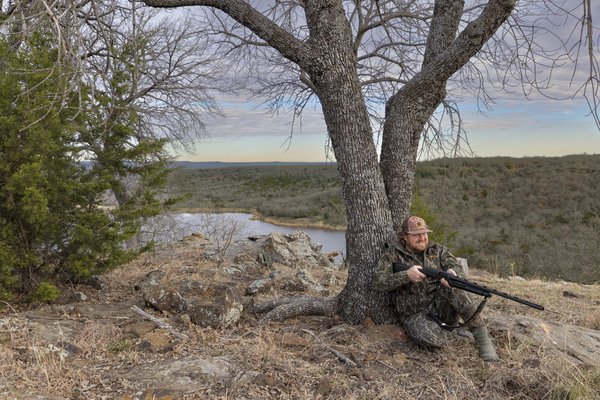
There’s no greater sound in nature than a turkey gobbling. That’s the opinion of Kyle Hand, a member of the small game program for the Texas Parks and Wildlife Department.
“It doesn’t matter if it happens in the spring or in the fall, but hearing this 20-pound bird making this crazy sound, there’s nothing like it,” he says.
A male wild turkey gobbles by rapidly forcing air from its lungs through its syrinx (voice box), creating a loud, gurgling sound. It’s a complex, throaty noise — one that hunters have worked for centuries to perfectly imitate. Males often use a gobble to signal their presence and fitness during mating season.
The gobble — it’s a sound that feels both immediate and ancient, echoing through East Texas bottomlands, Hill Country canyons, South Texas brush and North Texas oak forest.
Some of Texas’ wildlife management areas offer prime spots to hear the sweet sound of a good gobble, and to match wits with these wily birds on a spring hunt.
This month, we’re highlighting three WMAs where you can hunt for turkey. Wildlife management areas offer places where any Texan can hunt, which is somewhat of a rarity in our mostly privately owned state.
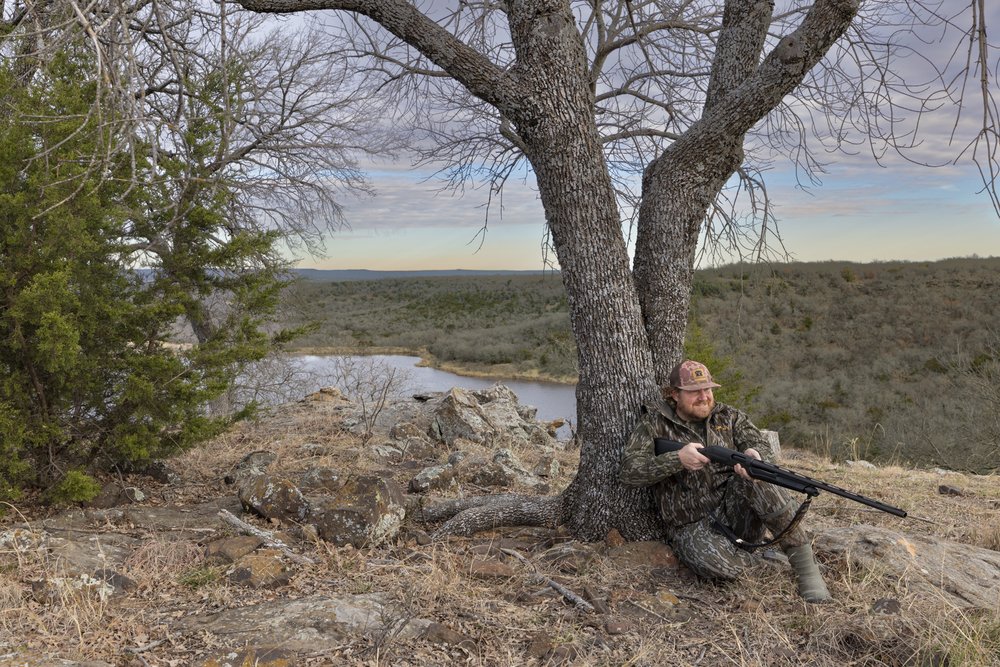
Turkey hunting is more interactive than other types of sit-and-wait hunting.
“It’s an impressive animal to see on the landscape, and it’s something you can have a communication back and forth with when you’re trying to sound like the hen,” says Jason Hardin, Wild Turkey Program leader for TPWD. “It’s a fun game to play and it’s not just sitting in a blind waiting for something to happen. You’re an active participant. And I think that’s why it’s so popular and growing.”
Success in turkey hunting requires some skill, and some patience, says Cameron Martin, biologist at the Muse Wildlife Management Area. “The public hunters who are successful — they’re really good with their calls, and they know when they need to run and gun and move to a bird and when they need to stay put and just let the turkeys come to them.”
And, sometimes, it’s worth it just to hear a good gobble.
Daughtrey Wildlife Management Area
Maegan Lanham
Daughtrey Wildlife Management Area
Maegan Lanham
Daughtrey WMA
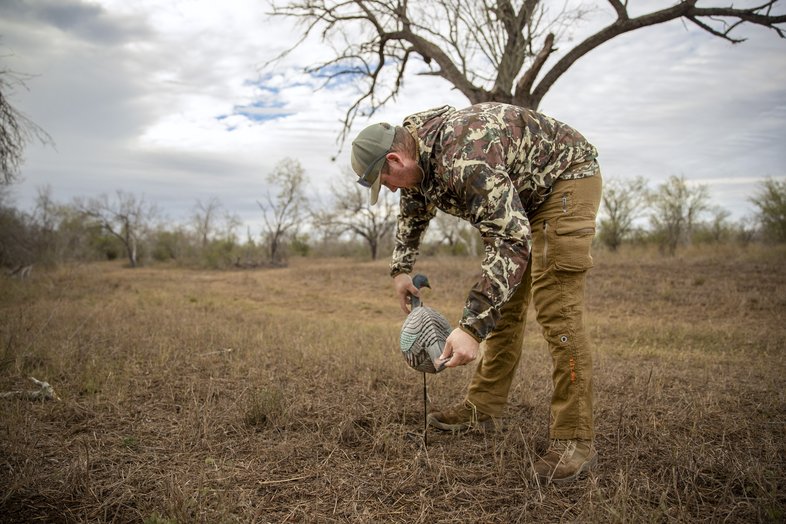
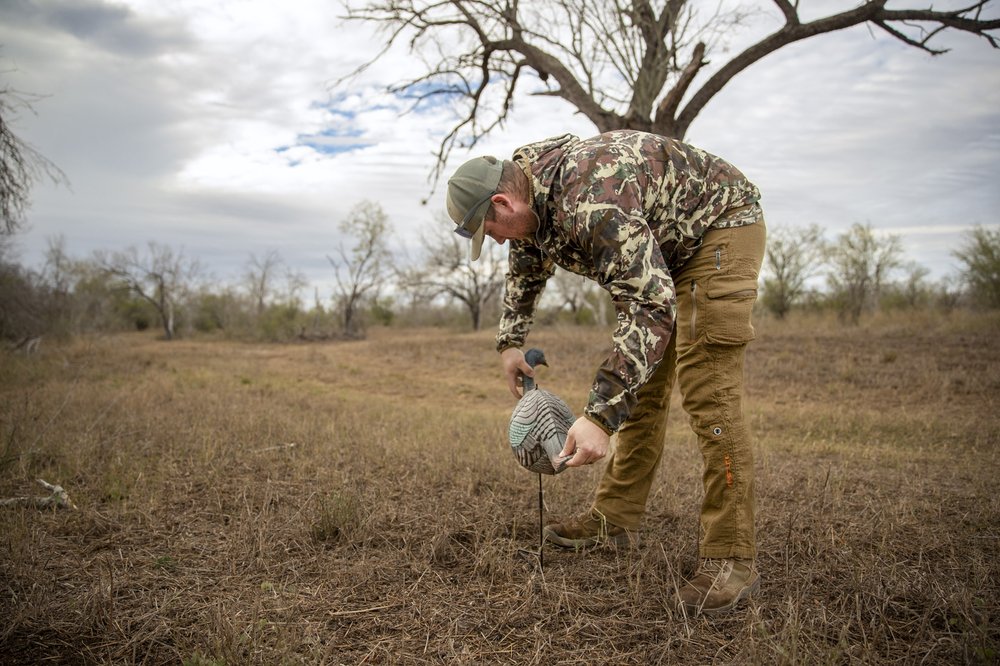
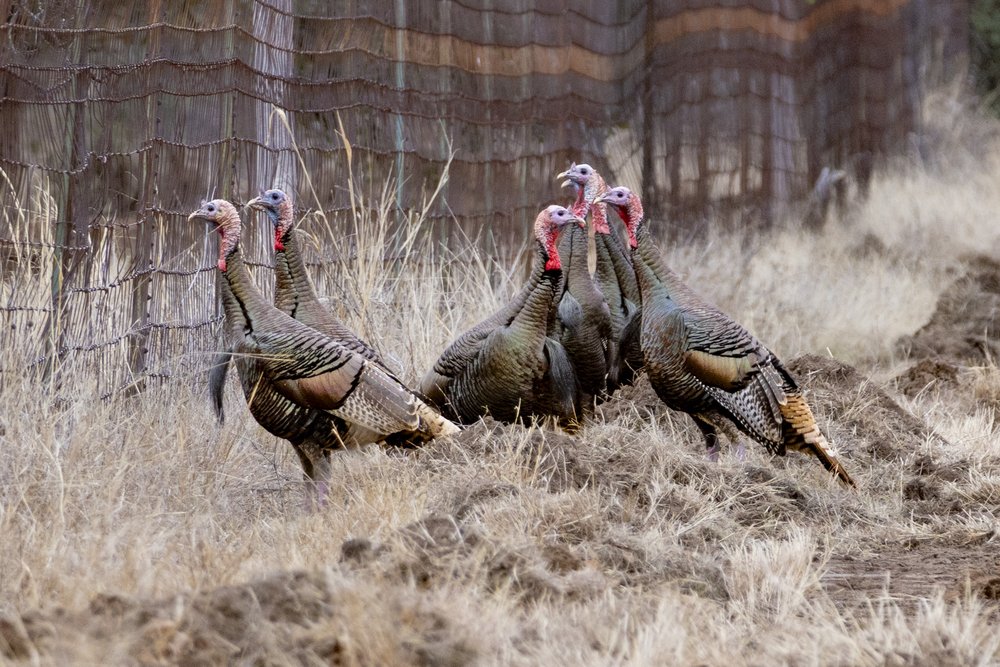
Hunting turkey at James E. Daughtrey WMA places you in expansive South Texas brush and shoreline habitat around Choke Canyon Reservoir, where Rio Grande turkeys and other wildlife thrive. Spring turkey hunts are special-draw permit hunts, with hunters assigned to specific compartments and required to attend mandatory orientation and check-in/out procedures. As with all WMAs, hunters at Daughtrey WMA must report harvests via the Texas Hunt & Fish app. The rugged landscape highlights classic South Texas turkey terrain, but hunters may also get to see bobcats, alligators and migratory and native birds.
Sonja Sommerfeld | TPWD
Sonja Sommerfeld | TPWD
Fawcett WMA
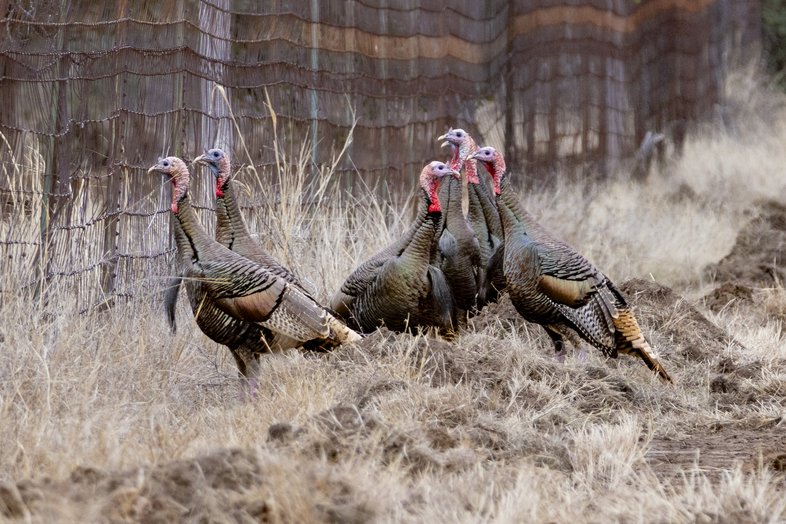
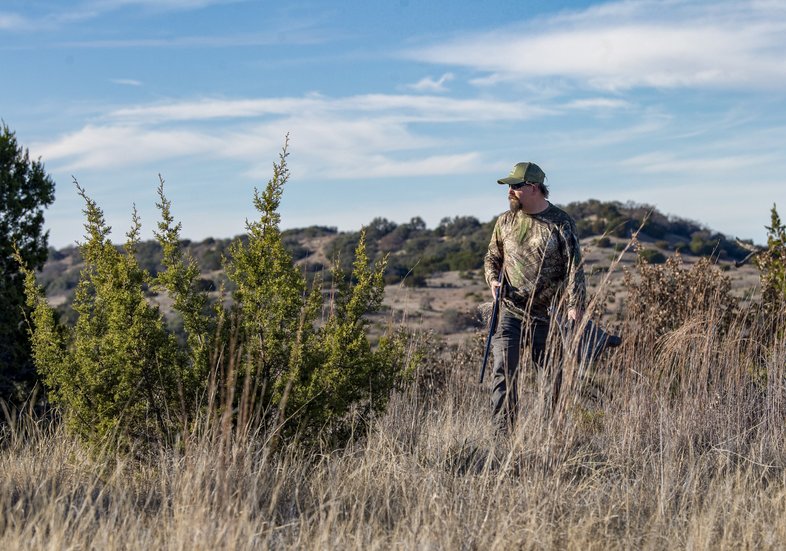
Hunting turkey at Roger R. Fawcett Wildlife Management Area lets you pursue Rio Grande gobblers in western Cross Timbers habitat of old-growth post oak and blackjack oak woodlands, open grassland savannas and rocky sandstone outcrops across roughly 5,459 acres near Gordon. The diverse terrain includes ponds and small lakes that support abundant wildlife and waterfowl alongside turkeys and deer. Spring turkey hunts are by special drawn permit, with hunters assigned to compartments and required to check in and out, carry a valid Texas hunting license and upland stamp endorsement, and report harvests via the Texas Hunt & Fish app.
Muse Wildlife Management Area
Chase Fountain
Muse Wildlife Management Area
Chase Fountain
Muse WMA
Hunting turkey at McGillivray and Leona McKie Muse Wildlife Management Area, north of Brownwood in Central Texas, offers a rewarding spring experience in southern Cross Timbers habitat of oak-juniper woodlands, post oak-mesquite flats and hardwood creek bottoms that support Rio Grande turkeys and other wildlife. Habitat work has helped revive Muse’s turkey population. “When I first got here in 2009, I saw very few birds,” says Devin Erxleben, Muse WMA manager. “Now we see multiple flocks of 10 to 20 birds all the time.” Public turkey hunts are by special draw, with assigned compartments and check-in/out procedures. Hunters must hold the proper licenses, report harvests via the Texas Hunt & Fish App or online and follow TPWD rules.
Other WMAs Offering Turkey Hunting:
Gene Howe, Matador, Kerr and Mason Mountain.