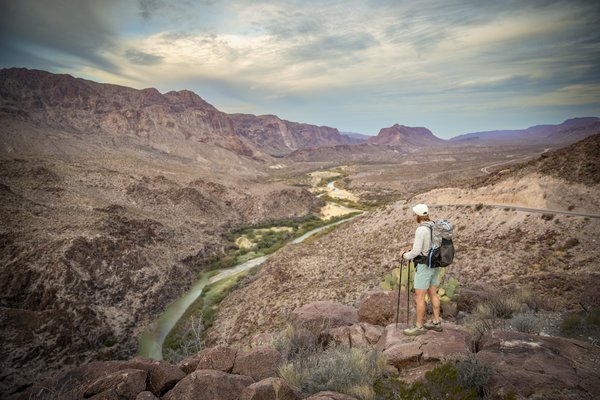
Hiking by the light of our headlamps, we descended a steep rocky slope and began looking for camp in Panther Canyon. We’d covered almost a marathon distance on day one. We were scratched up, tired, thirsty and ravenously hungry.
I’d once again underestimated the rugged terrain of my favorite state park.
We were still three miles from Ojo de Leon, the gurgling spring just below Casa Reza, a crumbling adobe homestead tucked into an impossible spot here at Big Bend Ranch.
With that spring out of reach until morning, I pushed to a point on the map with a blue squiggle, hoping for a trickling spring. After a few years of drought, it turned out to be a cloudy puddle that smelled of sulfur from 20 feet away. But hey, it was water in the desert.
Andrew, who was good on water, looked at me in disbelief.
“Dude, are you going to drink that?”
“For sure! My filter will handle the bad stuff. I’m going to cook dinner with it, too.”
Keith chimed in, “There’s no amount of money you could pay me to drink that.”
I filtered the water, added an electrolyte packet to mask the pungency and drank up. Mmm, fizzy orange with notes of rotten egg.
We were exhausted, and we still had over 75 miles to go on our trek. Things were off to a great start.
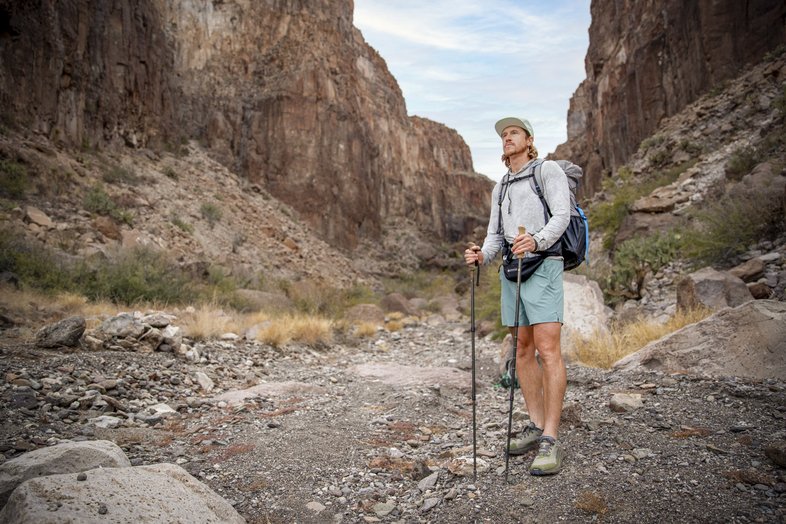
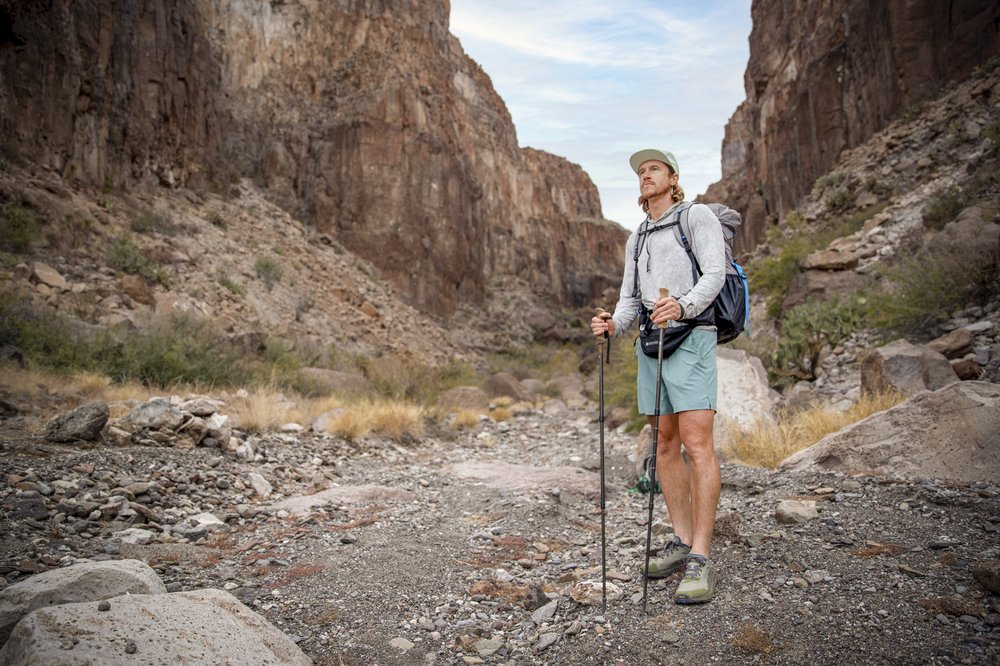
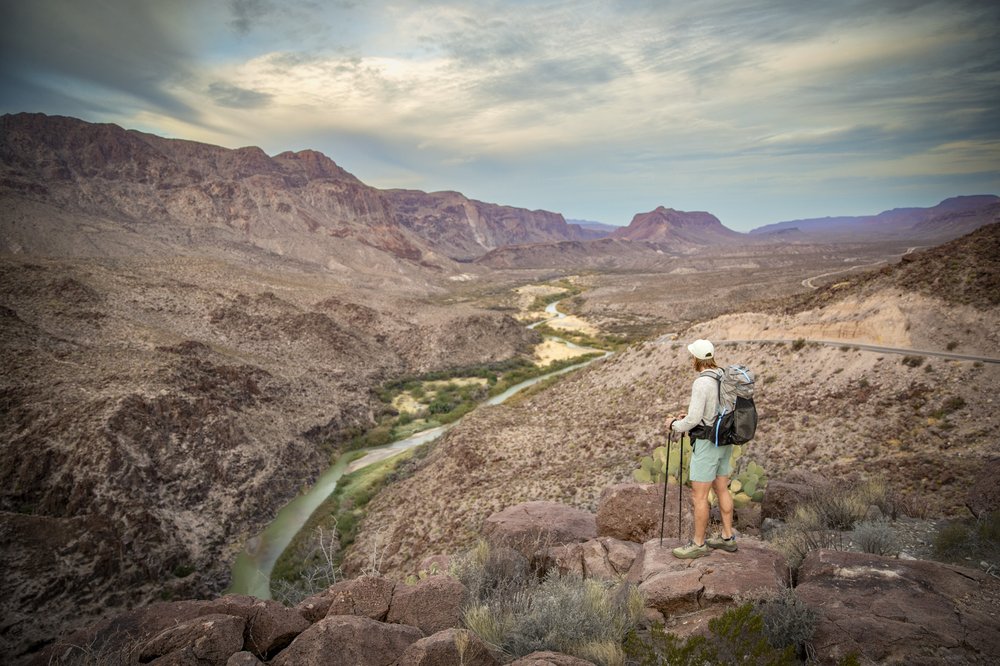
The author, an experienced backpacker, leads trips through Big Bend Ranch's creeks and canyons..
Maegan Lanham
The author, an experienced backpacker, leads trips through Big Bend Ranch's creeks and canyons..
Maegan Lanham
The Ranch
In the last five years I’ve seen some incredible landscapes on foot. I’ve backpacked from Mexico to Canada along the Pacific Crest Trail, and I’ve trekked across the Southern Rockies from Denver to Durango and Santa Fe to Taos. But there’s a place in far West Texas that keeps me coming back.
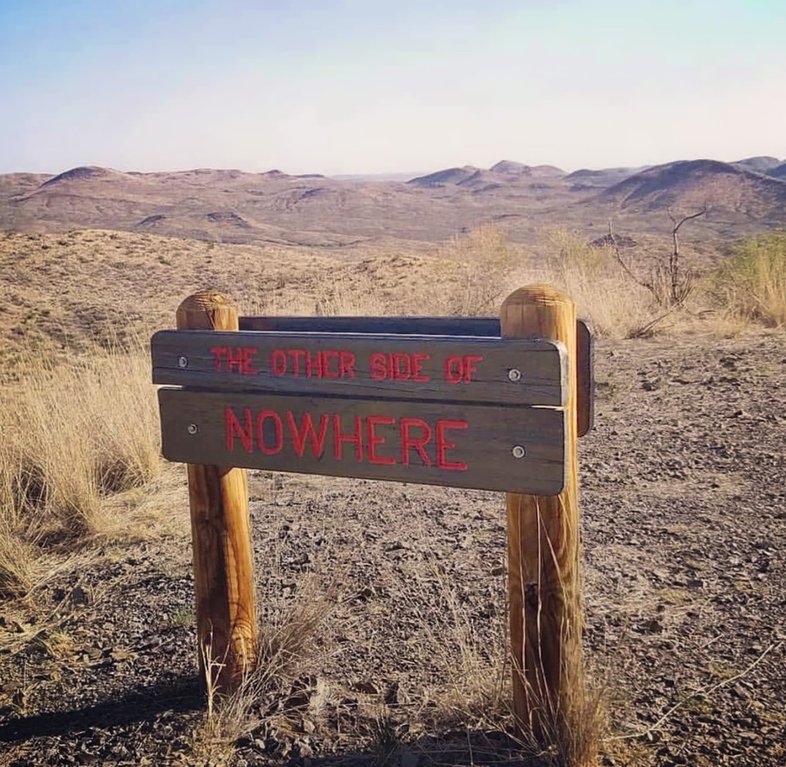
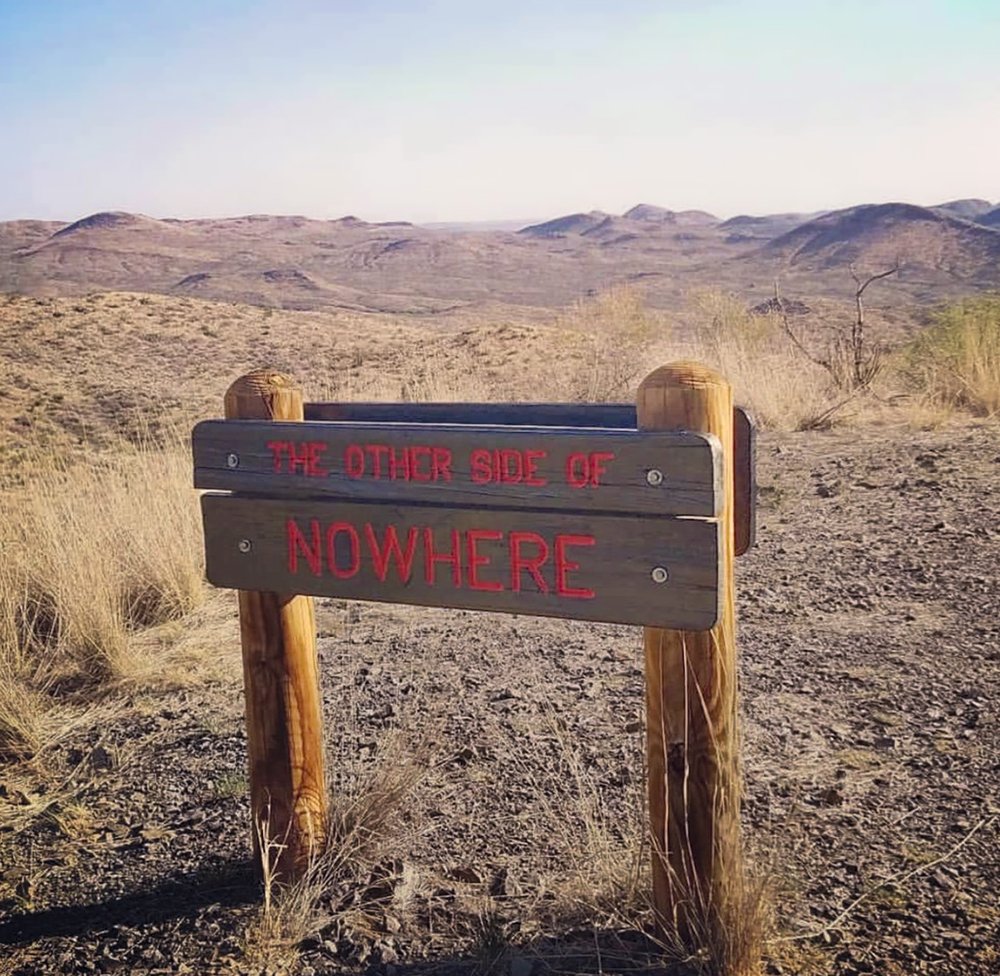
Big Bend Ranch's "Nowhere" sign.
TPWD
Big Bend Ranch's "Nowhere" sign.
TPWD
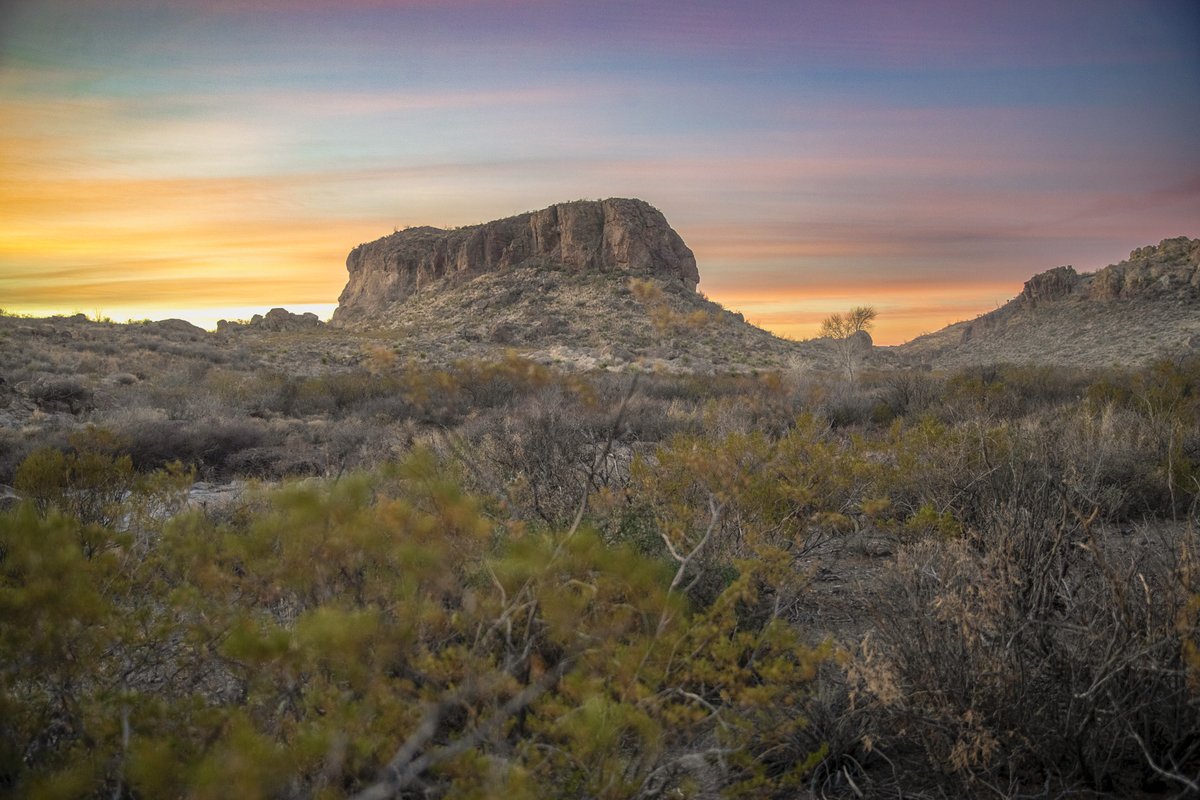
It’s a sprawling state park tucked away in the arid borderlands of Texas, forbidding country that’s home to the most remote reaches in the state. In an empty corner of the park sits a sign that reads: “NOWHERE.” And on the back: “THE OTHER SIDE OF NOWHERE.”
Welcome to Big Bend Ranch State Park, a desert playground for river paddlers, overlanders, stargazers, mountain bikers, day hikers and backpackers.
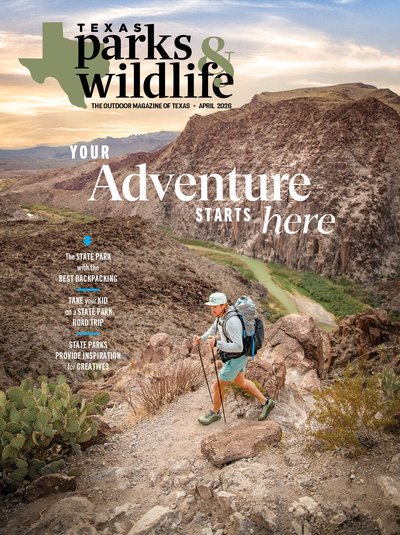
At 311,000 acres it’s a state park so large you could almost fit the rest of the Texas state park system inside it. It’s stunningly beautiful. Because it’s dotted with numerous springs and is surprisingly well-connected, I’d been dreaming up a 100-mile backpacking loop without relying on a drop of cached water.
I wanted to test my theory with one big adventure — drawing from dozens of previous trips — to create an unofficial route proving that “The Ranch” holds the best backpacking in Texas. Proof, at least, for anyone crazy enough to attempt it.
But it was already late February, and the comfortable window for desert backpacking was quickly closing. I had to move fast.
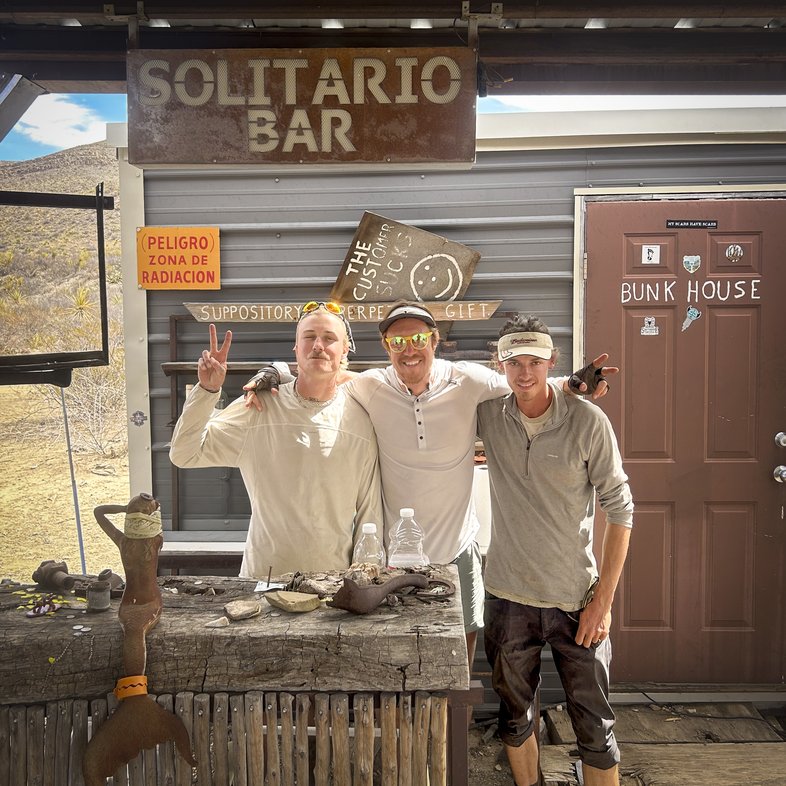
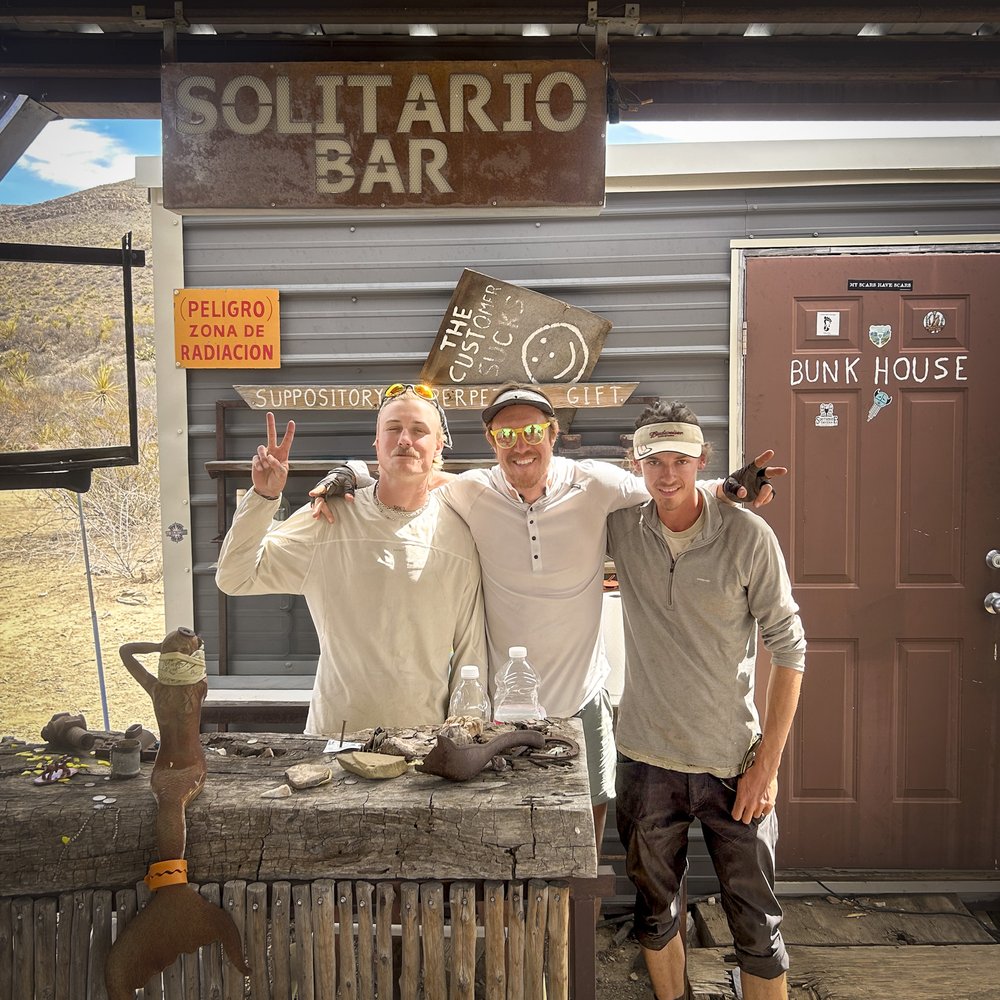
The hikers discover an outpost in the backcountry.
Tyler Priest
The hikers discover an outpost in the backcountry.
Tyler Priest
I hatched a plan less than a week before the start date and persuaded two friends to join me. First on board was Keith, my new roommate in Fort Davis. He began coming out to the Big Bend from Austin for ultra-distance road runs, including a 100-mile route from Marathon to Santa Elena Canyon that I’d mapped out. He had fitness and grit, but his backpacking experience was limited to an overnight in the Grand Canyon. Still, I knew he was up for the challenge.
Rounding out our crew was Andrew, who lives in Marathon. He’s my longtime adventure partner, fellow hiking guide and good friend. We’ve logged over a thousand trail miles in the Big Bend and beyond, we’ve summited unnerving peaks in Colorado, and we trust each other’s instincts. Andrew had recently placed third in a 50K trail race through the state park, finishing in under five hours with minimal training and a steady stream of hand-rolled cigarettes.
Our crew was solid, but we had just four days before Keith needed to return to his job bartending. The pressure was on: hike nearly a marathon distance for four consecutive days across one of the most demanding landscapes in Texas. Did I mention the route had a few unknowns?
The Trek
I fell in love with backpacking at Big Bend Ranch almost a decade ago. My first hike up Fresno Canyon and into El Solitario — a 10-mile-wide collapsed volcanic dome — felt like a dream, and I was hooked. Since then, I’ve hiked several hundred miles across the park and still haven’t seen it all.
Big Bend Ranch is raw, remote and intimidating at first. But when you push into its interior, it rewards you with surprising oases and jaw-dropping beauty.
Over the past three years I’ve partnered with Far West Texas Outfitters to build a hiking and backpacking program. We became the first and only outfitter to guide backpacking trips at the Ranch. At the end of each day, I invite hikers to debrief with a “rose, thorn, bud” reflection. The “rose” is their most beautiful moment from the day; the “thorn,” their biggest challenge; the “bud” is what they’re looking forward to.
This 100-mile loop would leave us with plenty of thorns, for sure, but I was counting on some roses, too. In every way, the Ranch delivered.
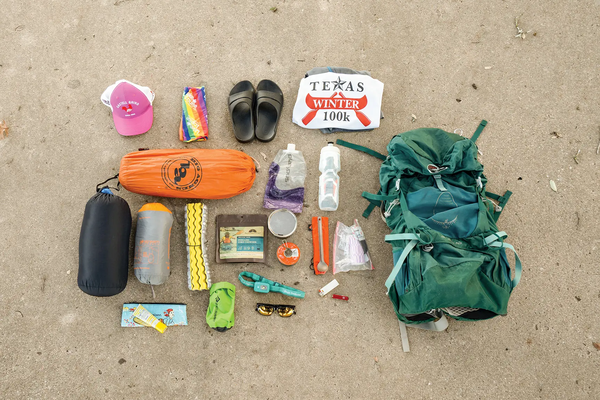
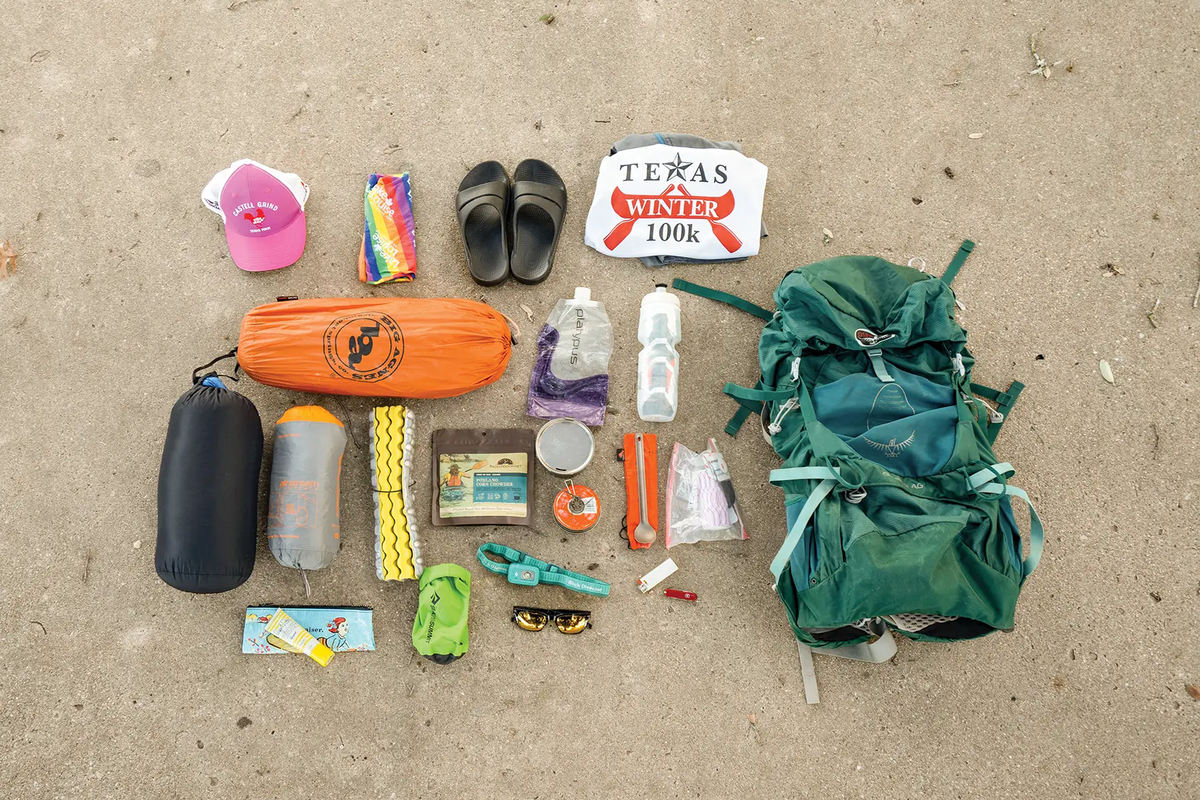
After securing our permits we drove to West Contrabando Trailhead and began our adventure. We’d packed light and were going tentless, opting to cowboy camp under the starry skies. We would also jog the gentle downhills and some of the flats. We were “fast-packing,” which blends trail running and ultralight backpacking to enable big mileage days.
With fresh legs we moved swiftly up Fresno Canyon, settling into the flow of the trip as the multicolored walls ushered us deeper. The miles came easily, at least at first.
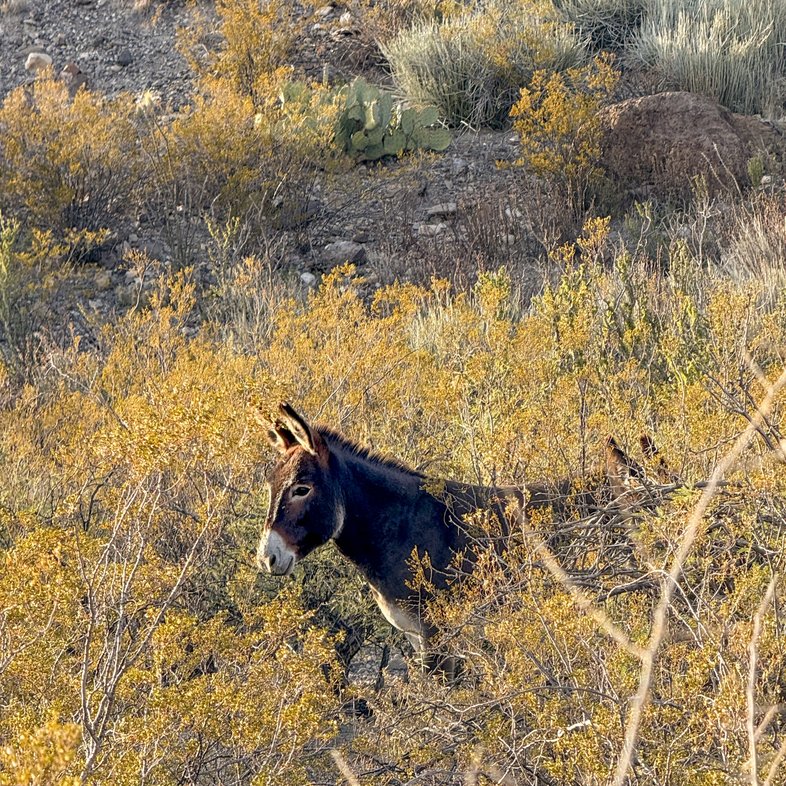
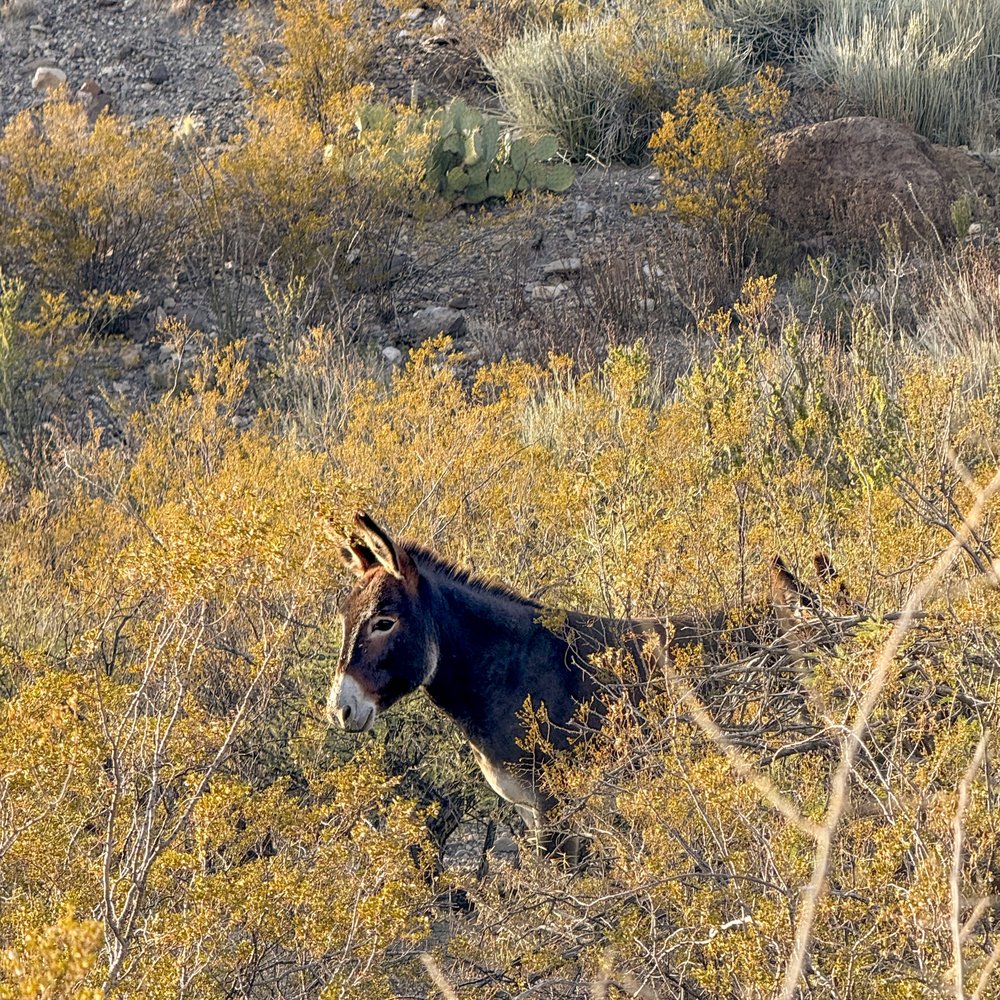
Wild burros at the Ranch.
Tyler Priest
Wild burros at the Ranch.
Tyler Priest
On a lunch break we laughed at the raucous brays of wild burros in the distance, and I could see the landscape was already wowing Keith on his first trip into the interior. But an ambitious day one dragged on into the night. Drinking from that rank-smelling puddle was my big thorn. But buds were soon to bloom, including Guale Mesa’s breathtaking vistas followed by my favorite canyon. Oh, and plenty of flowing spring water.
On the morning of day two we made it to Casa Reza for breakfast and spring water. We then climbed up to a dirt-road section when Andrew happened upon an unopened bottle of cranberry juice. Passing it around, it quickly disappeared, and the tart but sweet serendipity lifted our spirits. We soon made it to Rancherias Spring, a cottonwood-lined oasis where black bears had recently been spotted. Then it was up Guale Mesa for sweeping views, and a steep descent into Tapado Canyon.
Climbing down from the mesa was thorny and riddled with pour-offs that forced multiple detours. My hasty route planning had overworked us once again.
But Tapado is my favorite canyon on the Ranch, a hidden jewel with towering walls, wild geology and springs cascading down a narrow slot canyon. Following a mountain lion’s tracks — and her cub’s — up the canyon from those springs was an unexpected thrill. Morale was good as we camped just a few miles before our halfway point.
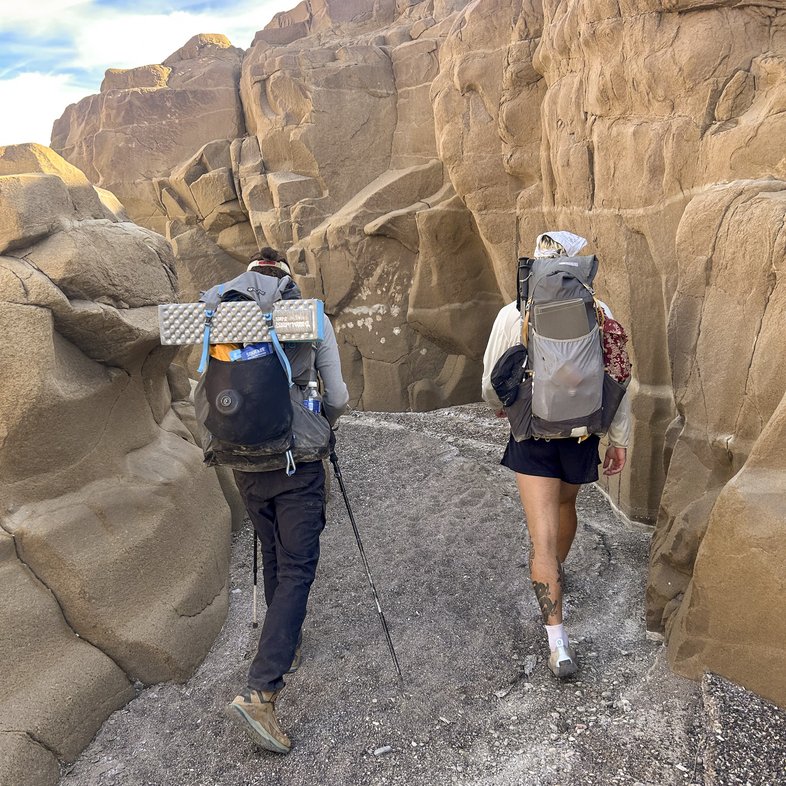
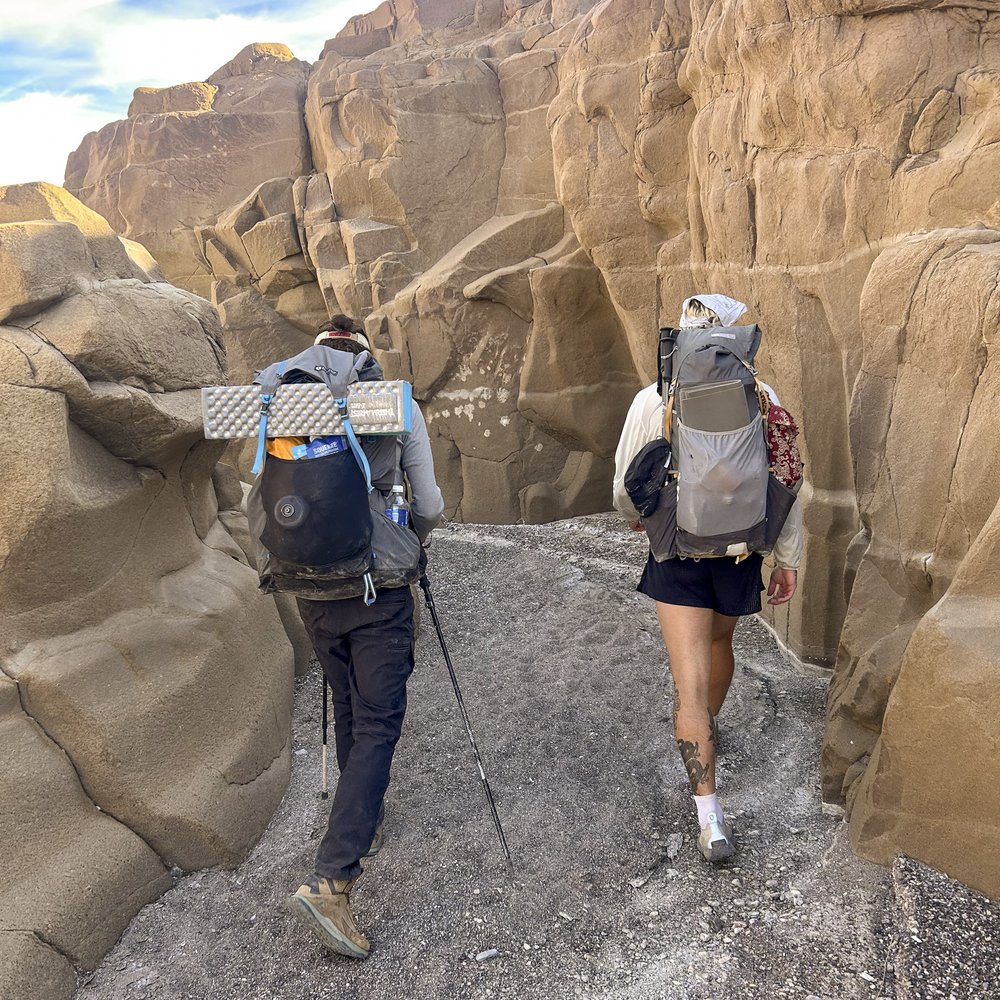
Hiking the gravelly ground of Fresno Canyon.
Tyler Priest
Hiking the gravelly ground of Fresno Canyon.
Tyler Priest
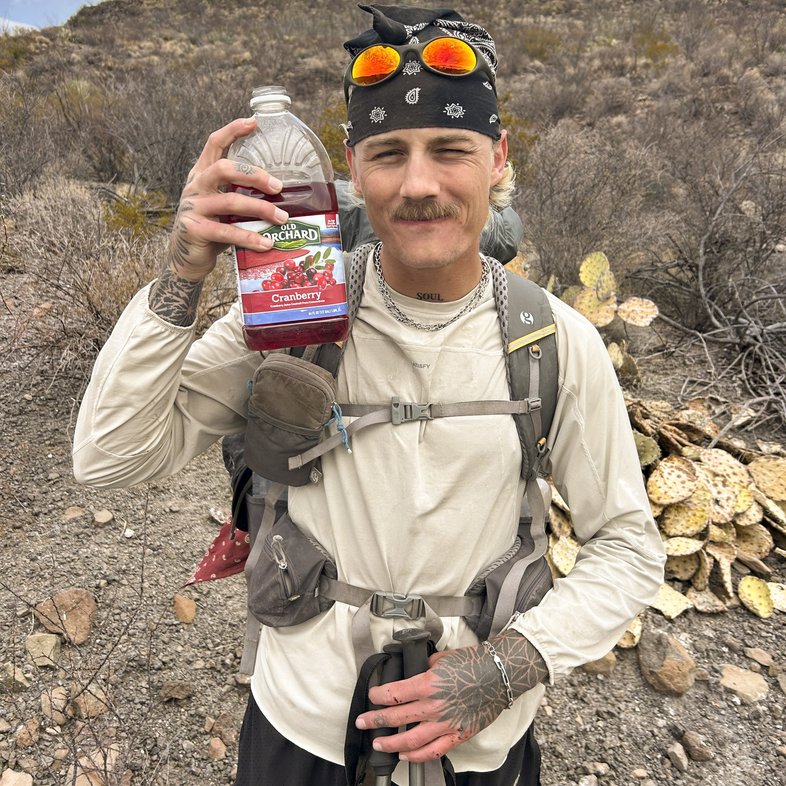
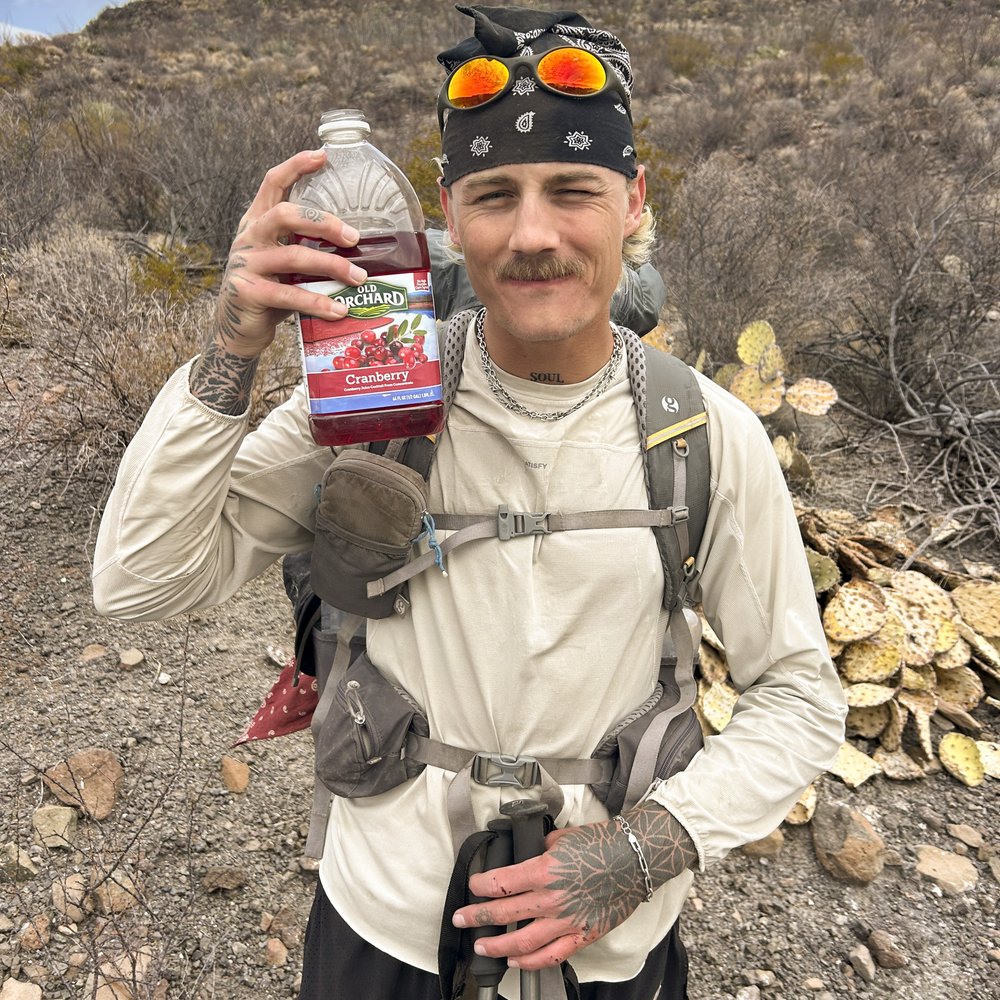
A found bottle of cranberry juice provided an unexpected treat.
Tyler Priest
A found bottle of cranberry juice provided an unexpected treat.
Tyler Priest
“ROCK! ROCK! ROCK!”
I was so tired I barely woke to the sound of Andrew’s shouting. The three of us were camped in a narrow wash between rocky slopes, unknowingly forcing a family of javelinas to take a high route to get around us. Thankfully none of the shifting rocks — or javelinas — came close.
On a warm day three, we were following a dry creek when a huge rock shelter overhang appeared unexpectedly. Entering the cool refuge, the vivid red pictographs quickly caught our eyes: handprints and a large circle. It was a portal into the past and one of our biggest roses.
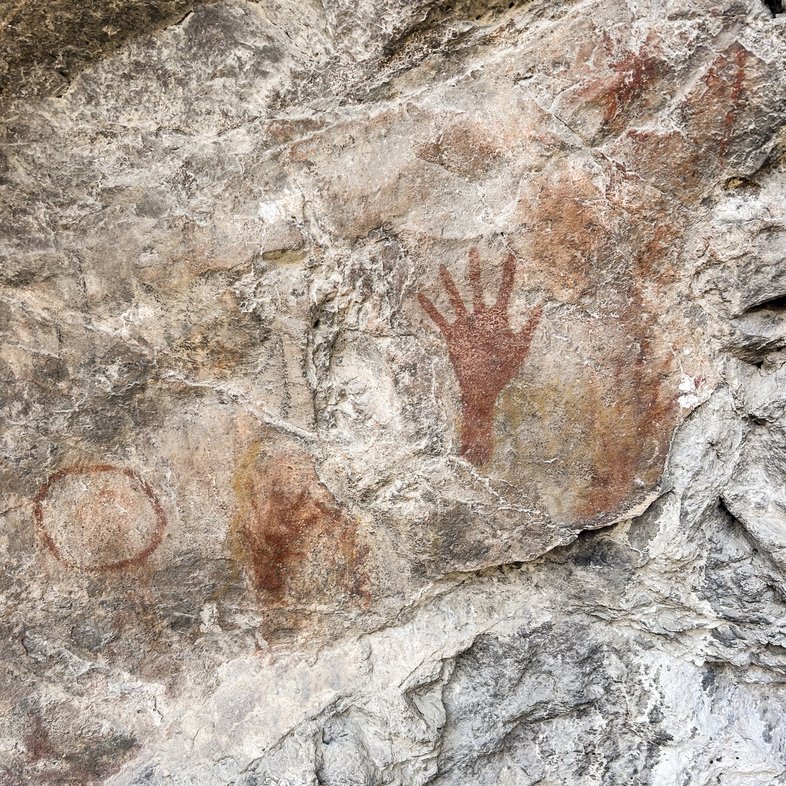
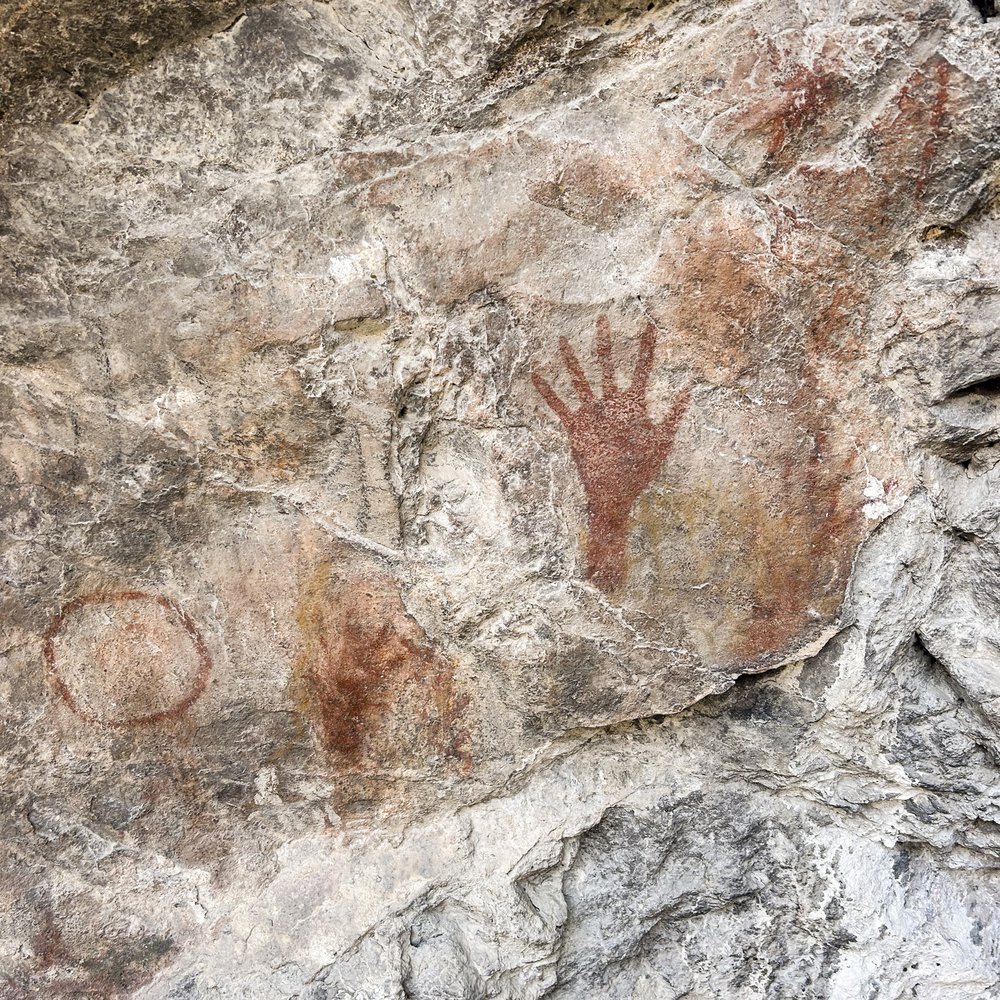
Ancient handprints in Yedra Canyon reveal the long history of this special place.
Tyler Priest
Ancient handprints in Yedra Canyon reveal the long history of this special place.
Tyler Priest
We trudged on through sandy arroyos, scaring up a herd of feral longhorns, remnants of the park’s ranching days. We reached Sauceda Ranger Station late in the day where we topped off water and checked in on the WiFi. That’s when another surprise came. It should have been a thorn but was unexpectedly a rose — I learned that I didn’t get a job for which I’d been interviewing. In a moment of personal clarity, the news lightened my load for the rest of the trip.
By our final full day, our packs were lighter and our energy was good. The sunrise slowly lit up Fresno Canyon, the wide creekbed between the Bofecillos Mountains and El Solitario. We jogged downhill, relishing the cool morning before the heat set in. We took in the ghostly handprints painted long ago on the charred ceiling of a rock shelter. Then came Righthand Shutup — a steep, scrambly two-mile ascent into El Solitario.
Crossing the parched interior of the Solitario, the heat began to build just as we found unexpected hospitality from a group of friendly overlanders camped at a private inholding. The shade, chairs and cold drinks were no mirage; they were a bit of desert trail magic. It breathed life back into us just when we needed it.
We soon reached the other side of nowhere and began descending Lower Shutup, one of the wildest, most scenic canyons in the Big Bend that drains the southern half of El Solitario. Weaving through multiple slot canyons, we pushed south until dark.
And we’d done it — we hit mile 100 just before camp.
We finished the next morning, reaching our cars after 104 miles of trekking. We'd hiked for 96 hours and climbed more than 11,500 feet of elevation. We were exhausted and sun-baked — and deeply fulfilled.
Those four days with Andrew and Keith felt like a small lifetime. We journeyed to the other side of nowhere and back through plenty of thorns, but with far more roses and a few new buds.
While Big Bend Ranch is not for everyone, it’s unexpectedly become my home in the wild. It summons a Texas of the past: uncharted, unfenced, wild and free. And whether it’s 100 miles or just a few, it will always be a place that calls me back.
Back to nowhere.
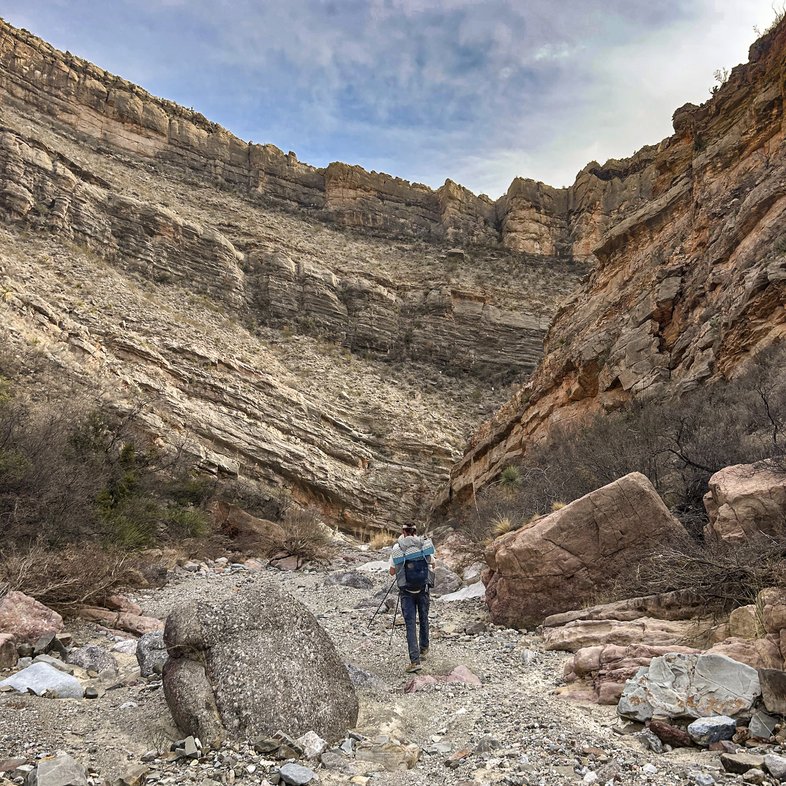
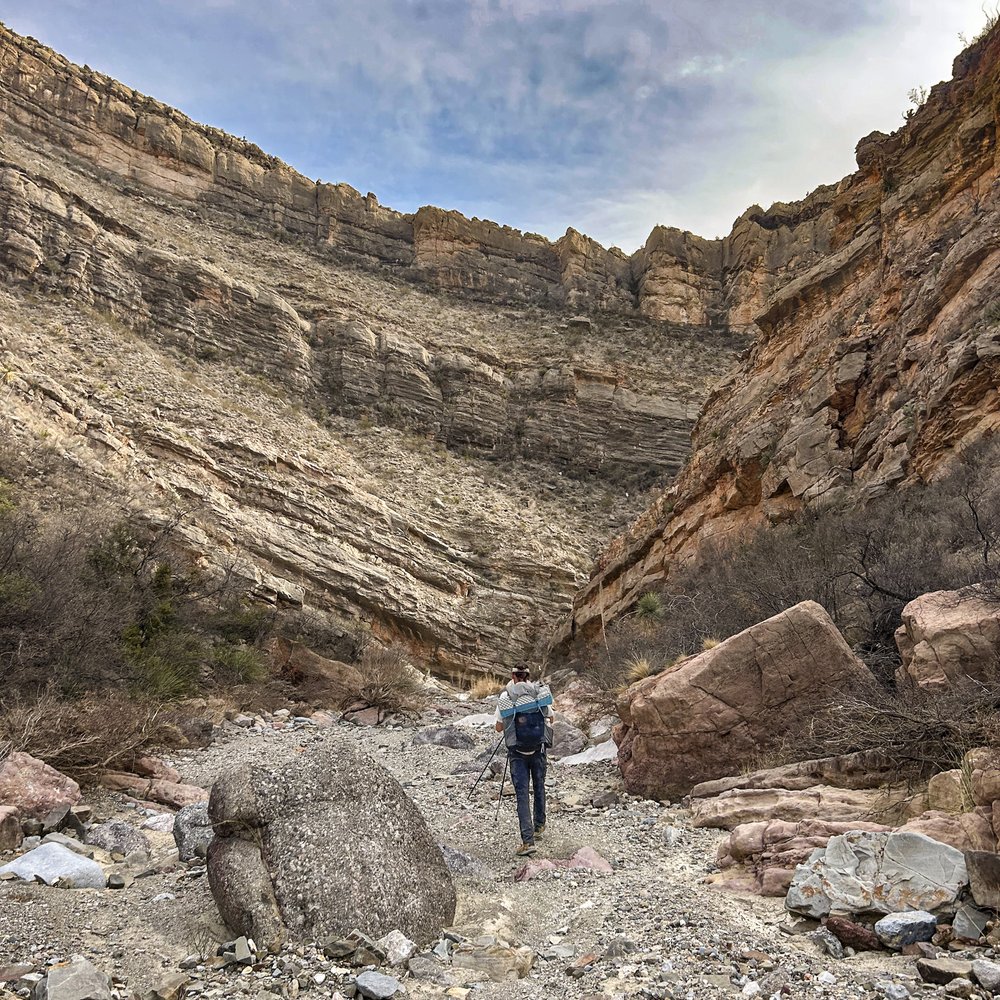
Descending the Lower Shutup in the Solitario.
Tyler Priest
Descending the Lower Shutup in the Solitario.
Tyler Priest