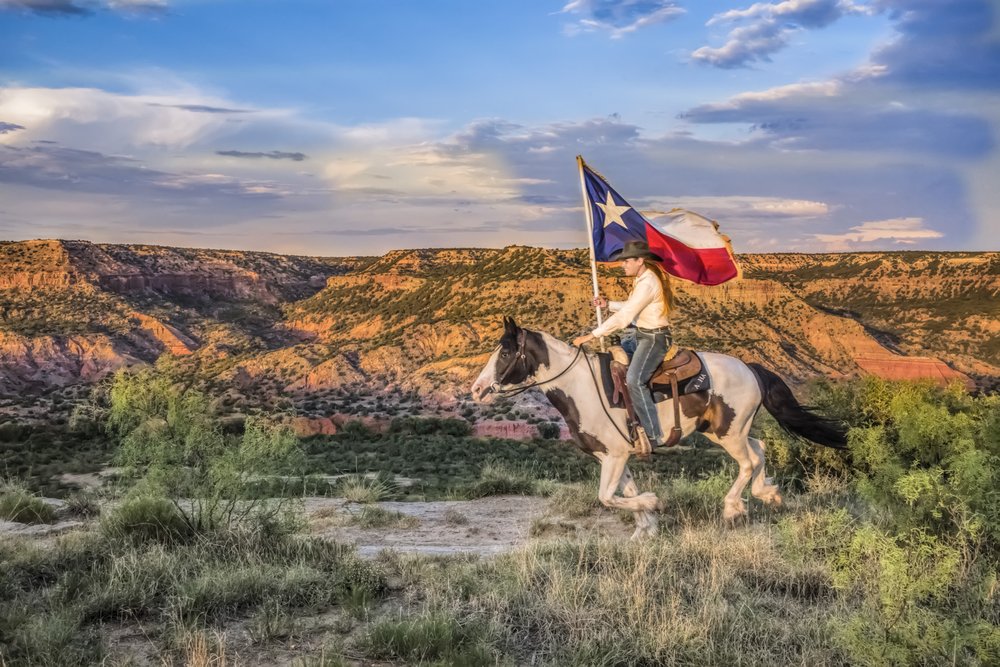
Spectators gasp as a bolt of lightning smashes against the cliff face hundreds of feet above their heads. Thunder rolls in with the storm, and trains chug-a-lug across the stage. Horses gallop, fires erupt and shimmering jets of water shoot high into the Panhandle’s star-filled sky.
It’s all part of the show at the outdoor musical Texas, a high-energy performance that bursts into life every summer in Palo Duro Canyon State Park. Now in its 60th season, the world-class production has captivated audiences for generations. Almost 100 cast and crew members come together to tell a story of love and perseverance that’s rooted in Panhandle history and electrified by special effects. Singers and dancers dazzle, musicians play their hearts out, and pyrotechnics explode. But it’s the canyon itself that steals the show, shaping every sound and sight with its overwhelming grandeur.
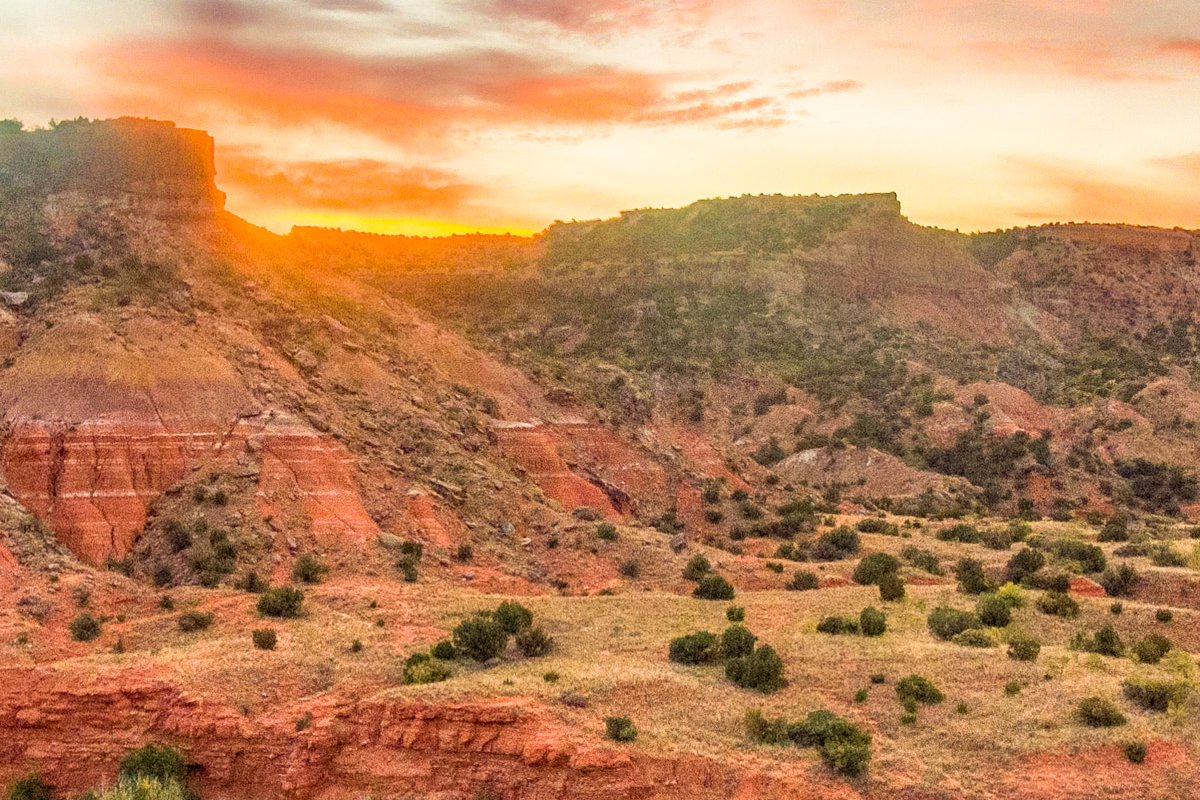
“We have the honor of performing in the most beautiful place in the state, and — dare I say — nation,” says Artistic Director Cloyce Kuhnert. Stretching 120 miles across the Panhandle southeast of Amarillo, Palo Duro Canyon is the second-largest canyon in America. Towering walls striped with shades of red, rose and rust cradle the vast chasm and its collection of caves and hoodoos. Juniper trees and cottonwoods fragrance the rocky terrain. Carved into the High Plains over countless millennia, its rustic splendor attracts hundreds of thousands of visitors each year.
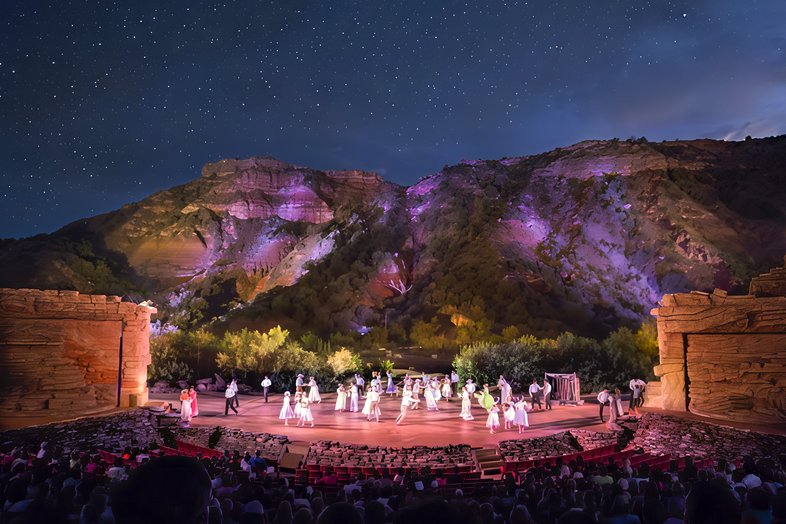
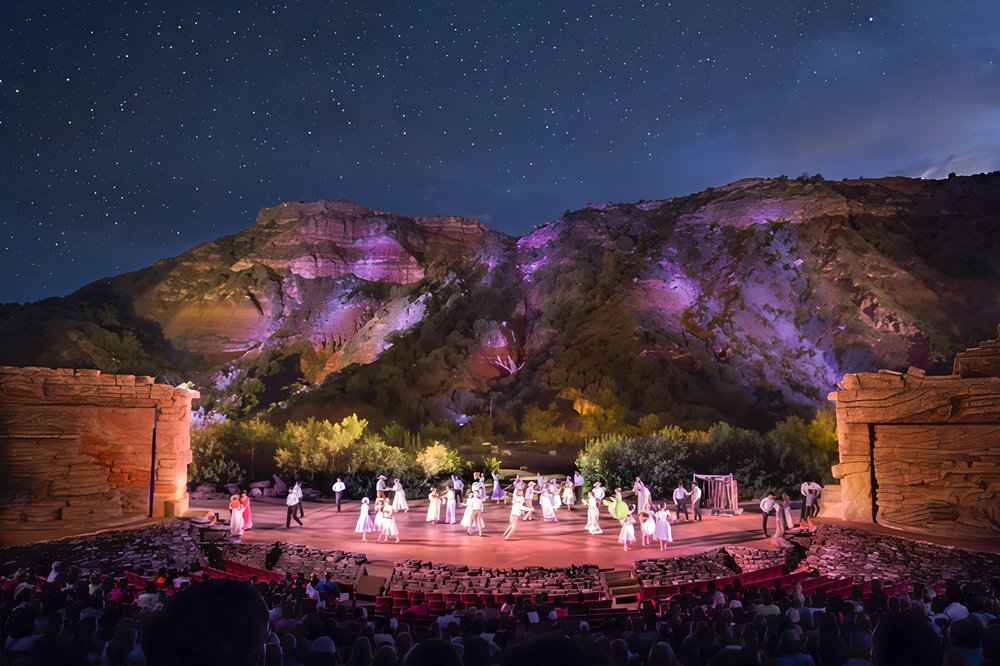
The show takes place at the Pioneer Amphitheatre, an open-air venue set within a natural bowl on the canyon floor. With a 600-foot cliff for its backdrop, it’s built as much by earth and time as by human design.
“The driving factor in choosing the site was the sound,” says Production Manager Blaine Bertrand, an audiovisual expert and 34-year veteran of the musical, which debuted in 1966. “Back then, they didn't have a whole lot of sound reinforcement, so they were looking for a natural echo chamber.” Much has changed in the past six decades — performers now wear microphones, and the speaker system has expanded — but the canyon still dictates the sound design.
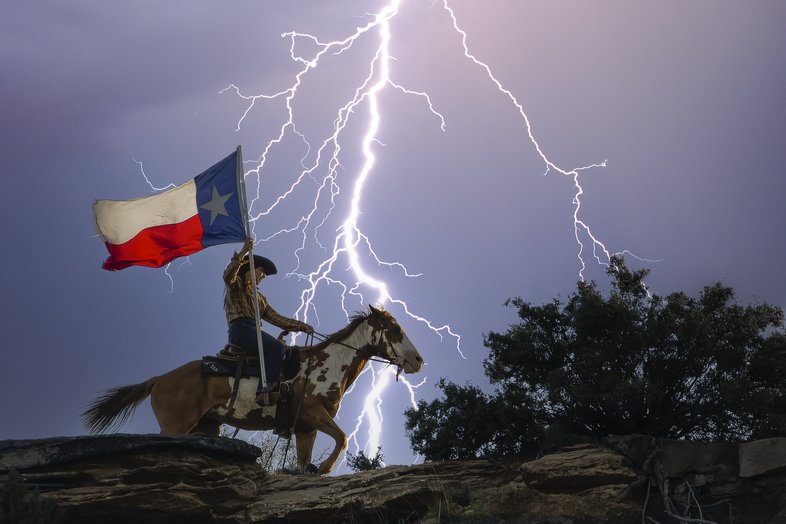
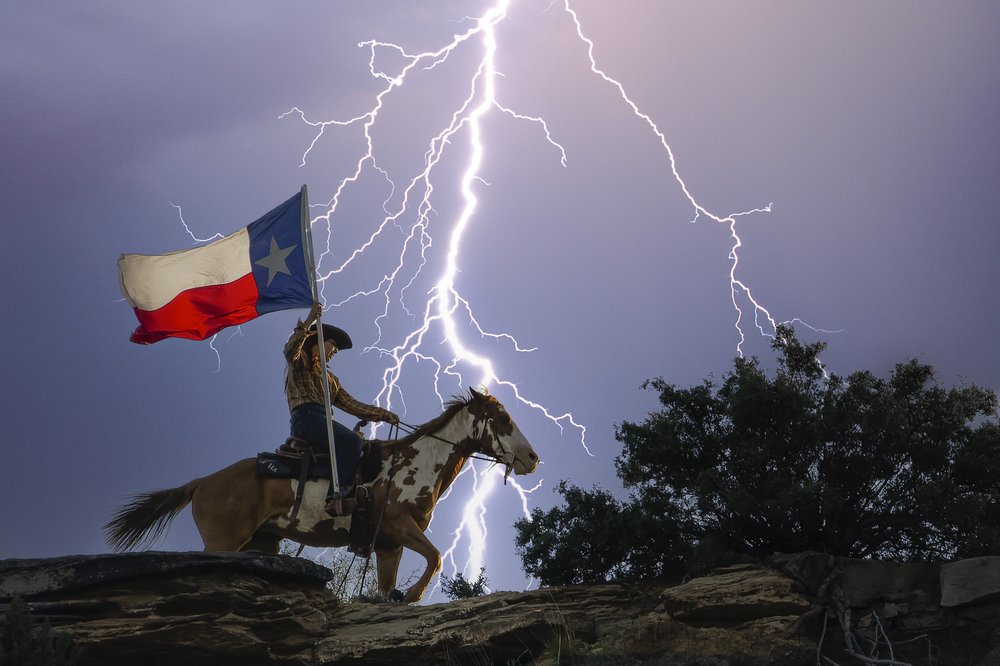
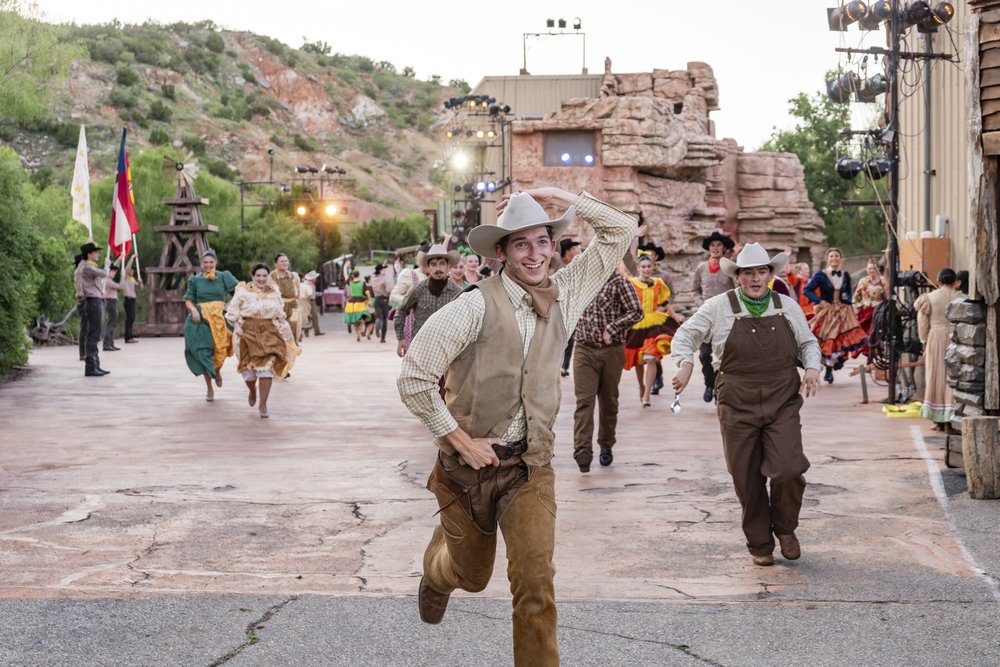
Palo Duro Canyon's natural setting brings added drama and challenges to the musical "Texas."
Palo Duro Canyon's natural setting brings added drama and challenges to the musical "Texas."
Everything’s bigger in Palo Duro Canyon
Palo Duro's unique acoustic environment creates distinct challenges for Bertrand and his sound team. Its walls reflect soundwaves back toward the audience, while its curves and contours cause smearing and overlap. Music and voices disperse in the open air. With no ceiling, HVAC system or sound-absorbing materials to help stabilize the acoustics, the team must make constant adjustments throughout the show to balance the sound and smooth away unwanted noises.
The canyon’s colossal scale presents the biggest problem: massive sound delays. In all large theaters, sounds from the stage reach the front row of the audience before the back row. Audio engineers must use digital tools to compensate for this natural acoustic lag. The greatest delays come from the speakers positioned behind the stage, because they’re farthest from the audience — about 5 feet behind the back curtain at your standard musical production.
At Pioneer Amphitheatre, however, some speakers are well over 200 feet behind the stage. Eighteen clusters of custom-built speakers are hidden behind rocks and bushes, around the audience and to the sides of the performance area. The stage is also much broader and deeper than average, roughly 800 feet below the canyon rim, with a background that’s 2,000 feet wide. Audio delays are extreme.
Precise speaker placement and meticulous timing are essential to ensure that every person in the audience hears clear, intelligible sound that’s synchronized with the action on stage. But the performers and sound crew aren’t located in the audience, so they hear the delays. “The singers need some level of classical training, because they watch the conductors to keep time as opposed to listening to the music,” Bertrand says. The audio team, perched in a booth above the spectators, must learn to account for the misaligned sound by ear.
Mother Nature’s instrument
Yet Palo Duro's cliffs also provide exciting opportunities. “A lot of sound bounces off that canyon wall, so we take advantage of it,” says Bertrand. The wide distribution of speakers allows him to dramatically “move” the sound around the venue, sweeping it over the terrain to create shifting echoes that bring the landscape to life. “We’ll bounce horse snorts, birds, cicadas and crickets off the canyon wall, so it gets that natural echo.” It often sounds so natural that live cicadas chime in with the synthesized cicada buzzing. “Then you can’t shut them up,” he laughs.
Such spatial audio techniques intensify one of the most heart-pounding moments in the musical, a dream sequence of a blaring, blinking locomotive bearing down. “When you have the train running, we wrap the sound around the audience and try to give them that sense of energy that goes with it.” Enveloped by the clacking rumble and blasting horn, it truly seems as though the train is right on top of you.
Sonics also take center stage during the thunderstorm scene. When the ultra-low-frequency soundwaves roll out of the subwoofers, you don’t just hear the rumbling thunder — you feel it, as the sub-bass vibrates the air, the ground and every cell in your body. “We’ve had many people, especially if the clouds are just right, who actually think the thunder they’re hearing is real,” Bertrand says.
Riveting special effects have long been a signature of the show, whose outside setting allows for horses, fires and high-spraying fountains. All are much more difficult to accomplish at an indoor venue, if not impossible, like the “lightning strike” that explodes on the cliff face with visceral impact. The shriek-inducing blast is accomplished with a military-grade explosive. “It’s the same stuff they use for tearing down buildings or breaching doors for SWAT teams,” says Bertrand. His crew must keep a keen eye on the ridge during show days to ensure no hikers have ignored the “No Entry” signs and wandered into range.
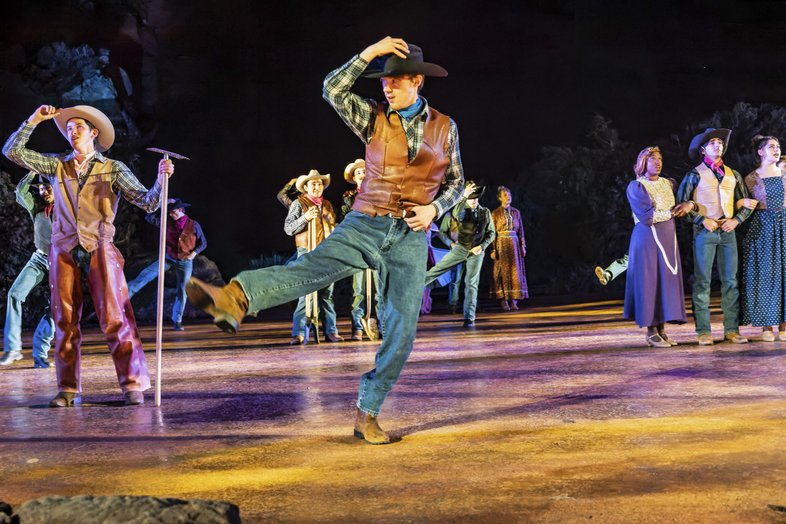
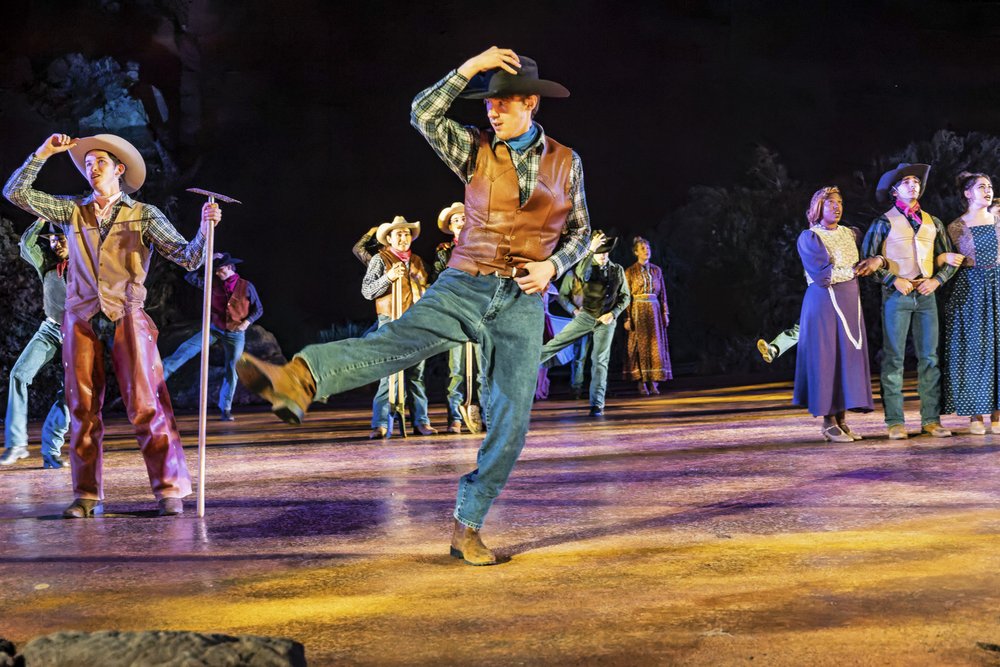
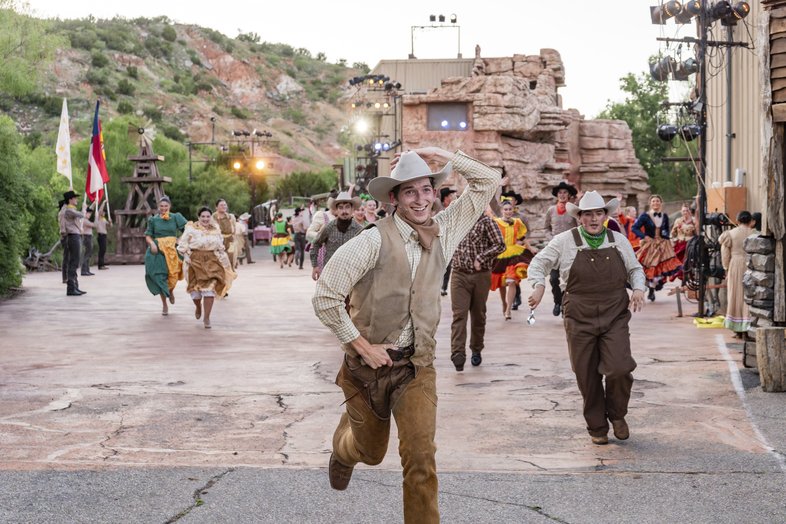
The show must go on: Performers sing and dance even in extreme Panhandle weather conditions such as heat and high wind.
The show must go on: Performers sing and dance even in extreme Panhandle weather conditions such as heat and high wind.
Perils of the Panhandle
Stray hikers aren’t the only hazards at an outdoor theater in the Panhandle, whose famously extreme, fast-changing weather and wild winds can wreak havoc on performances. “Wind can be a real problem with microphones,” says Bertrand, “especially during those hot summers when you get southwest winds at 10, 15 miles per hour consistently. We’re fighting the wind a lot.”
Heat presents another problem: sweat. “It’s a very athletic show, and perspiration is not our friend when it comes to microphones and technology. It can damage the equipment, so we’re constantly maintaining the microphones.” Drought has prompted the cessation of fireworks in favor of a water-and-light finale with sparkling, dancing fountains inspired by Disneyland’s World of Color.
Cooler, rainier summers have their own issues. In 2025, rainfall was 10 inches above normal, requiring crews to work double-time to clean up mud and cut back overgrown plants. Greenery looks gorgeous against the ruddy canyon walls, but it also absorbs and muffles the audio. Sounds come across as sharp and vibrant when it’s humid, and dull and dead when it’s dry. Bertrand’s team must stay on top of weather fluctuations and fine-tune their calibrations to retain clarity and projection.
“Mother Nature’s going to do what she’s going to do,” says Bertrand, who has seen a lot in his 34 years: centipedes in the sound booth, rattlesnakes on stage, cast members bitten by spiders and wasps. The landscape itself can be dangerous. Chunks of cliffside often work their way down, including one giant boulder that fell a few years ago. “It came down in the middle of the night,” he says. “We had light fixtures up there, and it took them out.”
Overcoming the perils of the Panhandle isn’t just part of life for the cast and crew, it’s a central theme of the musical. Set in the 1800s, the fictionalized frontier tale features farmers, ranchers and settlers who face hardships with resilience and ingenuity — and ultimately transform challenges into opportunities. The story resonates with Texans and especially Panhandlers, who know all too well the hazards of their landscape and climate.
“It has a great deal of meaning to those from this area, but also for those who know the trials and struggles of adversity,” says Kuhnert. “It is wholesome entertainment that has beautiful costumes, choreography, music and an uplifting story.”
Blending nature and the arts, raw beauty and real history, Texas thrills with top-quality entertainers and wow-worthy audiovisual effects. And it could only happen in Palo Duro Canyon, an awe-inspiring setting for celebrating the perseverance, pride of place and larger-than-life spirit that defines the Texas character.