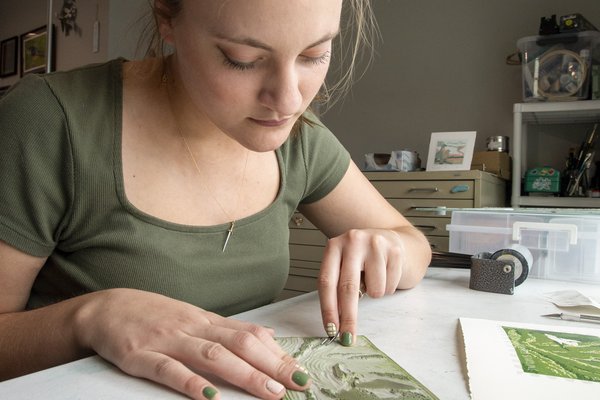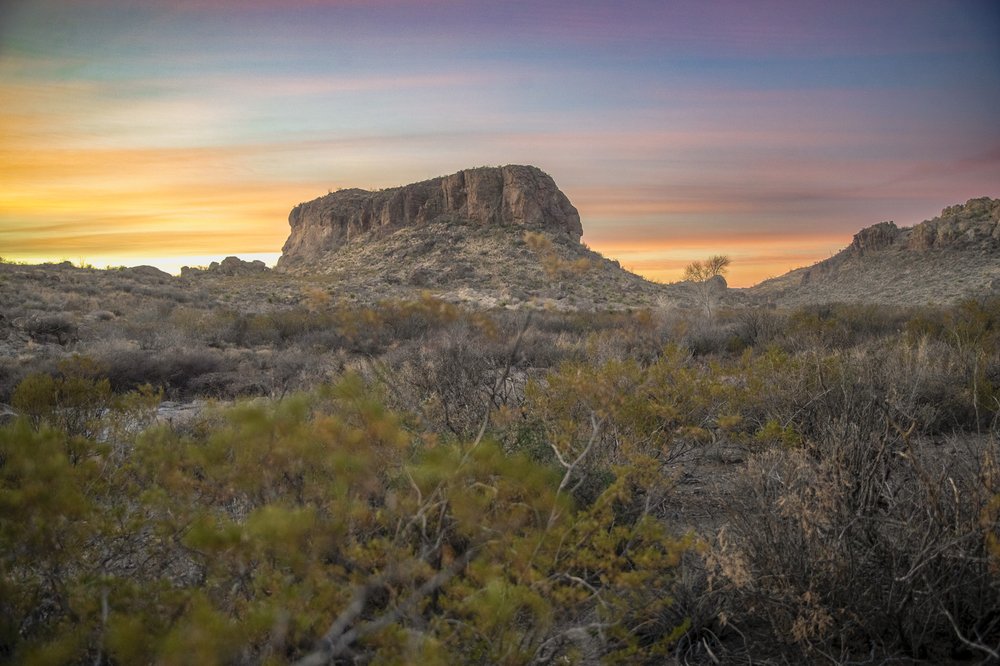
Interior designer Brittney Luedecke has been searching for years. Not for the perfect paint color or the ideal furnishing. Those come easily. She’s hunting down a scent.
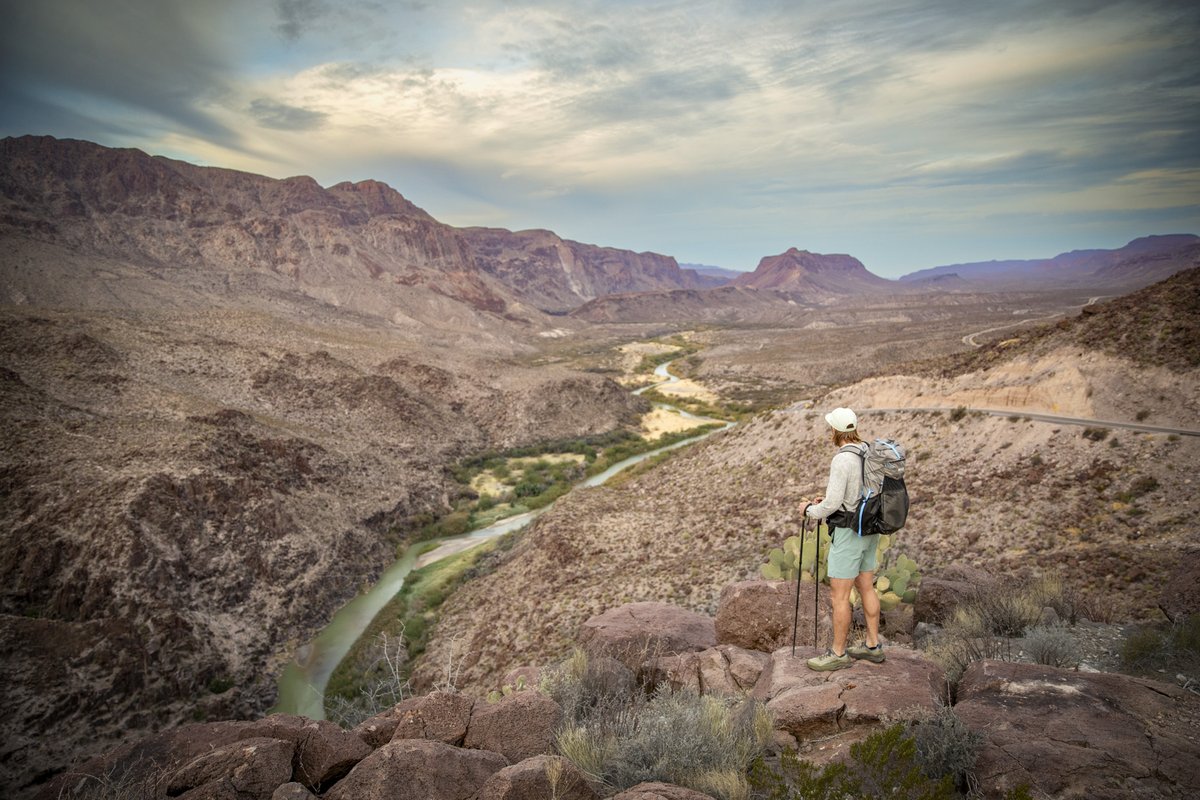
It started at Big Bend Ranch State Park, walking trails in the cool, early morning before the Texas sun climbs high. “I kept smelling something so pretty out here, and couldn’t figure out what it was,” Luedecke recalls. Juniper. Creosote. The clean desert air. She’s tried candles, essential oils, countless bottled promises of wilderness. “You can’t copy that scent no matter how much you try,” she says. “The synthetic versions don’t come close to the real version.”
What Luedecke embraces from this quest is something more valuable than any candle: how Texas parks reveal themselves through all the senses, not just the scenic highlights, lovely as they are. Across Texas, artists working in different media find that the deepest inspiration comes not from capturing the perfect sunrise, but from engaging sight, sound, touch and smell with an artist’s sensibility.
Their creative processes show us how to experience state parks in new ways, regardless of whether we ever create art ourselves.
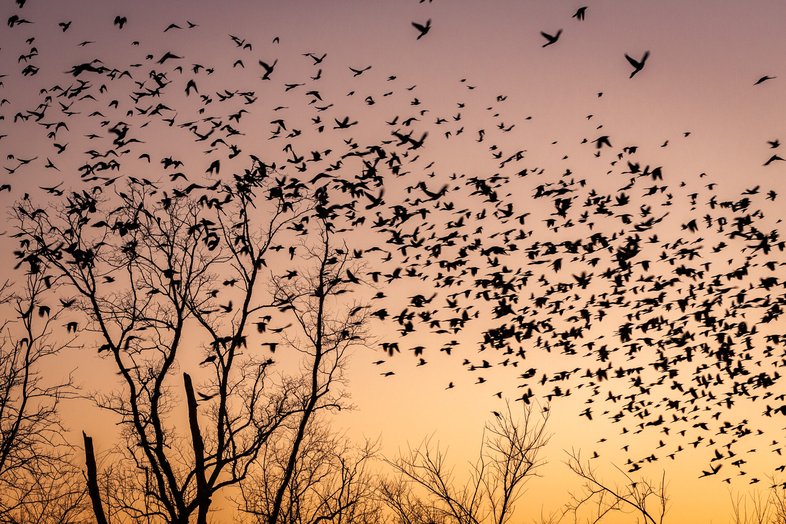
Birds at Brazos Bend.
Eric W. Pohl
Birds at Brazos Bend.
Eric W. Pohl
Sound
The Rhythm Beneath
Musician and composer Thomas Cunningham stands motionless at the edge of a marsh at Brazos Bend State Park near Houston. It’s early evening, with not even the slightest breeze. Several hundred dragonflies hover and mingle above the water. It’s a visual spectacle that would capture anyone’s attention. Their iridescent bodies catch the light, an aerial ballet. For Cunningham, what he hears is central: “You can hear them slurp up water as they pause just above the marsh to get a drink.”
That moment of auditory attention — the willingness to stop and listen for what’s barely there — reveals a different way of experiencing the park. Sound doesn’t just accompany the experience; it structures it. The rhythm of dragonfly wings, the pattern of bird movement, even the presence or absence of wind becomes compositional material for Cunningham. “I’m always very conscious of windy, not windy, and the movement of the breeze in the trees,” he explains. These aren’t background details. They’re building blocks of music.
Painter Ryan Henry’s relationship with sound operates differently. The distant call of birds or the rustle of leaves filters into his perception and ultimately into his paintings. Henry observes that much of the park experience transcends the visual. “What you hear out there doesn’t come with a color tube,” he explains, “but it still shows up in the art because you were there in that moment.” Staying attuned, he adds, allows the gentle rhythms of a place to shape a creative response.
For writer Karissa Thomas, sound prompts questions about what exists beyond her senses. The crickets and frogs signal life she can’t see but knows is there. Other times, “you have this definite silence that makes you just stop,” she says, and in that stopping, her awareness expands beyond the audible.
What the artists reveal is that sound in natural spaces encompasses more than birdsong or water rushing, but also rhythm, pattern, tempo. Their shift from passive hearing to active listening, past the surface of the sound, lets them draw from a broader auditory landscape to shape their creative works.
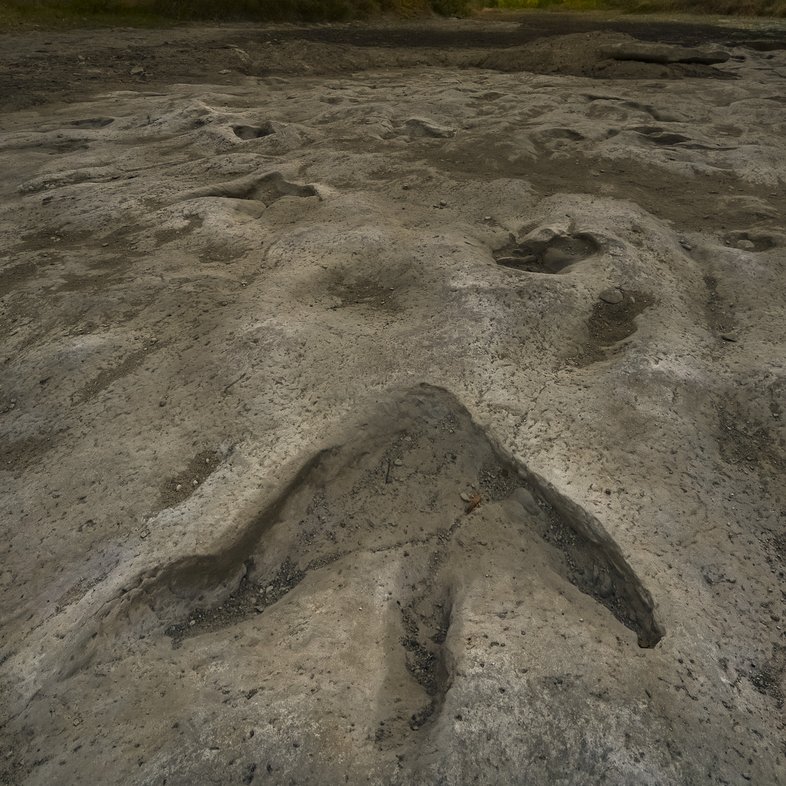
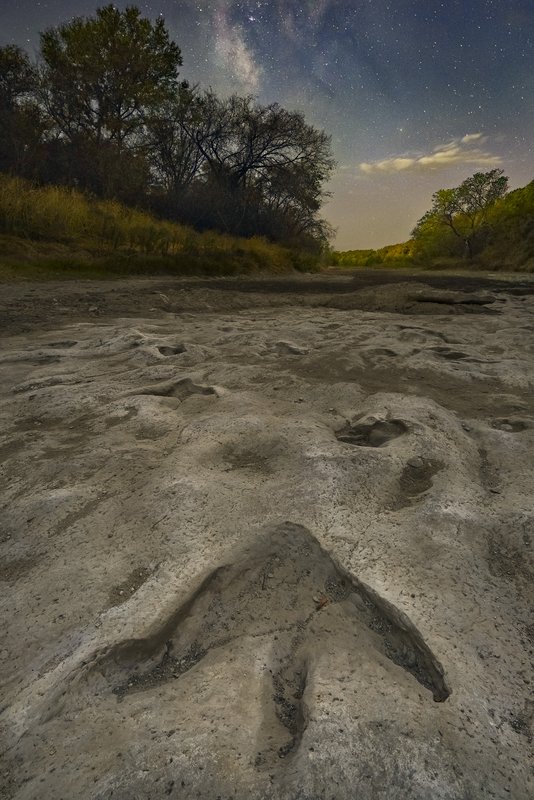
Fossilized footprint at Dinosaur Valley.
Ben Jacobi
Fossilized footprint at Dinosaur Valley.
Ben Jacobi
Touch
Layers and Textures of the Land
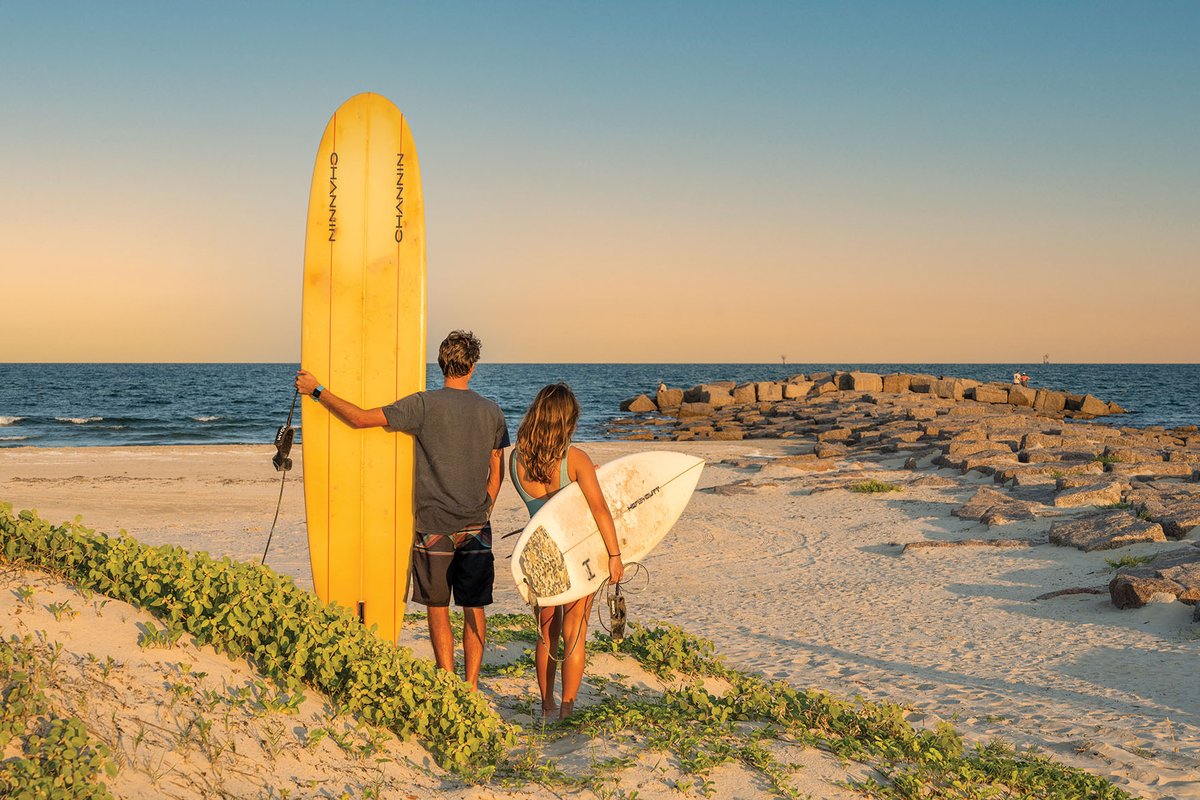
For Henry, seeing like a painter means attending to how light’s touch reveals layers in the physical world. Standing on Boca Chica beach, he stopped seeing beige sand and started observing the interplay between warmth and shadow: “You’ll have these little undulations in the sand where maybe there’s a footprint or whatever. And if you look where the shadow part of the sand has depth, it’s lavender. So it’s lavender, a cool color, against the sandy color warmed by the yellow sun.” This granular attention, looking past our assumptions about what the color of sand should be, transforms familiar landscapes into revelations.
Walking the dinosaur tracks at Dinosaur Valley State Park, Thomas found herself responding not to the visual spectacle but to what those impressions meant. The weight of a prehistoric foot pressed into mud that became stone, holding its shape across millions of years. “Seeing those ancient prints helped me unlock a sense of scale in my writing,” the writer says. “The idea that our lives leave these impressions too, some deeper, some more enduring.” Here, texture becomes metaphor. The land holds memory embedded in its very surface, reminding us that presence leaves marks.
Luedecke works to understand a place by recognizing its tactile vocabulary. At Big Bend, she finds herself drawn not to the sweeping vistas, but to smaller encounters: the satisfying roughness of weathered desert juniper bark, the unexpected smoothness of river stones tumbled over millennia, the delicate architecture of dried grass. “Nature really does have everything you need for design,” Luedecke, the designer, says.
This attention to texture isn’t mere decoration. It’s how Luedecke translates the essence of a place into lived space, how she helps clients bring the grounding presence of West Texas into their homes without resorting to clichéd cowboy imagery. When she describes live-edge countertops that capture “that old oak feel” from San Antonio’s massive trees, or the sculptural shape of prickly pear cactus pads, she’s reading the land through both sight and touch.
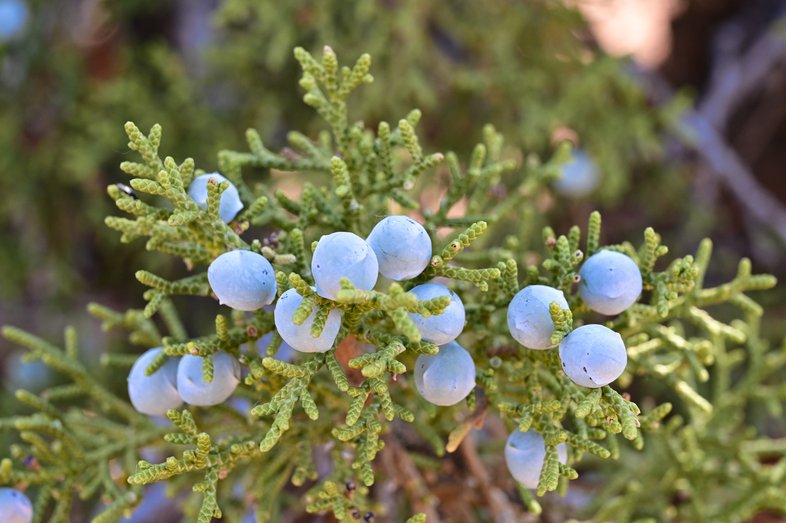
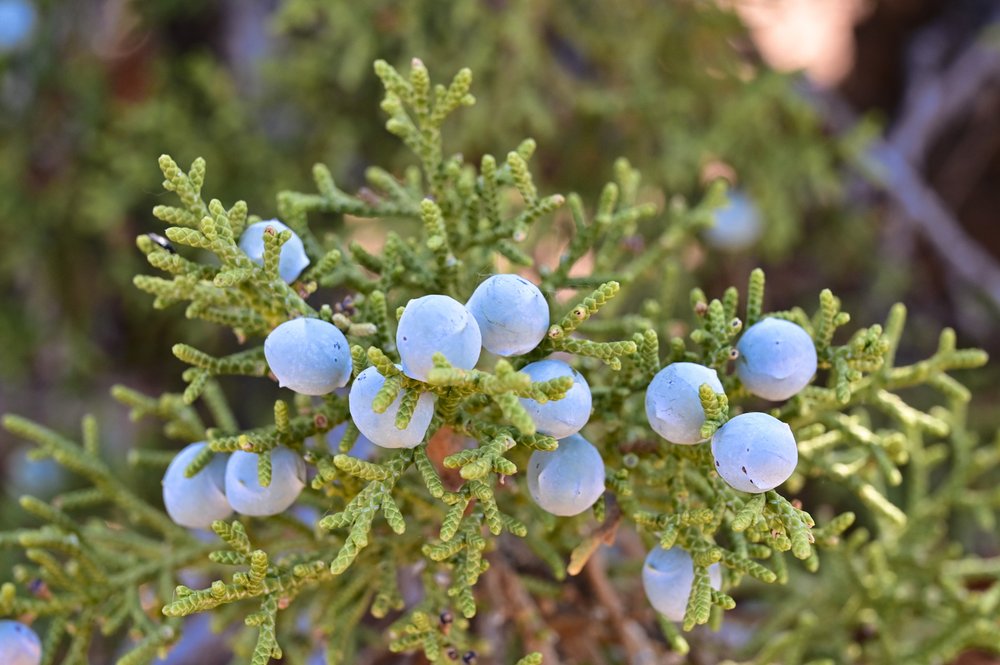
Berries on a juniper tree.
StockAdobe.Com
Berries on a juniper tree.
StockAdobe.Com
Smell
The Untranslatable Memory
Luedecke never did find a way to bottle Big Bend’s desert juniper scent. She did, however, accept the creative challenge that sits at the heart of translating sensory experience: some elements of place resist capture entirely.
Cunningham also knows this gap between experience and expression. For him, the parks offer a profound stillness where even the smallest shifts in sound or movement become meaningful: the presence and absence of wind, the tang of swamp water. These subtle elements become sources from which his compositions take shape, not as literal copies, but as emotional impressions.
Like Luedecke with her juniper, Cunningham works in the territory between what parks offer and what creative mediums can hold. Sound and smell share this quality: both are essential to how we experience place, both are ephemeral, and both resist translation. You can paint lavender shadows. You can incorporate live-edge wood. But you cannot bottle cedar or transcribe the feeling of absolute stillness broken only by dragonflies.
The attempt itself remains: the creative act of reaching toward what we cannot fully grasp.
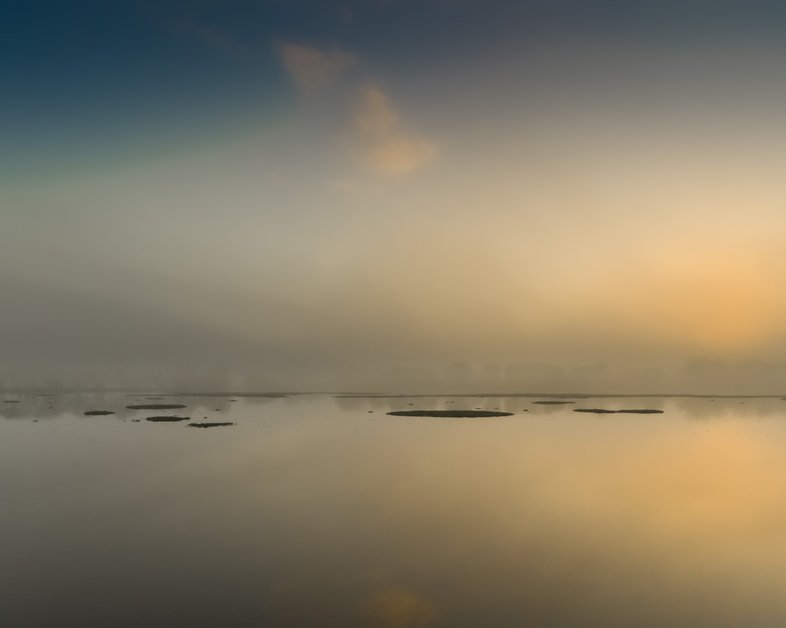
Elm Lake at Brazos Bend State Park.
Andrew Slaton
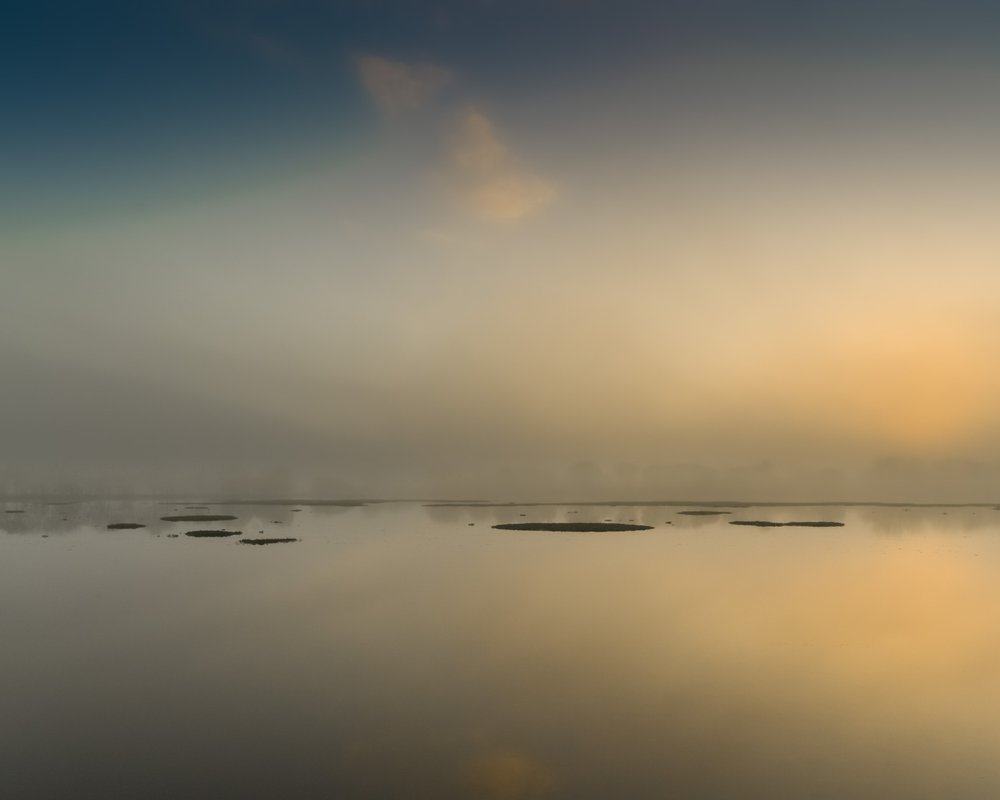
Elm Lake at Brazos Bend State Park.
Andrew Slaton
Sight
Finding Overlooked Beauty
Henry has learned that the most breathtaking vista rarely makes the best paintings. “Many artists will spend hours looking for the most spectacular scene possible,” he says. Henry isn’t immune to nature’s dramatic palette and is eager for his first autumn visit to Lost Maples State Natural Area. “But the genuine discovery,” Henry says, “comes from taking the time to notice what’s actually there, not what you expected to see.” He offers a tool for training the eye: perspective shifts. “Don’t be afraid to sit somewhere, to kneel, to stand on something,” he advises. “Even a small shift transforms what you see.”
As a composer and poet, Cunningham is drawn to movement in nature, like the rhythmic way birds adjust mid-flight. These observations don’t translate directly into notes, but they shape the feeling of his compositions. He remembers one early morning at Brazos Bend's Elm Lake, with mist over the water, watching animals and birds become more visible as the light grew. “The most important physical element is light and shadow,” Cunningham explains, “and how you see shapes emerge from nature that can be crafted into beautiful compositions.”
The key to visual surprise, these artists suggest, isn’t finding exotic locations or rare wildlife. It’s developing the patience to look past the obvious, to notice how light transforms ordinary objects, to recognize that even familiar trails reveal something new when viewed from a different angle or at a different hour. The new and spectacular are already there, ready to be found.
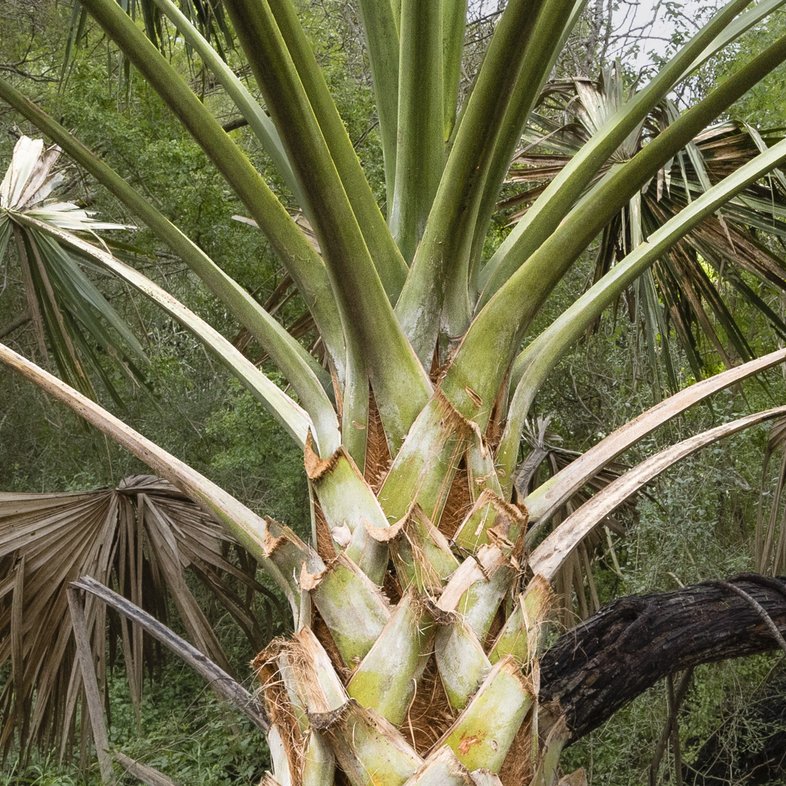
Palm fronds at Resaca de la Palma State Park.
Jerod Foster
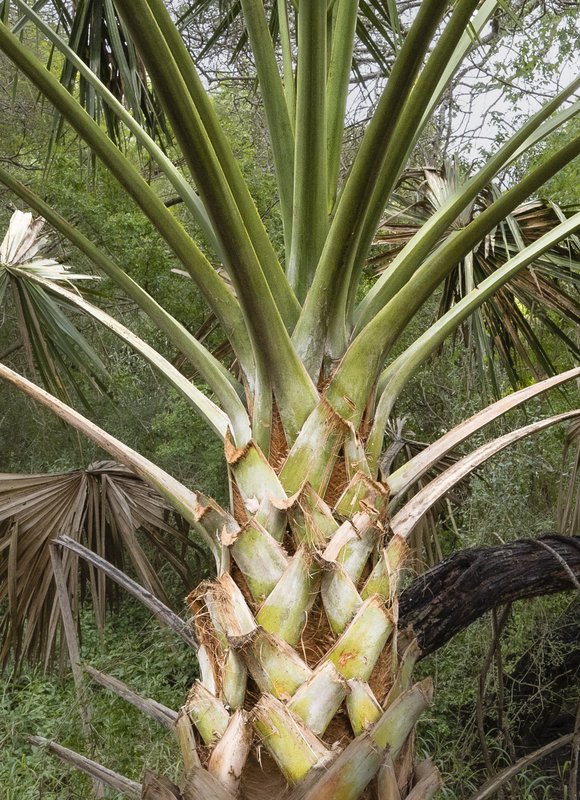
Palm fronds at Resaca de la Palma State Park.
Jerod Foster
The Long Conversation
Thomas calls her favorite trails “companions.”
“You want a consistent rhythm,” the writer explains, “but still, in those rhythms, it’s also unpredictable.” This stability allows for surprises; a familiar path somehow reveals something new each time.
Cunningham has returned to Brazos Bend hundreds of times over the decades. He’s seen the park after hurricanes tore through it and then witnessed nature reclaim what had seemed permanently damaged. Each visit delivers a new discovery.
Henry admits feeling burdened during his early attempts at plein air painting at Resaca de la Palma State Park. So he dropped the baggage and now returns frequently with a focus on what’s before him, whether that’s the dried lake bed of his first visit, or the patterns of palm fronds or thornscrub brush. “You can go back probably 100 times and see something new,” he’s learned.
These experiences emphasize that the creative breakthrough doesn’t appear in a single perfect moment. The beauty is in the ongoing dialogue. Parks reward repetition. Each visit is both familiar and fresh, and somewhere in that tension between knowing and discovering, something builds.
The artists’ invitation is simple: Come back. Notice differently. Let your whole body and intuition experience what’s there. The scent you can’t bottle, the color you can’t quite name, the rhythm you can only feel in the moment — those aren’t limitations. They remind us that we can only fully live some experiences in the places that hold them, and the creative expressions they inspire carry an essence that remains our bridge back.