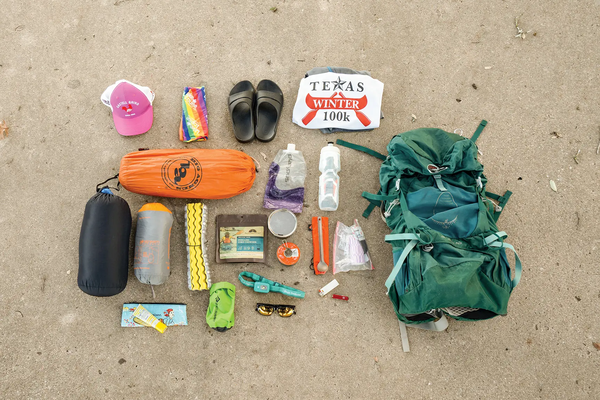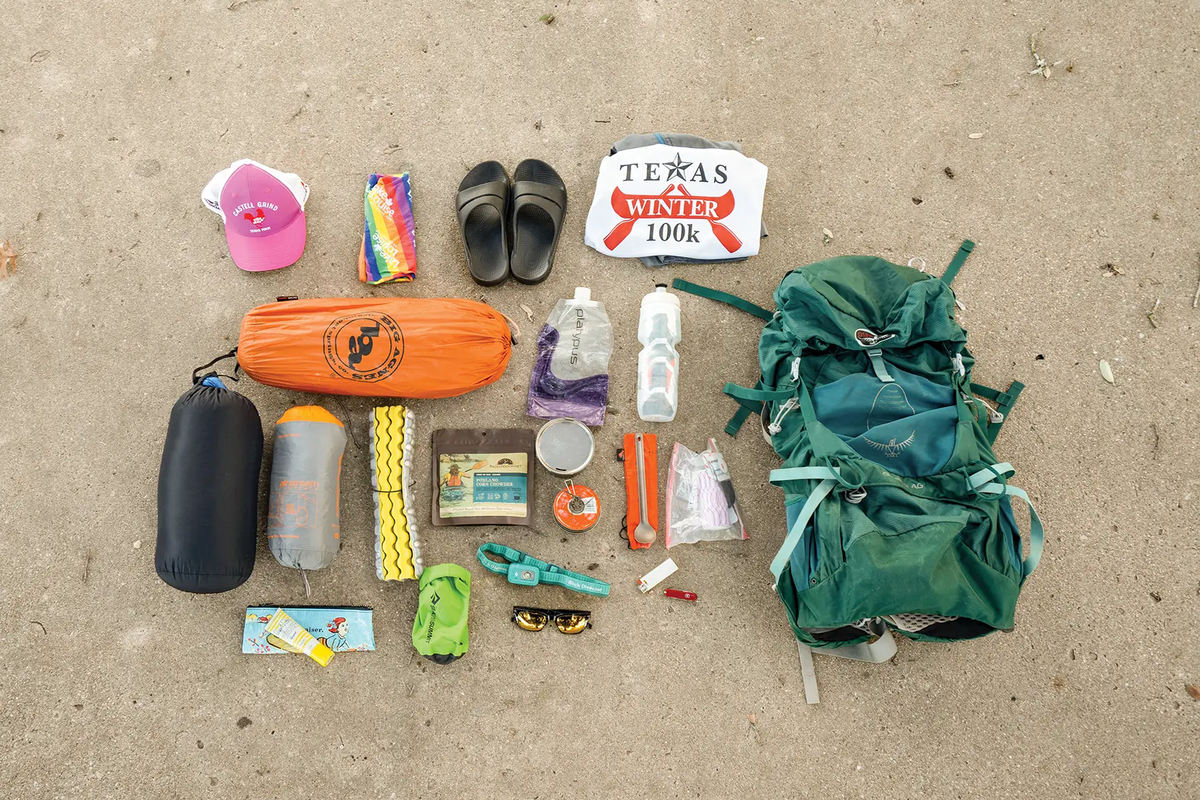
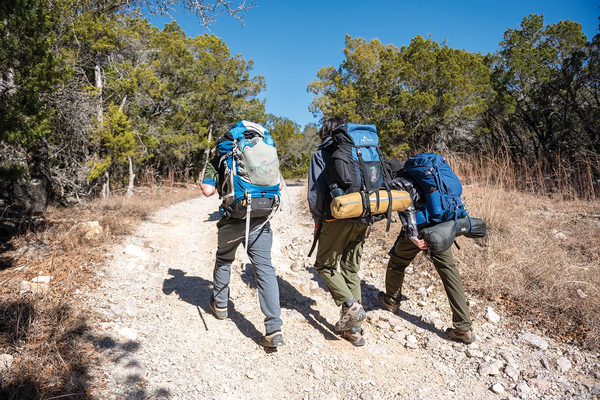
Packing a backpack is like walking a tightrope. It strikes an improbable balance, equal parts art and science, a puzzle that can perplex newbies and gearheads alike. How do you carry as little as possible while also having everything you need?
This balance becomes even trickier in winter, when the gear is bulkier and plunging temperatures demand extra layers.
It’s harder still to teach that balance to others, especially boys on the precipice of manhood, in that awkward phase where their bodies have outgrown themselves, all legs and arms and lean muscle. Their packs are too big or too small, and it’s hard to find one that will cinch tightly over their narrow hips.
It doesn’t help that these boys are often convinced they know everything (even though they clearly don’t), and yet can stump you with the simplest questions.
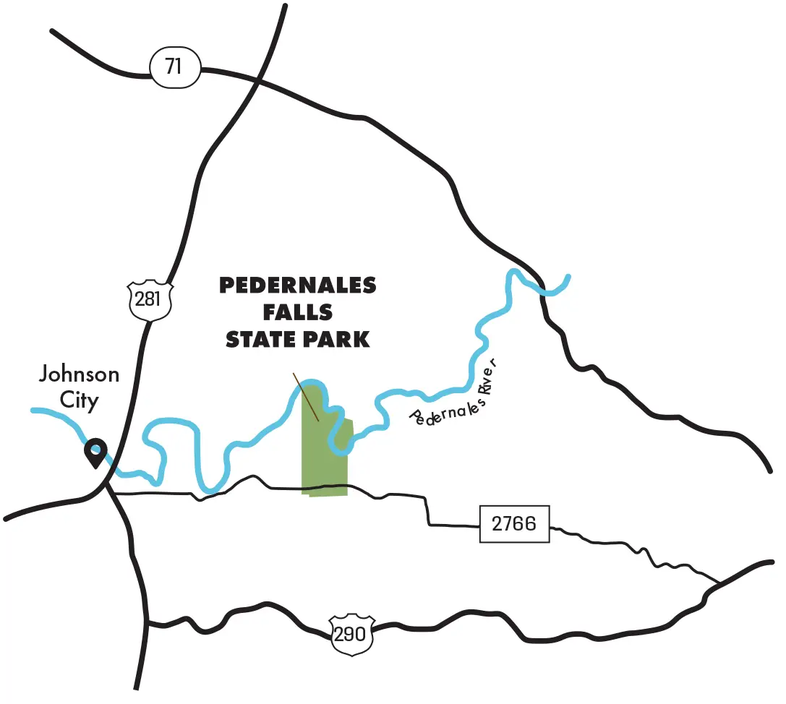
“Why does wool work so well for socks?” asks my son, Mason, as we prep for our weekend trek through Pedernales Falls State Park.
We’re sitting in the living room, sorting gear, and I’m telling him once again to avoid any footwear made from cotton.
I pause, realizing I don’t really have an answer. I know that wool socks can prevent blisters, that wool is light and warm and holds moisture away from the body, but I don’t really know why that happens.
I add the question to my list of things to Google as I’m trying to fall asleep.
Maegan Lanham | TPWD
Maegan Lanham | TPWD
On the Trail
As a scoutmaster, I find myself doing a fair amount of Googling. I also get to do quite a bit of backpacking, which is nice because I think I’m most at home on a trail, where my needs are as simple as they are critical. Away from the hustle of urban clutter, choices narrow. When should I eat? How much? How often? Should I drink more water? Where do we rest?
The boys haven’t developed my love for the challenge yet — not most of them, anyway — but they have great attitudes, and I love watching them work together Friday night as we navigate roughly two miles of trail by starlight to reach the park’s primitive camping sites.
In Scouting, the boys lead and adults mentor. That means letting them make the decisions — and sometimes mistakes — and stepping in as little as needed.
Once again, there’s a balance.
At times that balance can mean walking an extra mile when a trail gets missed, but luckily, this night, they are reading the map correctly and steering us to our spot.
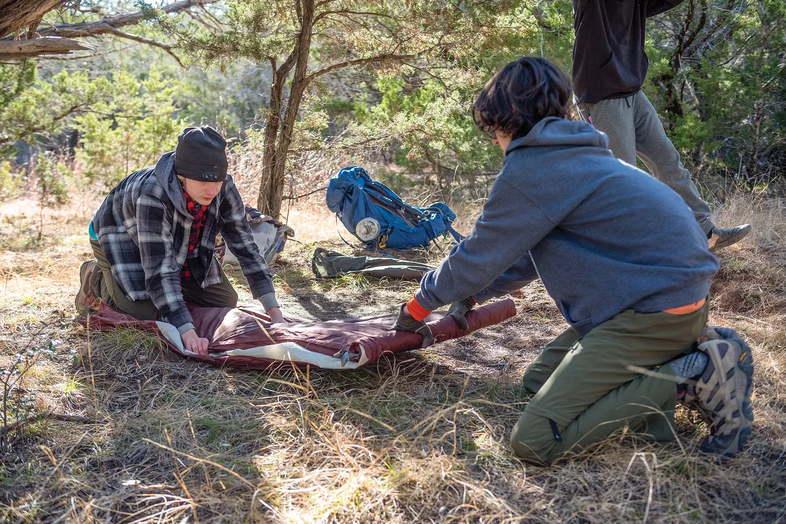
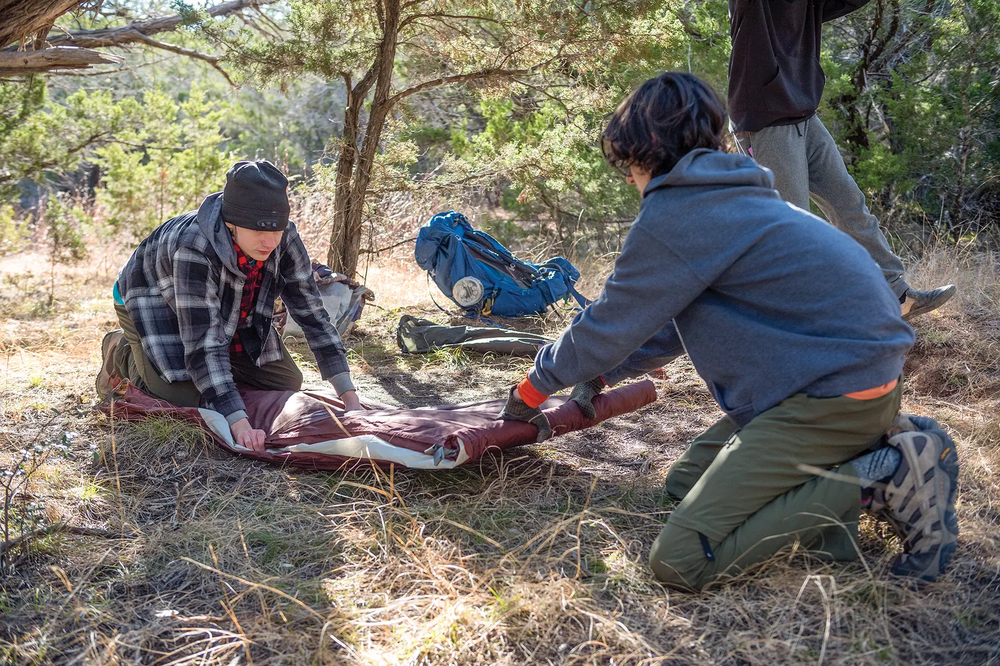
As the boys pitch their tents, they reminisce about past adventures. That time in the Rocky Mountains when two of them had to cram into a one-person backpacking tent. That time on the sand of Port Aransas when the wind blew so hard it snapped tent poles. The Lone Star Trail, where steady rains turned trails to creeks. There’s so much laughter. My heart is happy.
Maegan Lanham | TPWD
Maegan Lanham | TPWD
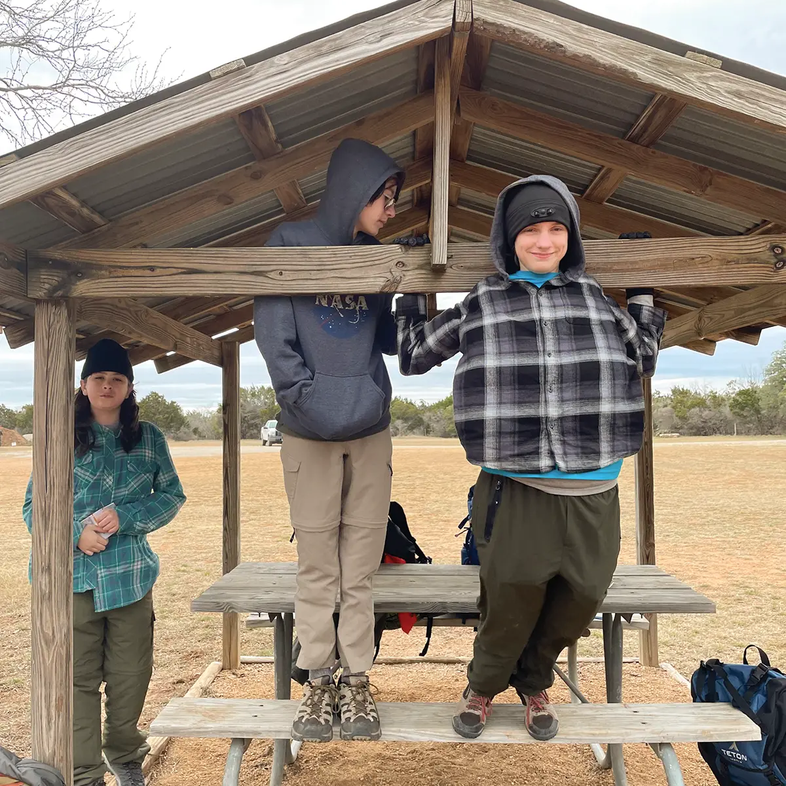
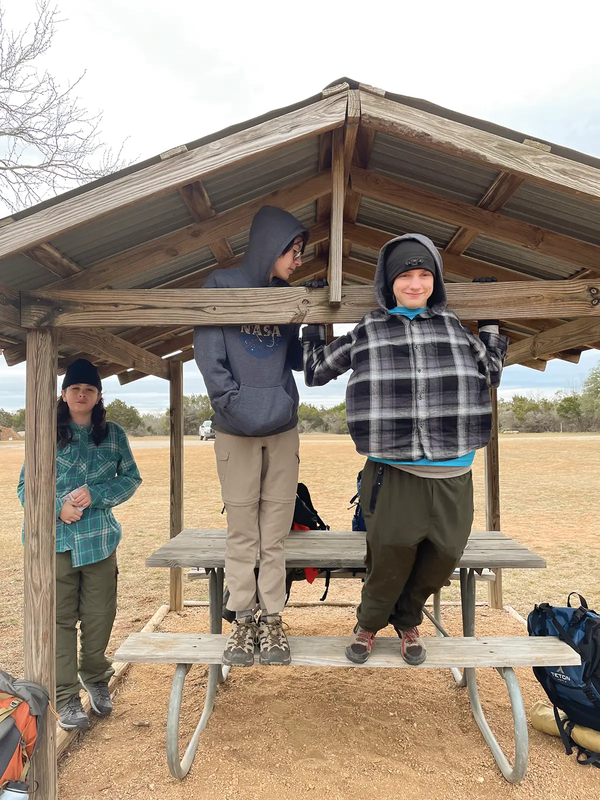
Photo by Cory Chandler
Photo by Cory Chandler
Tougher, Stronger, More Capable
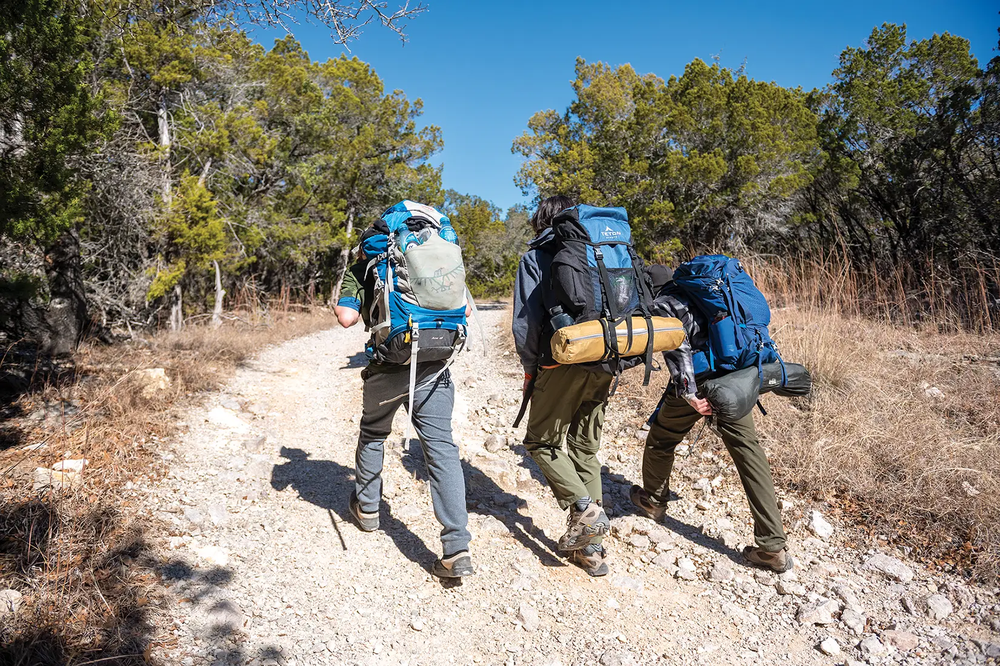
In the morning, we break camp and strap our packs in place. We’re aiming for at least 10 miles by nightfall, hauling our gear to the falls and back along relatively gentle trails. The goal is to toughen some of the younger boys for more demanding excursions in the future.
It’s a chilly day, with low gray skies and a biting breeze. The boys are cold. Many of them are now discovering they left essential items at home, which is standard for a Scout trip. No matter how many packing lists or shakedowns you do, boys will find new and novel ways to go empty-handed.
Take Mason, for example. After I told him not to bring a bulky cotton sweatshirt, he decided he didn’t need a coat at all. Now he’s bundled in two flannel shirts and multiple undershirts. And he’s not the only boy seeking extra layers. They are all shivering and keep asking why we won’t let them go home.
“We’re making you tougher and stronger,” we adults reply, grinning somewhat ironically.
The boys groan. They don’t want to hear it. That’s because while what we say is true, the boys aren’t in a place to realize that yet. It will probably be years before they are ready, decades even. They may be fathers themselves before they have the experience and context to recognize the lessons they learned through these excursions.
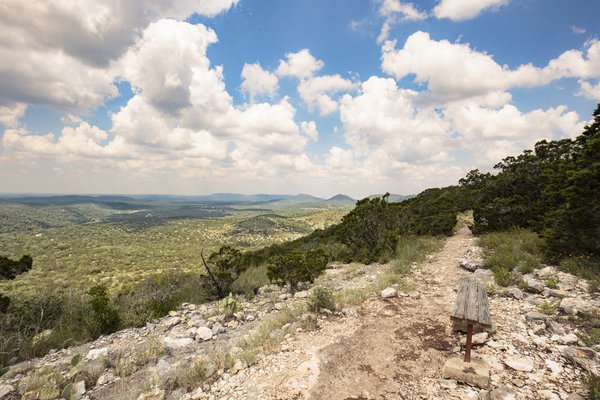
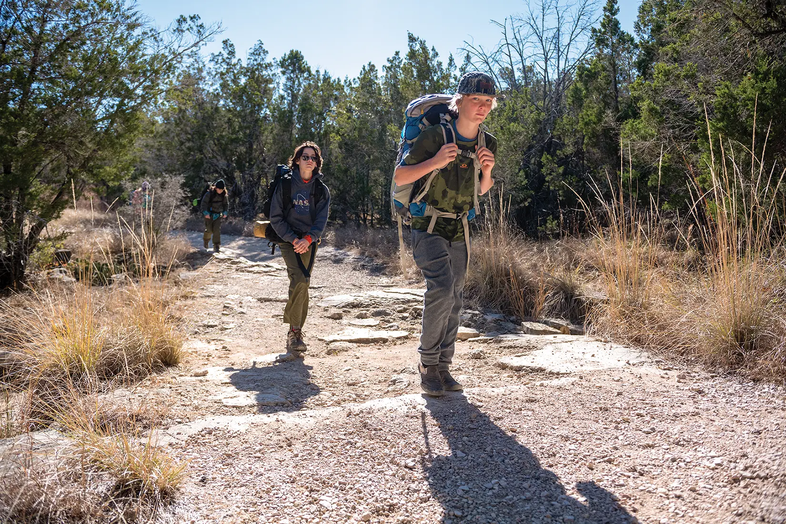
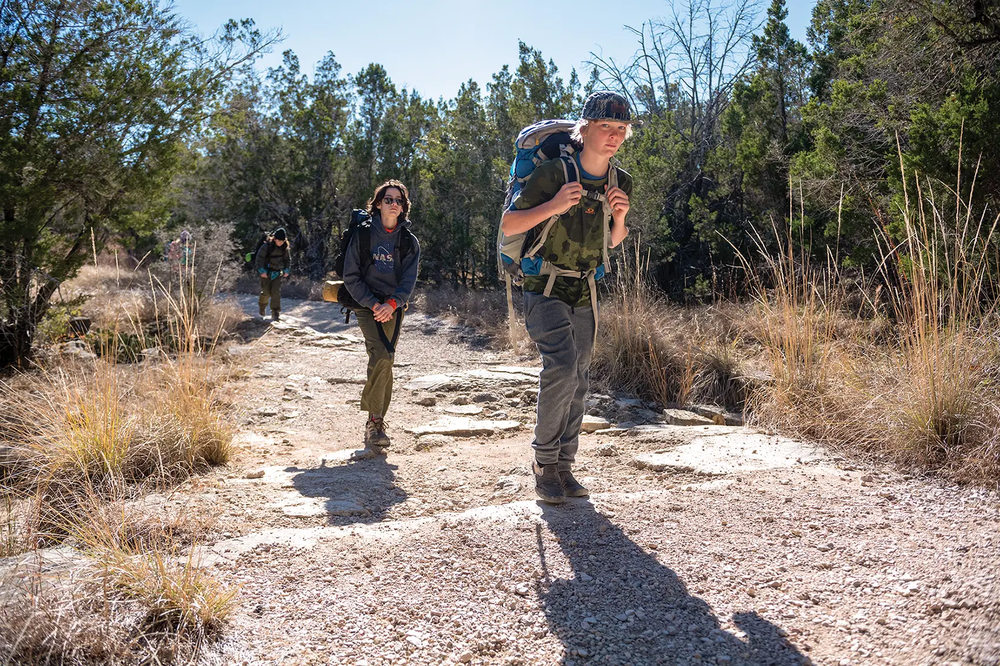
For now, we walk. Ushered by that uncharacteristically strong breeze, we make good time. The trails at Pedernales Falls are wide and smooth and well maintained. Despite their grumbling, the boys are in good spirits and maintain a brisk pace as we wind past stately oaks and huddles of junipers, following a series of small canyons until we connect with the meandering South Loop Equestrian Trail, which leads us north to a cluster of equestrian pens.
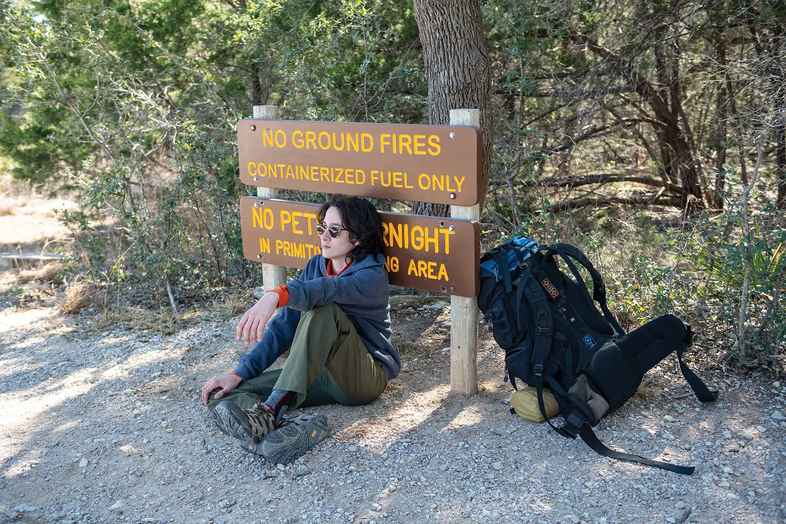
That’s where we take our first break, outside a barn near the park’s amphitheater. I dig out my water and a bag of almonds.
Ty, our troop’s committee chair, approaches me.
“We should try doing that next time,” he says, pointing to a nearby field where a park staff are teaching a small group of visitors how to use an atlatl.
This prehistoric hunting tool allows them to hurl spears with great force, in theory, though they’ll clearly need more practice to threaten any big game.
It looks like fun. I’m tempted to wander over and ask if we can join, but resist the urge. Best not to introduce such an enticing distraction at this point
Maegan Lanham | TPWD
Maegan Lanham | TPWD
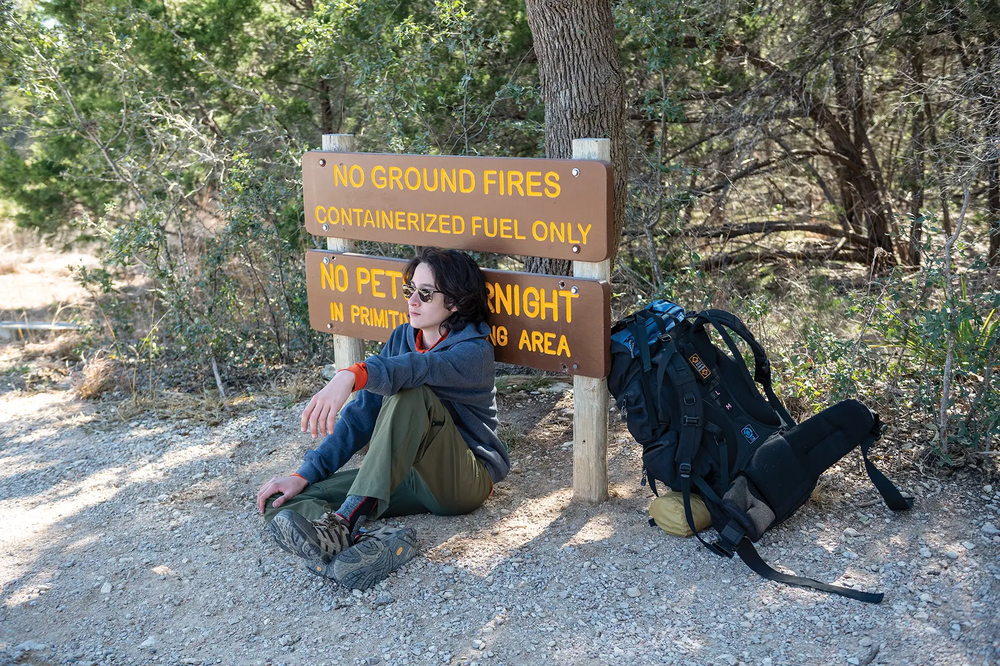
Maegan Lanham | TPWD
Maegan Lanham | TPWD
Falling for the View
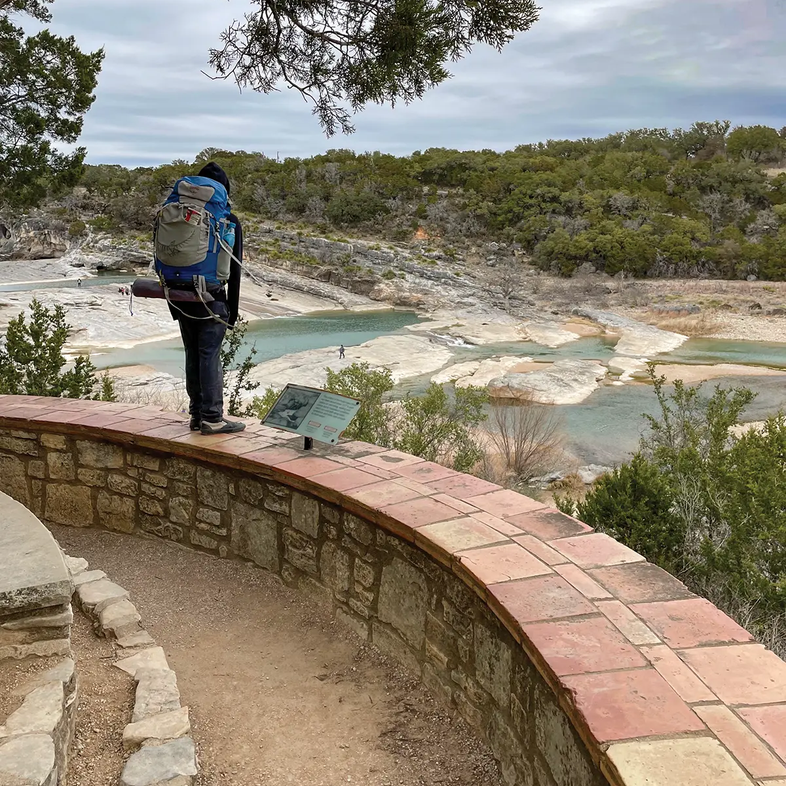
We reach the falls in time for a late lunch, though in an unfortunate twist, we don’t have time to explore them if we want to get back to camp before dark.
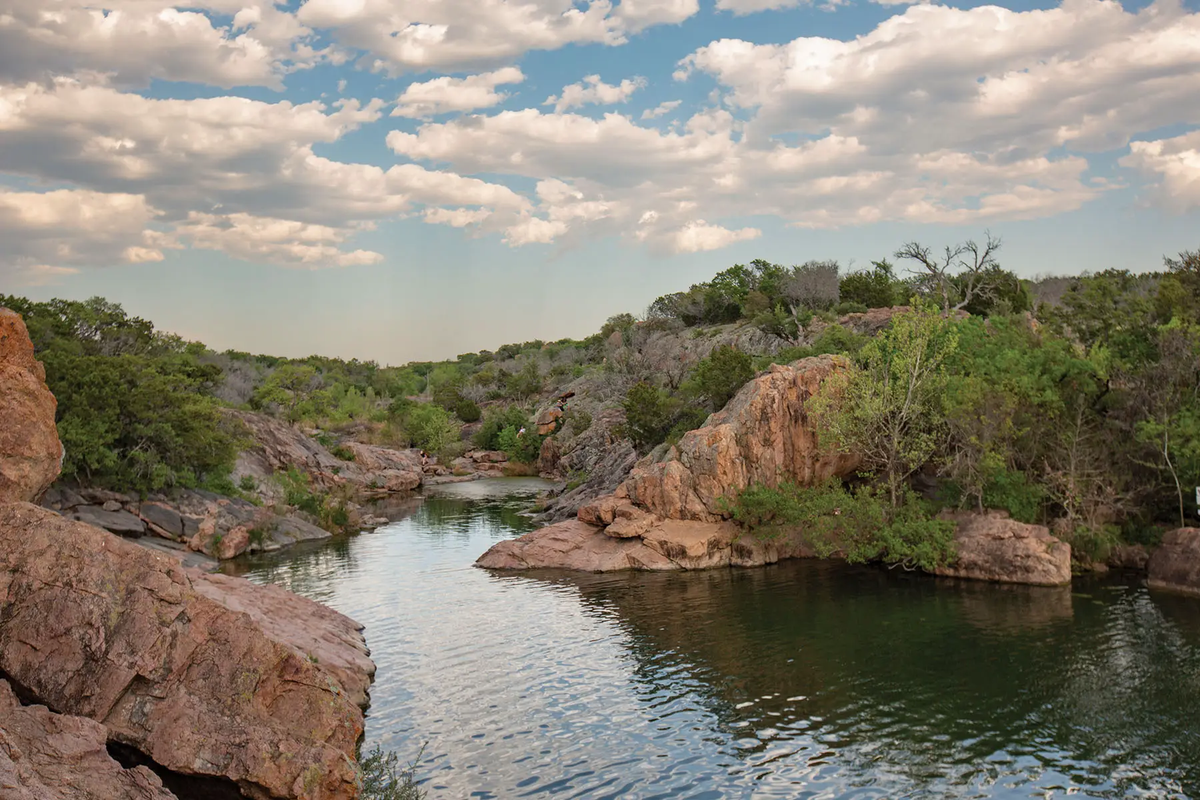
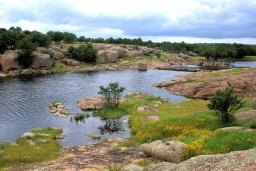
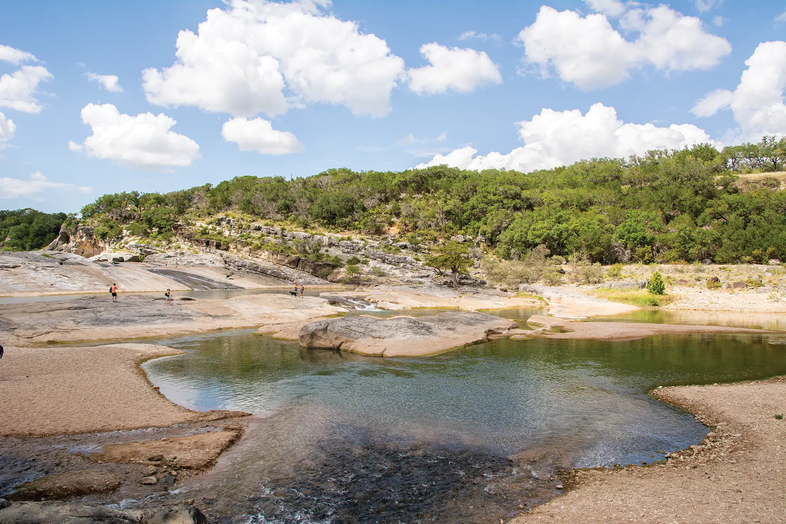
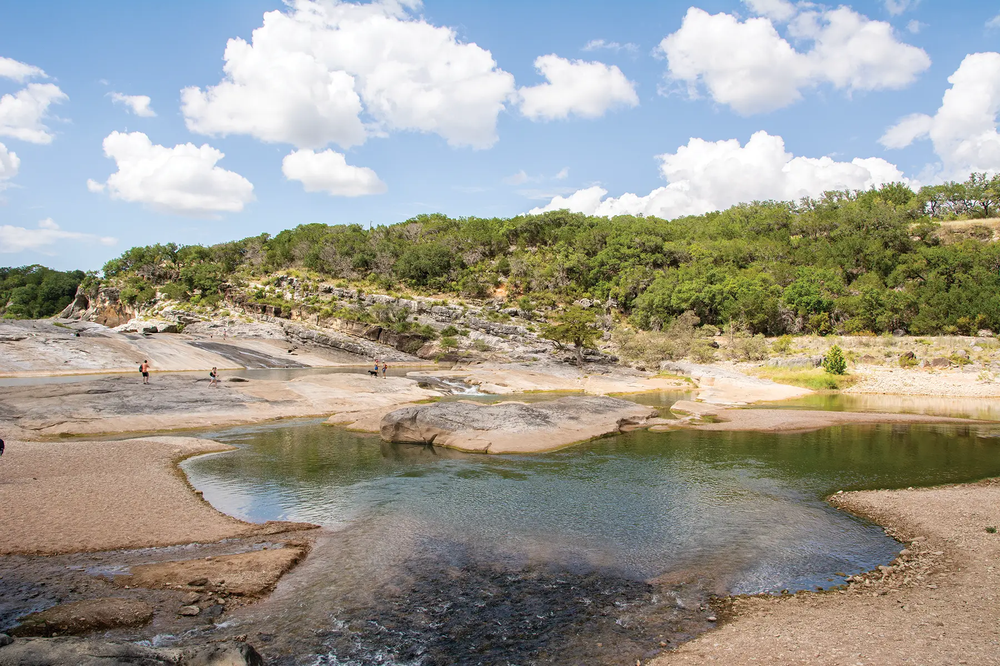
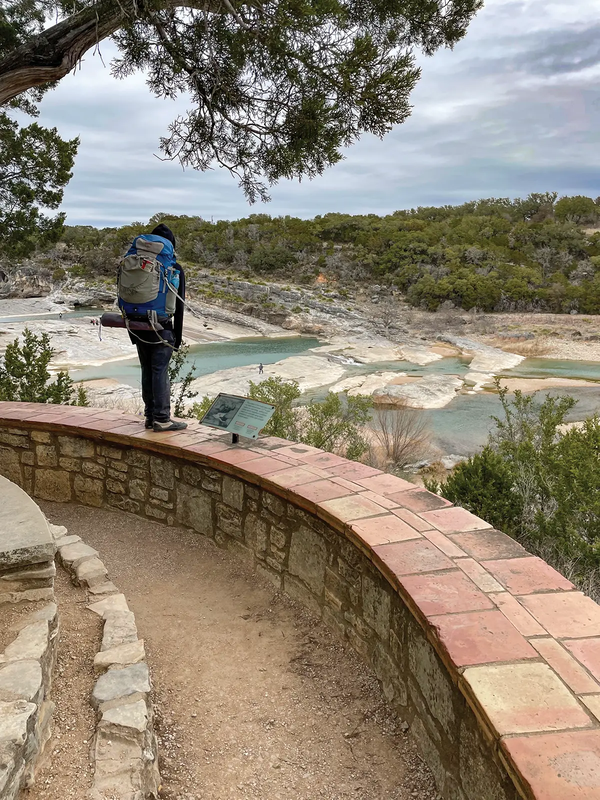
Instead, we choose an overlook where we can watch other visitors clamber over the sloping ledges that make up the riverbed. Sculpted and polished over more than 300 million years, these ledges form natural steps where children scamper and dogs frolic and water pours through limestone chutes to iron-blue pools below.
It’s a spectacular sight, and I settle against my pack to watch as the boys shelter under a juniper to plow through their lunches, greedy for calories. Once they’re done, they climb through a nearby ravine, doing their own exploring while I muster the will to shoulder the pack again. It’s much more pleasant to rest, though we still have around five miles to cover before we reach camp. The sun will set early, and it will be a cold night.
We call the boys out of the ravine. They police for trash and gather their gear. The grumbling begins. All is as it should be.
We hike on.
Maegan Lanham | TPWD
Maegan Lanham | TPWD
Some Thorns, Many Roses
The next morning, I circle the boys. We do Roses and Thorns, sharing positive and negative memories, as we do on every trip. What went well? What could be better?
There are thorns, of course. The cold. Sore feet.
But there are roses as well. The boys recount their adventures, the beautiful scenery. I tell them I’m proud of them.
“I think you’re tougher, stronger and more capable.”
The boys groan. I grin. We hike on.
Someday, these boys will become men. They’ll see that I’m right, but for now, we’ve learned enough lessons for one weekend.