A decade from now, Texas will celebrate 200 years since it won its independence from Mexico — and one historic battleground is already sprucing up for the occasion: the San Jacinto Battleground State Historic Site. With a cry of “Remember the Alamo!” for their recently fallen brothers, the outnumbered soldiers of that April 1836 battle defeated General Santa Anna’s forces to ensure Texas’ right to become a republic.
“San Jacinto embodies the spirit of Texas,” says Amy Rogers, executive director of the battleground and state historic site. “Even today, accounts of the battle of San Jacinto still inspire awe — whether it is [Mirabeau B.] Lamar’s heroics during the skirmish on April 20, [Colonel Juan Nepomuceno] Almonte organizing the largest group of Mexican soldiers surrendering, or even [General Sam] Houston sparing Santa Anna’s life against the desires of many in the Texas army — these stories remain relevant and impactful today.”
San Jacinto proved to be decisive and consequential. Mexico’s defeat triggered a devastating decline that would result in the loss of nearly a million square miles of territory. For Texians, victory brought independence and U.S. annexation.
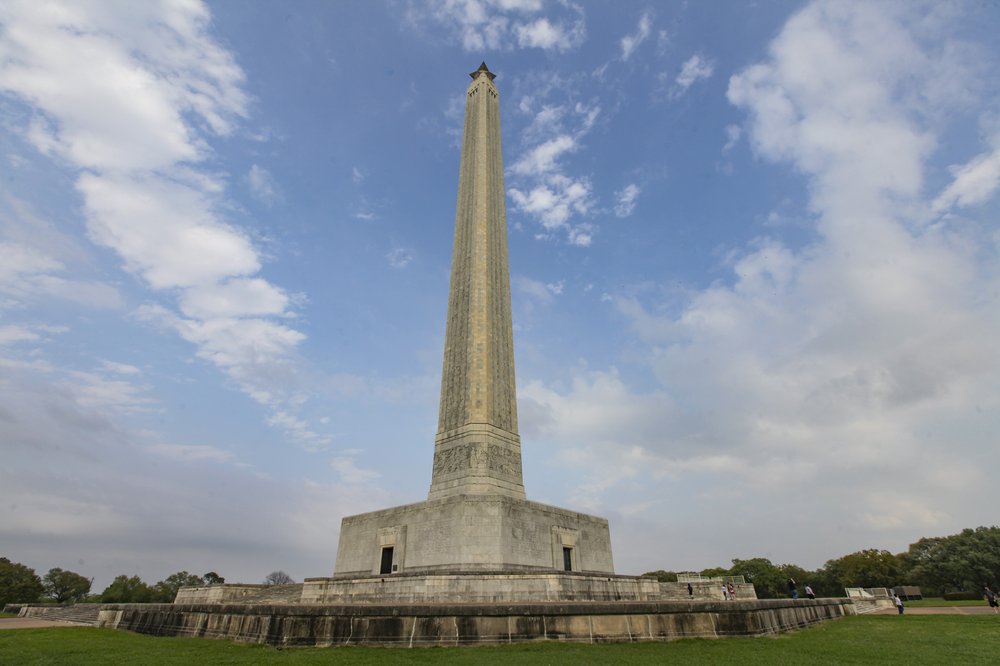
To commemorate that victory and those heroic stories, Texans began building a giant tower topped with a great stone star in 1936. Around it grew a public space steeped in history and storytelling. Though the valor has never faded, there are a few cracks and signs of wear in the memorial that honors it.
A Monumental Restoration
Thanks to a $142 million appropriation from the Texas Legislature, the 1,300-acre state historic site will one day boast a new state-of-the-art visitors center and improvements to the museum, historic monument and battleground site. The San Jacinto Museum and Battlefield Association is collaborating with the Texas Historical Commission (THC) on the plans.
“This overall project is the largest ever undertaken by THC and the most transformative for the site since the work done around the Texas Revolution Centennial in 1936,” Rogers says.
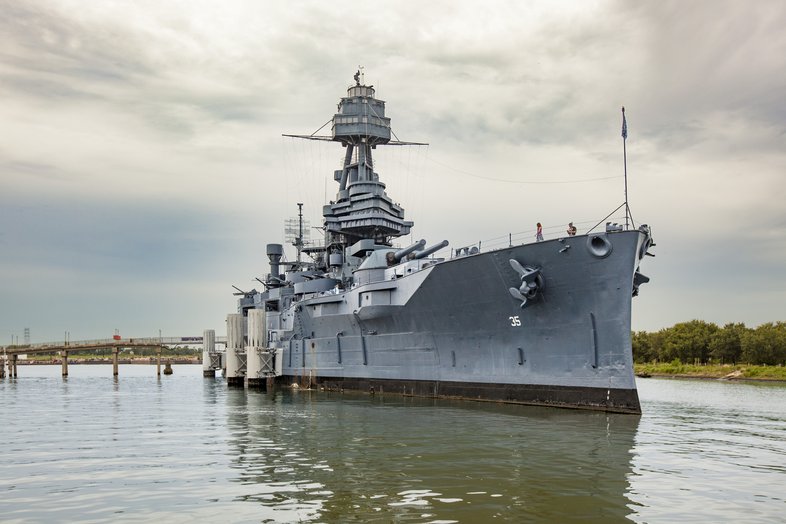
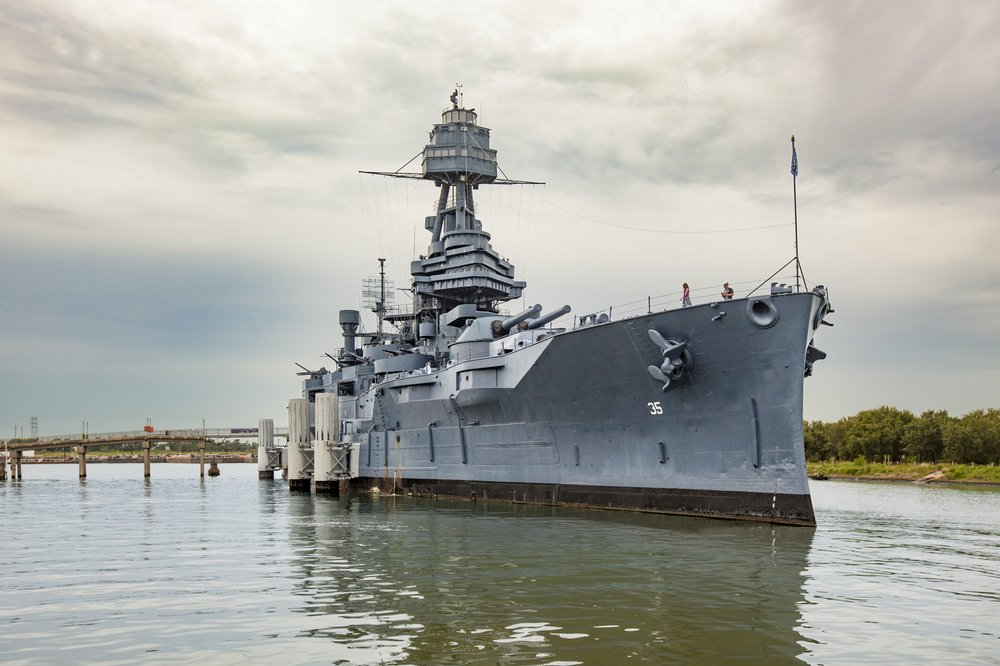
Battleship Texas has been moved from San Jacinto to Galveston.
Sonja Sommerfeld
Battleship Texas has been moved from San Jacinto to Galveston.
Sonja Sommerfeld
The Battleship Texas, once a beloved feature of the site, was moved in 2022 to a shipyard for repairs in Galveston, her new home. That change prompted an exciting addition to the restoration plans, one that also provides a long-lasting ecological gain for the site: infilling the artificial cove that once housed the ship and transforming it into prairie.
“The battlefield is envisioned to be restored as closely as possible to its 1836 appearance,” Rogers says. “This includes expansion and restoration of the historic tallgrass prairie, redevelopment of the historic tidal marsh, and better definition of the bottomland forest historically present all along Buffalo Bayou and the San Jacinto River.”
Battlefield trails and educational signage will allow visitors to experience more accurately what the Texian and Mexican armies saw and felt that fateful day. Restoration efforts are underway, including $1 million in donated labor from the Texas Department of Transportation: the removal of trees and underbrush to return the site to a coastal prairie consistent with eyewitness accounts from the battle.
A large portion of the project focuses on the monument itself, including the massive 34-foot star on top. Initial assessments point to some deterioration on the shell stone that covers the star (and the bulk of the monument), but the supporting structure is still very robust. Current plans include removing and replacing shell stone where needed and upgrading the attachment points to longer-lasting materials.
Our First State Park
San Jacinto Battleground holds the distinction of essentially being the first state park in Texas.
In the 1880s, Texas acted to protect San Jacinto and the Alamo as two of the most important sites in Texas history. The state purchased 10 acres along Buffalo Bayou in preparation for the 50th anniversary of the Texas Revolution.
San Jacinto’s transformation into a state park gained momentum in 1897 when the Legislature appropriated $10,000 to establish a public park and purchase an additional 336 acres. In 1907, the state appropriated more money for improvements at the battleground, leading to its official designation as San Jacinto State Park, the first named as a state park. Texas Parks and Wildlife Department managed the site on behalf of the state between 1965 and 2019, when management of the site moved to the Texas Historical Commission.