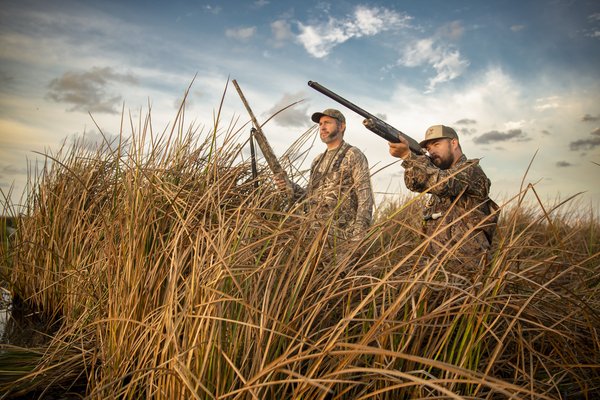
When the first cool breeze of fall rustles the Texas wetland grasses, it brings with it a whisper of excitement for a longstanding fall and winter tradition: duck hunting.
Texas hosts a variety of duck species in the winter months, from the gadwall, a softly patterened brown bird, to the green-winged teal, the males of which boast an elegant emerald face. Many of these duck species breed farther north and spend the winter in Texas’ warmer climate.
Duck hunting is a rare opportunity to see these beautiful, colorful birds up close.
“I enjoy being able to bring my kids out [duck hunting],” says Lang Alford, the manager of Mad Island Wildlife Management Area. “It’s awesome just getting out there and being able to enjoy all the diversity of species that you see and the sites you get to witness, and watching the sun come up while you’re out there.”
Duck is also good eating. While the flavor varies between species, and even between individual ducks depending on their diet, the rich meat makes excellent table fare.
Instead of focusing on just one property, this month we’re highlighting three WMAs where you can duck hunt, each within a couple of hours of each other. Wildlife management areas offer accessible public hunting, which is somewhat of a rarity in the mostly privately owned state of Texas.
“You don’t have to have a boat, you don’t have to spend a bunch of money for an annual lease,” says Trey McClinton, wildlife biologist at Justin Hurst WMA. “If you pay for your $48 Annual Public Hunting Permit and you have all the necessary licenses, endorsements and stamps, you can go out and have a really quality public hunting opportunity.”
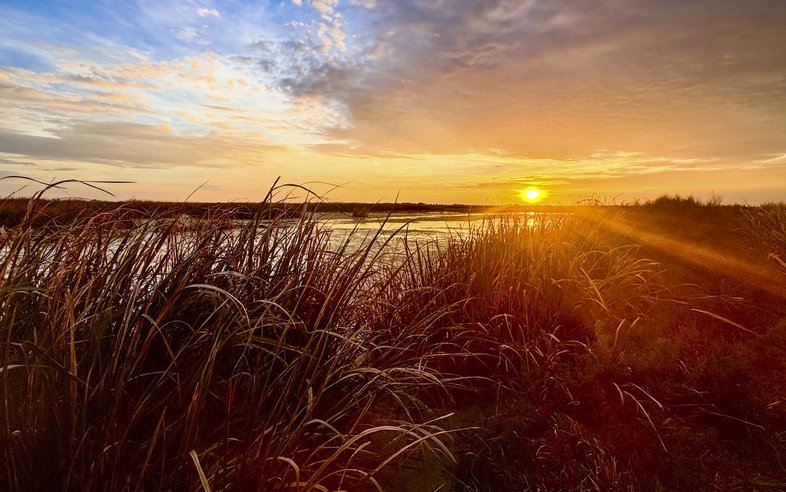
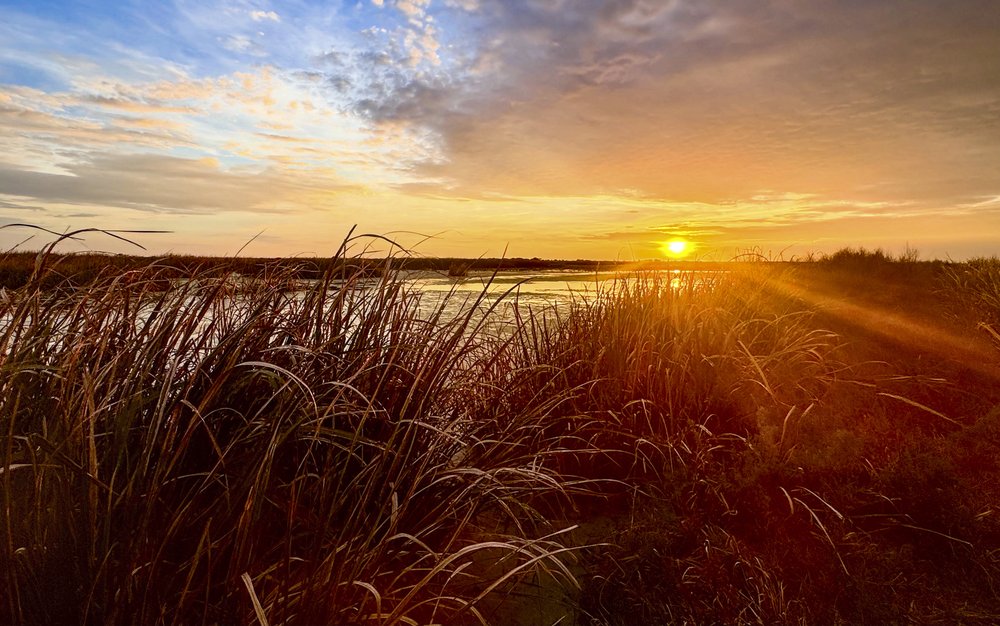
Sunset at Mad Island Wildlife Management Area.
Sonja Sommerfeld
Sunset at Mad Island Wildlife Management Area.
Sonja Sommerfeld
Mad Island
Located along the coast near Matagorda, Mad Island is not actually an island, and the only thing that might make you mad about it is the proliferation of mosquitoes in the warmer months. In the cooler season, the island trades its mosquitoes for ducks, especially blue- and green-winged teal and gadwall.
Alford enjoys the ecological diversity of the property. “There’s a lot of different types of habitat here, from the saline wetlands to freshwater wetlands,” he says. “To me, being a biologist, I like to see the different species of birds and animals and plants and things that use the different habitat types.”
The WMA is open for hunting on Saturdays and Sundays during the South Zone duck season. Hunters must arrive before 4:30 a.m., and a lottery-style drawing commences to select each hunting party’s spot. Some locations require a bit of a walk, and it helps to be in good physical shape.
Justin Hurst
Located west of Freeport, the initial 8,000 acres comprising the WMA were purchased in the mid-1980s using waterfowl stamp funds.
“Today, we operate just over 15,000 acres, and this property has everything from tidally influenced salt marsh, to freshwater wetland impoundments, to coastal tallgrass prairie, as well as Columbia bottomland hardwood forest and then some areas of shrub-scrub,” says McClinton. “Staff work year round to promote a wetland complex that benefits numerous species of waterfowl and water birds.”
The most commonly harvested ducks at Justin Hurst are green-winged and blue-winged teal, northern shovelers, gadwall, northern pintail and mottled ducks. The property is open for hunting on Tuesdays, Thursdays and Saturdays during the regular duck season in the South Zone. The property offers just under 60 different hunting locations, and like at Mad Island, locations are chosen in a lottery system (party tags are handed out between 4-4:30 a.m.).
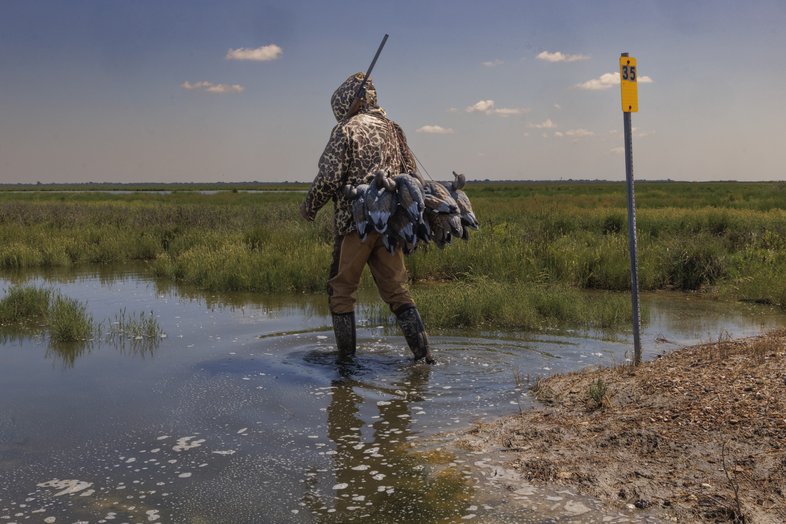
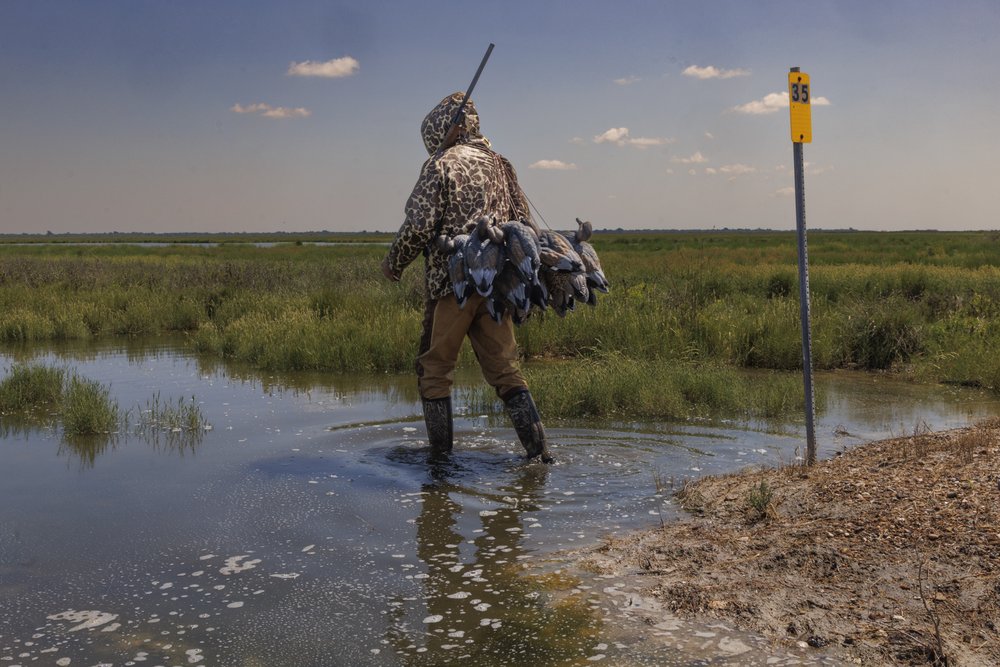
A hunter carries decoys into the wetlands at Guadalupe Delta Wildlife Management Area.
Sonja Sommerfeld
A hunter carries decoys into the wetlands at Guadalupe Delta Wildlife Management Area.
Sonja Sommerfeld
Guadalupe Delta
Guadalupe Delta WMA lies just southeast of Victoria, where the Guadalupe River meets the Gulf. Purchased in the 1990s with waterfowl stamp funds, the WMA offers prime duck hunting opportunities spread across three of the property’s four separate units. The most commonly harvested species include teal, shovelers, gadwall, widgeon and pintail.
The WMA headquarters are located within the 4,400-acre Mission Lake Unit in Calhoun County. Made up of mostly freshwater marsh habitat, the Mission Lake Unit is open for duck hunting on Tuesdays, Thursdays, Saturdays, and the last Sunday of each section of regular season, and then Tuesdays, Thursdays, Saturdays and Sundays of the early teal season.
Mission Lake hunts take place on a first-come, first-served basis, either via self-registration during weekdays or a staffed checkstation on weekends. If Mission Lake is full, it’s often worth it to check out the Hynes Bay and Guadalupe River units of the property, which each offer around 1,000 acres of brackish tidal marshes.