I enter the Matador Wildlife Management Area and write down my Limited Public Use Permit number on the sign-in sheet inside a nondescript metal shack. It feels as if I just drove onto a working ranch versus a swath of public land, and that is what I love about WMAs. They are rustic and wild. It’s up to you to make your own adventure.
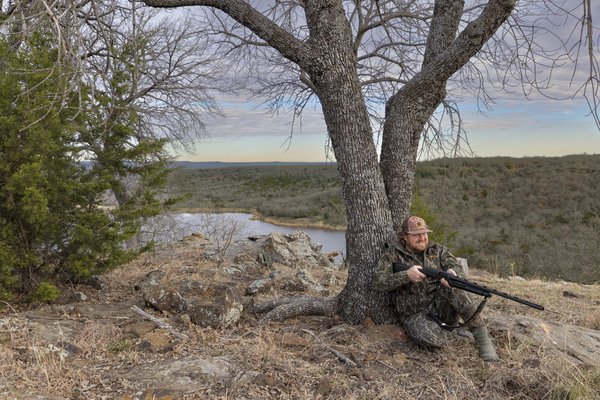
Matador’s 28,183 acres reside comfortably in the Rolling Plains, just southeast of the Panhandle. The property was purchased in 1959 for wildlife research, habitat management and public use.
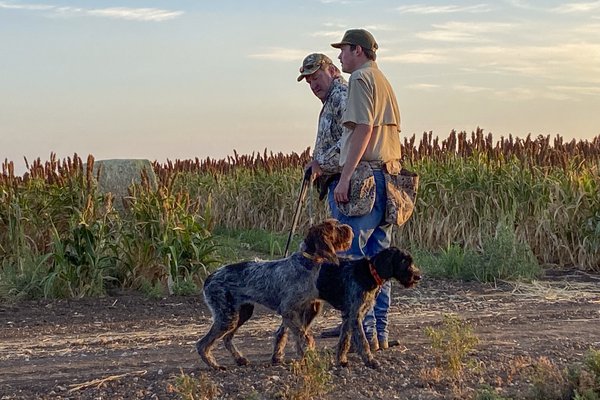
There’s no sign of life at the headquarters building, so I check the two campgrounds. There’s no dump station, no electricity and no water. The only amenities are covered picnic tables and a vault toilet. It’s a Wednesday in mid-January. I thought I’d have the whole place to myself, but I forgot it was still quail season. There are several camps with dogs
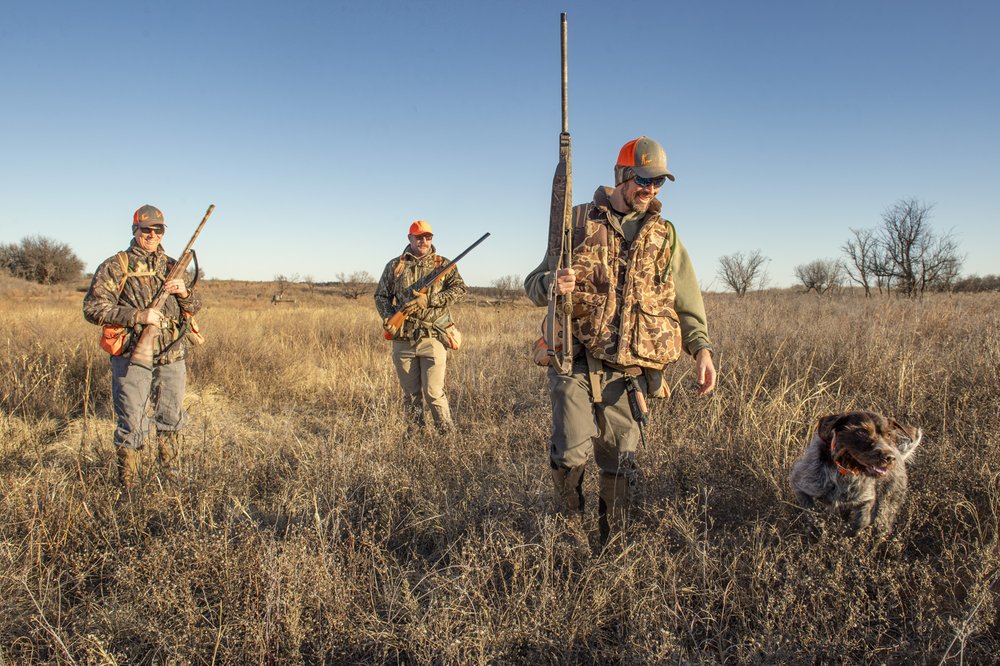
and bird hunters decked out in their blaze orange jackets and vests. I meet folks from San Antonio, Austin, Kerrville, Nantucket and Montpelier. Yep, those last two are in Massachusetts and Vermont.
I drive back to the headquarters and catch Matador WMA’s Project Leader Chip Ruthven and wildlife biologist Hunter Hopkins. We sit down at a large table with a topographical map of Matador printed on top. I ask Ruthven who their typical visitor is. “Most of the public use out here is public hunters, and the biggest bulk of that is quail,” he says. “This WMA is one of the premier bobwhite quail hunting areas in the state.”
Ruthven arrived at Matador in 2004 and has used tools like cattle grazing, grubbing, herbicide and fire to control invasive flora and restore the grassland habitat so the quail and other wildlife can flourish here.
Hopkins hands me a paper map and highlights the driving loop and some other sections of interest along the Middle Pease River, which runs through the property. “You guys may think I’m crazy,” I announce. “But I’m getting on a bike tomorrow to explore the WMA.” Matador has 80 miles of gravel and red dirt roads. Many are accessible only with four-wheel drive. “Just look out for the quail hunters driving around,” Ruthven tells me. “They’re not expecting a bicycle out there.”
The next morning, I meet Hopkins and Ruthven at the cook shack. A fire burns in a handmade circular stove, cutting the morning chill. Hopkins is heading to the north side of the Pease River to check on a couple of excavators grubbing junipers. I decide to join him and get the lay of the land and let the day warm up. After checking on the excavators we cross the Pease River and drive out of the valley. Hopkins points out the prolific grasses that thrive in the WMA: big bluestem, little bluestem and switchgrass. He stops and shows me western ragweed along the road. It is a preferred seed-producing plant utilized by quail. He tells me one of Ruthven’s greatest successes is transforming Matador from a mesquite forest back to a grassland. Exploring Matador WMA, I feel as if I’m journeying back in time to the Texas of 200 years ago.