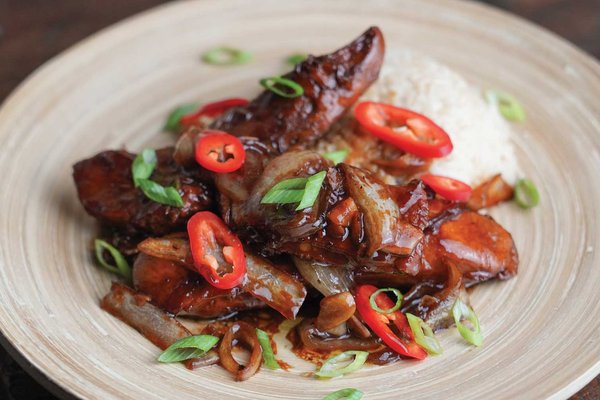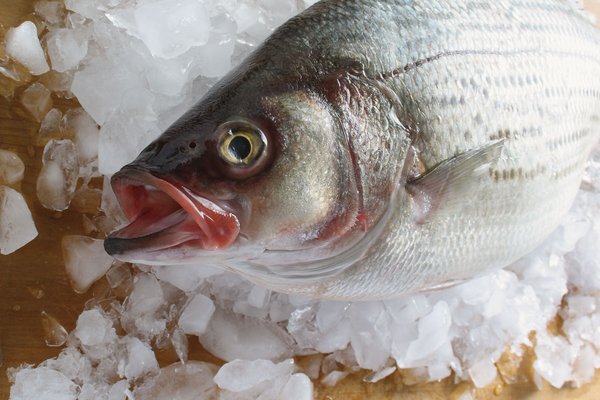
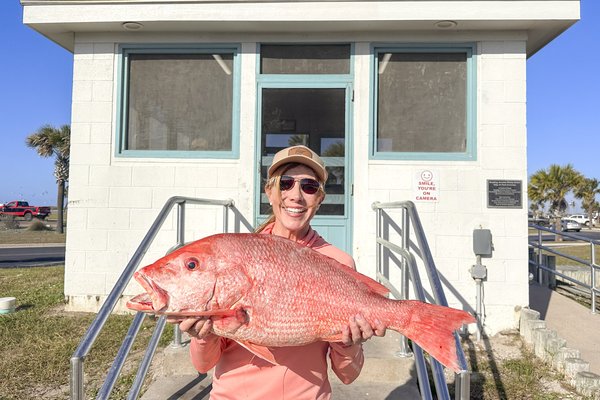
Red Snapper are one of the crown jewels of Texas offshore fishing. They’re beautiful, they’re hard fighters, and when you finally get some on the table, they’re a delicious reward, whether you’re fine dining or going casual. The red snapper’s mild and slightly sweet flavor is complemented by almost any side dish.
The catch is timing. As an Ohio outdoors woman who doesn’t live on the Texas coast, it is a challenge to align my travel plans with the federal red snapper season, which generally runs between June and November. Fortunately, snapper fishing is permitted year-round in the state waters of Texas, up to nine nautical miles from shore, opening the possibilities for both in-state residents and out-of-state visitors to catch them.
My base is the coastal town of Port Aransas, which offers quick access to bay fishing and easy departure points for deep-sea Gulf fishing.
During the transition months of early spring and late fall, red snapper are either moving in from deeper water or heading back out. So, while it’s possible to fish for them year-round, timing for anglers must be right for successful catches outside of the federal red snapper season.
For this reason, I plan for two days of fishing just in case the weather conditions, or the fish, don’t cooperate.
Day one weather conditions are favorable, and the tide movements indicate that we have the potential for a late-morning bite.
We head about seven miles offshore to fish near several rigs. These spots provide optimal structure for snapper. They function as artificial reefs, giving the species a place to hide in the open water. Structures like these platforms are popular fishing spots for anglers targeting red snapper in state waters because there’s always an abundance of fish. Smaller fish eat the barnacles and zooplankton, and the smaller fish attract the bigger fish.
The water here runs about 60 feet deep, good conditions for jigging, and I cycle through sardines and shrimp trying to dial in what they want.
Even though I am targeting red snapper, these areas are also productive for other species, including bull shark, Atlantic sharpnose shark, king mackerel, amberjack, cobia, mahi-mahi and yellowfin tuna. You never know what will end up on the line.
My first red snapper hits — my line goes tight, and I reel it in with anticipation. But it only measures 13 inches, which is under the 15-inch minimum required in state waters, so I quickly return it. My line gets hit over and over with small red snapper, all under the limit.
It appears, at least in this spot, that the bigger fish have already moved on.
Day one ends with a few keepers of other species, but not what I was targeting.
On day two, everything changes. The bigger fish are indeed on the move to deeper waters, and the question is whether we can get ahead of them. Sliding from the seven-mile mark to the nine-mile boundary, we find them congregating near the wreckage of an old oil rig sitting on the seafloor.
They’re biting on menhaden (pogies) and live and cut pinfish. Our timing on this day is perfect.
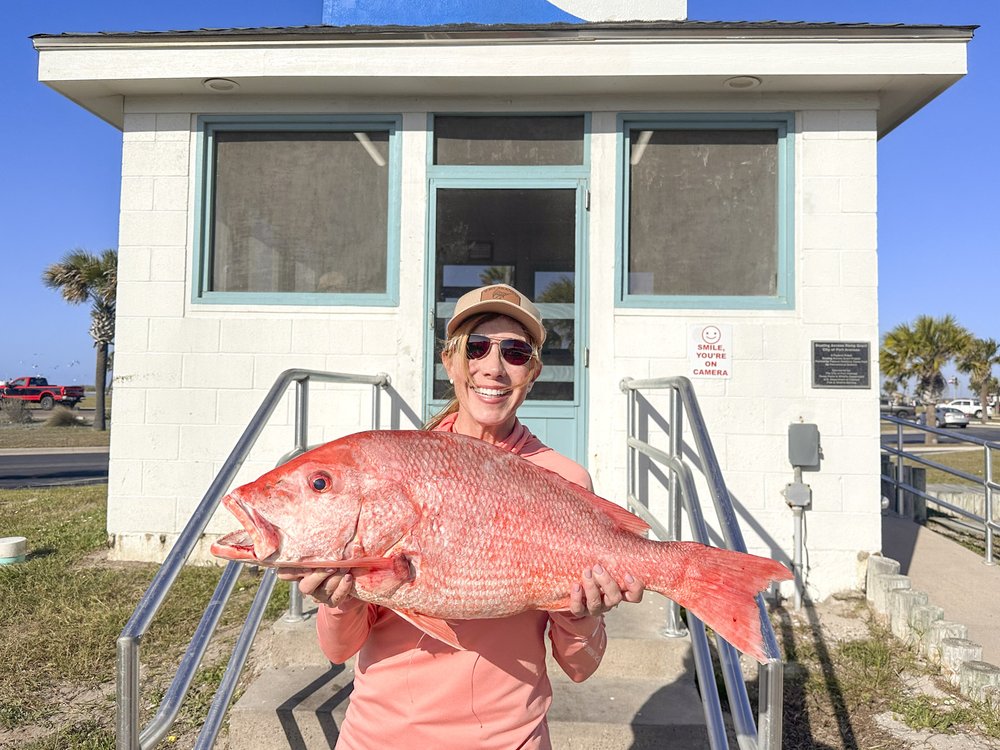
When my line goes tight this time, it’s different. My 13-pound snapper is a keeper.
With my mission accomplished, I head to the fish cleaning station with my hard-earned Texas off-season red snapper.
The hook-to-table experience is one of the great joys of being an angler. While I hope to make it back to enjoy the federal red snapper season sometime soon, this out-of-state angler appreciates knowing there’s a chance to catch them year-round