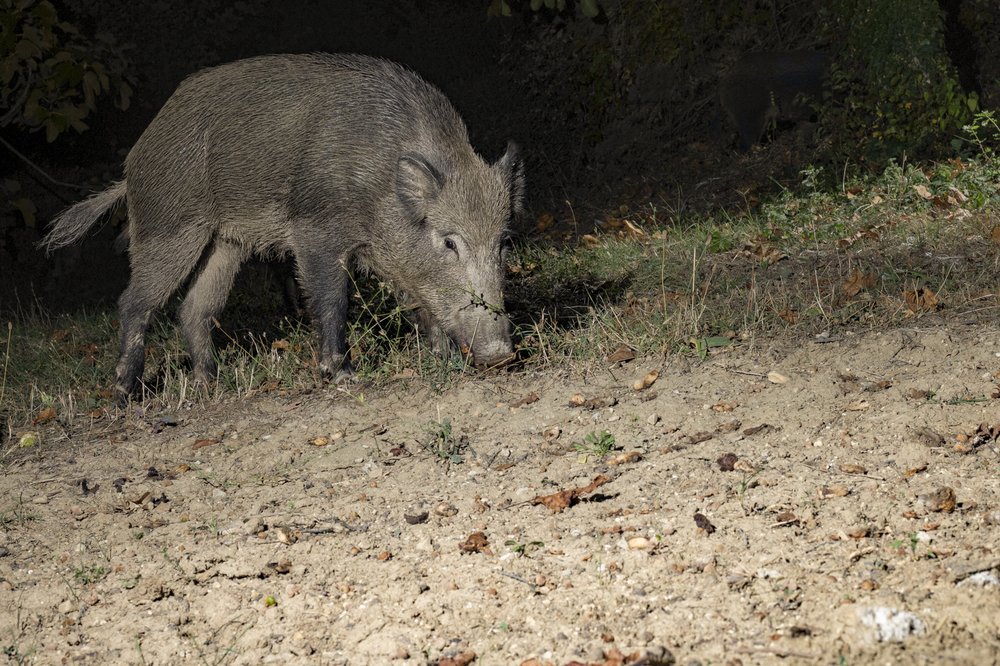
By law in Texas, hogs can be hunted 24 hours a day, seven days a week, 365 days a year, and we mean it. On top of that, as a Texas resident or nonresident, you don’t even need a hunting license to pursue hogs year-round on private property with landowner consent.
With almost half of the nation’s population of feral hogs calling Texas home, we have ample opportunities to remove these prolific, destructive and — yes — tasty pests from the landscape. Often, hogs are hunted specifically or incidentally during deer season, or generally in the cooler months of the year. However, a rule is a rule, and you can hunt them in the summer, too, day or night.
Lacking the ability to sweat, hogs are at their most predictable in the long, hot months between cool seasons. Being crepuscular — active during the transitional times around dawn and dusk — in the fall and winter, they’ll almost universally make the move to being nocturnal once the temperatures start to rise again in the spring. This makes them vulnerable to night hunting for those dedicated enough to brave the heat in pursuit of this wily quarry.
Beyond the fortitude to simply stay up late (and late can mean until the sun comes up), the only impediments to chasing nighttime hogs are access and equipment.
Finding a place to hunt hogs might actually be easier in summer, when they begin to wage their annual war on Texas agriculture. As corn, vegetable and grain crops progress, large groups — or “sounders” — of wild pigs start to descend on both fresh plantings and established crops, wreaking havoc on furrowed rows in search of a stolen meal. As the prospect of crop damage increases, so too might the likelihood of a farmer to grant permission to a hunter willing to guard the crops for a night, giving the hogs a stern lecture on Texan property rights. Conversations started at feed stores and farmers’ markets can turn into not only opportunities for hunters, but higher crop yields and better sleep for hardworking farmers.
As the hogs move into these larger agricultural fields, they also make themselves easier targets for hog hunters. First, they’ll be in mostly open areas, and in large groups. Second, they’ll operate under the assumption that they can’t be seen, so approaching them is a lot easier. Finally, these open areas and large sounder sizes can present chances to shoot more than one hog. Sometimes a lot more than one.
Here the hindrance is equipment, or rather the hunter’s budget and willingness to gear up for night hogs. There is a real spectrum of cost here, from virtually nothing to thousands of dollars in high-tech hunting gear. Let’s lay out some options:
The full moon. This sounds a little obvious, but a full, bright moon on a clear night can be all you need to successfully chase night hogs with standard daytime hunting gear. That’s right; a standard scoped rifle on a bright moonlit night can get the job done nicely. The downside here is that as your vision is improved by the lunar light, so is the hog’s. Approach from downwind, using stealth and as much cover as possible to close the distance on full moon pigs, and you might be shocked at how close you can get.
Spotlights. A high-powered, handheld light can work for night hunting, and was the mainstay for many, many years before night vision and thermals entered the conversation. You’ll typically spot the hogs, or at least have a general idea of where they are, and then hit them with the light. This is fast-action hunting, and requires quick reflexes to find the light-blinded hogs and make a good shot on them. It’s also advisable to contact your local game warden to inform them of your intentions — hunting game animals like white-tailed deer with spotlights is strictly forbidden, and a heads-up could save you some late-night explaining.
Thermals. These are by far the most effective of your night hunting options. They are also quite expensive. This incredible technology enables the hunter to have a veritable superpower: the ability to see in the dark. You can spot feral pigs hundreds of yards away, and see them with complete definition. Coupled with a multi-shot rifle and a downwind approach, putting a hurting on a marauding sounder is likely.
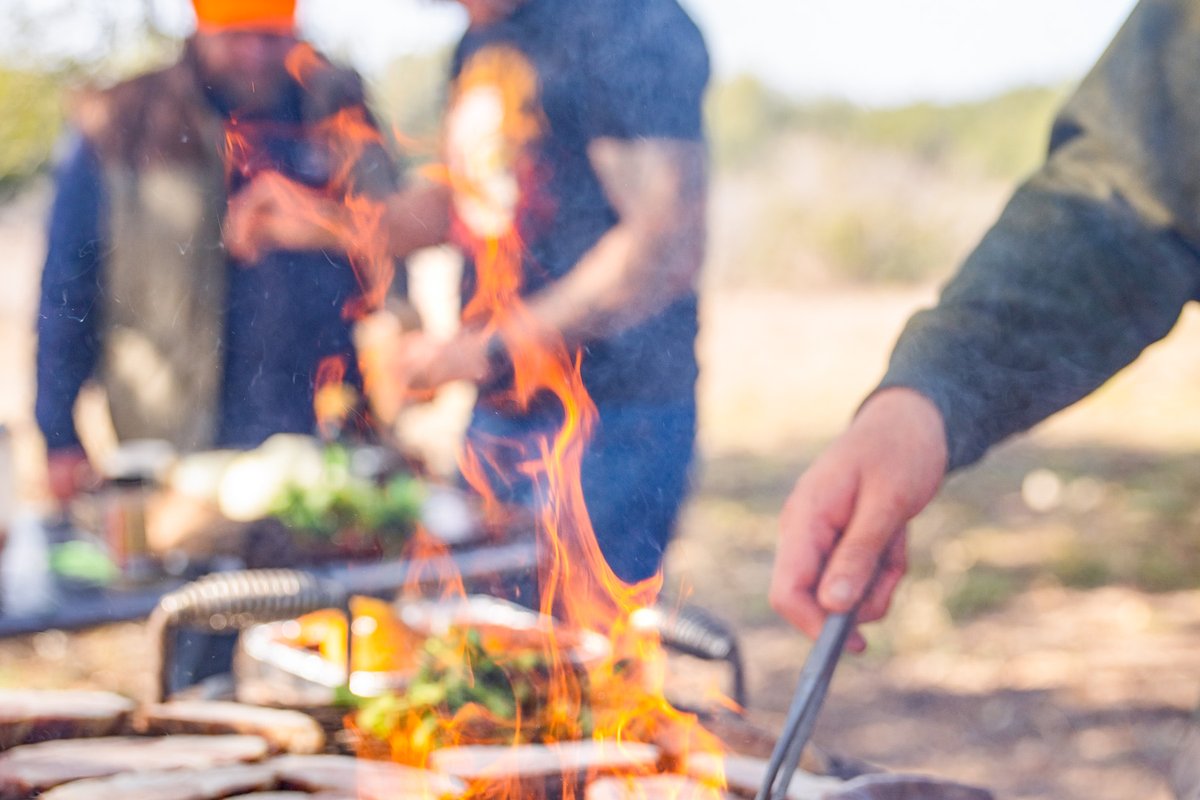
Once your hogs are downed and in hand, the clock is ticking if you’re inclined to take some meat home. Getting hogs gutted, skinned and quickly chilled in hot weather is essential for quality and safety. Many hunters opt to just quickly remove backstraps and/or hams, and it’s hard to argue against this fast and easy technique, especially if there is more than one hog to deal with. Backstraps can be pounded thin, marinated and grilled, or breaded and pan-fried. I like to stuff these cutlets with ham, cheese and roasted peppers, or serve them with a variety of sauces (these recipes, along with detailed videos of feral hog butchery, can be found on pedernalproject.com or in The Hog Book). In the summer, you can’t beat a simple tomato salad with grilled pork.
If you’re already dreaming of deer season, if your freezer is looking a little bare or if your new farmer friend with a few acres of sweet corn needs a helping hand, summertime offers a unique — and perfectly legal — option for helping out with our hog problem. Have the cooler packed with ice and plenty of water, get those knives sharp, and don’t forget to change the batteries in your headlamp.
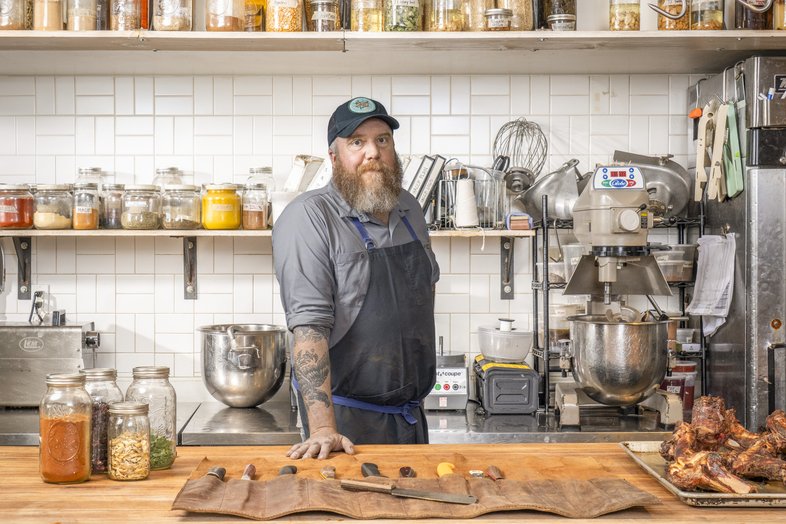
Jesse Griffiths, co-founder of Dai Due and New School of Traditional Cookery, is a hunter, fisherman, acclaimed chef and award-winning author of "The Hog Book," and more.
Jeff Wilson
Jesse Griffiths, co-founder of Dai Due and New School of Traditional Cookery, is a hunter, fisherman, acclaimed chef and award-winning author of "The Hog Book," and more.
Jeff Wilson