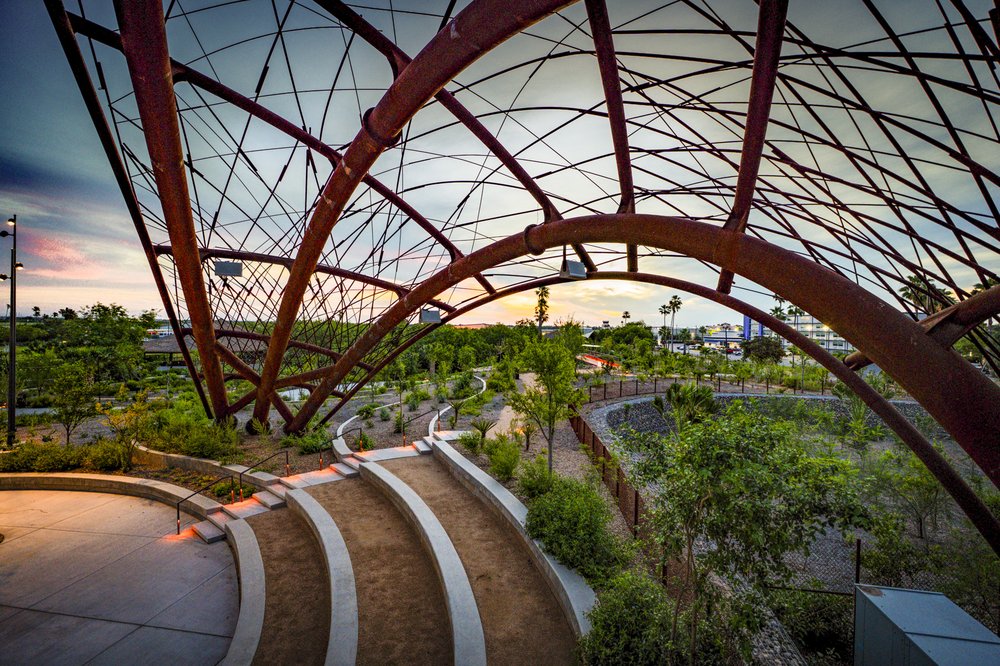
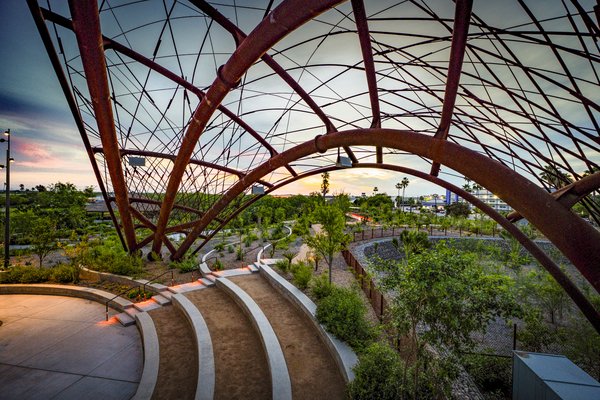
After laboring in disrepair for decades, the historic South Texas Spanish revival home Quinta Mazatlán and surrounding woodlands were revived as a new type of urban park in 2006. Owned and operated by the City of McAllen, Quinta Mazatlán endeavored to be a “Mansion with a Mission,” restoring one native backyard at a time. It fledged into a World Birding Center location, and now, with an addition of 15 acres, it is spreading its wings again to be the Center for Urban Ecology.
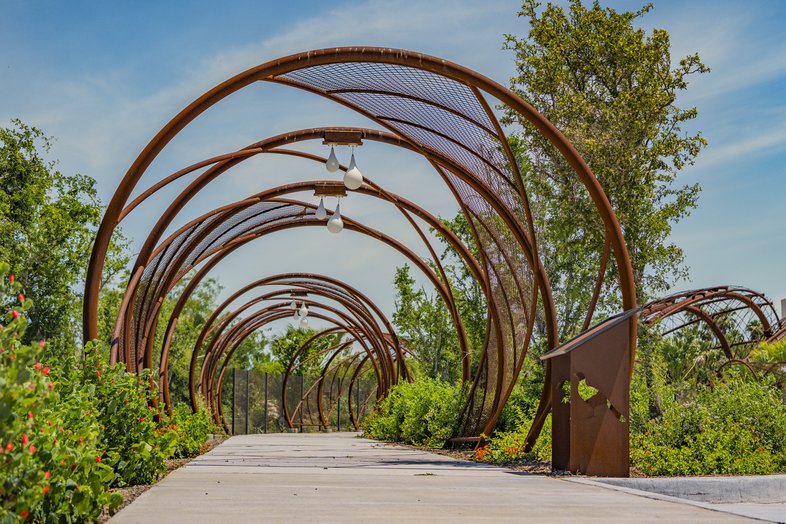
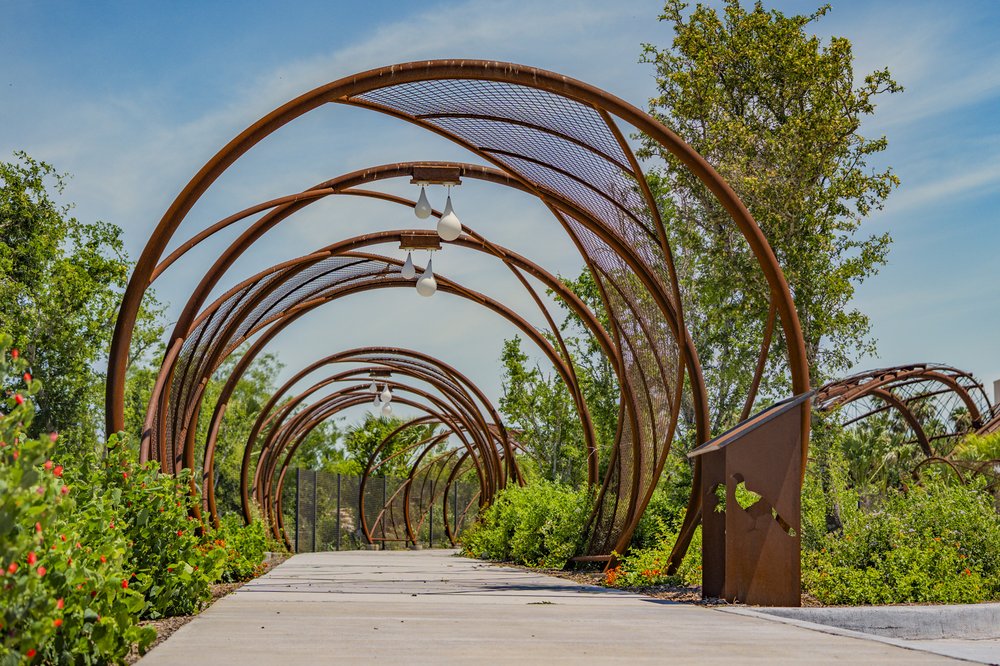
Arches frame an entrance walkway.
Jaime Villarreal
Arches frame an entrance walkway.
Jaime Villarreal
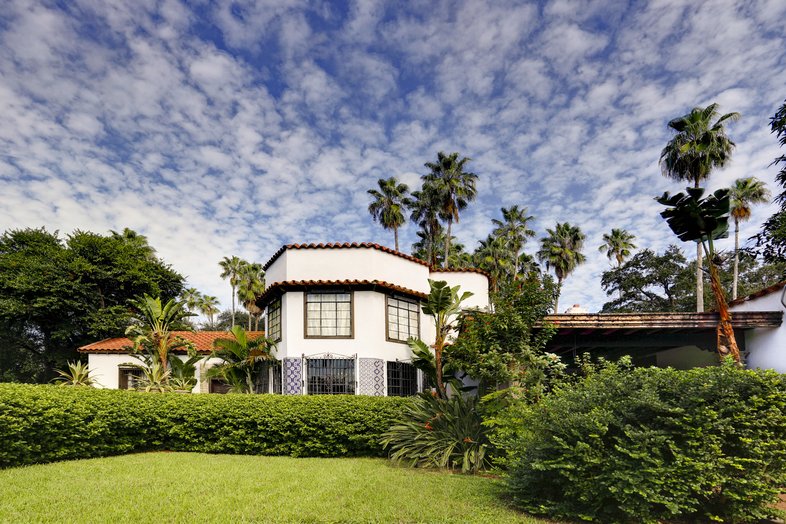
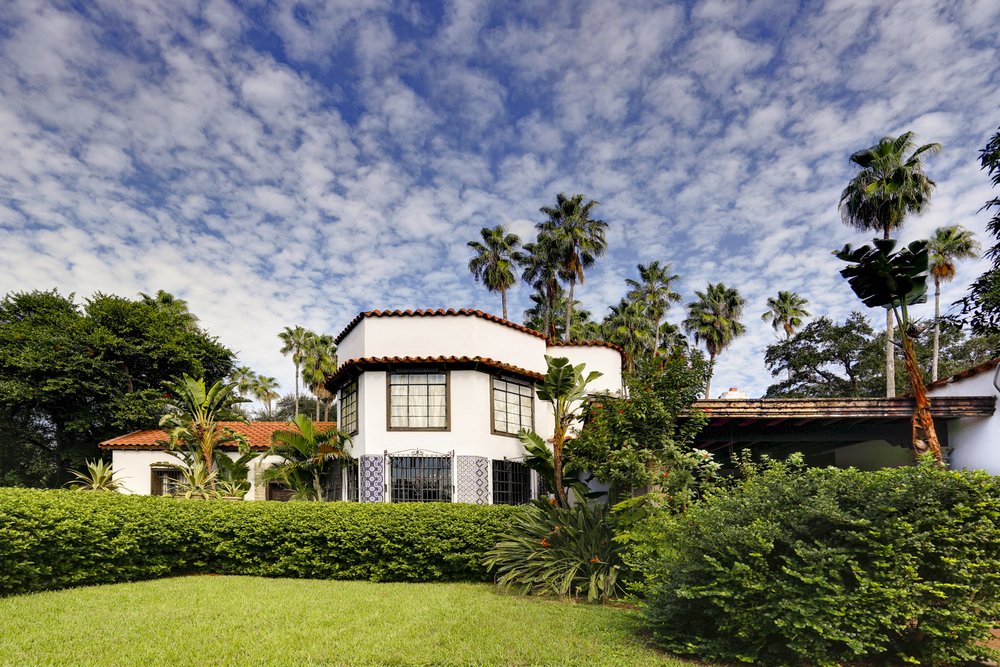
Quinta Mazatlán
Jaime Villarreal
Quinta Mazatlán
Jaime Villarreal
The Center for Urban Ecology, developed with partners including the University of Texas–Rio Grande Valley and the Texas Parks and Wildlife Department, is a 14-acre research and education hub focused on native plants, sustainability and biodiversity conservation. It acts as a “living laboratory” for urban greening, wildlife and environmental research to create healthier cities.
The two-story building celebrates the idea of minimizing environmental impact. The rooftop gardens and gathering spaces harvest rainwater to feed the wetland and pond below. Condensation from the air-conditioning is recycled back into the gardens. Bird-friendly glass deters the birds from fatally colliding with the building. And the historic "Mansion with a Mission" is stitched together with the new center by a canopy walk where visitors of all ages can enjoy a bird’s eye view of the 299 species of birds that frequent the oasis.
“We want everything we do to be an example of lacing the built environment together with nature,” says Colleen Hook, executive director of Quinta Mazatlán, adding that they have installed over 24,000 native plants on the additional property to sustain the birds and butterflies, while also creating a healthy environment for people.
Imagine school buses arriving in a parking garden — as children disembark the buses, they are engulfed in a magical tunnel made of vines and plants. While in the safety of the tunnel, they are encouraged to run, skip and jump their way to the entrance. After visiting the research facilities or receiving a lesson about South Texas ecology, they are released into the Children’s Garden. Among the boulders and tiny forests, children can splash in a scaled version of the Rio Grande that flows throughout the space. They can slide down the hill slide, balance on the cluster of logs or make up their own games with friends in a safe and welcoming environment. All elements that children learn about, touch and smell are native natural materials.
“When we met with Christine Ten Eyck, the landscape designer, the staff and I had notebooks full of ideas for her,” says Hook. “We wanted the kids, teachers and parents to feel immersed in nature, but not overwhelmed. The more confident they feel outdoors, the more they will explore the other parks and nature centers in the Valley.”
Hook’s vision cannot be contained in the confines of the 25-acre urban park. She and her staff deliver on the mission of restoring one backyard — or in this case, a schoolyard — at a time. They are installing “Tiny Forests” at seven elementary schools and plan to add more in the future. All 18 elementary schools in McAllen visit Quinta Mazatlán every year and now can continue their conservation education on their own campus.
The City of McAllen is planning the grand opening for the new Center for Urban Ecology in summer 2026.