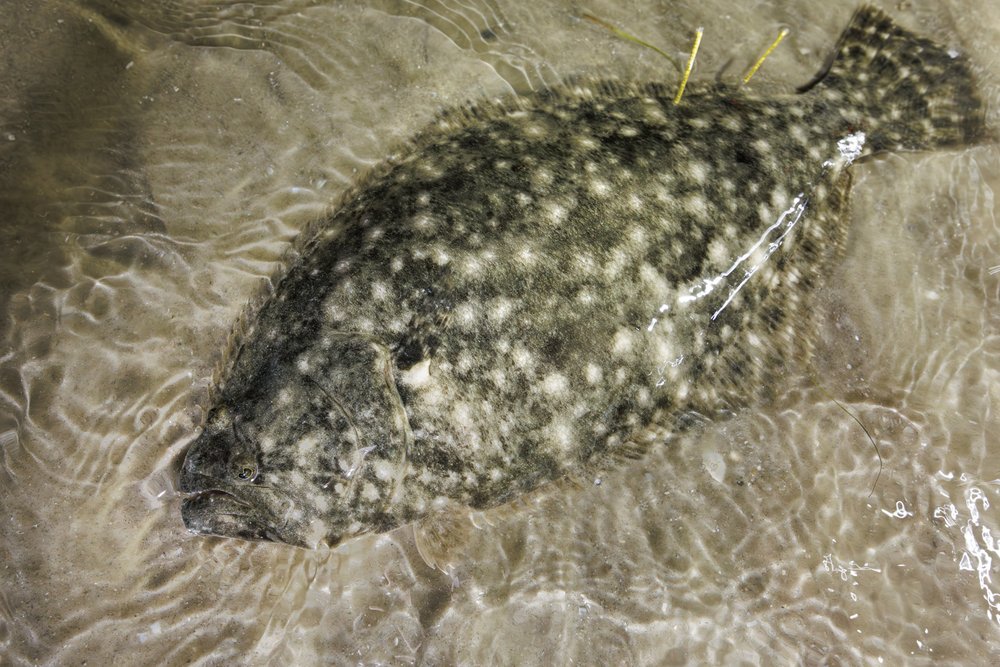
Standing over a shallow tray filled with southern flounder, hatchery manager Ashley Fincannon presses the handle of an old school clicker-counter while scanning flopping fish. She’s looking for the tell-tale signs of completed metamorphosis: dark pigmentation scattered with spots and two eyeballs set to one side of the fish’s flat body.
Selected juveniles are being prepared for release into their natural habitats after 40 to 50 days of hand-rearing in a hatchery — the final step of a meticulous process that defines the Texas Parks and Wildlife Department’s southern flounder stock enhancement program.
Fincannon has dedicated nearly two decades to this cause. “What we’re doing is making a difference,” she explains. “Our work supports both the fish itself and the future of Texas fisheries. I believe the flounder released from the hatcheries are now thriving, and hopefully they’re reproducing and adding back to the natural population on their own.”
Together, the CCA Marine Development Center in Corpus Christi and the Sea Center Texas in Lake Jackson have released over 1.4 million southern flounder since 2006 — all in an effort to bolster wild stocks and support the long-term stability of this beloved, yet declining, Texas species.
Fish are released into both Aransas and Galveston bays, covering a significant stretch of the Texas Gulf Coast where southern flounder are native.
“When we came out of COVID, we started breaking production records,” says Christopher Mace, director of the fisheries enhancement program at TPWD. “We used to average about 50,000 a year, but now we’ve exceeded over 300,000. The ultimate goal is to get them out as soon as possible into the natural environment.”
From Egg to Ecosystem
Few fish evoke the Texas coast’s essence quite like the southern flounder. Celebrated by anglers and revered for its delicate flavor, this staple species plays a vital role in the health of estuarine ecosystems.
But as wild flounder populations face decline from urbanization, habitat loss and rising water temperatures, the hatchery programs have been working hard to keep them stable.
“We source all of our broodstock from the wild,” says Fincannon. “We’re very concerned about genetic diversity, and we don’t do any type of genetic manipulation. Everything in our hatchery is designed to mimic their natural environment.”
Life at the hatchery during peak production season, which typically begins mid-November, is all hands on deck. Every single fish in the program is hand-reared and monitored by staff from conception to release.
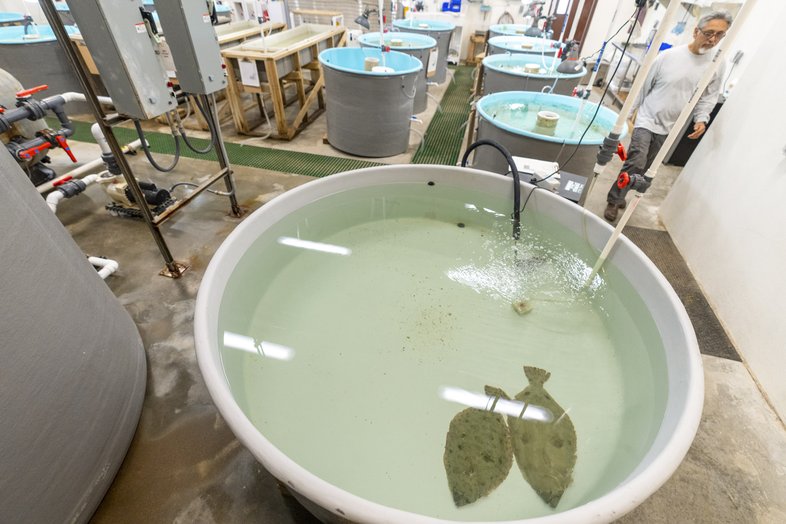
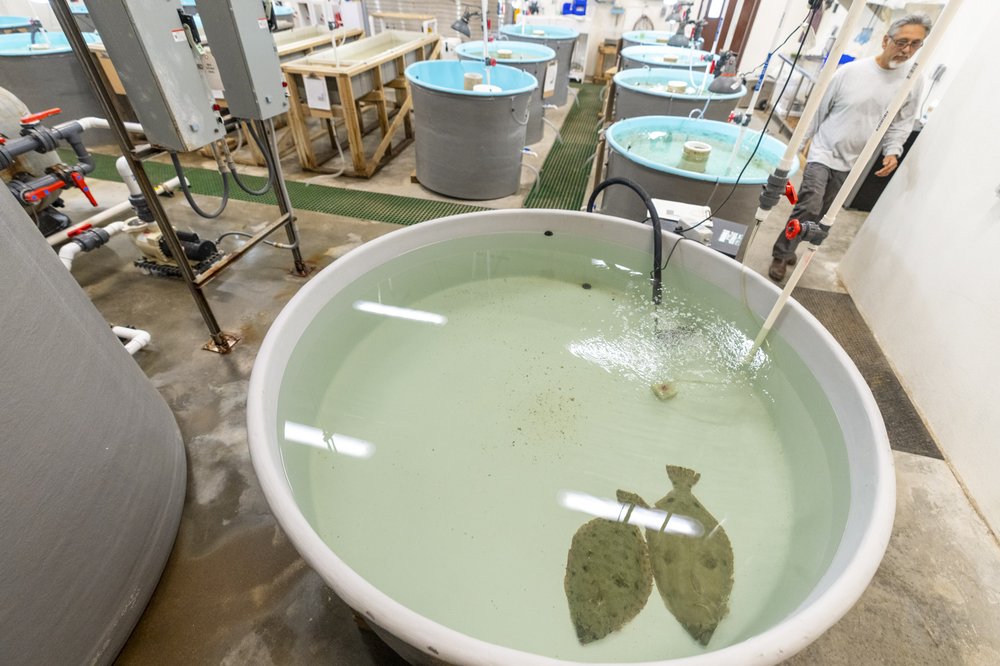
Flounder spawning in Corpus Christi.
Michael Miller | Texas A&M AgriLIfe
Flounder spawning in Corpus Christi.
Michael Miller | Texas A&M AgriLIfe
The Hatchery Process
Females are sedated with an anesthetic and carefully strip spawned 48 hours after hormone injections. The eggs are mixed with milt (a male's seminal fluid containing sperm) and salt water. Each batch is softly stirred by hand with a feather to ensure fertilization.
After hatching, the flounder are raised in incubators initially set to 18 degrees Celsius (64.4 degrees Fahrenheit), which gradually increase to 23 degrees C (73.4 degrees F) as they mature. Temperature plays a big role in their development, with research suggesting that warmer temperatures may masculinize genetically female flounder in the wild.
“They truly are a Goldilocks species,” says Mace. “Our staff is there every day taking care of them, even on holidays and weekends, making sure the water temperature and quality is just right for each stage of their life cycle.”
Around 30 to 35 days of life, southern flounder undergo a remarkable transformation called metamorphosis, where their bodies flatten out and their eyes come together. This is so they can lie flat at the bottom on the seafloor — making it easier to ambush prey and hide from predators.
“It’s really impressive that all of these fish go through the same change at the same time in their life cycle,” says Jennifer Butler, hatchery manager at Sea Center Texas. “These fish go through metamorphosis over just a few short days. The eyeball has to go from one side, across the top of the head, and travel through the head — where bone is broken down and reformed — all because their optic nerves and blood vessels are so delicate.”
In the wild, this process typically occurs in a calm bay. However, oftentimes flounder larvae are swept out into turbulent waters at a very young age. If exposed to the fluctuating temperatures and salinities of the sea early on, their survival can be severely affected.
“We’re giving these fish a head start by raising them through the bottleneck period, which is the roughest part of the flounder’s journey,” says Butler. “When we release them in the bay systems we’re making a large impact on their overall population.”
Mastering water temperature and timing is only half the battle. Keeping thousands of hungry, fast-growing flounders fed is a feat entirely on its own.
The Rotifer Challenge
A crucial element to flounder production is their ever-growing need for rich, microscopic food sources.
“The success of our flounder stock enhancement program is a direct correlation with the success of our live feed cultures, or rotifers,” says Butler.
Rotifers are microscopic invertebrate organisms commonly used to feed captive fish. TPWD hatcheries further enrich them with highly unsaturated fatty acids, which they naturally lack, to provide essential nutrition to the flounder larvae as they grow.
“It’s kind of like sneaking medication to your dog by putting it in a hot dog or in a piece of cheese,” jokes Butler. “In this scenario, the rotifers act as an organic container for all the nutrients a growing flounder would need.”
It’s a lighthearted analogy, but the science behind it is precise. The fatty acid enrichment process is carefully calibrated to mirror the nutrition profile of what flounder larvae would encounter feeding naturally in the wild.
“They are not easy to maintain,” admits Butler, noting their susceptibility to contamination.
When rotifers are raised in such high densities, available oxygen becomes an issue. Protozoan contaminants, known as ciliates, thrive in these low oxygen conditions and outcompete the rotifers — oftentimes taking over and depleting rotifer populations with surprising speed.
“It’s a challenge every year to make sure we have all of the feed items in place for our production,” says Fincannon. “We usually have one person dedicated to keeping the populations stable, and cleaning out their tanks constantly.”
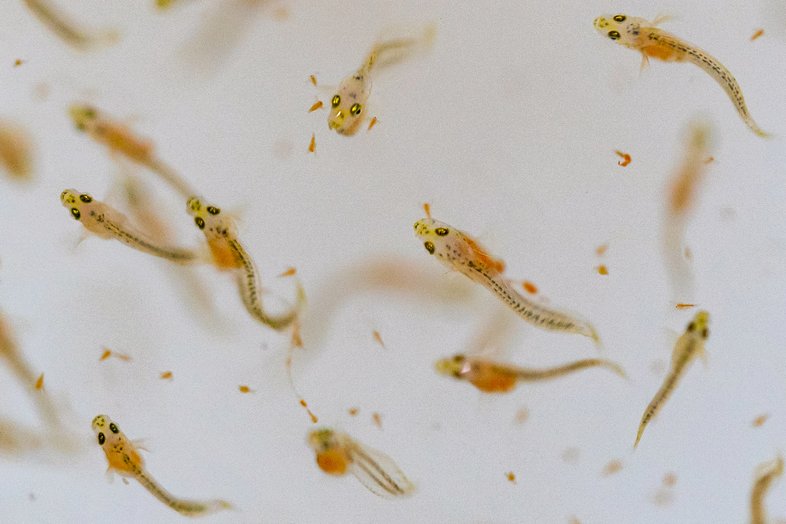
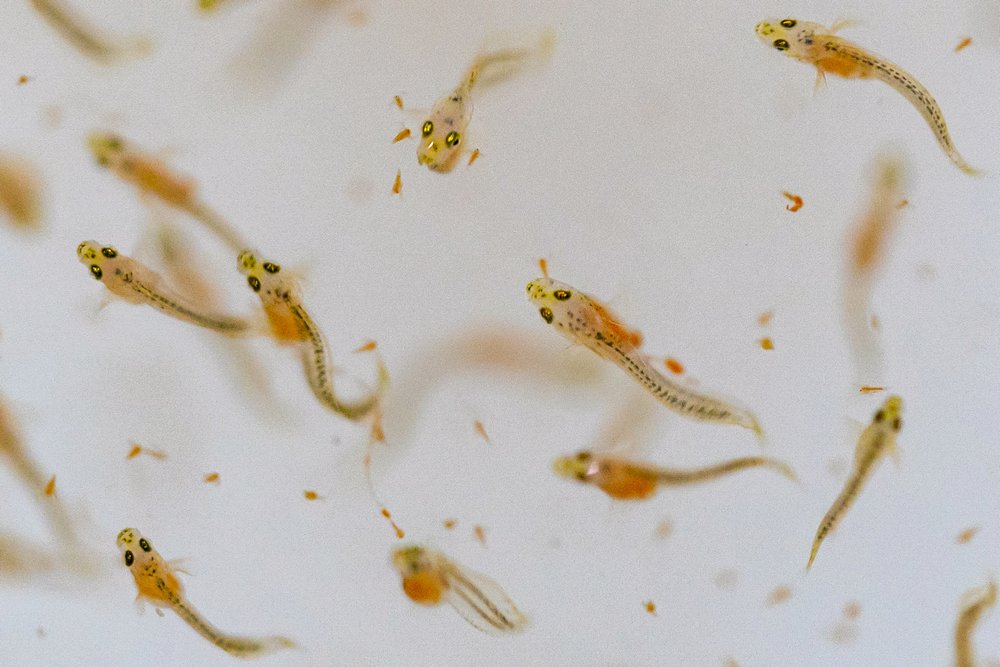
Flounder larvae before their metamorphosis.
Texas A&M AgriLIfe
Flounder larvae before their metamorphosis.
Texas A&M AgriLIfe
A Passion for Preservation
Across each facility in the Texas’ southern flounder stock enhancement program, one thing remains apparent besides their success in releasing thousands of juveniles each year: passion.
The program was a result of 10 years of intense research and development before the hatcheries could establish broodstock of their own, with the first spawning taking place in 2009. Both Fincannon and Butler were there from the very start, and have seen these facilities grow from the ground up.
“This is not an easy job, and flounders are a difficult species to work with,” says Butler. “But I love coming into work every day knowing that there are problems that I get to solve. Sometimes, whenever I see pictures from my friends or family catching flounder along the coast, I always think: is this one of my fish? It’s a good feeling to know that we play such a huge role in their survival.”
Mace echoes that sentiment.
“As the first state-operated hatcheries, our staff are the leading experts on this; nobody’s raised more flounder,” says Mace. “During release, we siphon them out one by one into their natural habitats. I mean, they almost have names at that point — we really care for them and do everything we can to keep them happy, healthy and growing quickly.”
That commitment extends beyond the incubators. TPWD scientists are investigating how water temperature and other environmental conditions influence phenotypic sex of the southern flounder, wanting to ensure that warming post-release environments don’t skew the male-female population ratio over time.
And so, the ritual continues. Batch after batch, Fincannon and Butler stand watch over each flounder — clicker-counters in hand — making sure that all the fish under their care make it back to the Texas coast where they belong.