About 20 years ago, East Texas rancher Bob Sanders heard oilman T. Boone Pickens make a prediction about the future of water in Texas. “He was saying that years from now, water is going to be the most valuable asset, more than oil,” says Sanders. “That stuck with me.”
Earlier this year, Sanders became the first person in more than two decades to donate to the Texas Water Trust, a conservation tool established in the 1990s to help preserve water for environmental purposes. The Water Trust was created as part of Senate Bill 1 in 1997, the legislation that created Texas regional and state water planning as we now know it.
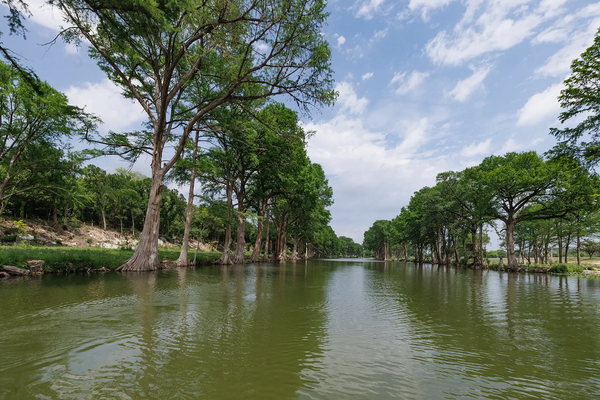
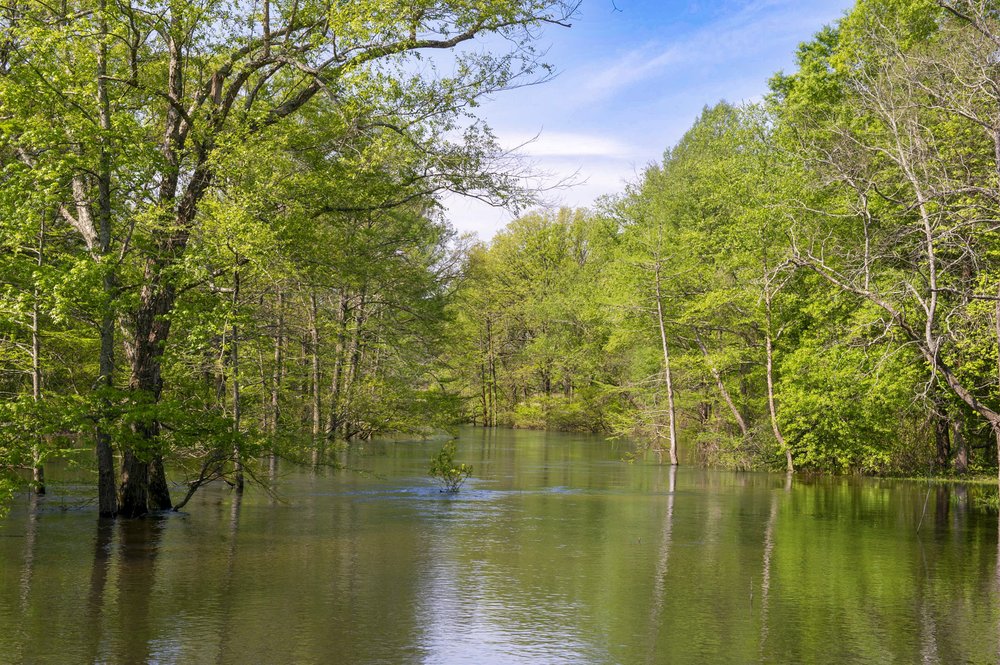
Since its establishment, the Water Trust has seen only three donations. The first, in 2003, was along the Rio Grande, and the second, in 2006, was along the San Marcos. Now, 20 years later, Sanders has added a donation along a 2.6-mile stretch of Big Cypress Bayou, a waterway that connects Lake O’ the Pines, the region’s main water supply, to Caddo Lake, the state’s largest natural lake.
As Texas faces water shortages in coming years, donations like this one are increasingly important. When landowners donate water to the trust, they commit to leaving the donated water in the river or stream instead of piping it off for irrigation or other uses. People can choose to donate for a set period of time, or in perpetuity. The Texas Parks and Wildlife Department can help manage the water in the trust, which includes monitoring flows and making sure the portion of the river is receiving the water it should, as well as submitting water use reports to the Texas Commission on Environmental Quality.
Sanders’ property, located outside of Jefferson, suffered in the 2011 drought. “We were the last ranch around here to run out of grass, but we had to ship our cattle,” he says. “Then in May of 2013, we’ve got a 75-acre lake with cypress trees in it, called Little Caddo — it was bone dry.”
Concerned about the future of water on his land, Sanders reached out to organizations including TPWD, Caddo Lake Institute and the Army Corps of Engineers. They connected him with The Nature Conservancy, which bought a portion of Sanders’ water rights and placed them in the trust.
To Sanders, donating water rights is a way of partnering with a larger organization to help keep water in the region. “What it’s doing is giving us a seat at the table for how the water in our watershed will be used,” he says. “We say it needs to stay here and prosper. Our water needs to create our jobs. We don’t need to ship it to Dallas.”
Big Cypress Bayou is an excellent candidate for a Water Trust donation, says Marty Kelly, water resources program coordinator at TPWD. The water body is one of few in the state with no established standards for environmental flows, a term used to describe the water needed to maintain ecologically healthy rivers and bays. “It’s all just voluntary, and so being able to have folks in that water basin add these flows helps in that regard,” Kelly says. “Additionally, there’s a bunch of critters out in that area, fish and mussels that are very dependent on these kinds of flows.”
The water from Big Cypress Bayou flows into Caddo Lake. “It’s the largest natural reservoir in Texas, and we’ve got the paddlefish there, which is an iconic East Texas species,” says Kelly. “They’re reliant on flows too — they get their spawning cues in spring and early summer when they start spawning, and so being able to keep that water in the creek in the river helps their population overall.”
Water rights in Texas have historically been complicated. Surface water is by default owned by the state, but landowners can apply for a “water right” from the TCEQ that allows them to use water for irrigation or other purposes. With a water right comes reporting responsibilities and fees.
Donating to the trust — even for a short period of time — can give landowners a reprieve from the fees and reporting while they plan for the future. “It’s something that landowners can do to protect their water, so if you are an irrigator and you know you have all this land and you're not sure if you’re going to continue to produce cattle or crops, you don’t know if you're going to sell your land, you can put your water in the trust for a period of five or 10, or however many years, and we can structure that dedication in a way that it protects the water,” says Kelly.
As the state’s population increases, Texans will need to continue working to manage our limited water resources. Conservation tools like the Texas Water Trust can be a piece of that puzzle.
“The problem is people without an ag background or whatever don’t realize the valuable resource that water is,” says Sanders. “They think they turn the faucet on and it will always be there, and it’s just not the case.”