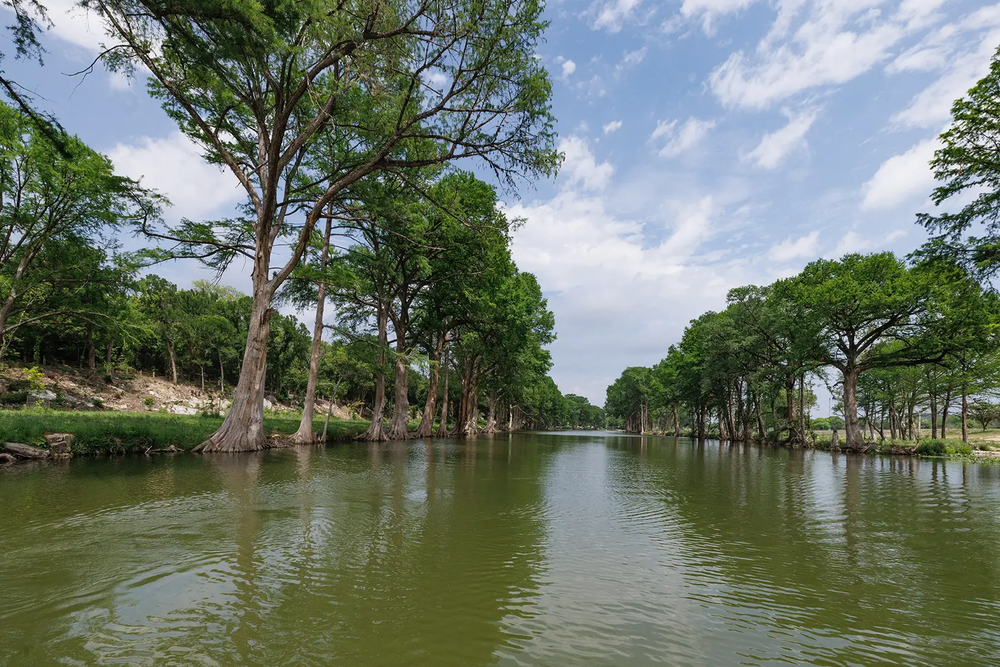
Until July 4, 2025, Erin Mosty Wofford’s River property in Center Point was a quintessential Hill Country retreat.
Bald cypresses towered over the Guadalupe River, their gnarled knees snaking toward the water’s edge. Sycamore and cedar elms sheltered stands of tall grass where deer and rabbits browsed at dusk. Nearly every month Wofford’s family gathered by the water, tailgating on a stretch of flat rocks at the river’s edge and listening to the Guadalupe burble around a bend.
All that changed with the Independence Day flood. Up to 12 inches of rain fell over the South Fork of the Guadalupe, and in Center Point, in southwestern Kerr County, the river crested at more than 21 feet. The July 4 floods killed at least 137 people, most of them in Kerr County; dozens were rescued after terrifying hours being swept downriver and clinging to trees. Wofford’s family was safe, but the floodwaters rendered the property unrecognizable. When the river receded, Wofford’s land was littered with broken limbs and trunks of trees that had washed downstream. The trees that remained listed dramatically, as though tugged by unseen strings, and were stripped of their leaves. “It just looked like a bomb went off,” Wofford says.
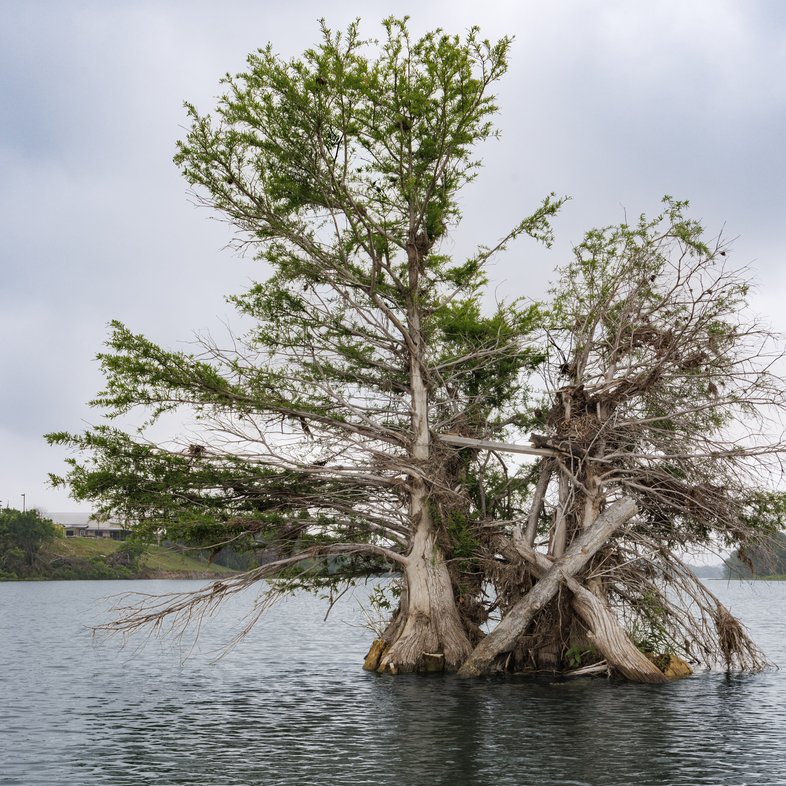
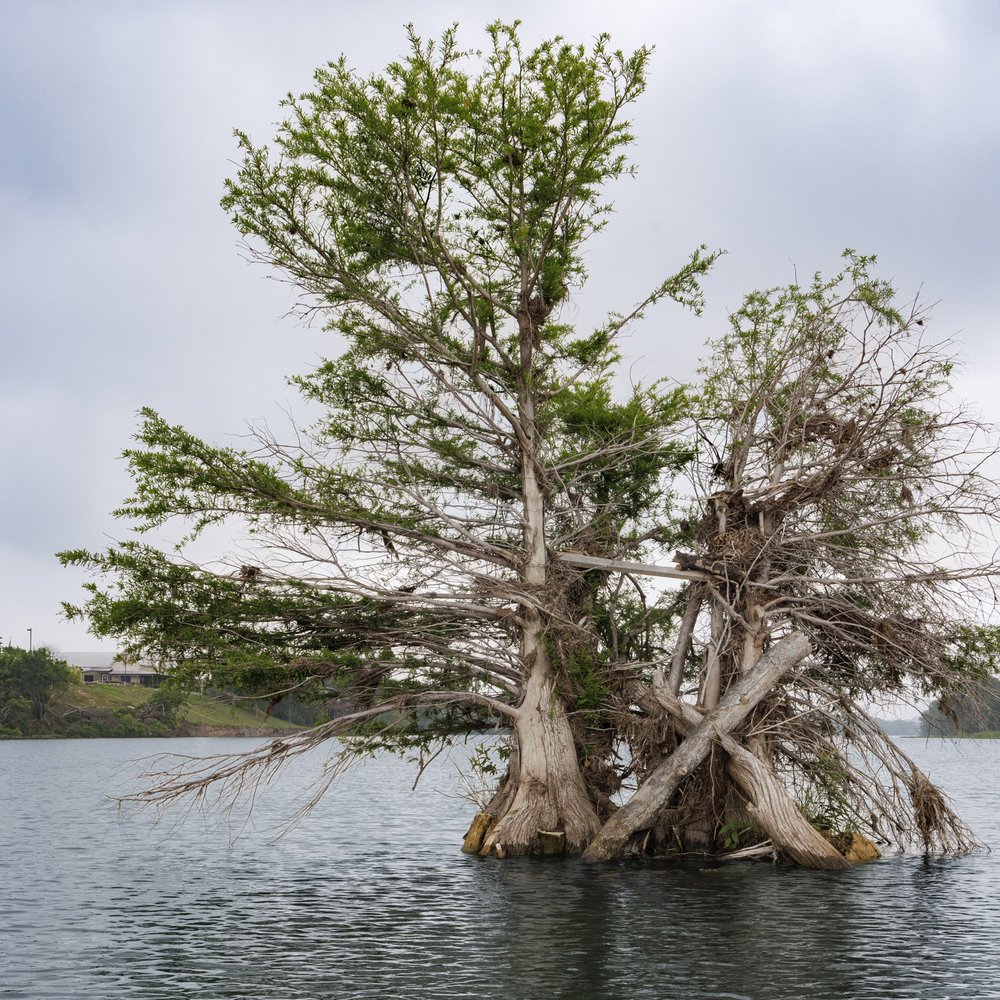
Flood debris lodged in a tree on the river.
Flood debris lodged in a tree on the river.
Some landowners facing this devastation cleared all the debris as soon as they could, hoping that would restore a sense of normalcy. But Wofford, thanks in part to guidance from the Texas Parks and Wildlife Department, left most of the organic material in place. Over time, it will stabilize the riverbanks and return nutrients to the soil. This approach to river restoration helps the land absorb more water and slows the path of future floods, building a more resilient landscape — and potentially saving lives. It just takes time.
“For a lot of people, it’s hard to look at their land because it’s a little bit sad, so they just wanted to fix it,” Wofford says. “But it’ll get there. It’s just going to take a lot of patience.”
For the past year, TPWD staff have been helping the Guadalupe’s human neighbors become patient partners in the river’s recovery. They’ve supported landowners like Wofford in making strategic choices about debris management that will help the plant community rebound. They’ve led volunteers in planting more than 1,500 trees in public parks. They are monitoring how the riverbed and the fish populations recover over time, which will help the department respond effectively to future floods.
Floods are a natural part of a river’s life, and the Guadalupe will restore itself. Humans can support the process, says Ryan McGillicuddy, the watershed conservation team leader with the Inland Fisheries Division.
“The river knows how to heal,” McGillicuddy says. “After moments when our lives have been impacted, we have to go through processes of grief, and it’s messy. The river is the same way: it’s messy for a little while, but if we trust the process, it knows how to use that mess to heal itself.”
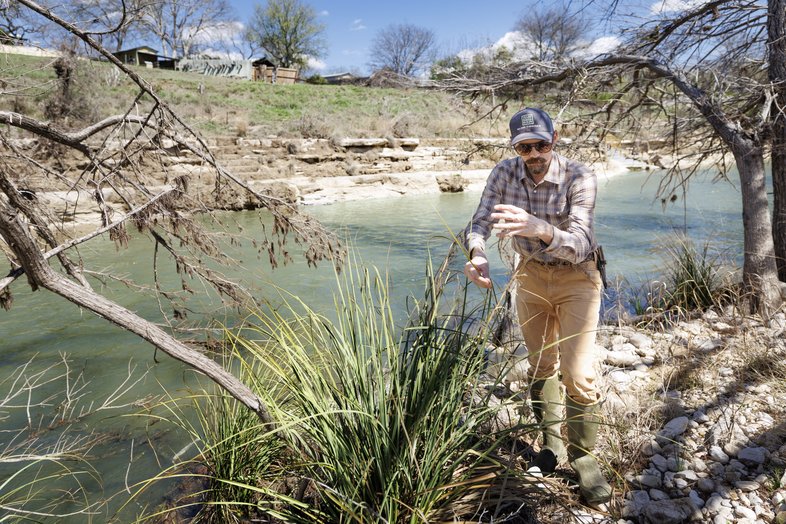
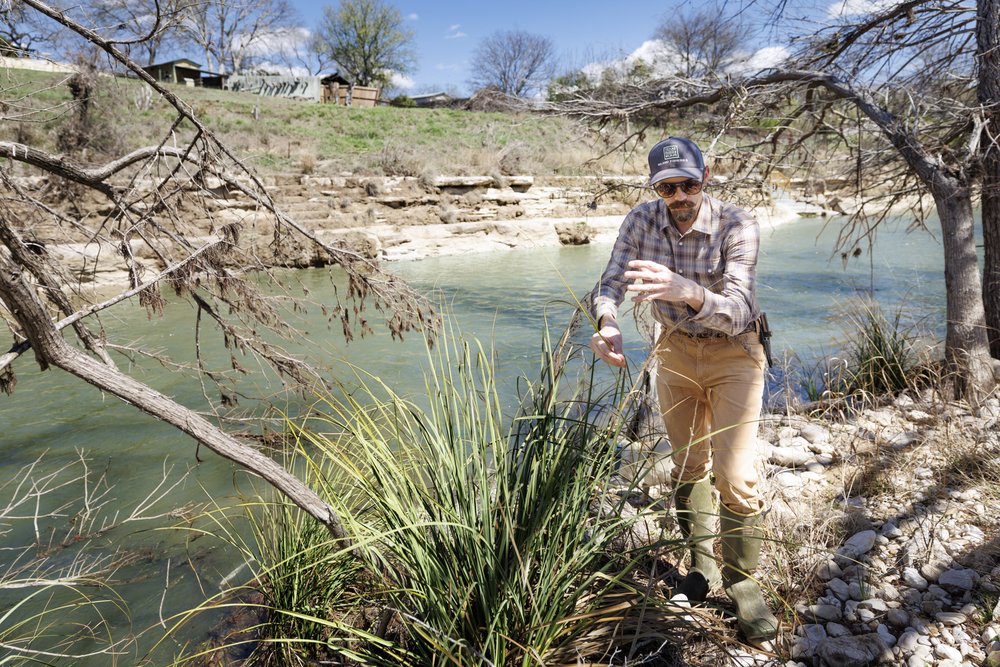
Ryan McGillicuddy shows a bank-stabilizing plant.
Ryan McGillicuddy shows a bank-stabilizing plant.
After the Flood
Although floods are a normal part of river dynamics, their destructive force can be overwhelming. In addition to claiming lives and ruining homes and businesses, the waters removed more than half of the vegetation along the Guadalupe in Kerr County, according to an analysis of post-flood aerial imagery conducted by watershed ecologist Clint Carter of the Bandera County River Authority and Groundwater District.
A week after the flood, TPWD watershed restoration biologist Gaby Tamez helped staff at Kerrville’s Riverside Nature Center rebuild an outdoor field lab. “I walked down to the river, and I was completely dumbstruck,” she says. “I understand river systems, or at least I thought I did. To see that sheer destruction was mind-blowing.”
Still, she knew that destruction was part of how a river’s resources are redistributed in floods. Sediment is scoured from the river channel and deposited downstream. Fish, too, are displaced, but they often go on to reproduce in large numbers. Trees bend and break, but where they fall, they help rebuild the riverbank and support new growth. “The river is alive and balancing itself out during these flood events,” Tamez says.
Tamez and McGillicuddy were on the ground in Kerr County from the beginning to share this message and support landowners however they could. But ecological restoration took a backseat to the urgent rescue and recovery efforts. By August, most of those searches had concluded, and property owners were staring at 20-foot-tall piles of debris, wondering what to do. With longtime riparian stewardship partners including the Hill Country Alliance, TPWD convened community conversations in Ingram, Kerrville, Center Point and Comfort. Attendees were desperate for guidance about what to do with their land.
Addressing the concerns of landowners required an understanding of river ecology and a sensitivity to human psychology, says Daniel Oppenheimer, Hill Country Alliance’s land program director.
“From an ecological standpoint, there’s a whole list of reasons why ‘wood is good,’ in terms of bank stability and habitat for terrestrial and aquatic species,” he says. “But we told folks, ‘If you need to get rid of that wood because it is a visceral reminder of the tragedy that happened, we get it. You need to do what’s best for you and your family.’”
Some contractors and well-meaning volunteers launched a cleanup that ultimately would make it harder for the river to recover. Northern Hendricks, whose riverfront property is a few miles downstream from Wofford’s, says she was grateful to receive help from thoughtful volunteers who treaded carefully on the flood-battered landscape. But she noticed a different approach on other properties. “We had two disasters,” she says. “We had the flood, and then we had the cleanup disaster.”
Working to remove the debris piles quickly — and paid by the volume of rubble they removed — cleanup crews “removed more material from the landscape than is preferable, from a fish and wildlife perspective,” McGillicuddy says. In many cases, the crews scraped the ground clean, leaving no plants at all. Their heavy equipment compacted the soil, stymying future growth.
TPWD, HCA and other partners presented an alternative strategy at a series of November workshops informed by the questions landowners had raised in August. Leaders distributed nearly 7,000 pounds of a native grass seed mix to restabilize the banks. At a workshop on Wofford’s land, attendees picked their way along riverbanks, past downed trees with clumps of dead vegetation still lodged in their upper limbs.
Standing near the water, McGillicuddy suggested the 34 participants choose areas for targeted river access — such as spots for grilling and swimming — and designate the rest of the riparian area a “grow zone,” where plants and debris are left largely alone. The downed trees in the grow zone would guard against erosion and act as natural caging to protect new growth from being gobbled by deer. In time, they would break down and enrich the soil.
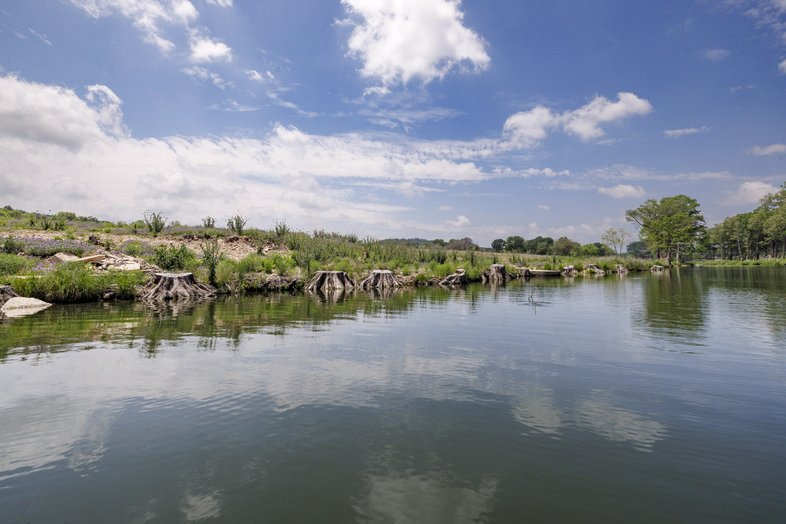
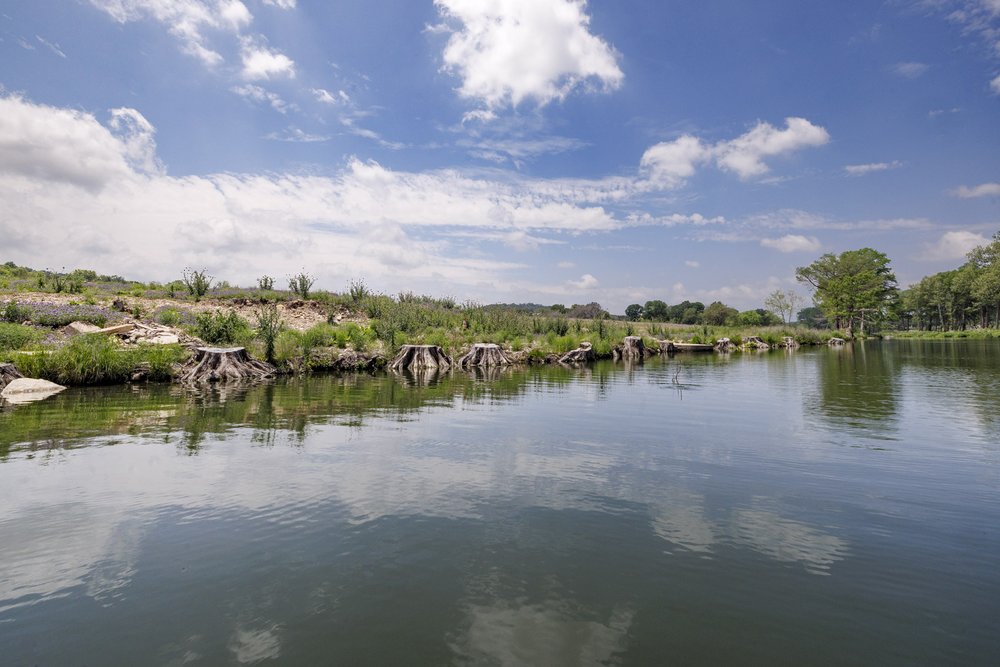
Cleanup efforts removed trees and other vegetation from the banks of the Guadalupe.
Cleanup efforts removed trees and other vegetation from the banks of the Guadalupe.
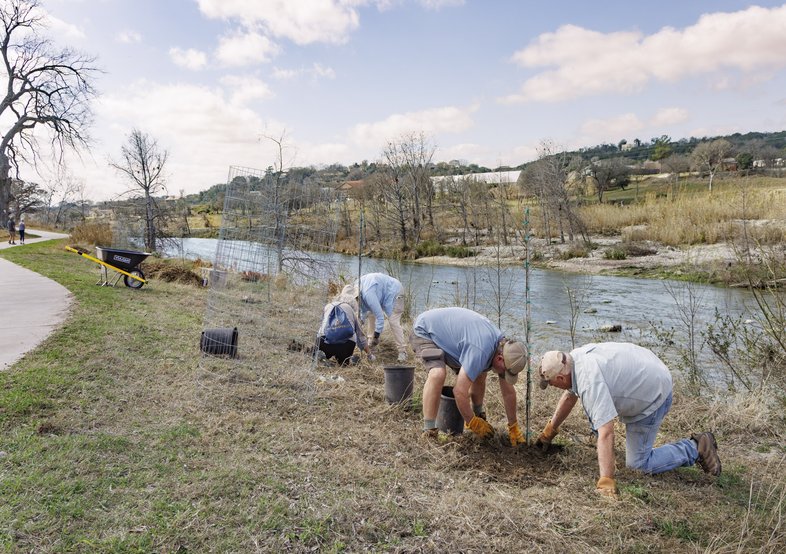
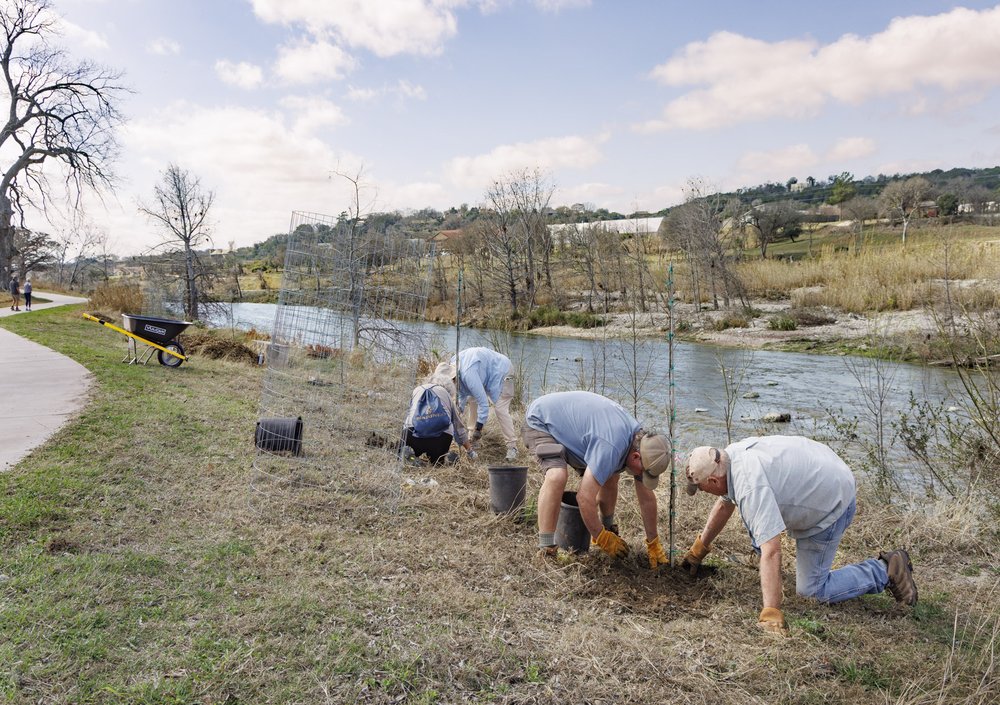
Volunteers in Kerrville replant trees along the river.
Volunteers in Kerrville replant trees along the river.
Lessons from the Blanco
Most of McGillicuddy’s and HCA’s recommendations were based on the experiences of Blanco River landowners after the 2015 flood. “Blanco taught us about not just the process of restoration and how plants respond to flooding, but how people respond to flooding, disaster and grief,” McGillicuddy says.
Many Blanco River landowners — like those along the Guadalupe — had prized the parklike look of their property, with manicured grass stretching to a line of cypresses at the river’s edge. After the flood, some, with help from TPWD, shifted their approach to foster a more resilient landscape.
D’Anna Tindal was one of them. The stretch of river at her Wimberley property is typically shallow enough to wade, but on Memorial Day 2015, it rose at least 40 feet above its bed and knocked down the enormous cypresses and most of the other vegetation.
“After the flood, we were just so devastated at how bald it looked,” Tindal remembers. “When Ryan started talking to me about how we could help the health of the river and maybe even help manage floods, I was all for it.”
She decided to create two paths to the water and leave the remaining riverfront as a grow zone. In March, we followed one path to the river as cardinals and cricket frogs sang along with the babbling stream. Young sycamores stood 20 feet tall on the bank alongside bushy bluestem and Roosevelt weed, hardy colonizing species that aren’t picky about where they grow and that create the conditions for other species — like cypress — to follow. TPWD seeded the bank with switchgrass and eastern gamagrass, and the property’s natural seed bank also thrived when Tindal stopped mowing.
We stepped closer to the water, feeling the ground squish beneath us. Our shoes were on spikerush, one of several sedges TPWD planted in the once-bare gravel at the river’s edge. Over the past 11 years, these perimeter plantings have expanded into the water, capturing sediment and actually rebuilding two vertical feet of riverbank — McGillicuddy has the before-and-after photos to prove it.
Regaining Control
After the 2015 Blanco flood, McGillicuddy and his colleagues realized people wanted to clean up their riverbanks partly to restore their sense of control. “People want to do something,” he says. Even though the plants would eventually return on their own, TPWD partnered with nurseries to grow 15,000 riparian grasses and sedges and distribute them to landowners. Planting them would jumpstart the regrowth and give people a sense of investment in the river’s recovery.
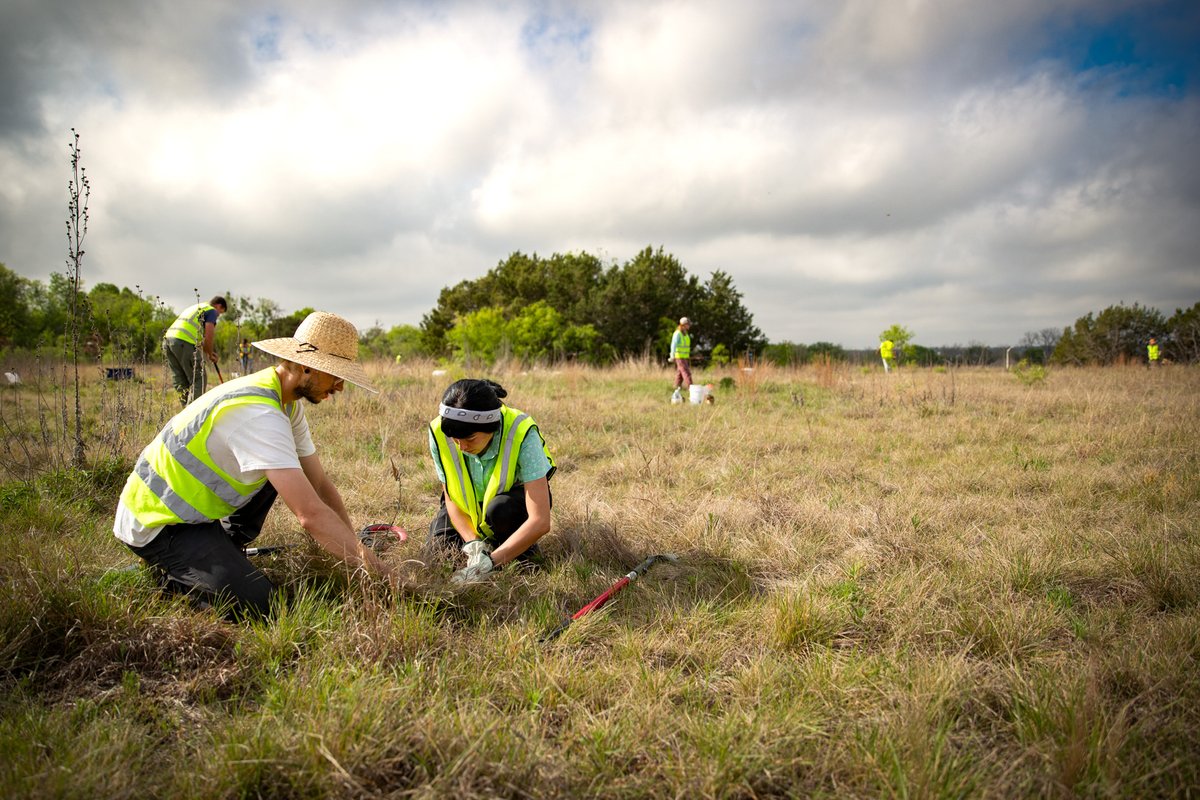
A similar strategy is underway now along the Guadalupe, with the Hill Country Alliance managing a growout of thousands of grasses and sedges for distribution. It’s a complement to the San Antonio Botanical Garden’s effort to grow 50,000 trees from rescued seeds and plant them with the help of volunteers. That project will take several years. In the meantime, Tamez is helping Kerr County residents accelerate the return of their riparian forest using a method called live staking. Many riparian trees, including sycamore and black willow, are adventitiously rooting, meaning that a stem or branch, if planted, can grow into a new tree. Sixty volunteers, including many recruited through the long-term recovery group Kerr Together, planted more than 1,500 such trees at Kerrville’s Riverside Nature Center and adjacent Lowry Park.
Not all of those trees will survive. “We are working in a scoured environment where the wildlife used to congregate, and now there is no food on the landscape,” she says. “And we are planting a buffet.” She showed volunteers how to surround tiny saplings of cypress with branches of fast-growing sycamore and black willow, and surround those with “sacrificial snacks” of buttonbush and roughleaf dogwood. She figured 20 percent of the trees might make it.
Tamez demonstrated the same live-stake planting technique at the November workshop on Wofford’s land. When McGillicuddy returned to check on the stakes in March, some had been devoured by beavers. But others stood defiant.
From a distance, Wofford’s property still looked battered and covered in debris. Yet, on closer inspection, a redbud tree that survived the flood had begun to bud out in brilliant fuchsia. Butterflies flitted along the edge of the rapids, cavorting in the spray. And in a few felled cypresses, the fruit of Wofford’s patience was visible. From a living limb, nearly hidden behind a tangle of dead branches, rows of tiny green leaves were just beginning to emerge.