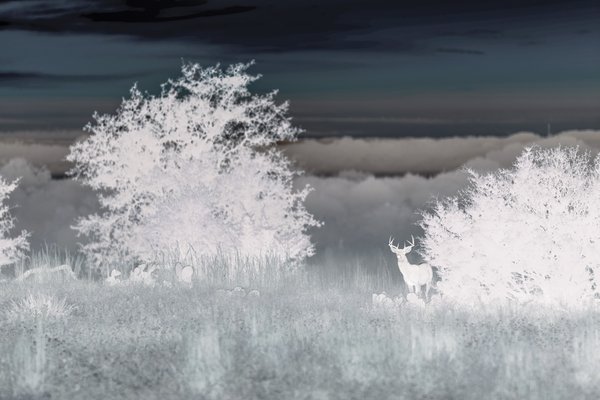
Outside, with binoculars in hand, your eyes land on a twitching muscle, or a face, or a color or texture that doesn’t quite match the surrounding vegetation. You feel the excited joy of spotting wildlife; this is why you love to spend time out here.
But then, a closer look reveals something else — ribs and hip bones visible through a raggy coat, a skinny neck struggling to hold up a head, a flesh wound, maybe even a major injury. The joy leaves as quickly as it showed up, and sadness and concern take hold.
Nature can be incredibly unforgiving for wildlife. Diseases and injuries are common. The question of how to respond can land heavily on the shoulders of state wildlife agencies, which must strike a balance between avoiding too much intervention and addressing the potential for more widespread harm. Lately, the culprit has been New World screwworm (NWS), concerns about which have taken Texas by storm since the U.S. Department of Agriculture (USDA) confirmed the nation’s first infestation in six decades in South Texas on June 3, 2026. The host was a 3-week-old beef calf in La Pryor, whose umbilical cord attachment point played host to the parasitic larvae.
The good news? The calf was treated and survived the ordeal. The bad news? Ranchers and landowners across Texas have spent the summer and fall fearing similar infestations in their own livestock herds. Hunters and wildlife enthusiasts should also be on the lookout, since screwworm can infest wild animals as easily as it can infest livestock.
One especially prone species is the white-tailed deer. Since screwworm flies tend to live in brushy areas near water, they’re highly likely to overlap with whitetails, which also prefer that type of habitat. When the whitetail rut, or mating season, gets into full swing, bucks are likely to wound each other with their antlers, creating plenty of opportunities for larvae to establish in what would otherwise be mature, healthy deer. Newborn white-tailed deer fawns are also highly susceptible to umbilical infestations.
For Texas deer hunters, the risk of disease in whitetails isn’t exactly new or novel. New World screwworm is just one of a few diseases or conditions that could impact the highly popular game species. Other deer diseases include chronic wasting disease (CWD), epizootic hemorrhagic disease, anthrax outbreaks and others. That list might sound daunting. But hunters, landowners and wildlife watchers have plenty of opportunities to support and contribute to the Texas Parks and Wildlife Department’s efforts to monitor and respond to these various deer ailments.
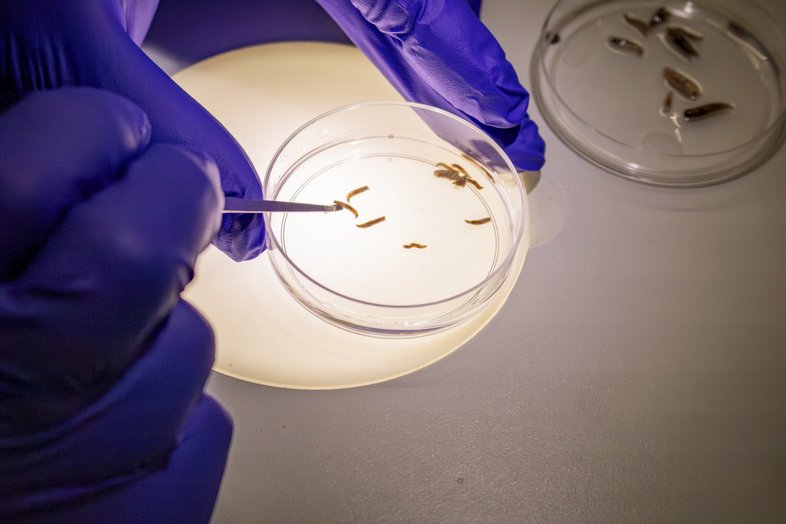
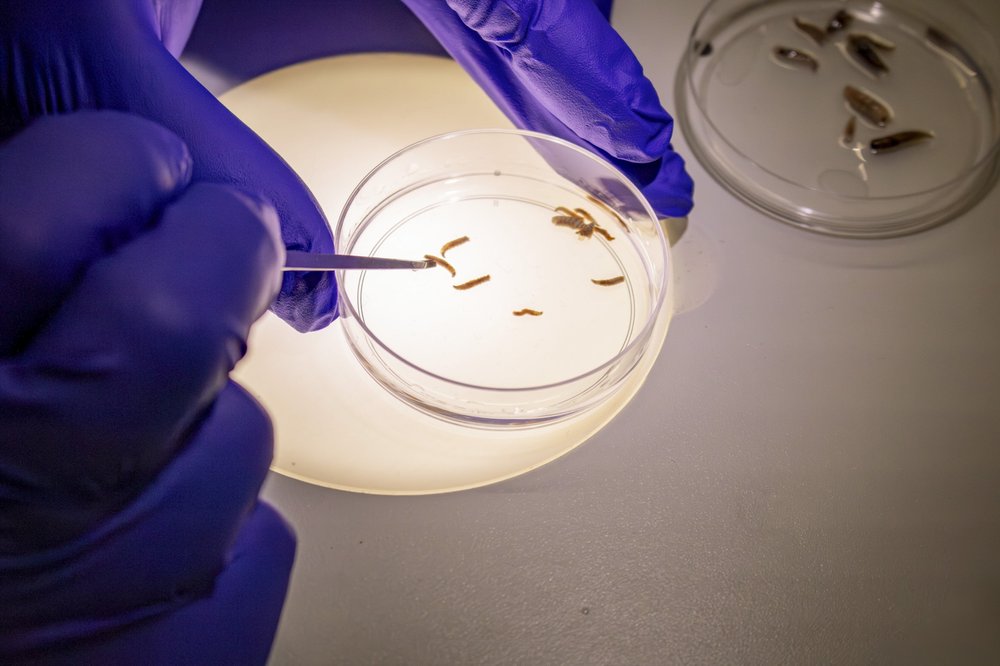
New World screwworm larvae eat living tissue.
Mary Pfeifer Texas A&M | Veterinary Medical Diagnostic Laboratory
New World screwworm larvae eat living tissue.
Mary Pfeifer Texas A&M | Veterinary Medical Diagnostic Laboratory
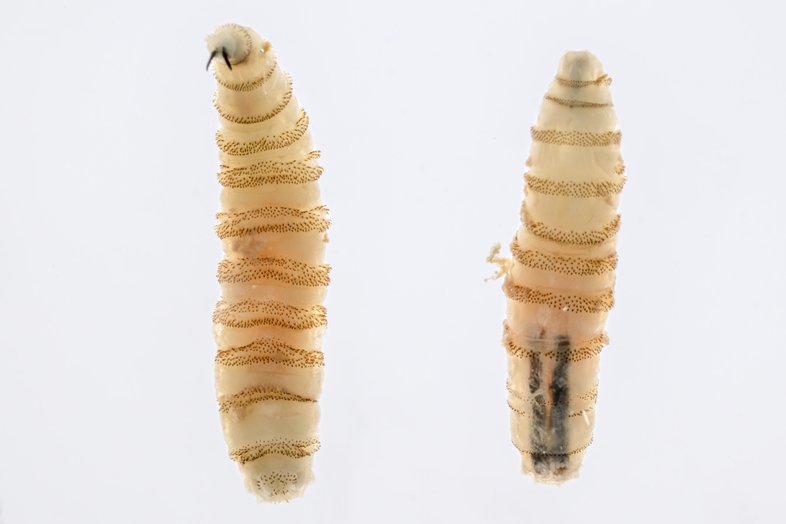
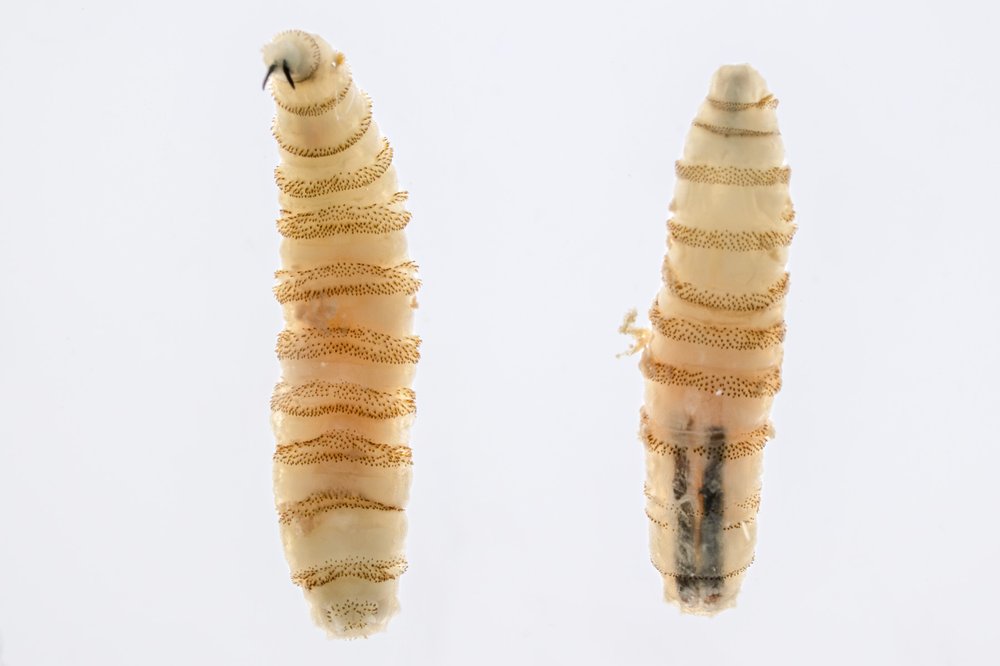
The hooked mouthparts of New World screwworm can cause extensive damage to tissue.
Hannah Lang | Texas A&M AgriLife
The hooked mouthparts of New World screwworm can cause extensive damage to tissue.
Hannah Lang | Texas A&M AgriLife
New World Screwworm
As wildlife veterinarians with TPWD, Dr. Sara Wyckoff and Dr. Hunter Reed are well-versed in monitoring large landscapes for wildlife diseases like New World screwworm. In mid-September, they had just returned from a days-long duck tracking project, and there had yet to be any detected cases of New World screwworm in Texas wildlife.
“It certainly hasn’t been for a lack of looking,” Reed says. “We have done some 12,500 hands-on inspections across the state. This includes deer, exotic wildlife, doves, ducks … this parasite infects all warm-blooded animals, so we’ve done a very thorough inspection on a wide variety of species.”
New World screwworms are larvae or maggots of the Cochliomyia hominivorax fly, which can cause the painful condition screwworm myiasis. The flies lay eggs in open wounds or orifices of live tissue. These eggs hatch into dangerous parasitic larvae, or maggots, which burrow or “screw” into flesh with sharp mouth hooks. Screwworms not only infest livestock, but can also affect pets, humans and wildlife.
In Texas, around 95 percent of the land is privately owned. As a result, monitoring for wildlife disease requires TPWD biologists and veterinarians to engage with willing landowners to get access to wildlife habitat on private ground. In the case of screwworm monitoring, TPWD works with other state and federal agencies, such as USDA and Texas Animal Health Commission, and private landowners to conduct and promote surveillance in livestock and wildlife species.
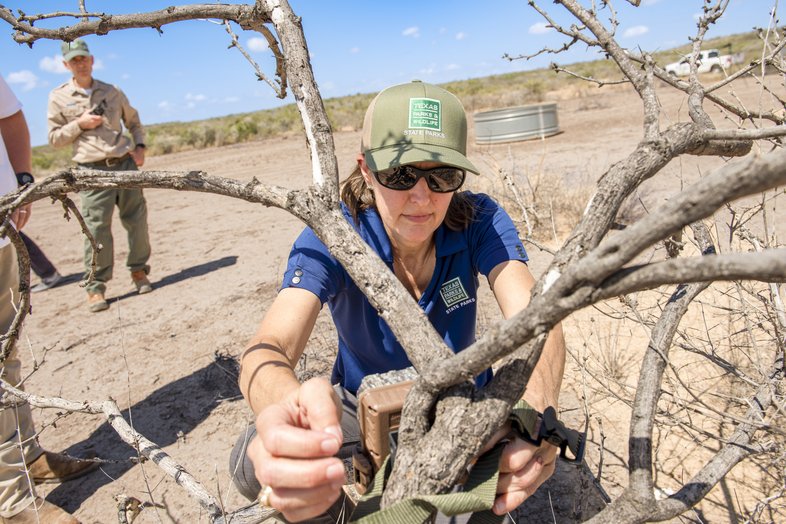
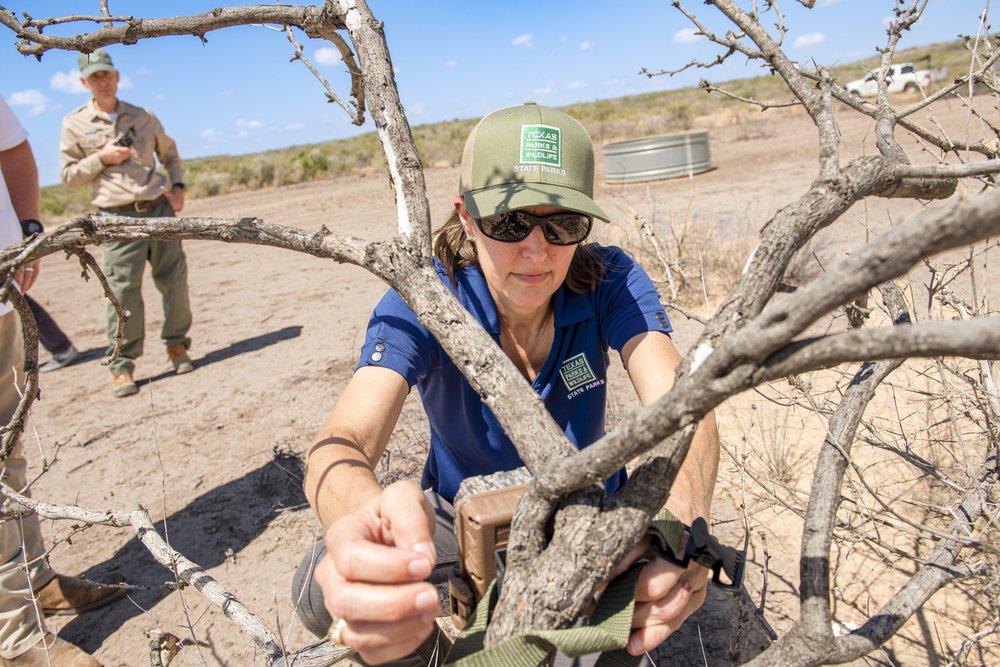
Game cameras help TPWD monitor for screwworm.
Chase Fountain
Game cameras help TPWD monitor for screwworm.
Chase Fountain
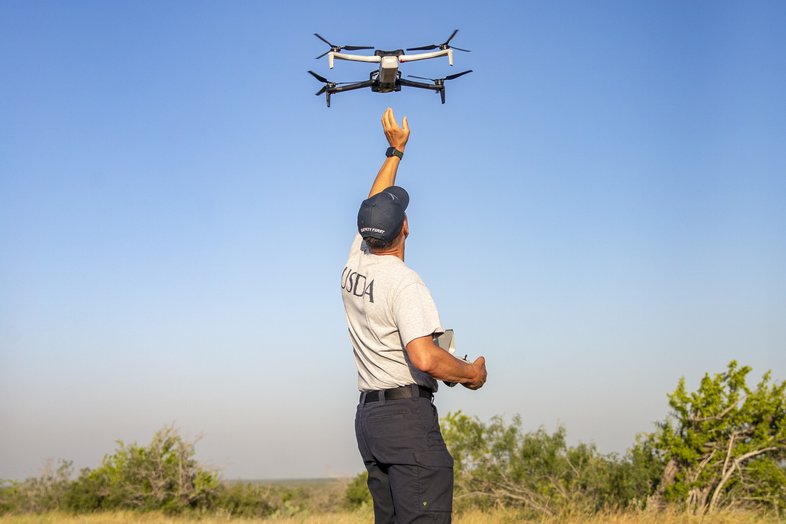
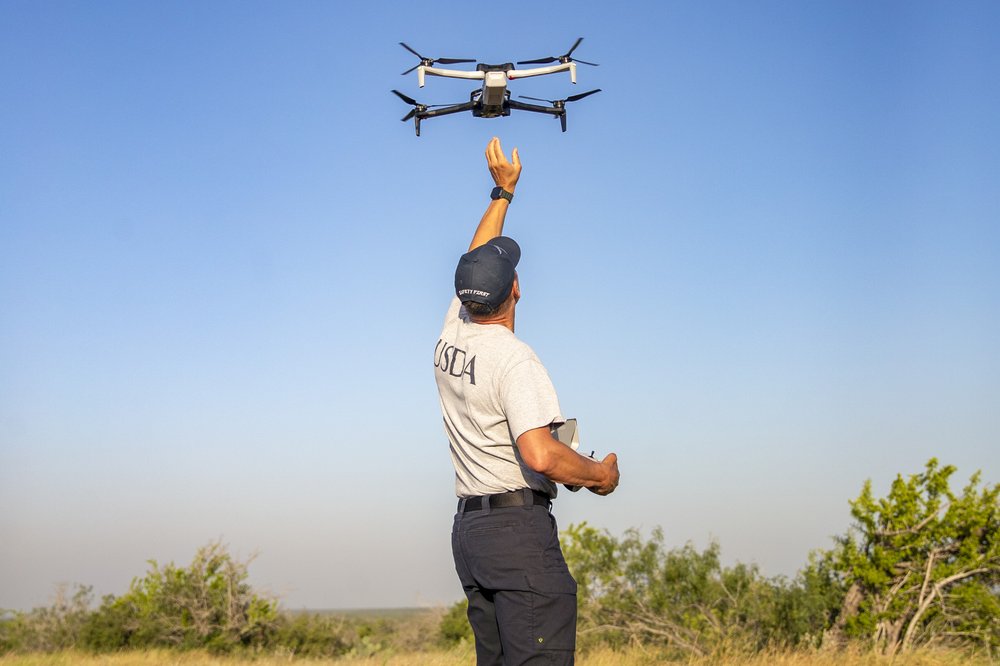
Drones allow researchers to survey large areas for screwworm infestations.
Maegan Lanham
Drones allow researchers to survey large areas for screwworm infestations.
Maegan Lanham
“USDA has been using drones and thermal imagery paired with spectral imagery to look for any animals of interest,” Reed says. “If there are [suspicious animals], the appropriate agency can follow up on those individuals and get samples from them if needed.”
According to Reed’s data, TPWD has facilitated access for USDA’s drone teams at 243 private properties that cover some 2.5 million acres. They have also contacted some 7,700 cooperating landowners and 100 deer breeders and rehab permit holders within the New World screwworm surveillance zone for further cooperation. Additionally, TPWD can monitor wildlife on state lands; Texas wildlife management areas within the screwworm zone account for some 147,000 acres, plus six state parks in the area that tack on another 38,000 acres.
The agencies working on the response also need landowner permission to distribute boxes — which Reed likened to giant milk crates — full of sterile fly pupae. This highly effective, weird-science response to New World screwworm outbreaks involves flooding the ecosystem with sterile male flies for female flies to mate with. When those females lay eggs in an open wound of a living animal, which females only do once in their lifetime, the eggs aren’t viable and won’t infect the host. Since June, over 1 billion sterile flies have been released in Texas.
The sterile insect technique, as this process is called, is how the U.S. eradicated New World screwworm the first time, after it started wreaking havoc in the 1930s. Biologists feel confident in its ability to be effective this time as well
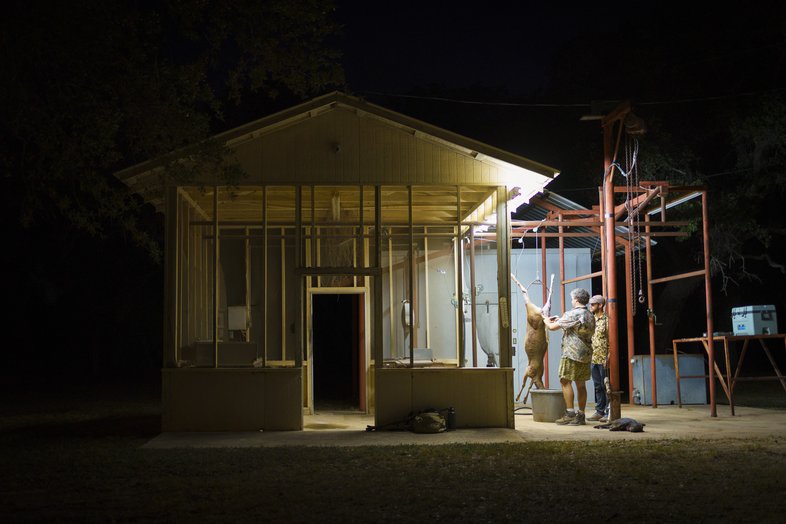
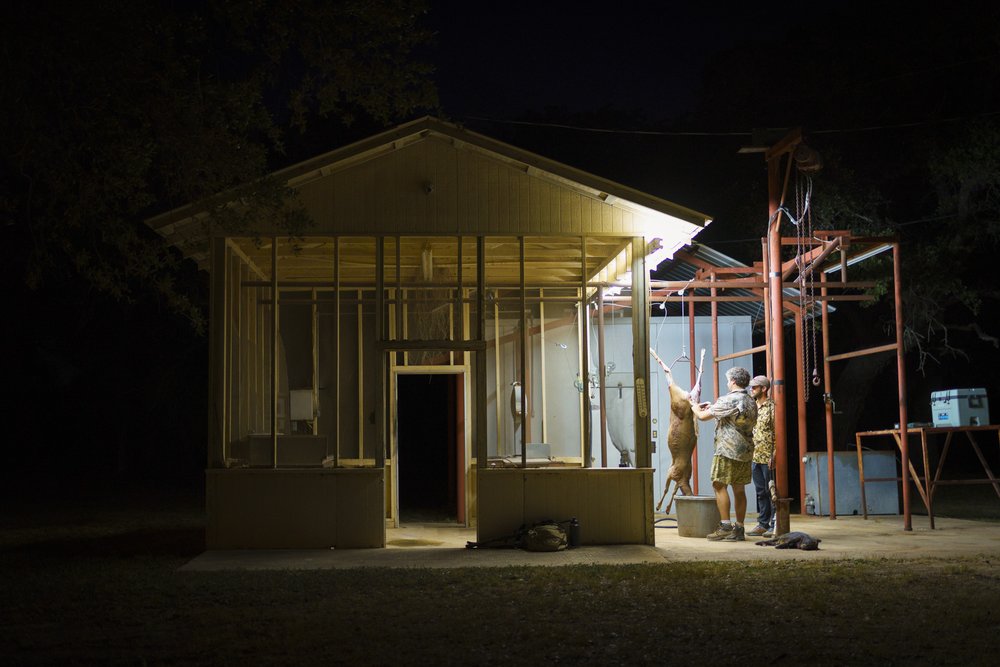
Hunters should keep an eye out for deer with open wounds or tumors.
Earl Nottingham
Hunters should keep an eye out for deer with open wounds or tumors.
Earl Nottingham
Chronic Wasting Disease
Over the past few years, TPWD has done extensive monitoring for chronic wasting disease, a fatal, contagious neurological illness. CWD is a prion disease, caused by a misfolded protein which spreads to other animals through bodily fluids, and so monitoring efforts for CWD are much different than for screwworm. Wyckoff and Reed have been helping with some CWD modeling projects that involve collaring free-ranging whitetails, as well as mule deer and elk, in the Panhandle and Hueco Mountains regions. They’ve put collars on over 300 animals so far while also conducting antemortem, or live, CWD testing.
“We’re trying to understand how those three species interact amongst each other, and also how they operate individually,” Reed says. “There’s an environmental component with CWD, and if species are interacting with areas that are CWD hot spots, they could be at greater risk of contracting the disease. So we’re really trying to understand that dynamic as well.”
Texas’ first known case of CWD showed up in a free-ranging mule deer in 2012. Three years later, its first known case in a captive whitetail surfaced. Around 2023 and 2024, the agency saw an uptick in CWD-positive breeding facilities, but those detections have slowed significantly since then, according to Wyckoff and Reed.
“We’ve partnered on research projects that have really assessed the efficacy of our CWD surveillance program, and it’s shown that there has been a marked improvement compared to our previous surveillance system,” Reed says. “That component alone has been able to help us find infected breeding facilities, so that we can limit the movement and spread of the disease, not only to high-fence release sites but to other breeding facilities.”
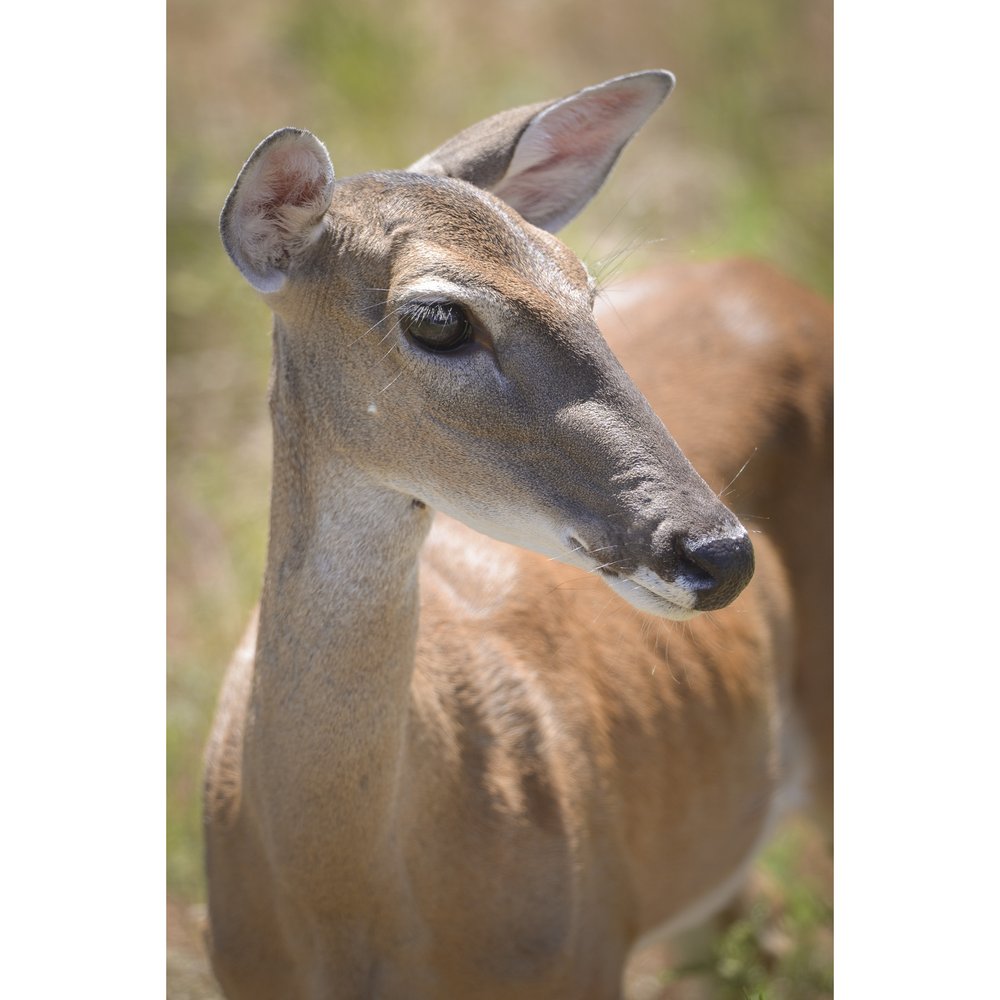
Natures Realm | Wildlife Photography
Natures Realm | Wildlife Photography
Mystery Nasal Tumors
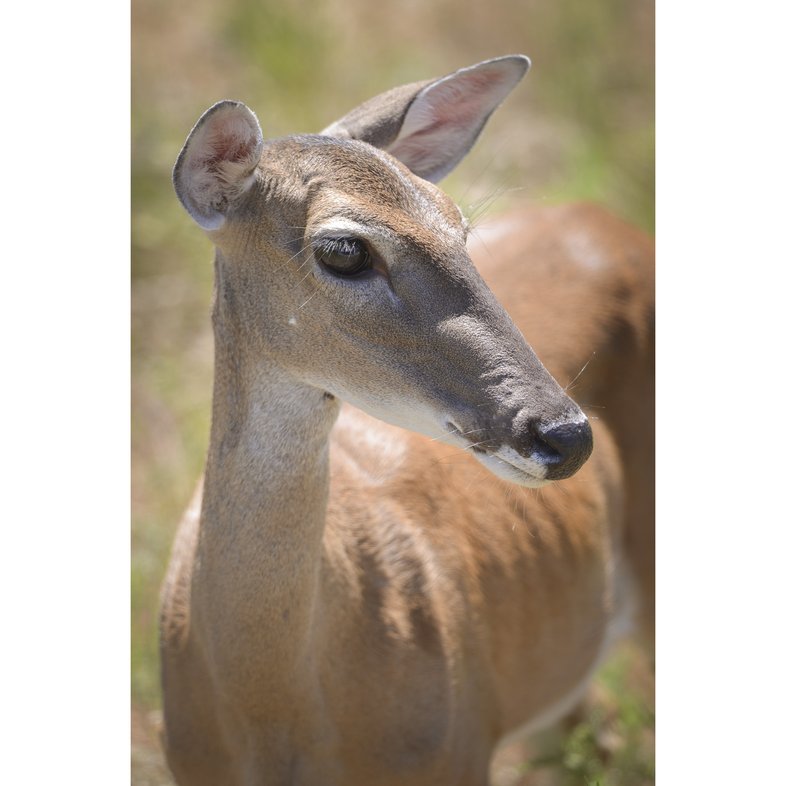
This year, another, more mysterious condition is affecting Texas white-tails. Reed and Wyckoff have also encountered a strange occurrence of cancerous nasal tumors in a handful of white-tailed deer, clustered in the central part of the state.
“It started in May,” Wyckoff recalls. “Then all of a sudden, by the end of the summer, we had four sightings, all more or less within the same area.”
The tumors protruded from underneath the deer’s eyes, making them look like they’d been punched in the face. Because of the clustering of the cases, the vet team treated the tumors like a disease event, partnering with the Texas A&M Veterinary Medical Diagnostic Laboratory to run tests on the sick deer.
“We’ve sent in heads, we’ve sent in whole carcasses, we’ve sent in field samples. We’ve tested for cancer-causing viruses, and we’ve done pathology to look at what cells are present in the tumors to get an idea of what the mechanism might be. They’ve used next-generation techniques to cast a wide net, and throughout all of that, we haven’t been able to find a cause,” Reed says.
What Hunters and Wildlife Watchers Should Know
So where do everyday Texans — especially those who hunt, own land or enjoy watching wildlife — fit into all this? And more importantly, what can they do to help? TPWD whitetail program director Blaise Korzekwa encourages all of the above to keep their eyes extra peeled for odd behavior, wounds or anything else out of the ordinary when they’re watching deer.
“When the first detection [of NWS] happened in June of this year, not a lot of people were out in their deer blinds looking at deer, because it was too hot,” Korzekwa says. “But as we get closer to deer season and we get cooler weather, a lot of hunters are going to be out in the field, whether they’re actually in the deer blind scouting and hunting, or they’re going through trail camera pictures.”
Korzekwa especially encouraged hunters to look for symptoms of NWS on their trail cameras — an option for disease surveillance that, as he points out, wasn’t available during the state’s last NWS eradication campaign in the 1960s.
“The technology has improved so much since screwworm was last in Texas,” he says. “It’s a night-and-day difference. We have cellular trail cameras now, and those are really your eyes on the property when a landowner is not there.”
If something seems off, Korzekwa says a quick call to the TPWD biologist in your region could make a big difference in disease spread. Every county in Texas is assigned a TPWD biologist. Find contact information for your county’s TPWD biologist at: tpwd.texas.gov/biologist
“If something looks suspicious, call your biologist, share that photo with them, and then if needed, they can go out there and collect that sample from that animal,” Korzekwa says. “If it is confirmed to be NWS, usually within a day or two, the USDA will drop those sterile flies over that property and the surrounding area. The best way to eradicate it is to report any suspicious cases.”
Reed and Wyckoff similarly encourage hunters and landowners to engage with local biologists as much as they can, no matter what strange symptoms they’re seeing in deer or other wildlife. Ultimately, Reed says, the agency’s landowner partnerships and the involvement of the public both greatly increase the agency’s chances of eradicating NWS — again.
“We are on the ground and responding, but our biggest added value in this situation has been our ability to leverage relationships with private landowners and hunters, so that we can get more eyes on the ground, and then get sterile insects onto those properties,” Reed says.