A nuisance — that’s how some people regard eastern moles and the dirt mounds they leave behind in landscapes. Not Lesley Tierney, a licensed wildlife rehabilitator in Melissa, a suburb northeast of Dallas.
“Moles serve a purpose in nature,” she says. “They’re natural pest controllers because they eat grubs, and they aerate the soil as they dig.”
Two years ago, Tierney cared for her first mole, a baby sent by an animal control officer. For several months, she kept the palm-sized pup in a deep flower pot filled with soil. Gradually, the young mole learned how to hunt for grubs and earthworms. “Digger” was later released on a rural property near Kaufman.
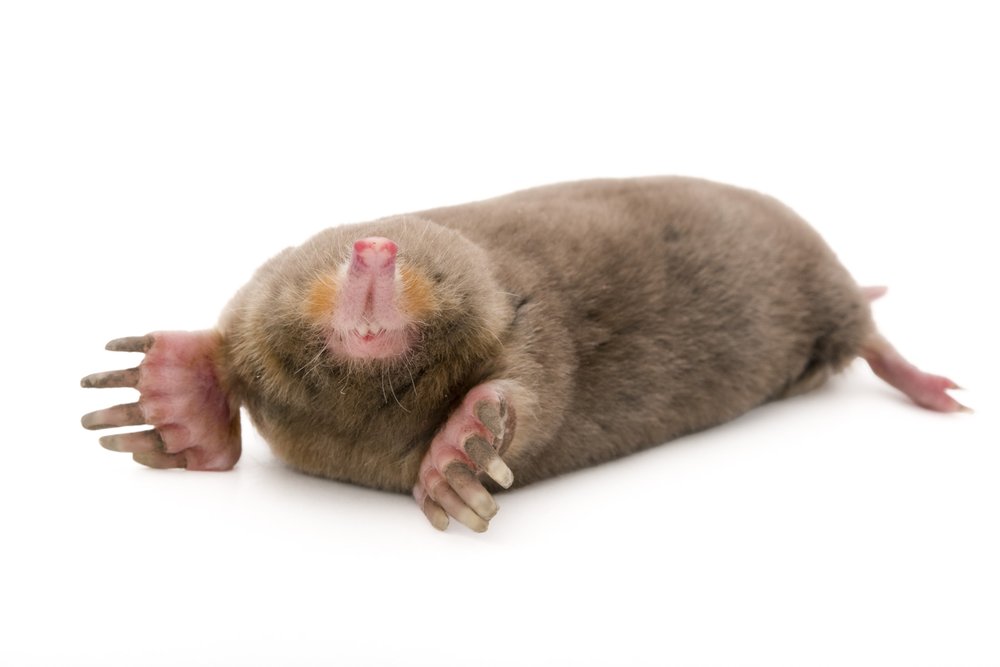
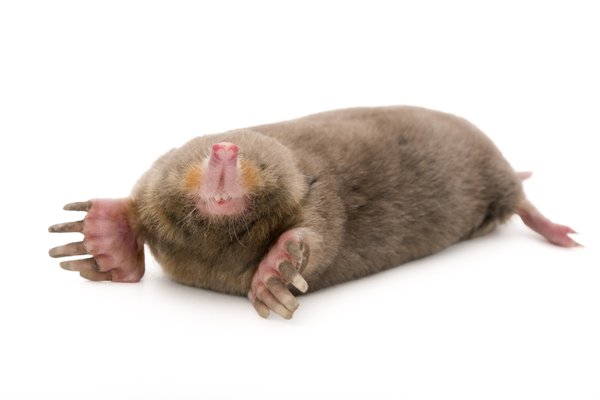
Of North America’s eight mole species, only one — the eastern mole — inhabits Texas. Rarely seen alive above ground, they range across the state’s eastern half and parts of the Panhandle. They measure from 5 to 7 inches long and weigh around 4 ounces or less. Their short tails are sparsely haired. Unlike most mammals with flat fur, the dark, velvety fur of moles grows straight up, allowing them to glide back and forth through soil.
Mostly solitary, eastern moles live completely under the ground. Using front paws shaped like pink baseball mitts, they can tunnel through dirt as much as 18 feet in an hour. As they shovel out passages and burrows, moles push dirt mounds (molehills) to the surface. When foraging for insects to eat, they plow just below the ground’s surface, leaving behind wavy ridges in the terrain.
Nearly blind with only pinprick-sized eyes embedded just beneath the skin, moles rely on their long, pink snouts to survive. “Eastern moles smell in three dimensions,” says Jorge Salazar-Bravo, an associate professor of biological sciences at Texas Tech University in Lubbock. “They can pinpoint exactly where a smell is coming from. This enables them to find food and also mates.”
Following their sensitive noses in the spring, males sniff for chemical signals (pheromones) released by potential mates, holed up in burrows eight to 10 inches below ground. “When breeding, males are so desperate to find receptive females that they may venture out of their burrows and move on the ground,” Salazar-Bravo says. “That’s why a lot of moles are run over on roads or people find them on streets.”
Successful males may mate with multiple females. About six weeks later, mothers birth from two to five pups, their only litter for the year. At 1 month old, little ones venture out on their own. By 1 year old, they’re ready to mate. In the wild, moles can live up to six years.
As a whole, eastern moles get next to no good press. “That’s unfortunate because they’re unique in behavior and lifestyle,” Salazar-Bravo says. “In nature, they aerate grasslands and recycle nutrients. But people want their manicured lawns, not molehills and tunnels. In my opinion, that’s their problem, not the moles’.”
As an aside, Swedish biologist Carl Linnaeus — who originated the uniform system of naming organisms — in 1758 labeled the eastern mole as Sorex aquaticus, which translates to “water shrew-mouse.” No authoritative source explains why Linnaeus believed the animal inhabited watery places (although moles are excellent swimmers). In 1803, the genus name was changed more appropriately to Scalopus, which means “digger foot.”