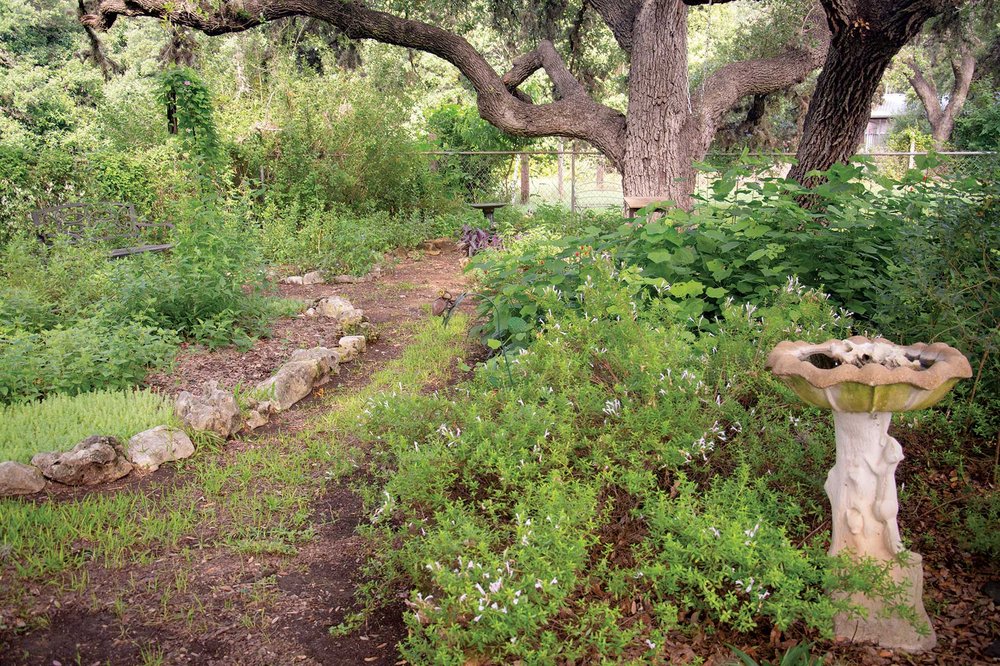
Black-crested titmice chattered in the live oaks as I pruned dead stems from our salvias that late July evening. Just as I paused to survey my work, something odd caught my eye. I froze and focused on the spot.
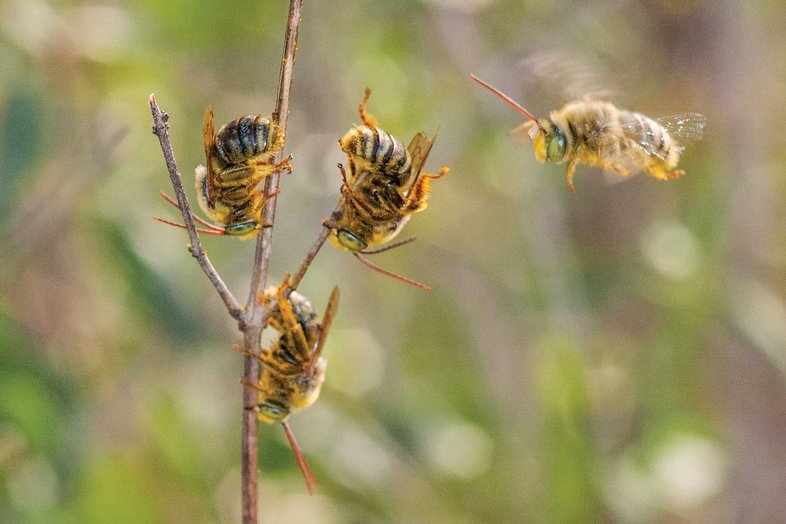
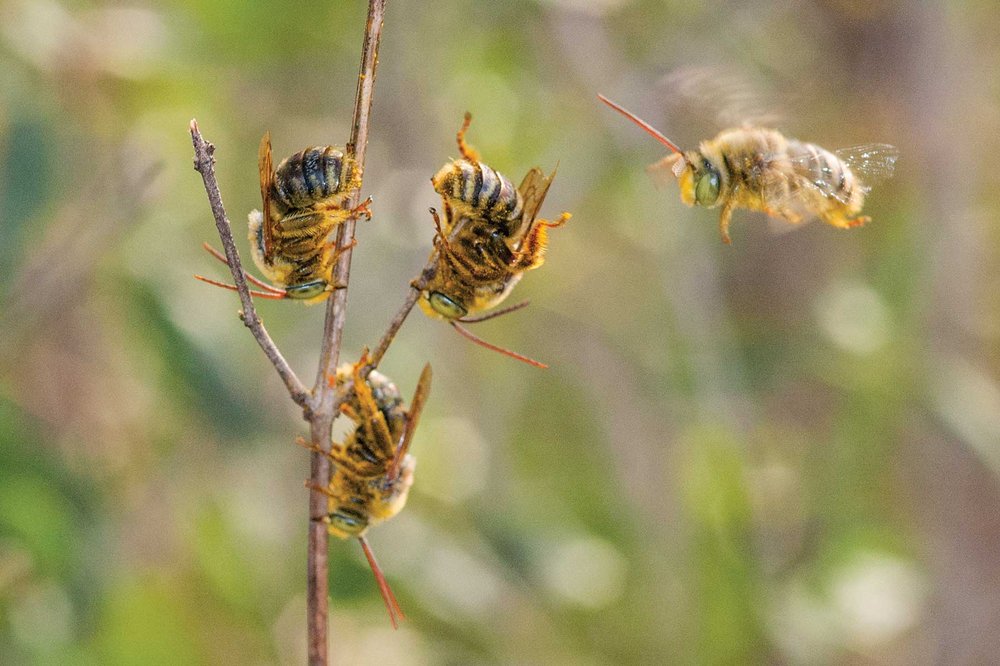
Inching closer, I spied three fuzzy insects with striped abdomens attached upside-down to a dead salvia stem. They appeared to be hanging on by their jaws. Mesmerized, I set down my shears and pulled out my smartphone.
What had I found in this yard that continually amazes me? Forget gardening. I had photographs to take and insects to identify.
This happens a lot in our yard. No matter what I stumble upon, I stop to get a better look. Because who knows?
Maybe I’ll find a new species, like yellow passionflower or pearl milkweed vine. Or watch a mini drama unfold, like an iridescent cockroach-hunter wasp attacking a Boll’s sandroach. Or laugh when a Bewick’s wren kamikazes a northern cardinal on a birdhouse. Or solve mysteries, like where do pipevine caterpillars go after they leave their host plants? (Alas, hours of trailing several yielded no clues.)
Every day’s an adventure in our mostly native gardens, located two minutes from downtown Blanco in the Hill Country.
Melissodes bees
Sheryl Smith-Rodgers
Melissodes bees
Sheryl Smith-Rodgers
Outdoors at our house wasn’t always that much fun, though. “Well-kept but ho-hum” better described the property 18 years ago. That’s because few beneficial plants grew in our yard, which stretches across two city lots. In the front yard, the previous owners planted two rose bushes, bearded irises and a crape myrtle beneath the towering live oaks.
One afternoon, I yanked out Japanese honeysuckle, snailseed and greenbriar vines from a rocked-in bed along the street. Then I sowed zinnia seeds. Boy, did I feel proud when they bloomed.
In the backyard, more majestic oaks shaded the huge lawn, blanketed with carpetgrass, horseherb and assorted weeds. Under one big oak, I hung up a bird feeder and set out a birdbath. Sometimes I borrowed a push mower and trimmed the front and back yards. Or I hired someone to do the three-hour job. I kept the yards manicured as best I could.
In May 2006, James Hearn and I got married — where else? — in the backyard. Two weeks later, we bought a riding lawn mower. Now and then, we bought plants at nurseries or big box stores, but ornamentals didn’t grow well or survive our hot summers.
So, we turned to Texas natives, like lantana, salvia, Turk’s cap, Texas betony, rock rose and flame acanthus. Our gardening successes improved. Better yet, the natives provided flowers, nectar, fruits, leaves and nuts for wildlife.
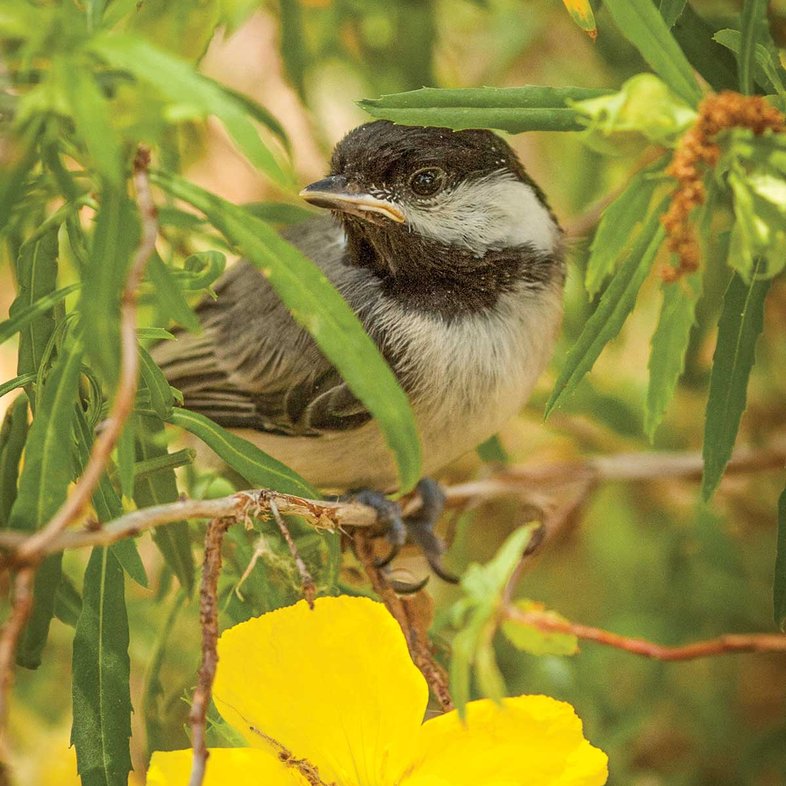
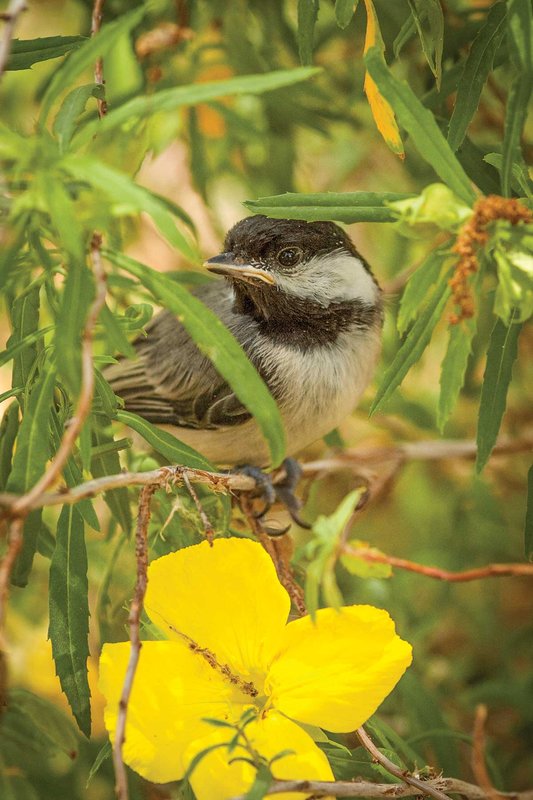
Baby chickadee
Sheryl Smith-Rodgers
Baby chickadee
Sheryl Smith-Rodgers
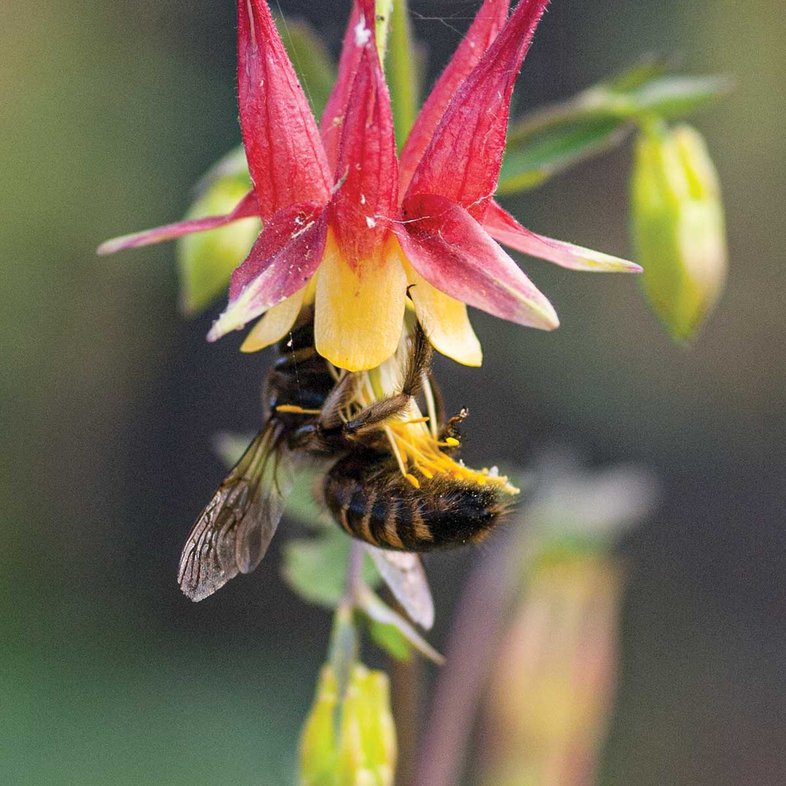
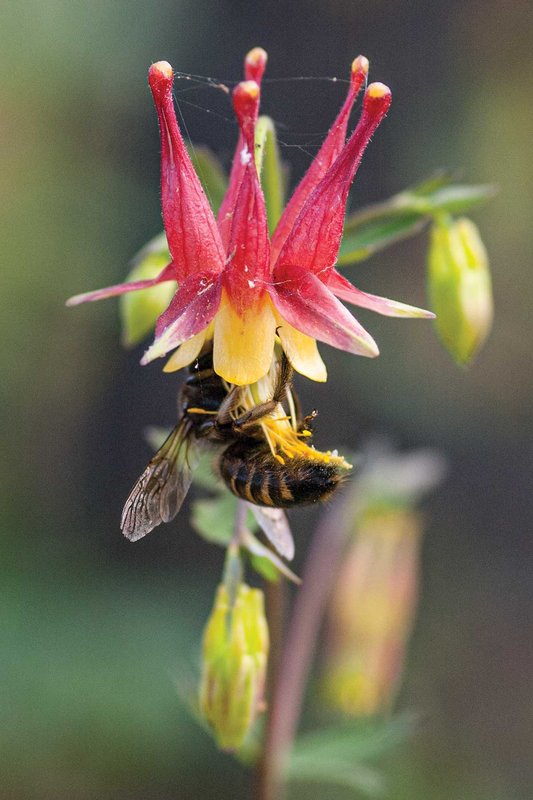
Red columbine with solitary bee
Sheryl Smith-Rodgers
Red columbine with solitary bee
Sheryl Smith-Rodgers
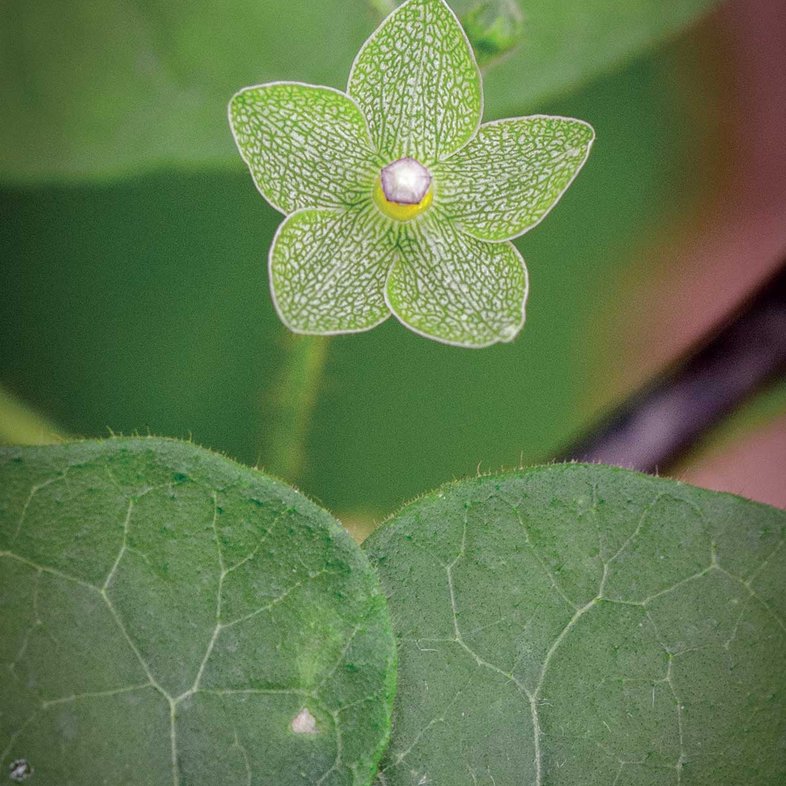
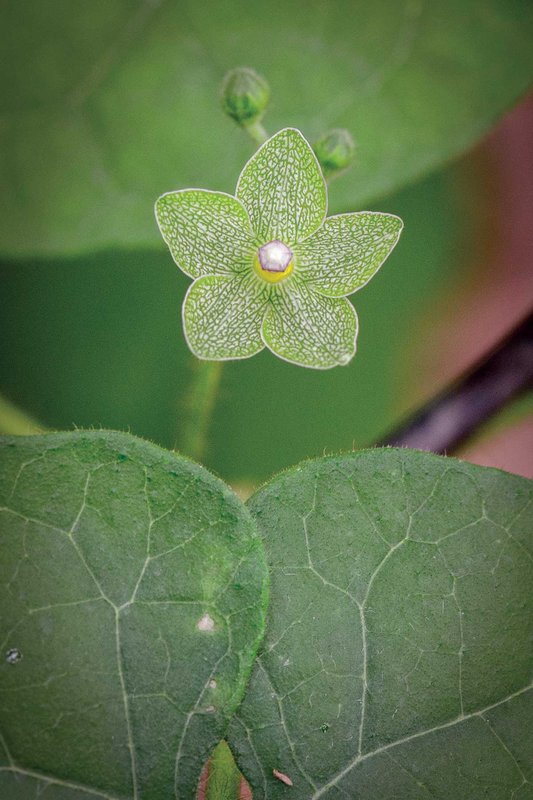
Pearl milkweed vine
Sheryl Smith-Rodgers
Pearl milkweed vine
Sheryl Smith-Rodgers
A year later, I learned about Texas Wildscapes, a wildlife habitat program sponsored by the Texas Parks and Wildlife Department. Surely our yard met the basic criteria of providing native plants, food and shelter for wildlife. Why not apply? So, I mailed off an application and got our yard certified.
As our gardening work progressed, I jotted notes in a spiral journal. But not for long. In its place, I started a blog in May 2008. “Window on a Texas Wildscape” has allowed me to keep gardening notes, share what I see and learn and maintain a searchable database.
Fast-forward to the present. Nowadays, the riding lawn mower gets used only twice a year to trim the adjoining lot. We bought that property in 2008. Later we erected a wooden sign that reads “The Meadow,” to let passersby know that someone tends the land.
Beneath a live oak motte grow native residents, such as blue-eyed grass, a redbud, mountain laurel and twistleaf yuccas. An open area supports bluebonnets and other wildflowers along with more neighborhood natives, including agarita, Texas lantana, ashe juniper, gum bumelia, velvet bundleflower, silverleaf nightshade, scarlet pea, sensitive briar and antelope-horns.
As for our front and back yards, they no longer host just groundcovers. Now footpaths wind between rocked-in beds planted with hundreds of natives that we’ve bought through the years. Most came from native plant sales and native plant nurseries. Some were gifted. They include American beautyberry, mistflowers, chile pequin, coral honeysuckle, crossvine, passionflowers, red columbine, scarlet clematis, Texas milkweed, sawtooth sunflower, prairie flax and standing winecup. Some are neighborhood natives that I’ve transplanted — Texas bush-clover, velvet bundleflower, yellow passionflower, scarlet pea, sensitive briar and pearl milkweed vine.
Along the way, we’ve also planted native trees, including a Blanco crabapple, Texas madrone, Mexican buckeye, Texas buckeye, rusty blackhaw viburnum, escarpment black cherry, roughleaf dogwood, possumhaw, persimmon and Mexican plum. Flowers on our Texas kidneywood attract cool pollinators, such as green soldier flies and great golden digger wasps. On our wafer ash, I saw two-tailed swallowtails deposit eggs on leaves. Then I returned to get photos of the larvae as they changed from bird-poop mimics to bright green caterpillars with black eyespots.
As the diversity of our flora has increased, so has the fauna in our yard. Using the iNaturalist app, I’ve so far documented more than 910 species of organisms! These include 174 plant species (these exclude species we’ve planted) along with 81 beetle species, 65 spider species and 207 butterfly and moth species.
Among 46 true bug species I’ve found, jagged ambush bugs rank as a favorite. As their name implies, these tiny predators with ridged, fiddle-shaped bodies lurk on coreopsis and other flowers. Then — like a praying mantid — they grab a bee or other insect with their thick front legs and enjoy a meal.
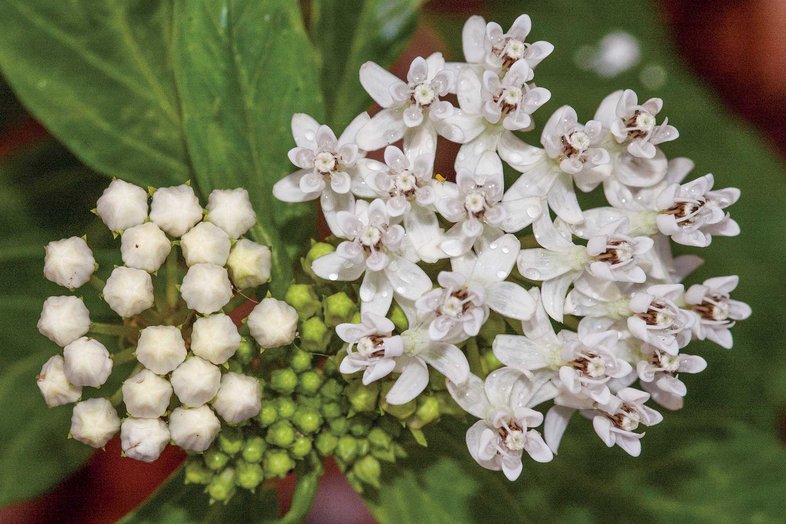
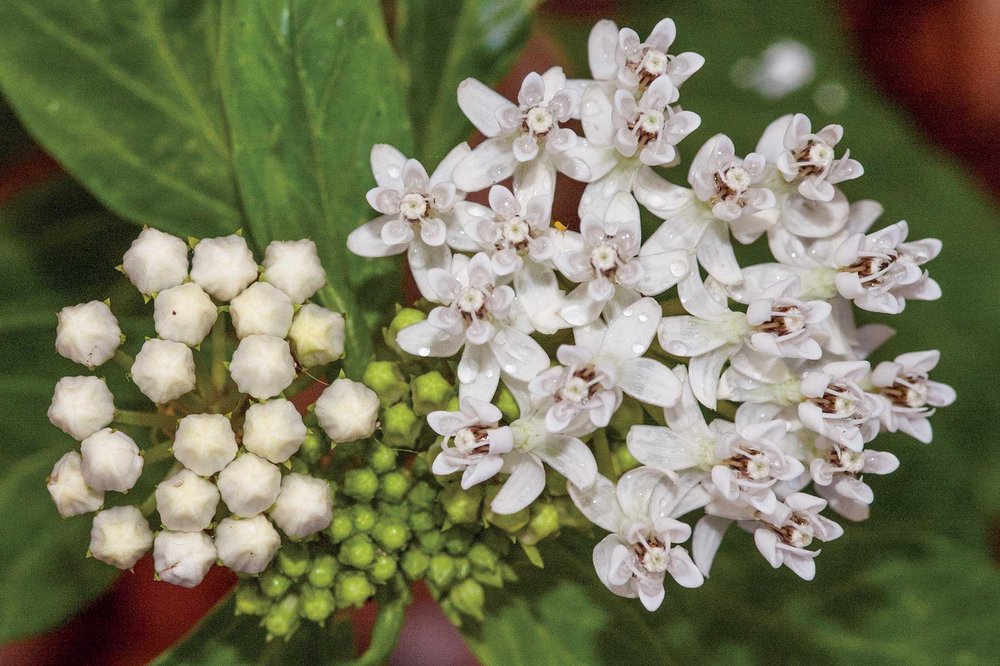
Texas milkweed
Sheryl Smith-Rodgers
Texas milkweed
Sheryl Smith-Rodgers
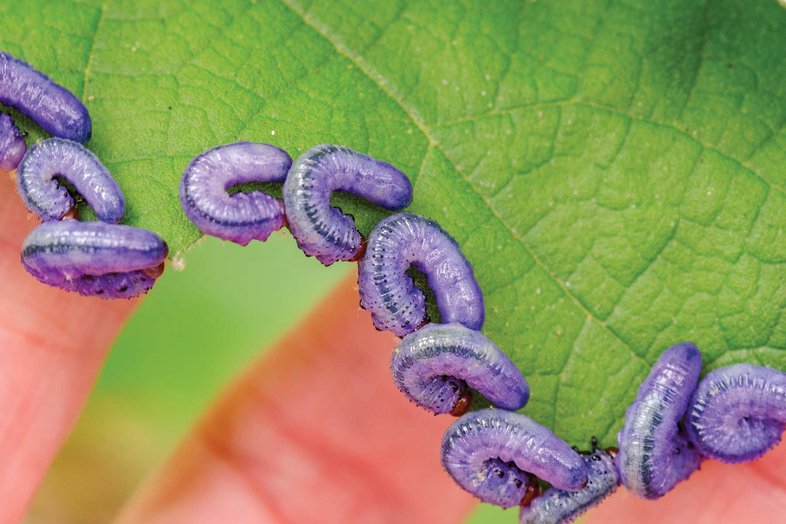
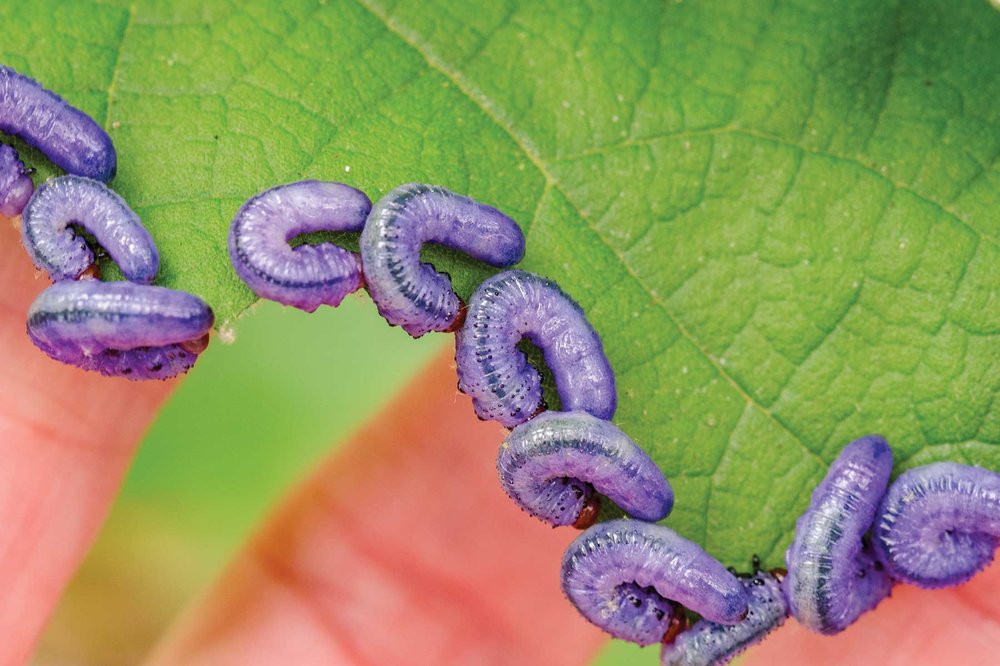
Sawfly larvae
Sheryl Smith-Rodgers
Sawfly larvae
Sheryl Smith-Rodgers
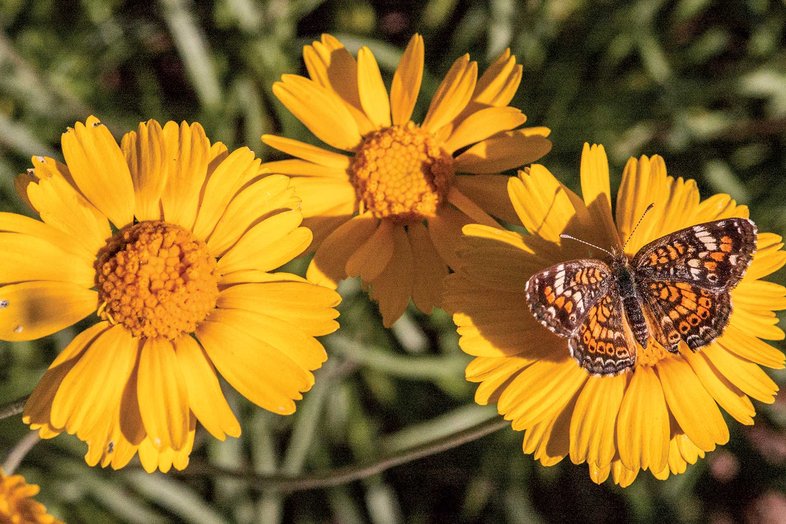
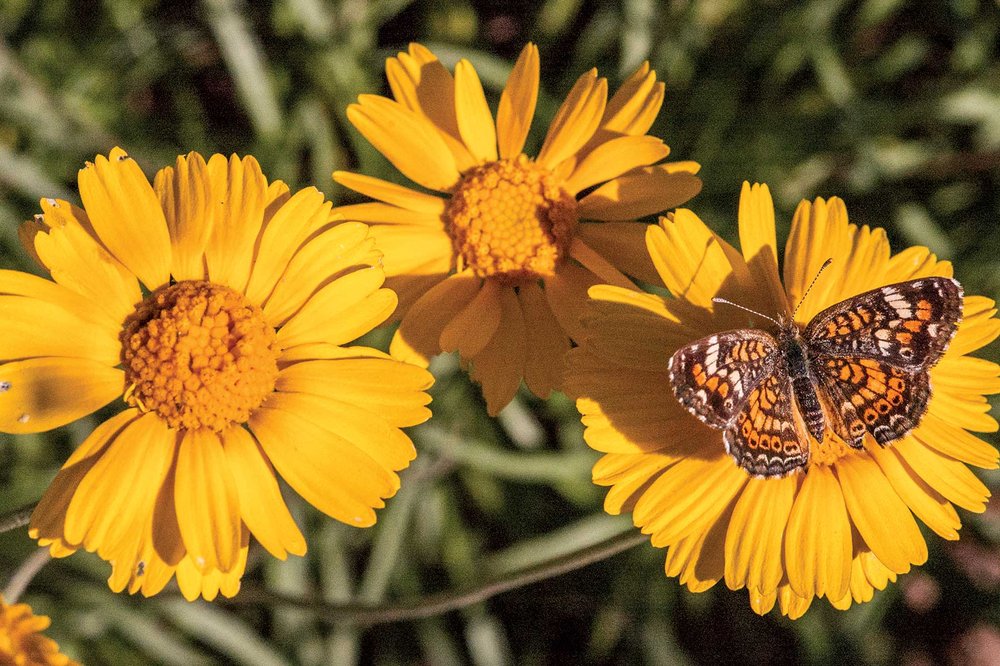
Phaon crescent on cowpen daisy
Sheryl Smith-Rodgers
Phaon crescent on cowpen daisy
Sheryl Smith-Rodgers
Very little escapes my eagle eyes. One June evening, something on our water fountain stuck out. I stopped for a closer look. A black critter with white-and-gold patterns clung to the concrete tier as water splashed over it. I turned off the water, then watched the insect skitter around and groom itself. I’d found a tumbling flower beetle. These beetles are named for their ability to bounce erratically when fleeing predators. Adults feed on flower pollen.
Robber flies are also aptly named. Long-bodied and big-eyed, they perch atop stems or other high points and scan for flying insects to nab in mid-air. The six species of robber flies in our yard have included the hefty Beelzebub bee-killer, a fuzzy bumblebee mimic that I’ve seen eat green June beetles. They’ve been reported to attack hummingbirds (but not in our yard) and are one of North America’s largest robber flies. In contrast, the tiny Hadrokolos texanus — a robber fly no bigger than my pinky fingernail — barely caught my eye when I passed one, poised on a dead salvia tip that I’d failed to clip.
Lesson learned: Perfection should never apply to wildlife gardens.
Even poop can be useful.
One time I found a little dung beetle making a pea-sized ball in a smelly pile. I didn’t crouch down too long to watch. I knew what would happen next. Soon the metallic green beetle with fan-like antennae would roll the ball away. Then she’d bury it for her future grubs to eat. Yum!
Thank goodness our neighbors “get” me. I often stand in our yard with my arms outstretched. My crazy stance has enticed numerous red admirals (my favorite butterfly since childhood) to land on me. Once an eastern pondhawk — one of 16 dragonfly and damselfly species recorded in our yard — landed on my hand.
But the coolest insect to visit on me was a longhorn cactus fly (Odontoloxozus longicornis). Mosquito sized, the googly-eyed fly landed on me several times. Then it showed up the next day in our kitchen. I carried it outside. It landed on me several times before disappearing for good. According to Bugguide.net, the species inhabits deserts and lays eggs in decaying cacti. Don’t ask me how it found our yard.
Our nature stories are endless. Once a juvenile green heron tried to fish in a shallow birdbath. That didn’t go well. One summer, a wild turkey patrolled our back-yard for several weeks until she vanished.
I’ve observed Texas spiny lizards dig nests in the dirt and deposit their eggs. Found the bright purple larva of a sawfly (Neoptilia tora) on our velvetleaf mallow. Removed some drowned Texas ironclad beetles from a bucket, only to discover days later that they were still alive. Watched a checkered gartersnake gulp down an earthworm. Made friends with the thread-legged bugs that hang out on our screened porch door. Discovered a resin bee building her tubular nest of itty-bitty pebbles.
We’ve even hosted a family of eastern screech-owls in a nest box.
Since spiders intrigue me, I’m not afraid to handle them. But one encounter ended badly. I’d cupped a female sac spider in my left palm for photos. To my surprise, a small black wasp landed on my hand and attacked the spider. I kept snapping photos while the wasp paralyzed the spider with a sting and then lifted her away. I stared down at the two spider legs left on my palm. It had all happened within seconds right in my hand. Poor spider! Soon she’d be live food for the wasp’s larvae.
Back to those fuzzy insects attached upside-down on a salvia stem. It turned out that they were a guy group of long-horned bees, bedded up together for the night. Several species of wasps and bees exhibit this sleeping behavior called roosting. Years ago, I found a male digger bee snoozing upside-down, jaws clamped tightly around a narrowleaf globemallow.
But, wait a minute. Did you hear that? Some blue jays, Carolina chickadees and northern cardinals are screaming in the live oaks out in the Meadow. Could they be mobbing a rat snake? An eastern screech-owl? Our local Cooper’s hawk?
Please excuse me while I go investigate. Because you just never know what’s going to happen next in our mostly native gardens.