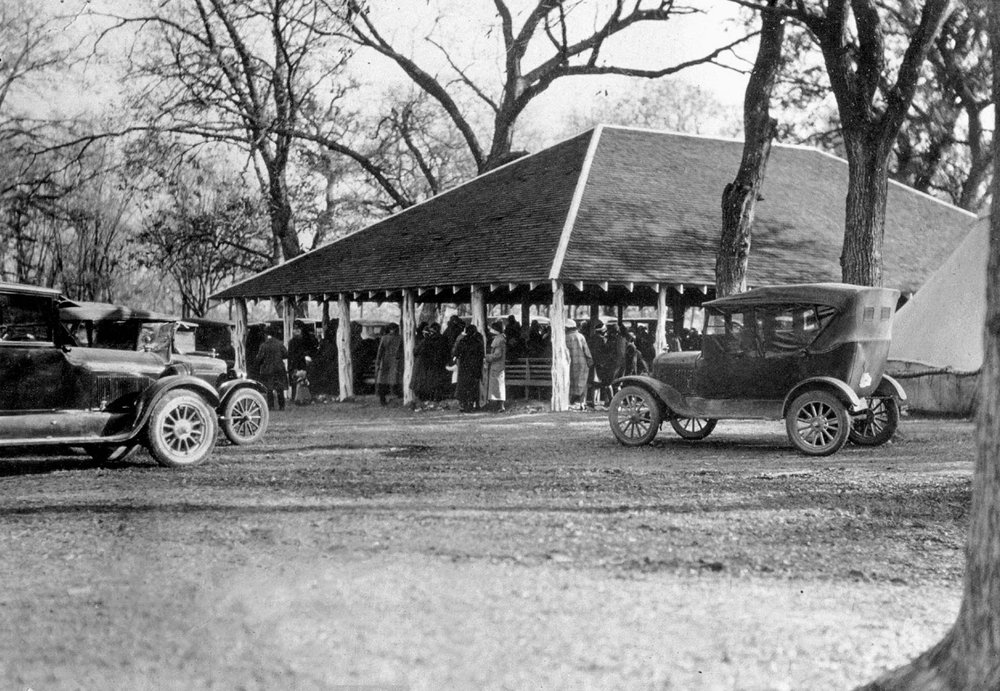
AS TEXAS STATE PARKS celebrate a century of stewarding the most beloved public lands in the state, let’s jump into the time machine to see how it all began. Start up your Model-T ($360), fry a fresh chicken for your wicker picnic basket and bring along a wide-brimmed straw hat.
WOMEN BLAZE THE TRAIL
MORE THAN A CENTURY ago, a desire to preserve America’s natural jewels sparked the idea of a national parks program, fanned to a bonfire during Theodore “Teddy” Roosevelt’s administration. Yellowstone, Sequoia and Yosemite were the first three established, followed by other now-familiar wild sanctuaries and historic sites. They were (and still are) the road-trip destinations of a lifetime.
No Texas sites were on that early list of national treasures, as Texas had negotiated to keep the rights to all public land early in its statehood. Texas women had already been working for many years to preserve historical landmarks. The Daughters of the Republic of Texas led the effort to save battlegrounds such as San Jacinto, Gonzales, Fannin and the Alamo and the place where the Texas Declaration of Independence was signed, Washington-on-the-Brazos.
In 1923, Gov. Pat Neff persuaded the state Legislature to create a six-member State Parks Board, citing the need for overnight camping spots for the rising number of car travelers. Noting the groundwork laid by women’s groups, Neff appointed three women to the first board, two journalists and a rancher.
Inspired by the governor’s mother, Isabella, the Neff family led the way by donating acreage on the Leon River for what would become Mother Neff State Park, sometimes called the “first” state park despite the earlier establishment of several historical parks. Another 23 sites were donated in that first decade but languished from a lack of funding to develop the necessary roads and lodging for visitors.
FROM CCC TO THE GOLDEN AGE
A MUCH-NEEDED boost came from another Roosevelt who left his mark on Texas parks. President Franklin D. Roosevelt’s New Deal programs included the Civilian Conservation Corps (CCC), formed in 1933 to help the country’s unemployed rise from the Great Depression. Young men were quickly organized into companies and dispersed to parks across the state.
They built pavilions, bridges, refectories, lodges, cabins, picnic areas and more in a natural style utilizing local wood and stonework. The result was aesthetically pleasing and structurally sound, and the men emerged from the CCC era (which ended in 1942 after the start of World War II) as skilled craftsmen.
Much of the CCC work can be enjoyed today at parks such as Palmetto, Bastrop, Davis Mountains and more, some becoming the place of memories for generations of Texans. Raise your hand if your first dance was a shy shuffle at Garner State Park’s CCC pavilion. You’re in good company.
Following the war, a long drought and hurricane damage, state parks struggled in the early 1960s. Gov. John Connally merged the State Parks Board with the Game and Fish Commission to form a new Texas Parks and Wildlife Department in 1963. Money from a cigarette tax and bond issues paid for new state parks and improvements for existing ones.
Pedernales Falls, Mustang Island, Galveston Island, McKinney Falls and Lost Maples are just some of the sites that opened in the 1970s and ’80s, the Golden Age of Texas State Parks. By decade’s end, some 130 state parks beckoned Texans to come and “forget the anxiety and strife and vexation of life’s daily grind,” as Neff once said of their purpose.
The parks’ popularity grew into the 21st century with increasing numbers of well-equipped adventurers heading to parks as destinations, not just stopovers on the way to somewhere else. In 1993, a state sporting goods sales tax ensured funding for parks that were in danger of being “loved to death.” Those funds were later dedicated as a constitutional amendment, with park improvements in full swing across the state.
NO BETTER TIME TO EXPLORE
OVER THE SPAN of those ensuing years, much has changed in Texas, but not the “we’ll do it our way” spirit of independence of those early pioneers. They set in motion a state park system that has grown and developed to become one of the most extensive in the United States.
Turns out, Texas State Parks are more relevant than ever. Texas State Parks Director Rodney Franklin notes the increased state park visitation resulting from the stress and isolation of the coronavirus pandemic.
“The challenges of the last few years have led many people to explore the outdoors in new and adventurous ways,” he says. “Nature heals, and it connects people. That’s what state parks are all about, connecting people to nature and connecting people to one another.”