Not long ago, the undersides of my forearms itched. I paid little notice. By next morning, the areas had morphed into a rash. I shrugged it off. Day three, though, when my increasingly itchy dots erupted into bumpy red patches and some began to ooze, the proverbial light bulb went off — duh, I had poison ivy!
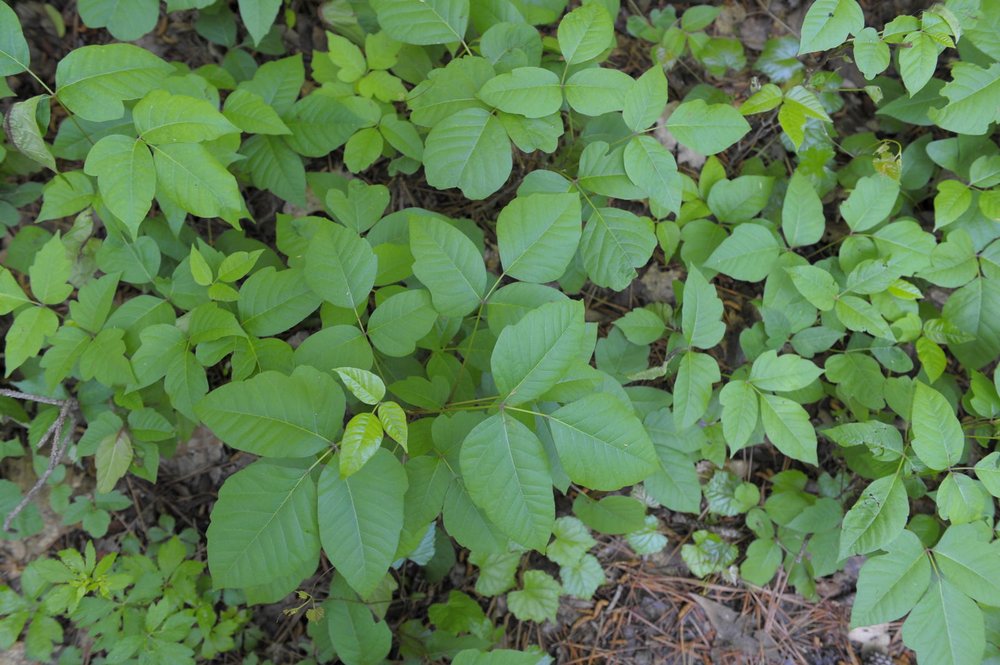
Like 85 percent of the population, I’m allergic to the noxious plants. Even if I were among the lucky few who say they’re not, that could change. According to dermatology studies, immunity can weaken with repeated exposures. Either way, here’s my simple advice: Learn to recognize the three poison ivy species and stay away from them!
Toxic oil
All parts (except the flowers, pollen and fruit pulp) of poison ivy, poison oak and poison sumac contain urushiol, an oily substance that triggers dermatitis, but only in humans. Birds and animals that eat the berries and hang out in the wretched stuff aren’t bothered by it.
Urushiol’s tricky, though. Years ago, I held my then-toddler-aged son in the crook of my arm. Several days later, I itched with poison ivy. Unbeknownst to me, Patrick had sat in the plants. Urushiol adheres to nearly everything, including clothing, tools, shoes, animal fur and even smoke particles.
Warning: Never burn poison ivy! If you’ve been exposed to and inhaled infected smoke, get to an emergency room fast.
Prevention
Time matters. Allergic skin reactions start eight to 48 hours after contact. Right away, wash the area with lots of tepid (not hot) water. As soon as possible, wipe affected areas with rubbing alcohol to neutralize and leach urushiol from the skin (plain soap and water won’t work). Then take a long shower. If you wait too long to wash the poison ivy off, it’s probable that urushiol has bonded with your skin. Prepare to be miserable. (Hikers and campers, take note: carry alcohol in case of exposure.)
Treatment
See a doctor if you have a severe reaction or a rash breaks out on your face or genitals. Prescription corticosteroids by pill or injection will stop allergic reactions. For milder cases, relieve the itch with topical creams containing cortisone. Apply calamine lotion (not Caladryl) to help dry up oozing blisters. Contrary to popular belief, that fluid doesn’t spread the rash.
Hot showers draw out histamines from the skin and provide temporary relief, not to mention a little ecstasy (ask anyone who’s had poison ivy). Just be careful not to burn your skin! Don’t worry — rashes heal and disappear within two weeks. I know firsthand!
Learn lots more about the “toxic trio” in A Field Guide to Poison Ivy, Poison Oak and Poison Sumac: Prevention and Remedies by Susan Carol Hauser.