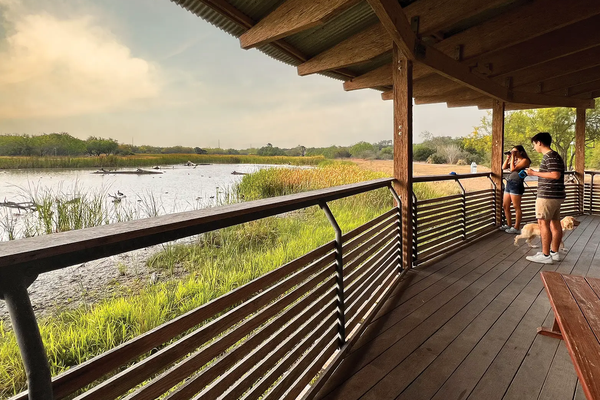
There’s a duck in every direction. A green-winged teal scurries across the water as it takes flight, slowly ascending from the marsh. Gadwalls and wigeons meander through wispy grass, while canvasbacks vanish beneath the rippling surface in search of breakfast. Quacks and calls fill the dewy air, composing a melody unique to the J.D. Murphree Wildlife Management Area.
The J.D. Murphree WMA, endearingly referred to as “The Murph,” encompasses 25,852 acres of coastal marsh in Southeast Texas. Its intermediate, fresh and brackish water units are home to a diverse array of migratory and nesting waterfowl, fish and plant life. The property is also known for its alligators, which are found here in one of the highest densities in the state.
The area is managed as a wetland system, with a special emphasis on migratory waterfowl habitat. The Texas Parks and Wildlife Department team on site works hard to keep the marsh healthy, manage water levels and ultimately create an environment where the ducks will return year after year.
“A lot of what we do is like farming, but we’re farming wildlife habitat instead of crops,” says wildlife biologist Philip Pauling.
Much of that work happens outside of hunting season. This may include conducting a controlled burn, mitigating invasive plant species or restoring a marsh by pumping dredge material into severely degraded areas.
Emergent marsh can quickly deteriorate into open water, reducing habitat quality for ducks and other wildlife. To combat this, the team deposits dredge material — a mixture of mud, silt, clay and sand‚ into the area and plants new vegetation on top of it.
Waterfowl may be the primary focus, but the marsh supports far more. The WMA’s alligator program serves as an effective research platform, and biologists on property monitor populations by counting and tagging alligators for long-term growth studies.
Pauling’s passion is the waterfowl. He grew up in nearby town Port Arthur and learned to hunt at age 12. He says that’s when he “fell in love with the marsh.”
“When I was in college I would come down here, even when hunting season was over, and I’d sneak around in the marsh with a camera,” Pauling says. “I would army-crawl through the grass and sneak up on birds just to get as close as I could.”
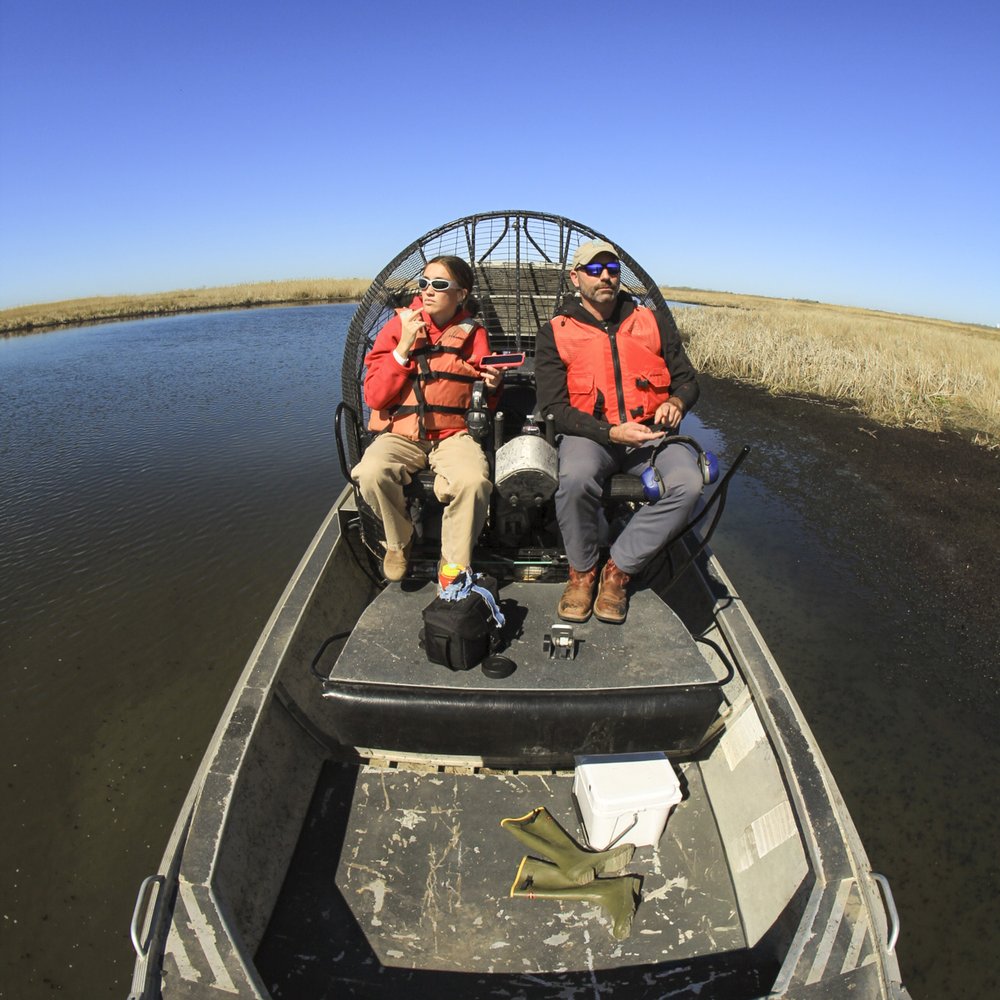
Zigzagging through the maze of marsh via airboat on a sunny February morning, wildlife biologist Andrew Peters explained the mission of the WMA. “The initiative is to set an example for private landowners on how to manage this type of land,” Peters says. “We’re research- and outreach-driven, and we provide public access and public hunts, too.”
For those who get to experience it, the J.D. Murphree Wildlife Management Area is more than acres on a map — it is a reminder of the power of stewardship.