“Because of their diversity, natural beauty and sheer power, insects certainly constitute a force of nature.”
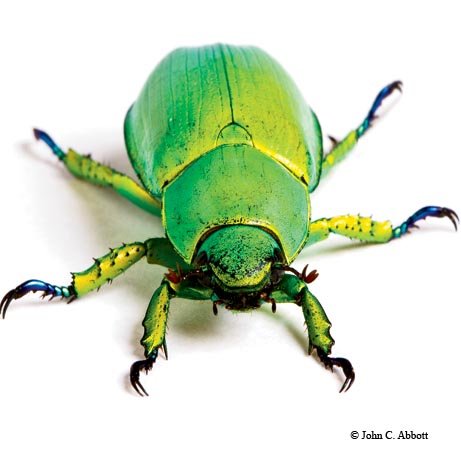
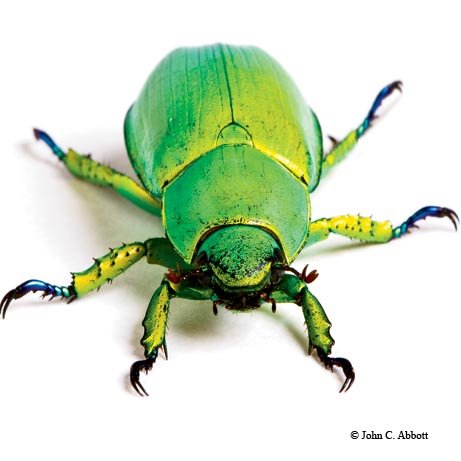
A jewel beetle (Chrysina woodi), from the Davis Mountains, is one of the few animals on the planet that can see circularly polarized light in the same way that we use glasses to view 3-D movies.
John C. Abbott
A jewel beetle (Chrysina woodi), from the Davis Mountains, is one of the few animals on the planet that can see circularly polarized light in the same way that we use glasses to view 3-D movies.
John C. Abbott
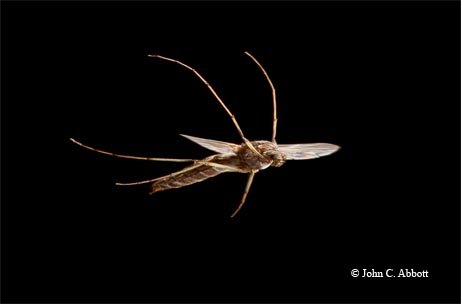
A non-biting midge in flight with its front legs raised.
John C. Abbott
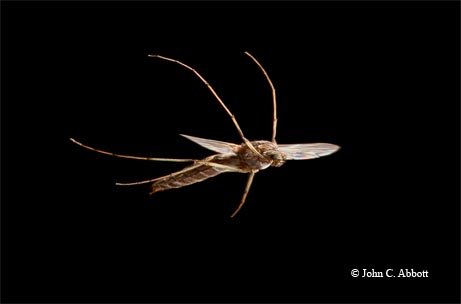
A non-biting midge in flight with its front legs raised.
John C. Abbott
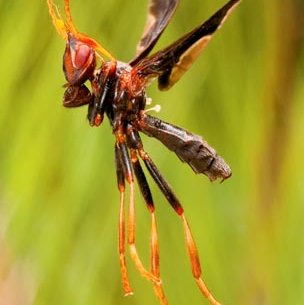
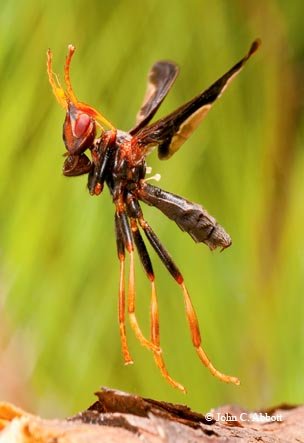
The unusual-looking waved light fly (Pyrgota undata) deposits eggs on the backs of June beetles. The larvae become parasites of the beetle.
John C. Abbott
The unusual-looking waved light fly (Pyrgota undata) deposits eggs on the backs of June beetles. The larvae become parasites of the beetle.
John C. Abbott
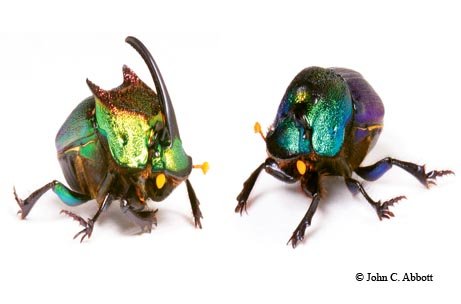
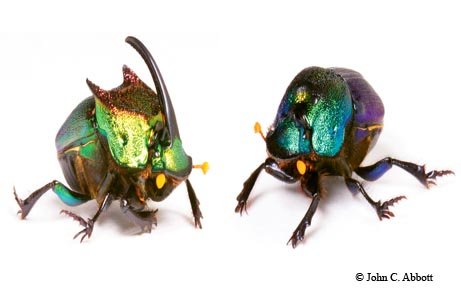
These striking dung beetles — the male and female rainbow scarab (Phanaeus difformis) — are commonly found in cow pastures throughout Texas.
John C. Abbott
These striking dung beetles — the male and female rainbow scarab (Phanaeus difformis) — are commonly found in cow pastures throughout Texas.
John C. Abbott
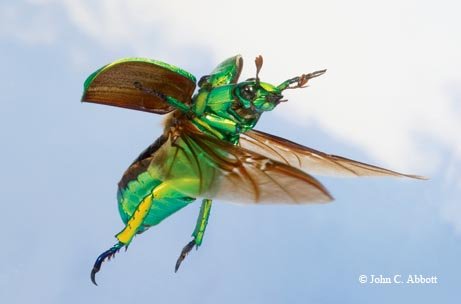
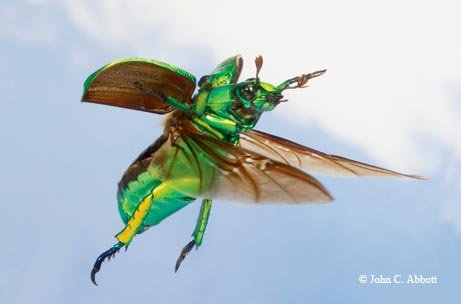
A brilliant jewel beetle (Chrysina woodi) flies between walnut trees in the Davis Mountains.
John C. Abbott
A brilliant jewel beetle (Chrysina woodi) flies between walnut trees in the Davis Mountains.
John C. Abbott
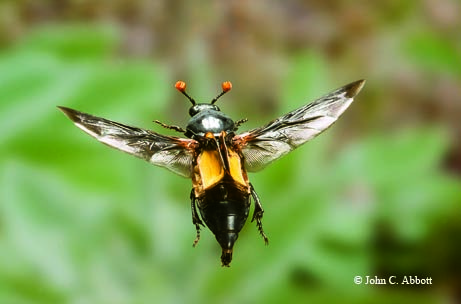
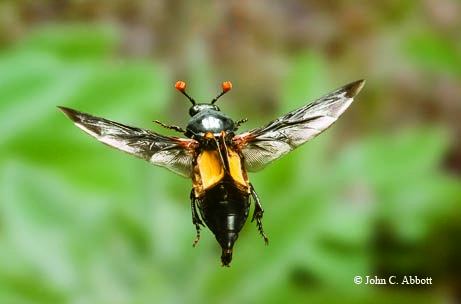
The burying beetle (Nicrophorus carolinus) mimics a wasp while in flight by inverting its elytra (forewings). A pair of these intriguing beetles will bury a small animal carcass, lay their eggs on it and then guard the young as they feed.
John C. Abbott
The burying beetle (Nicrophorus carolinus) mimics a wasp while in flight by inverting its elytra (forewings). A pair of these intriguing beetles will bury a small animal carcass, lay their eggs on it and then guard the young as they feed.
John C. Abbott
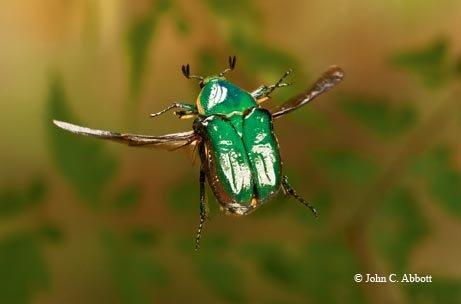
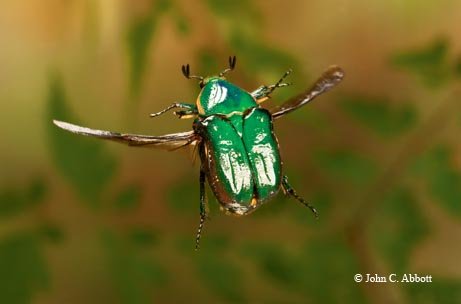
The emerald euphoria (Euphoria fulgida) is a common visitor to butterfly bait traps in the spring.
John C. Abbott
The emerald euphoria (Euphoria fulgida) is a common visitor to butterfly bait traps in the spring.
John C. Abbott
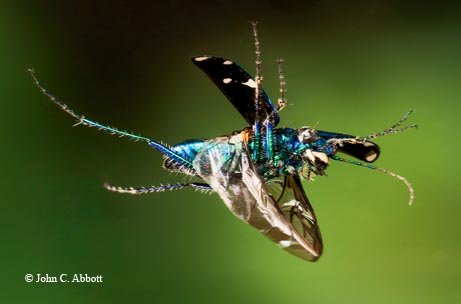
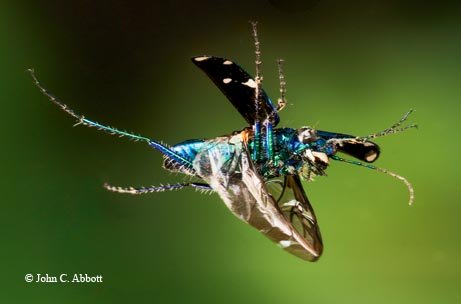
The six-spotted tiger beetle (Cicindela sexguttata) is equally capable of avoiding predators by flying in the air or running on the ground.
John C. Abbott
The six-spotted tiger beetle (Cicindela sexguttata) is equally capable of avoiding predators by flying in the air or running on the ground.
John C. Abbott
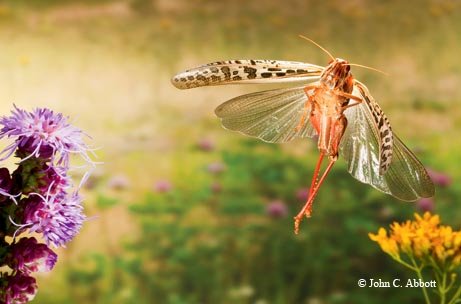
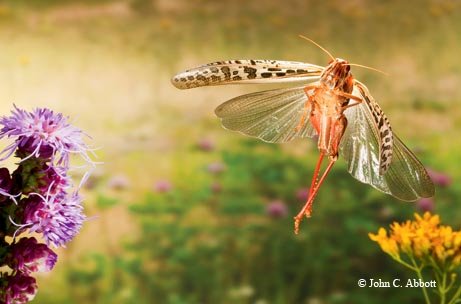
The American bird grasshopper (Schistocerca americana) gets its name because of its large size and its abilities as a strong flier.
John C. Abbott
The American bird grasshopper (Schistocerca americana) gets its name because of its large size and its abilities as a strong flier.
John C. Abbott