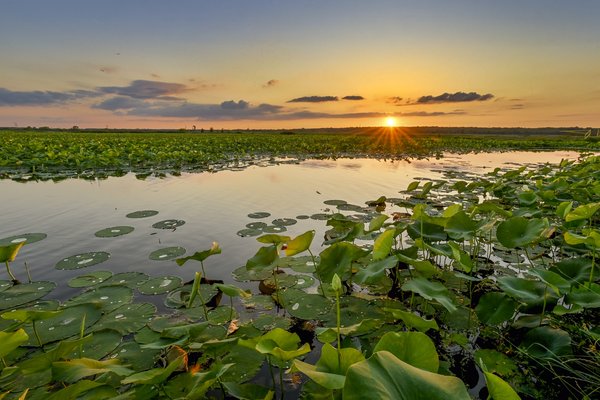
Richland Creek Wildlife Management Area is washing Dallas’ water. Fort Worth’s too.
The WMA’s constructed wetlands along the Trinity River are the first of their kind — a water recycling project on a grand scale.
Water from the river, downstream from Dallas and Fort Worth, flows through a series of ponds and comes out cleaner on the other end. It’s a nature-based solution to the human problem of pollution.
The WMA’s wetlands were conceived as a way to create public water supply without building additional reservoirs. The idea also allowed critical bottomland forest to be saved along the Trinity.
“Water is in demand,” says Ryan Assenheimer, manager of the 14,000-acre WMA. “Water is Texas’ next oil, if you will. Water is very vital to everyone. And this project came about in lieu of building another reservoir, instead of inundating more bottomland hardwoods. We were able to use public land and partnership to provide water that can supplement the lake.”
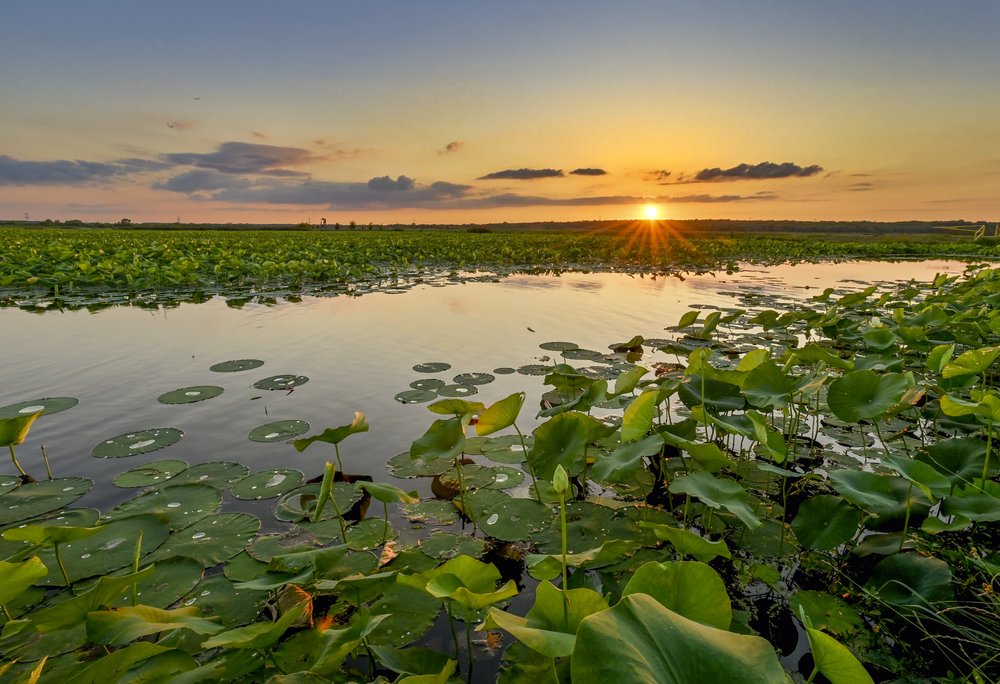
It works something like this: Water from the Trinity River flows through a pipeline into sediment basins at the WMA. Those sediment basins have a series of flaps to help slow the water down. That’s just where the heavy sediments drop out. From there, the water flows through a chain of three to four wetlands, powered by gravity, where wetland plants remove more sediment and pollutants such as nitrogen and phosphorus. The native-plant wetland ecosystem powers the project’s water-cleaning abilities. The further the water goes through the system, the cleaner it gets. The water flows into additional conveyance canals and eventually ends up in Alligator Creek, from which it is pumped into nearby Richland Chambers Reservoir.
In the end, the water is cleaned cheaply, quickly and efficiently. “If we’re running full out,” Assenheimer says, “we’re cleaning roughly 90 million gallons a day out of the river.”
Fort Worth pulls water from the lake for its municipal water supply. Residents brush their teeth and wash their clothes with water cleaned by the WMA’s plants.
The idea for the project came about in the mid-1990s when Texas Parks and Wildlife Department biologist Carl Frentress started working with the Tarrant Regional Water District on the idea of water reuse and water recycling. Their pilot project proved successful and was expanded into the 2,000-acre wetlands at the WMA today. Construction was finished in 2013.
That’s not all that occurs at Richland Creek. The wetland draws a remarkable diversity of wildlife. Ducks, geese and wading birds share the water with migratory shorebirds and passing raptors. In the fall, migrating ducks arrive by the thousands. Otters frolic, and raccoons and the occasional bobcat venture to the water’s edge to drink.
The aquatic wetland plants serve two purposes. The annual plants used by the WMA “are very productive because they uptake so many nutrients — they’re trying to grow so fast,” Assenheimer says. The annual wetland plants also serve as highly nutritious staples for waterfowl.
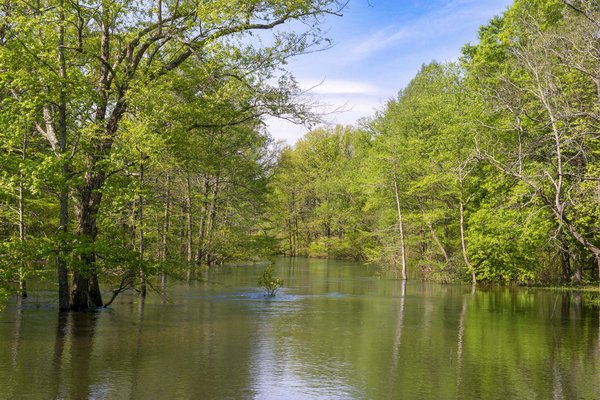
A separate but related project at Richland Creek is also cleaning water — but for the sake of wildlife and the environment, not tooth-brushing. TPWD, Ducks Unlimited and other partners constructed 238 acres of wetlands to capture Trinity River floodwater and clean it in the same way using a series of forested wetlands and natural filters. Supported by the nonprofit Texan by Nature, the project has succeeded in meeting its goals of cleaner water, increased wildlife habitat and improved recreation opportunities.
Bird-watchers have found their way here. The mudflats attract migrating shorebirds such as sandpipers and avocets. In addition, herons, egrets and ibises are regulars. “It is a very popular birding spot, especially in the spring,” Assenheimer says. “Last year, we had a local Audubon Society come do a Big Sit and actually recorded the most species on an inland Big Sit in Texas,” he says, referring to a Great Texas Birding Classic event in which participants identify as many species as possible in a day from a fixed location.
In the fall, the ducks come. Tens of thousands of ducks visit each year — gadwall, shovelers, pintail and teal. “It’s pretty awe-shocking to see that many birds,” Assenheimer says. “I thought I would get used to it at some point. I don’t think I have. I still get excited about it every October when they start showing up.”
In addition to the wetlands on the Frentress Unit of the WMA, the South Unit (formerly the Trinity Unit) contains bottomland hardwood forest. The overstory is filled with cedar elm, green ash and bur oak. Palmetto bushes fill in the understory in addition to other mixed plant life.
TPWD’s recent acquisition of the Trinity River WMA, a 6,900-acre property across the river, will allow for coordinated habitat management on both sides of the river.